



Restoration Hall Table
A restoration hall table brings formal presence to an entrance, spanning sturdy seventeenth-century oak and sleek nineteenth-century French mahogany.

Restoration Hall Table
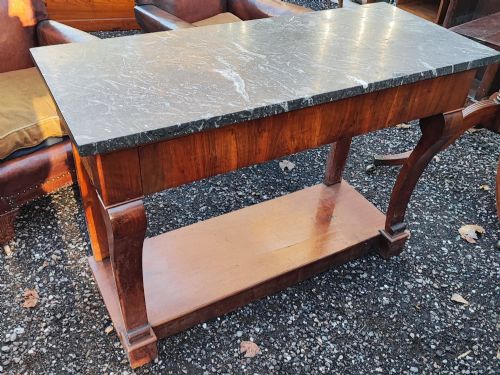
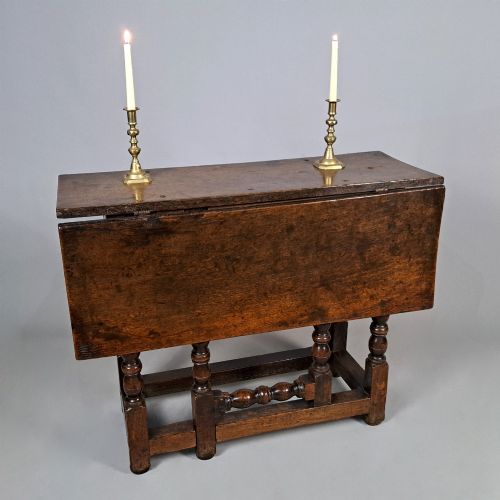
When you search for a restoration hall table, you encounter a selection spanning the seventeenth and nineteenth centuries, including console tables, centre tables, side tables, and occasional tables designed for hallways and grand rooms.
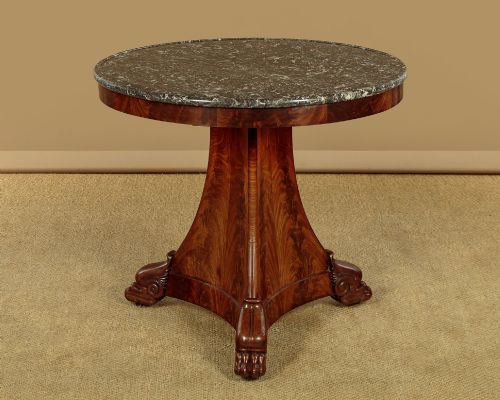
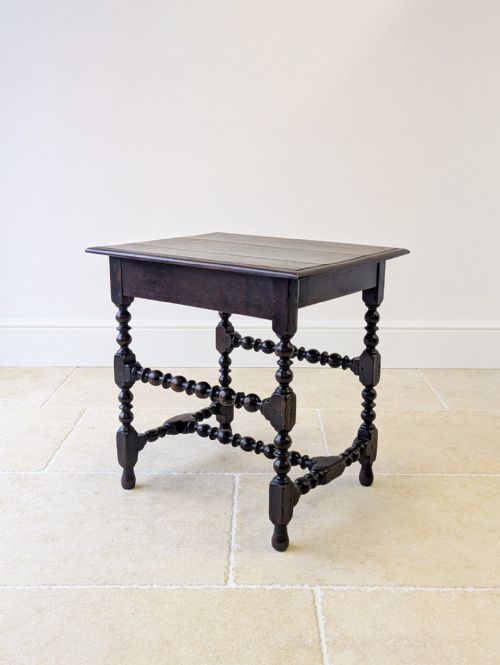
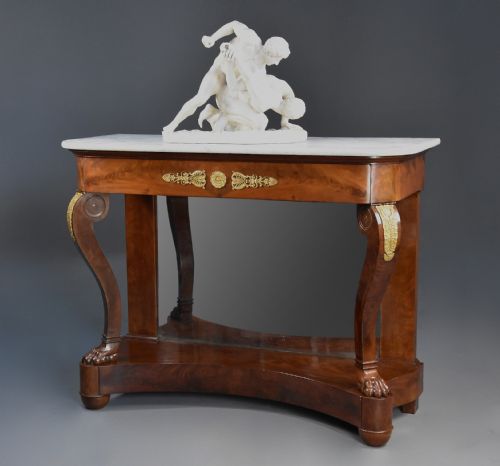
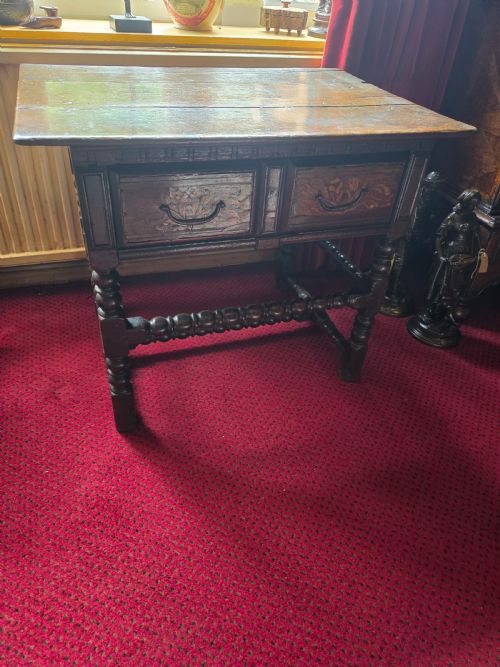
The pieces you meet most frequently on this page are nineteenth-century French console and centre tables alongside seventeenth-century English side tables, reflecting continental Empire and Restauration tastes as well as earlier English joinery.
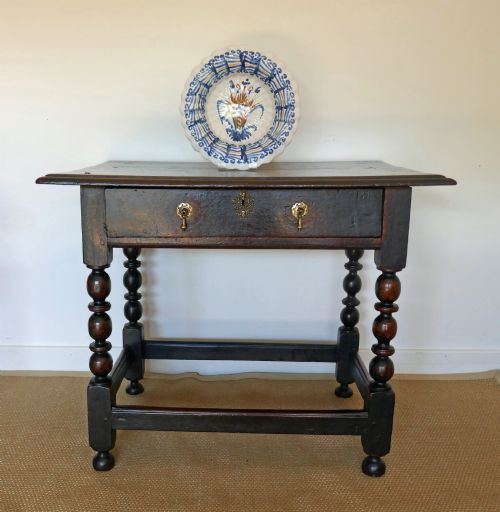
Formats range from wall-anchored console tables topped with marble to free-standing centre tables and side tables featuring drawers or bobbin-turnings.
Materials and construction
Cabinetmakers built these tables using timbers such as mahogany, oak, walnut, satinwood, and laburnam, frequently applying complex oyster veneers, marquetry, and wood inlay.
Nineteenth-century French examples often pair mahogany or walnut structures with heavy white marble or fossil tops, whilst earlier English pieces rely on solid oak joinery.
Decorative metalwork appears through brass mounts and ormolu detailing, particularly on continental console and centre tables.
Restoration Hall Table Retail Price Guide 2026
Typical asking prices for restoration hall table among the pieces listed under this phrase on Sellingantiques today, from the lower quarter to the upper quarter. They describe what is for sale here now, not the wider market.
The listings span seventeenth-century English oak and nineteenth-century French mahogany, walnut, and satinwood.
Distinctions in quality
Quality rests in the selection of timbers, where highly figured mahogany, intricate oyster veneer patterns, and sharply cut wood inlay elevate an example above plain stock.
The integration of heavy materials dictates value, distinguishing thick, well-fitted marble slabs or crisp ormolu mounts from simpler timber surfaces.
Structural integrity and the retention of original surface colour define the finer pieces, particularly amongst early oak side tables and continental console tables.
The Restoration Hall Table Glossary
- Console table
- A table designed to stand against a wall, frequently secured to it and topped with marble.
- Gueridon
- A French round centre table, often supported by a central pillar or tripod base.
- Oyster veneer
- Slices cut transversely from small branches to create circular or oystered patterns across a table top.
- Ormolu
- Gilt bronze mounts applied to furniture for decorative enrichment, common in French empire design.
- Bobbin-turning
- A form of lathe-turned furniture leg resembling a string of bobbins or spools, typical of seventeenth-century joinery.
Restoration Hall Table: Frequently Asked Questions
Where should I place a console table?
A console table sits naturally against a hallway or living room wall where floor space is measured.
Because many examples feature flat backs for wall placement, they serve well beneath mirrors or paintings without obstructing movement.
What is the difference between a console and a centre table?
A console table is designed to stand against a wall, frequently accompanied by a marble top and wall fixings.
A centre table stands free in the middle of a room, finished on all sides for viewing from every angle.
How do I care for a marble top?
Marble surfaces require gentle cleaning with warm water and a soft cloth to avoid scratching the polished stone.
Acidic liquids can etch the surface, so coasters protect the historic finish against spills.