

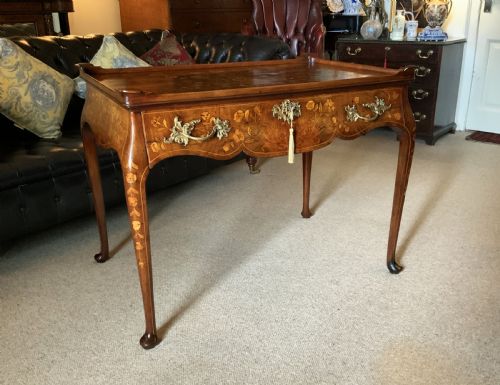


Inlaid Walnut Dressing Desk
An inlaid walnut dressing desk brings together rich timber and intricate marquetry for a practical surface with real presence.
Inlaid Walnut Dressing Desk
An inlaid walnut dressing desk combines the functions of a writing table, a side table, and a lowboy, often featuring drawers and fitted mirrors for grooming or correspondence. These pieces span the 18th century through the Victorian period, reflecting styles such as Georgian, Dutch Rococo, and French Empire.
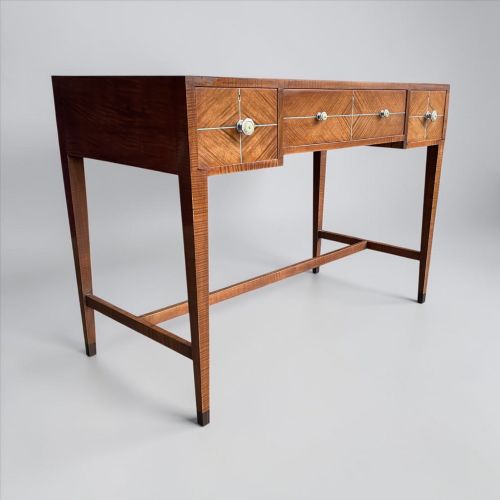
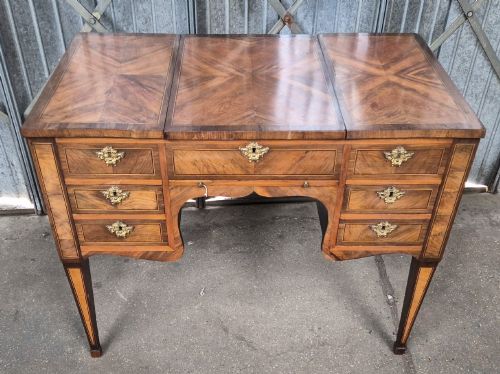
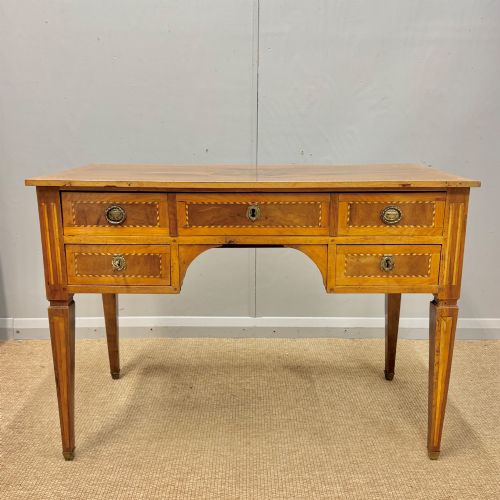
The version most commonly encountered on this page is a Victorian or Georgian kneehole dressing chest or lowboy, constructed from burr walnut or figured timber with contrasting boxwood and fruitwood inlay. Alongside these, buyers find French work tables and Dutch marquetry toilet mirrors serving similar domestic uses.
How they were made
Cabinet makers built these desks using walnut, frequently selecting burr walnut veneers for rich grain patterns across the primary surfaces. Carcasses often incorporated secondary timbers like fruitwood to support the internal drawer structures.
Decoration relied heavily on boxwood inlay and fruitwood marquetry, creating floral or geometric motifs set into the dark timber. Brass fittings such as handles and escutcheons completed the construction, alongside fitted glass for mirrors.
Inlaid Walnut Dressing Desk Retail Price Guide 2026
Typical asking prices for inlaid walnut dressing desk among the pieces listed under this phrase on Sellingantiques today, from the lower quarter to the upper quarter. They describe what is for sale here now, not the wider market.
Object types include lowboys, side tables, console tables, and toilet mirrors alongside standard dressing desks.
What varies in quality
The standard of an inlaid walnut dressing desk depends heavily on the precision of the marquetry and the choice of veneer. Finer examples display crisp fruitwood and boxwood cutting that sits flush within the walnut ground, whereas lesser pieces show simpler parquetry or plain surfaces.
Structural integrity and the retention of original brass hardware and glass also dictate the standing of a piece. Desks retaining their fitted interior compartments and original timber patination hold greater distinction among collectors.
E and R·Maples
The Inlaid Walnut Dressing Desk Glossary
- Marquetry
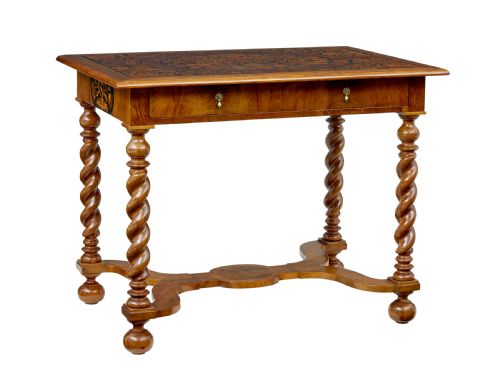
- Decorative veneer work forming pictures or patterns using various woods. In these pieces, fruitwood and boxwood depict floral and bird designs against a walnut ground.
- Lowboy
- A small table with drawers, typically standing on four legs and dating from the 18th century. They frequently serve as dressing tables or writing desks.
- Parquetry
- Geometric mosaic woodwork used for floors and furniture surfaces. It appears on several writing tables in simple repeating patterns.
- Burr walnut
- Timber taken from a tree growth or wart, yielding highly figured grain patterns. Cabinet makers prized this wood for its decorative surface movement on tabletops and drawer fronts.
Inlaid Walnut Dressing Desk: Frequently Asked Questions
What is a kneehole dressing table?
A kneehole dressing table is a form featuring a central recess for the legs, flanked by banks of small drawers. This design allows the user to sit comfortably close while grooming or writing.
Such pieces often incorporate fitted mirrors and storage compartments for toilet articles or writing materials.
How do I identify a Georgian dressing desk?
Georgian dressing desks typically display understated proportions, straight or cabriole legs, and figured walnut veneers without excessive ornamentation. Their construction focuses on clean joinery and practical drawer arrangements.
Later Victorian interpretations often revive these earlier styles while adding more elaborate marquetry or Aesthetic movement details.
What distinguishes marquetry from parquetry?
Marquetry uses different veneers to create pictorial representations, such as flowers, foliage, and birds. It requires careful hand-cutting of diverse timbers like fruitwood and boxwood.
Parquetry, by contrast, arranges wood veneers into repeating geometric patterns like cubes or chequers rather than picture scenes.
Where were these desks used in the home?
These desks primarily served in bedrooms and dressing rooms as private spaces for personal grooming and letter writing. Their dual functionality made them valuable items in domestic interiors.
Over time, many transitioned into reception rooms or studies to act as decorative side tables or writing desks.