

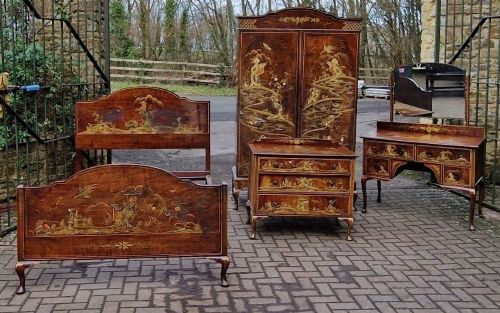
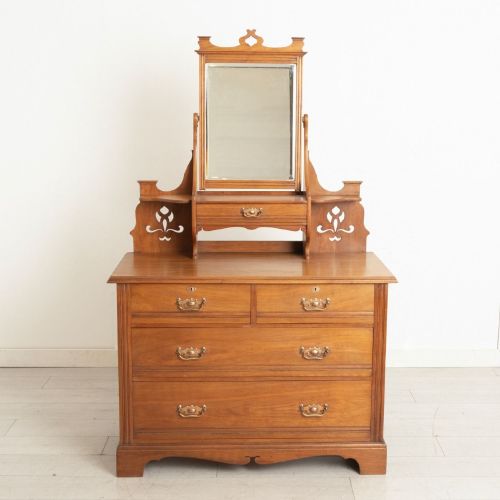
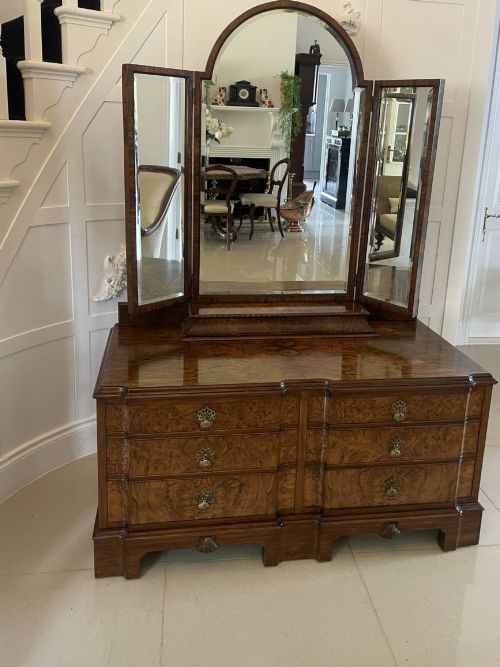
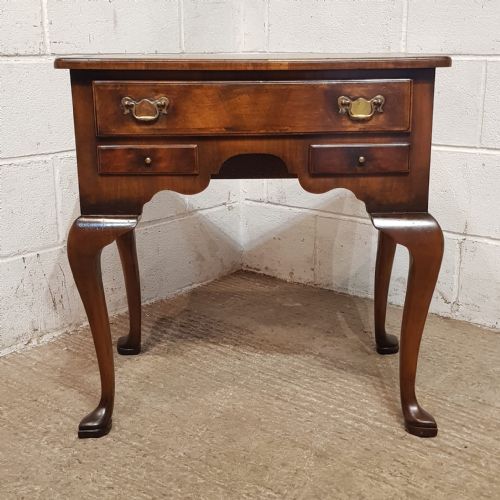


Brown Walnut Dressing Chest
A brown walnut dressing chest brings rich timber grain and period utility to a bedroom, combining surface space with organised drawers.
Brown Walnut Dressing Chest
When you search for a brown walnut dressing chest, you encounter a variety of forms ranging from lowboys and kneehole tables to substantial Victorian and Edwardian dressing units.
The pieces span multiple periods including the eighteenth century, Georgian era, Victorian period, and the nineteen-twenties, reflecting changing domestic habits.
You also find related forms such as cheval mirrors, jewellery boxes, and vanity tables that share the same walnut vocabulary.
How they were made
Cabinet makers utilised solid walnut, burr walnut veneers, and figured walnut over secondary timbers like pine, often incorporating brass handles and mirror glass.
Surface decoration frequently relied on contrasting grain patterns, parquetry, and mixed timber inlay rather than heavy carving.
Construction techniques evolved from eighteenth-century dovetailed drawer boxes and lowboy frames to the pedestal designs of the Victorian and Art Deco eras.
Brown Walnut Dressing Chest Retail Price Guide 2026
Typical asking prices for brown walnut dressing chest among the pieces listed under this phrase on Sellingantiques today, from the lower quarter to the upper quarter. They describe what is for sale here now, not the wider market.
Materials recorded across the inventory include solid walnut, burr walnut, brass, glass, velvet, and mixed timber inlay.
What varies in quality
Quality rests upon the selection of the timber veneers, where highly figured burr walnut or matched walnut panels elevate the visual depth of the piece.
The integrity of the construction, from the tightness of the drawer dovetails to the retention of original brass hardware and mirror plates, dictates the standing of an example.
Proportion and restraint in revival styles separate superior cabinet work from more ordinary commercial production.
The Brown Walnut Dressing Chest Glossary
- Burr walnut
- A veneer taken from the warted growth of a walnut tree, prized for its swirling, highly decorative grain pattern. It appears frequently on high-status furniture surfaces.
- Lowboy
- A small table with drawers, resembling a chest on legs or a miniature dressing table, popular in the eighteenth century. These pieces often served multiple domestic functions.
- Kneehole
- A desk or dressing table configuration featuring a central recess for the legs, flanked by pedestals of small drawers. This design allows the user to sit close to the surface.
- Parquetry
- Geometric mosaic woodwork used for decorative effect on tabletops and drawer fronts. It employs contrasting timbers to create patterns.
- Cheval mirror
- A full-length mirror hung in a frame that allows it to tilt. These freestanding glasses often accompanied dressing chests.
Brown Walnut Dressing Chest: Frequently Asked Questions
What is a brown walnut dressing chest?
A brown walnut dressing chest is a period furniture piece designed for personal grooming and storage, featuring timber construction and integrated drawers.
These items range from compact lowboys to elaborate Victorian pedestal tables with adjustable mirrors.
How do I date a walnut dressing chest?
Dating relies on examining construction methods, hardware, drawer dovetailing, and stylistic markers such as cabriole legs or Aesthetic movement inlay.
Earlier pieces from the eighteenth century show hand-cut joinery and simpler timber framing, while later Victorian and Edwardian examples incorporate mirrors and pedestals.
Where should I place a lowboy?
A lowboy functions well as a side table in a hallway, a dressing surface in a bedroom, or a writing table in a study.
Its compact proportions allow it to fit into spaces where a full-sized chest of drawers would prove too large.
How do I care for antique walnut?
Antique walnut requires protection from direct sunlight and dramatic changes in humidity to prevent timber splitting and veneer lifting.
Regular dusting with a dry cloth and occasional application of appropriate furniture wax maintains the finish.