

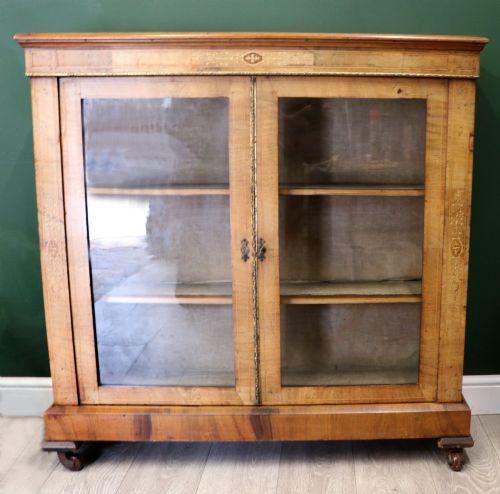

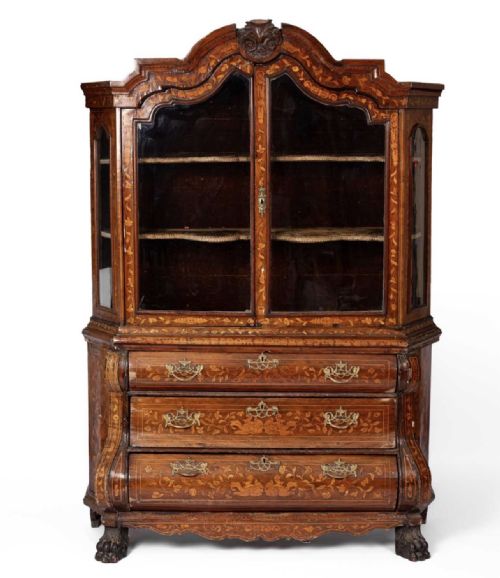
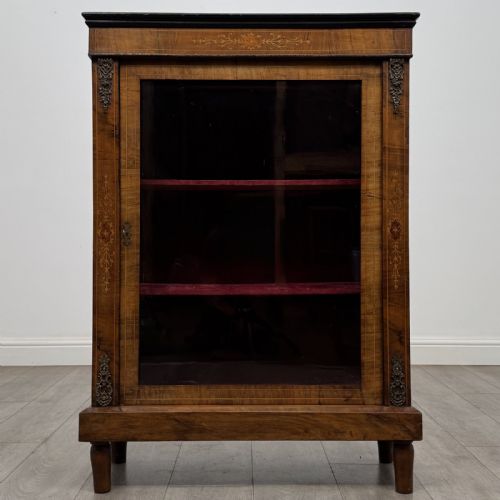
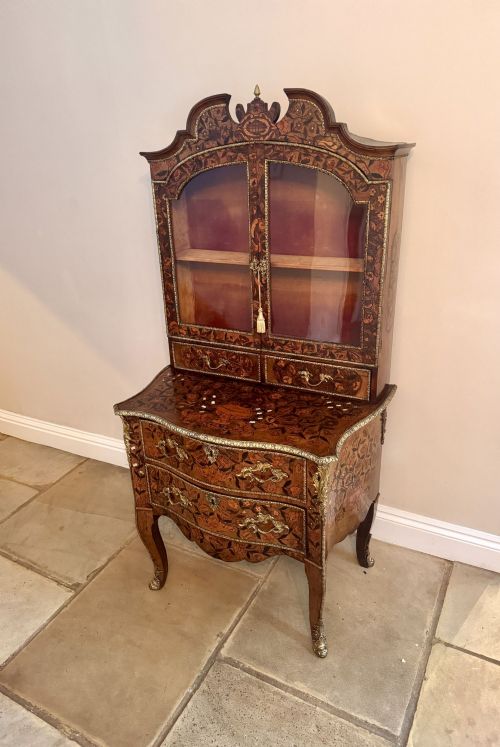
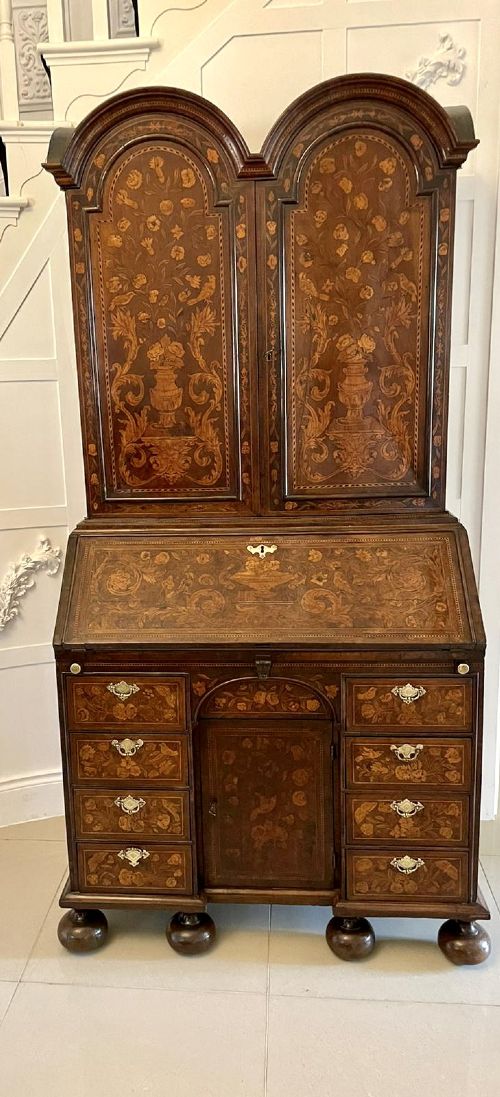
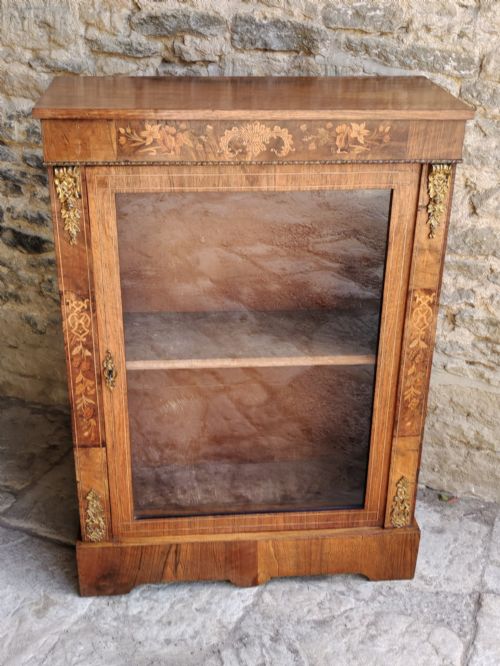
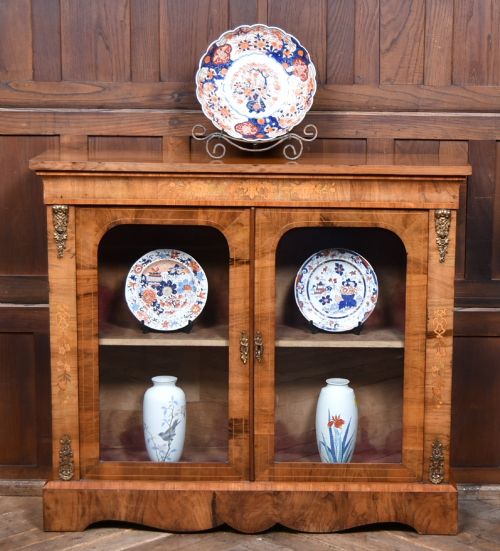
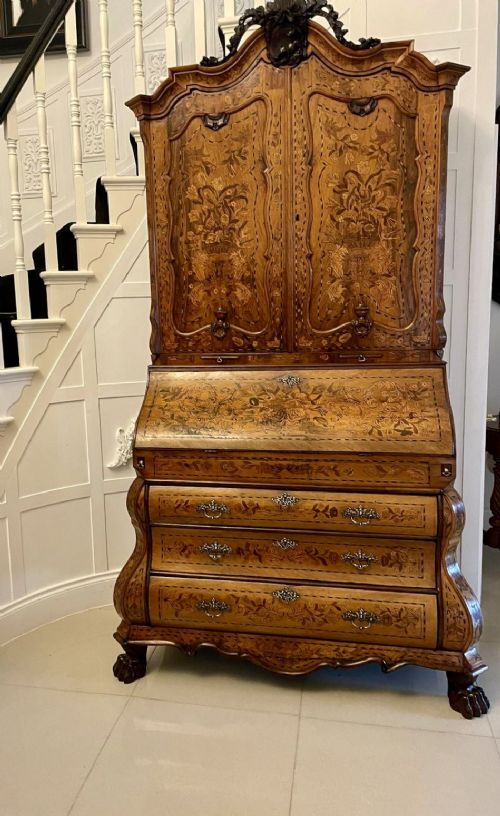
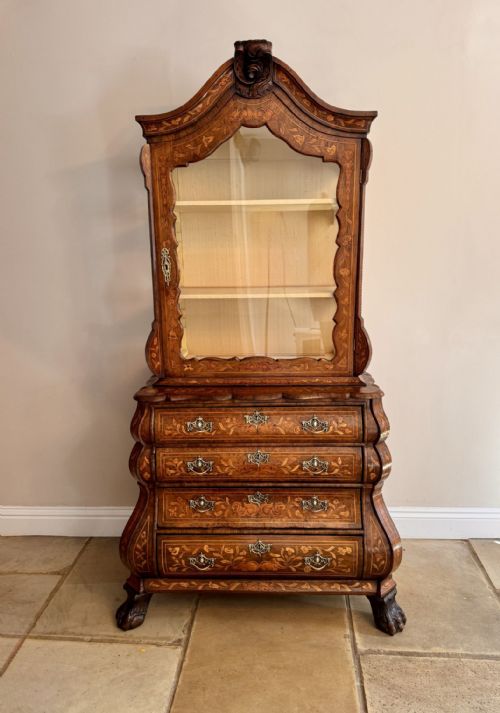
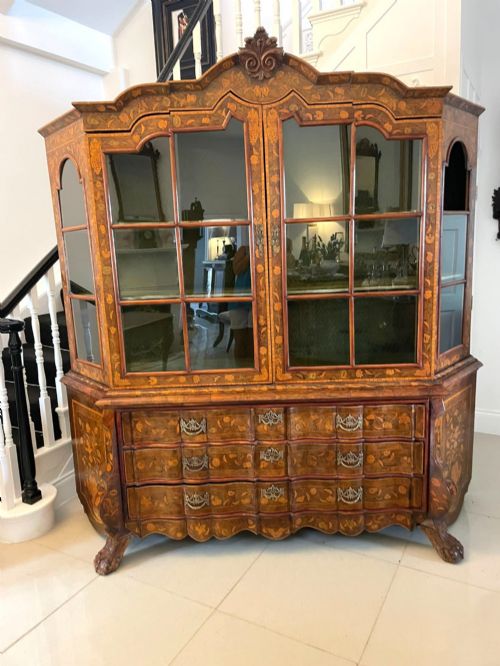
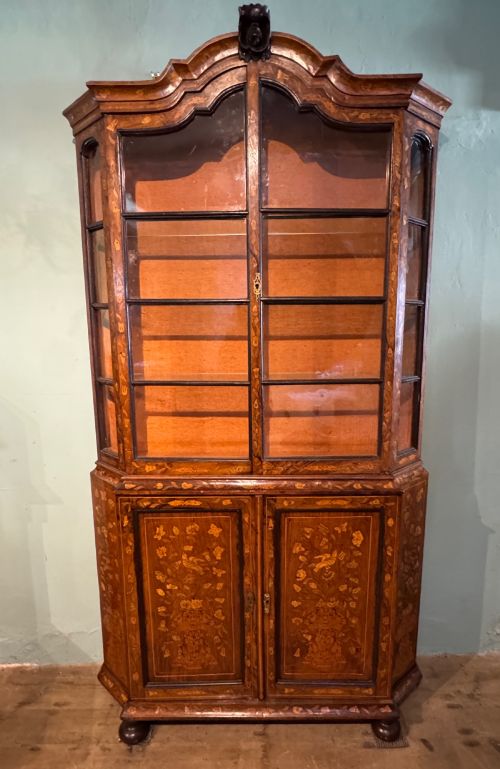
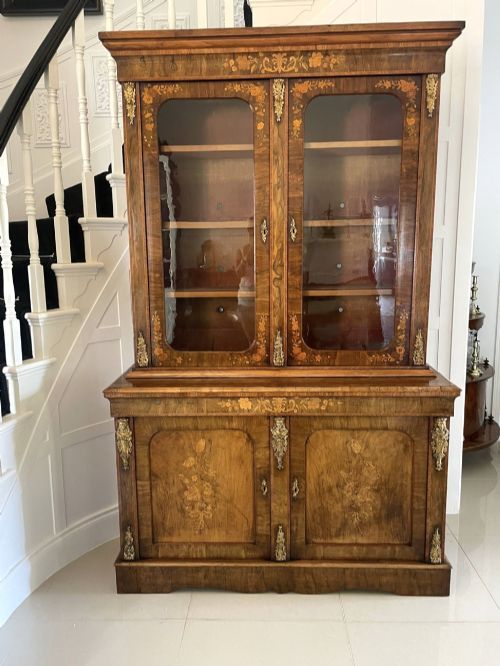
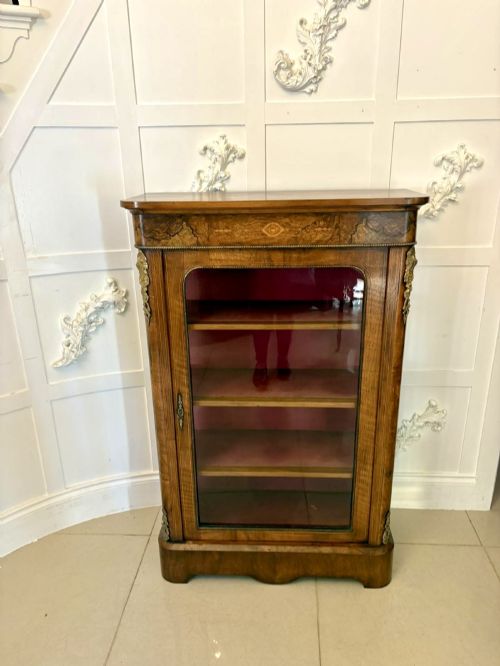

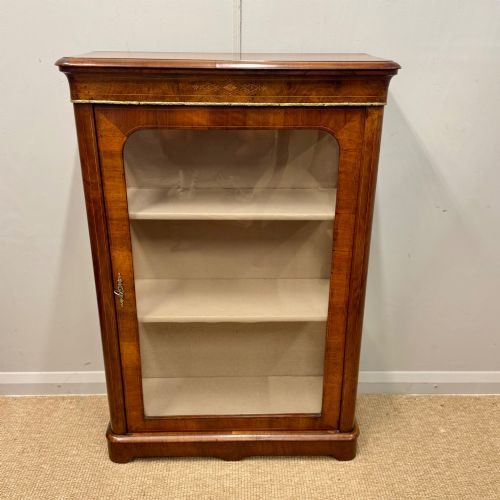
Inlaid Walnut Bookcase Cabinet
An inlaid walnut bookcase cabinet brings together fine timber and glazed display space, offering a practical home for a collection of books.
Inlaid Walnut Bookcase Cabinet
When searching for an inlaid walnut bookcase cabinet, a buyer encounters a variety of forms ranging from compact pier cabinets and display units to substantial breakfront bookcases and bureau bookcases. These pieces originate primarily from the Victorian era alongside 18th-century and early 20th-century workshops, reflecting diverse regional tastes across Britain, France, Italy, Austria, and the Netherlands.
The most common version met on this page is the Victorian pier cabinet or display case, frequently constructed from figured or burr walnut with marquetry inlay and glazed doors. Alongside these smaller display pieces, larger architectural bookcase cabinets and bureau desks appear, combining open shelving or enclosed glass compartments with fitted writing drawers.
Makers and regional styles shape the selection significantly, with Dutch marquetry and English Victorian cabinet-making forming the core of the available pieces. Whether intended for a formal library or a modest drawing room, these items serve to exhibit and protect bound volumes and decorative objects.
How they were made
Cabinet-makers relied on walnut and burr walnut veneers applied over secondary carcase timbers, often enhanced by contrasting fruitwood, rosewood, tulipwood, and ebony marquetry inlay. Glass panels fitted into glazed doors protected the interior contents while metal mounts in brass and ormolu provided structural reinforcement and decorative accenting.
Surface ornamentation frequently involved intricate floral marquetry or Tunbridgeware detailing, set against ebonised wood mouldings or polished walnut fields. Interior shelving adjustments and velvet linings were commonly integrated into display cabinets and library bookcases during the Victorian period.
Inlaid Walnut Bookcase Cabinet Retail Price Guide 2026
Typical asking prices for inlaid walnut bookcase cabinet among the pieces listed under this phrase on Sellingantiques today, from the lower quarter to the upper quarter. They describe what is for sale here now, not the wider market.
The furniture styles span Victorian and Dutch Baroque revival to Aesthetic Movement and Viennese Secessionist designs.
What varies in quality
The refinement of the marquetry inlay and the selection of the timber dictate the visual distinction of a piece, with figured burr walnut and complex floral or pictorial veneers marking out finer examples. Precision in the joinery, the weight and finish of the ormolu or brass mounts, and the integration of glazed doors determine the standard of the cabinet-making.
Subtlety in proportion and the preservation of original veneers separate standard utilitarian furniture from exceptional workshop productions. Pieces signed by recognised makers or exhibiting advanced decorative techniques carry a distinct level of craftsmanship.
Lamb of Manchester·August Ungethüm·Edwards and Roberts
The Inlaid Walnut Bookcase Cabinet Glossary
- Burr walnut
- A timber harvested from the wart-like growths on walnut trees, yielding complex swirling grain patterns. It was sliced into thin veneers for decorative furniture surfaces.
- Marquetry
- A technique of forming decorative patterns using thin veneers of various coloured woods. Craftsmen cut pieces of timber to fit together within a prepared ground.
- Ormolu
- Gilt bronze ornamentation applied to furniture mounts and feet. This decorative finish adds metallic contrast to dark wood surfaces.
- Pier cabinet
- A low cabinet designed to stand against the wall space between windows. These glazed pieces were popular in Victorian drawing rooms for displaying ornaments.
- Breakfront
- A piece of furniture whose central section projects forward from the flanking wings. This architectural arrangement creates depth and visual balance in large bookcases.
Inlaid Walnut Bookcase Cabinet: Frequently Asked Questions
What is an inlaid walnut bookcase cabinet?
An inlaid walnut bookcase cabinet is a piece of furniture designed for storing books and displaying decorative items, constructed from walnut and decorated with contrasting wood veneers. These units combine shelving, often behind glass doors, with intricate marquetry patterns.
Such cabinets served prominent roles in period drawing rooms and libraries, providing both secure storage and a surface to showcase refined craftsmanship. The combination of functional shelving and decorative inlay distinguishes them from standard storage furniture.
How do I date a walnut cabinet?
Dating a walnut cabinet involves examining the construction methods, veneer thickness, and decorative style of the piece. Victorian examples often feature burr walnut with machine-cut veneers and elaborate floral marquetry, whereas 18th-century pieces tend to show hand-cut veneers and distinct regional joinery.
Hardware, locking mechanisms, and secondary woods inside the carcase also provide reliable clues to the period of manufacture. Comparing the decorative motifs, such as Dutch marquetry or Aesthetic Movement influences, helps narrow down the decade.
Where should I place my cabinet?
Placing an inlaid walnut bookcase cabinet requires a stable environment away from direct sunlight and sudden temperature changes. Sunlight can fade walnut timber and dry out delicate veneer surfaces over time.
Positioning the piece against an interior wall protects the wood from exterior dampness and extreme heat fluctuations. Ensuring adequate clearance allows the glazed doors to open smoothly without catching on surrounding furnishings.
How do I care for walnut veneer?
Caring for walnut veneer involves maintaining a consistent indoor climate and dusting the surfaces regularly with a soft cloth. Avoiding harsh chemical cleaners preserves the integrity of the French polish or wax finish.
Applying a suitable furniture wax occasionally helps nourish the walnut timber and maintain its natural lustre. Gentle handling of doors and drawers prevents stress on the underlying veneer joints.