
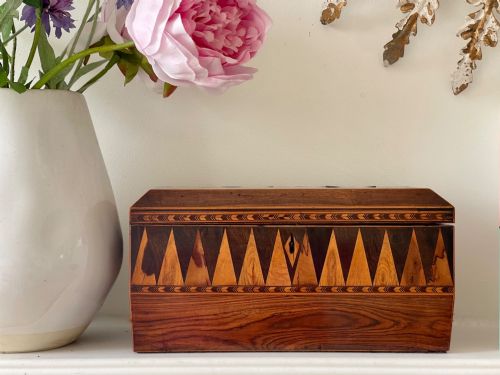

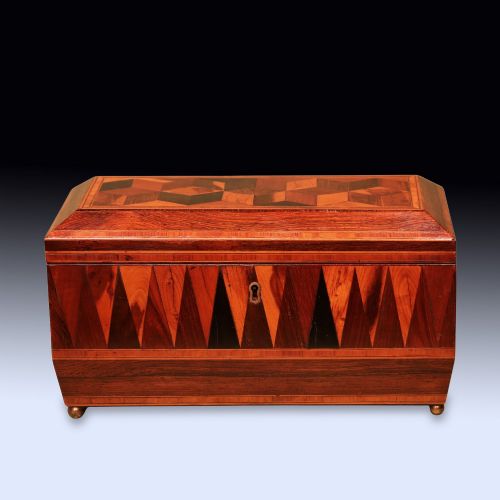


Inlaid Timber Tea Chest
These inlaid timber tea chest examples are carefully crafted containers designed to store and preserve precious tea leaves while adding elegance to a room.
Inlaid Timber Tea Chest
An inlaid timber tea chest is a refined box constructed to hold dry tea leaves safely away from moisture and air. The pieces on this page span the Georgian, Regency, and Victorian periods, alongside later Art Deco examples.
Most items you encounter are tea caddies or keepsake boxes featuring decorative veneering and banding. They range from simple mahogany and satinwood boxes to elaborate Tunbridge Ware and partridge wood specimens.
How They Were Made
Cabinetmakers utilised dense timbers such as rosewood, walnut, and partridge wood as a stable base for decorative veneers. Boxwood and brass often formed contrasting stringing and geometric inlay patterns across the surfaces.
Many examples incorporated specialised parquetry work or mosaic pictorial panels, particularly those associated with Tunbridge Ware. Fitted interiors often retained small compartments and sometimes tiny glass mixing bowls.
What Varies in Quality
The sophistication of the timber selection and the precision of the inlay determine the standing of each piece. Finer items display meticulous contrasting wood grains, such as burr yew or amboyna, matched symmetrically across the lid and panels.
The integrity of the internal fittings, such as original foil linings, compartment lids, and working locks with keys, elevates an example. Simpler geometric banding sits below the intricate pictorial tessellation found on specialised Tunbridge Ware boxes.
Henry Hollamby
The Inlaid Timber Tea Chest Glossary
- Tunbridge Ware
- A form of British woodworking originating from Kent that uses tiny mosaic wood tesserae to create pictorial views and geometric designs. It requires exceptional patience and precision to manufacture.
- Parquetry
- A geometric mosaic of wood pieces used for decorative veneering on floors and furniture surfaces. It creates striking patterns through the contrast of different timber tones.
- Stringing
- Thin lines of contrasting wood inlay used to outline the edges of panels and lids. This technique defines the architectural proportions of the box.
- Veneer
- A thin layer of highly figured or precious timber applied to a more stable secondary wood body. This method displays expensive grains economically.
- Partridge Wood
- A heavy, durable tropical timber featuring distinctive partridge-feather speckled markings. Cabinetmakers valued it for high-end Georgian decorative boxes.
Inlaid Timber Tea Chest: Frequently Asked Questions
What is an inlaid timber tea chest?
An inlaid timber tea chest is a decorative wooden box built to store dry tea leaves securely. These containers often feature intricate wood veneers and banding.
They served a practical purpose in historical households where tea was an expensive commodity requiring careful preservation under lock and key.
How were these tea boxes used?
These boxes held loose tea leaves in separate internal compartments to prevent spoilage and theft. The host often kept the key close at hand during social gatherings.
Some interiors included small glass bowls used for blending different tea leaves before brewing.
How do I date an antique tea caddy?
Dating relies on observing the timber choices, construction techniques, and decorative styles characteristic of specific eras like the Georgian or Regency periods. Look at the hinges, locks, and internal layout for period clues.
Art Deco examples from the twentieth century display distinctly modern geometric motifs compared to eighteenth-century specimens.
What is Tunbridge Ware?
Tunbridge Ware refers to wooden items decorated with precise mosaic patterns made from thousands of tiny tinted wood blocks. These detailed pictorial or geometric designs represent a specialised Kentish craft.
Such pieces demand close inspection to appreciate the microscopic accuracy of the wooden tesserae.