


Antique Tea Chest Fitted
An antique tea chest fitted brings both craftsmanship and period elegance to a room, offering a glimpse into domestic storage traditions.
Antique Tea Chest Fitted
An antique tea chest fitted provides traditional storage for leaves, often taking the form of tea caddies, teapoys, and decorative boxes. These pieces emerge primarily from the 18th century, Georgian, and Victorian periods, reflecting shifting interior tastes across decades.
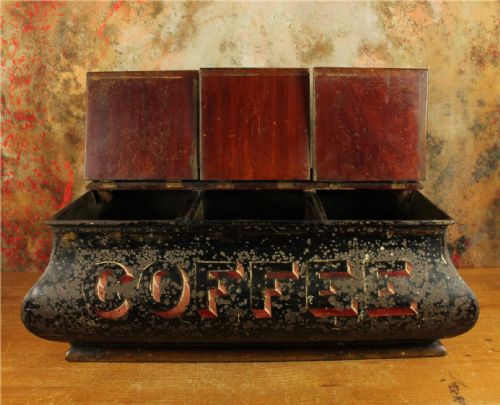
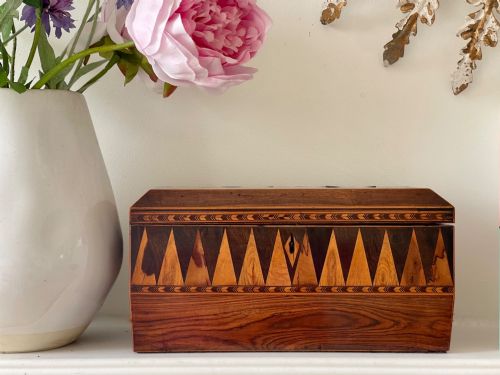
The most common examples you will encounter here include wooden caddies in mahogany, rosewood, and coromandel, alongside occasional tin or toleware storage boxes. Many retain interior compartments or glass mixing bowls, showing how dry leaves were once kept secure under lock.
Makers utilised various stylistic influences, spanning Georgian, Regency, Victorian, and Swedish Biedermeier aesthetics. Buyers look to these forms to add period character to a modern mantel or side table.
How They Were Made
Cabinet makers constructed these pieces using timber veneers like flame mahogany, rosewood, burr elm, and coromandel over solid wood carcases. Tunbridge Ware examples incorporated intricate mosaic woodwork, while others featured mother of pearl and bone details.
Metalwork played a structural and decorative role, with brass mounts, escutcheons, and banding reinforcing the wooden lids and corners. Some variants relied on sheet iron and toleware, particularly triple compartment boxes meant for commercial or domestic cafe use.
Listings feature items spanning the 18th and 19th centuries, including Georgian, Regency, and Victorian pieces.
What Varies in Quality
The refinement of the timber grain and the complexity of the veneer dictate the visual impact of each piece, ranging from simple figured mahogany to highly decorative coromandel and burr elm. Superior examples show careful matching of wood figures across the lid and sides.
Internal fittings distinguish standard storage from finer items, particularly where original mixing bowls, interior lids, and brass mounts remain intact. The precision of bone, mother of pearl, or Tunbridge Ware inlay further separates standard production from exceptional craftsmanship.
The Antique Tea Chest Fitted Glossary
- Tea caddy
- A small box designed to store loose tea leaves securely. They often featured internal compartments and a locking lid.
- Teapoy
- A pedestal table fitted with a storage box or caddy top for holding tea. These pieces stood independently on a central pillar or legs.
- Toleware
- Enamelled or japanned sheet metal objects used for domestic storage. They appear in cafe and household contexts.
- Coromandel
- A dense, heavily figured exotic timber utilised for high-end Victorian decorative boxes. It provides a distinct dark grain with pale streaks.
- Tunbridge Ware
- Woodworking characterised by mosaic decoration made from tiny pieces of naturally coloured woods. It creates detailed geometric or pictorial designs on the surface.
Antique Tea Chest Fitted: Frequently Asked Questions
What is an antique tea chest fitted?
These are period boxes designed to hold and preserve loose tea leaves, featuring internal compartments and sometimes glass mixing bowls.
They date from the Georgian and Victorian eras, serving as both functional storage and decorative household objects.
How were these boxes used?
Tea was a valuable commodity, so owners kept their leaves locked inside these caddies to control distribution.
Servants or hosts would retrieve the leaves from the internal compartments when preparing tea for guests.
What woods are common in these pieces?
Cabinet makers frequently used mahogany, rosewood, and walnut for standard production.
More decorative examples incorporate exotic woods like coromandel and burr elm, often enhanced with brass mounts.
How do I date a tea caddy?
Stylistic cues point to the period of origin, such as Georgian proportions or Victorian brass banding.
Materials and construction techniques also indicate whether a piece originates from the eighteenth or nineteenth century.