
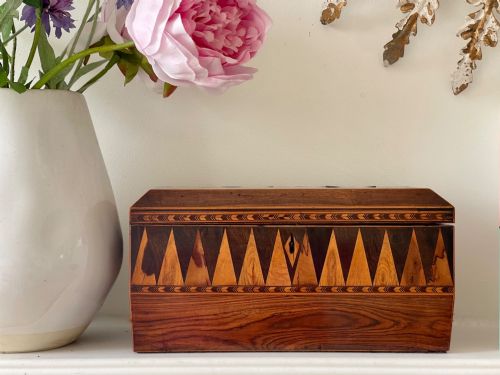

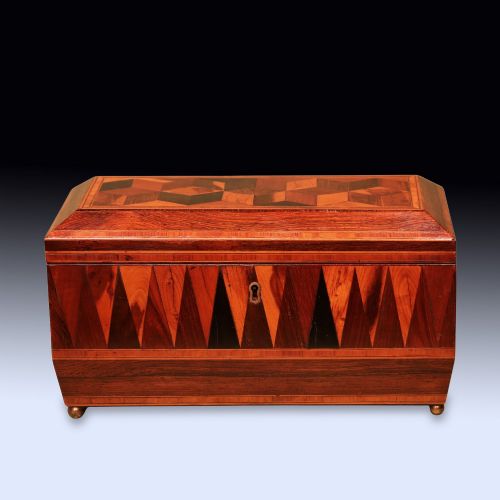


Georgian Tea Container
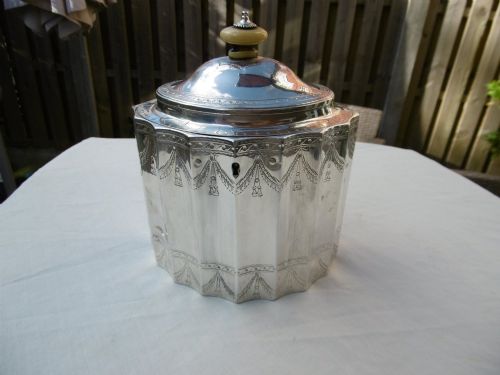
A georgian tea container sits on the table as a small box for loose leaf, holding dry leaves safely under lock.
Georgian Tea Container
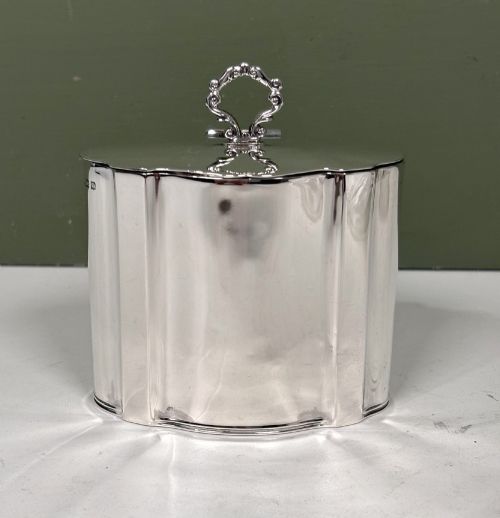
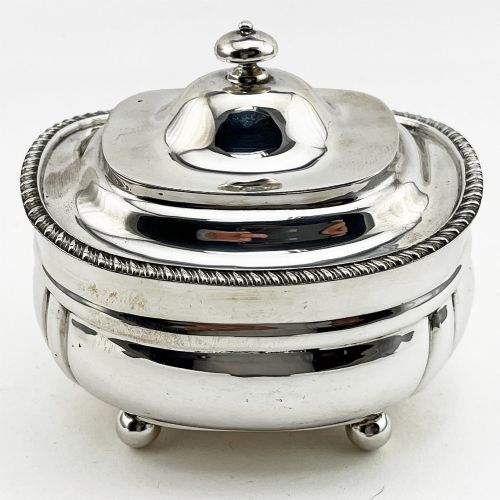
A georgian tea container takes the form of a small box, caddy, or teapoy designed to hold precious leaves securely. Buyers encounter various shapes on this page, from mahogany boxes to sterling silver vessels spanning the eighteenth and nineteenth centuries.
The materials range from dense hardwoods like mahogany, walnut, and rosewood to gleaming sterling silver and brass. Many examples include fitted interiors or keys, reflecting the high value placed on dry leaves during the period.
Origins stretch across the Georgian, Regency, and Victorian eras, alongside later revival pieces. Each container shows the distinct craftsmanship of its period, whether through simple wooden panels or intricate parquetry.
Materials and construction methods
Cabinetmakers constructed wooden boxes using figured hardwoods like flame mahogany, walnut, and partridge-wood, often employing parquetry and brass inlay for surface decoration. Specialised techniques such as Tunbridge ware or tortoiseshell application also appear across the surviving pieces.
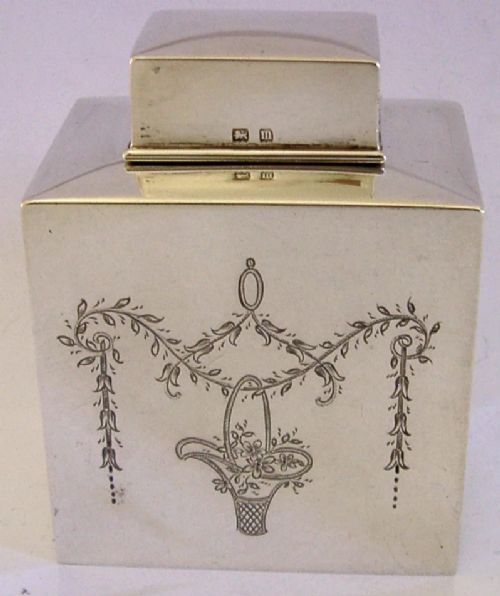
Silversmiths hammered and cast sterling silver to form heavy vessels, frequently adding fluted details or crisp engraving. Makers like Robert Hennell and silversmithing firms shaped these metals to create durable containers with secure lids.
Listings feature sterling silver, brass, mahogany, walnut, rosewood, and tortoiseshell across Georgian, Regency, and Victorian periods.
Separating top tier pieces from standard examples
The choice of raw materials defines the upper tier, where figured mahogany, well-matched tortoiseshell, or heavy-gauge sterling silver distinguish finer items from simpler brass or plain timber boxes. Superior execution shows in the precision of parquetry, the crispness of silversmithing, and the presence of original fitted interiors.
Maker attribution elevates certain pieces, particularly when stamped by recognised workshops or silversmiths like Robert Hennell or Gillows. Craftsmanship that retains working locks, keys, and intact interior compartments places an example higher in the range.
Robert Hennell·Goldsmiths and Silversmiths Co.·Gillows
The Georgian Tea Container Glossary
- Tea caddy
- A small box or container made to store loose leaves safely. The term covers various wooden and metal vessels.
- Teapoy
- A larger stand or table equipped with containers for holding leaves, often raised on a central pillar with legs.
- Parquetry
- Geometric mosaic woodwork used to surface boxes with decorative patterns. This technique appears on Regency examples.
- Tunbridge ware
- Woodworking craftsmanship featuring tiny mosaic tiles forming pictorial scenes or geometric designs. It decorates specialised wooden boxes.
- Sarcophagus
- A monumental container shape featuring a domed or sloping lid, popular during the Regency period for larger boxes.
Georgian Tea Container: Frequently Asked Questions
What is a georgian tea container?
A georgian tea container is a small box or vessel created to store loose leaves securely under lock and key. These pieces reflect the high social value placed on dried leaves during the eighteenth and nineteenth centuries.
They appear in materials ranging from solid sterling silver to figured mahogany and rosewood. Many feature fitted interiors designed to keep different varieties separated.
How do I spot a Regency period box?
Regency boxes often feature architectural shapes like the sarcophagus form, along with brass inlay or parquetry surface decoration. These design traits separate them from earlier plain wooden chests.
Makers of this era also utilised rosewood and chinoiserie decoration to match changing interior tastes.
Did these containers always have locks?
Many examples include a key and working lock because dry leaves were expensive commodities that households kept safely secured. Surviving hardware often bears the marks of original craftsmanship.
Some pieces retain their keys today, while others show empty keyholes where the original mechanism once operated.
How do silver caddies differ from wooden ones?
Silver caddies are fashioned from sterling metal by silversmiths, featuring hallmarks and often heavy fluted or engraved body work. Wooden caddies rely on cabinetmaking skills using timber like walnut, mahogany, or partridge-wood.
Both forms served the same purpose of storage but offered distinct aesthetic choices for the household.