



Parquetry Tea Box
These parquetry tea box examples bring geometric wood artistry into the home, offering both period charm and traditional storage.
Parquetry Tea Box
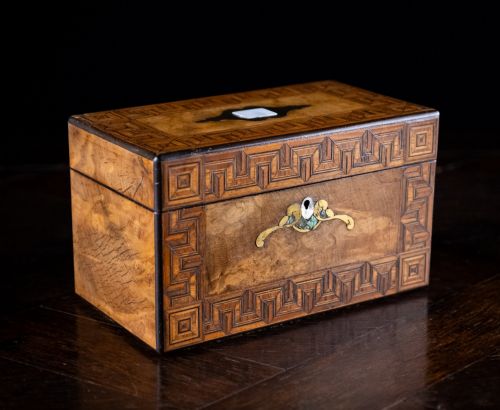
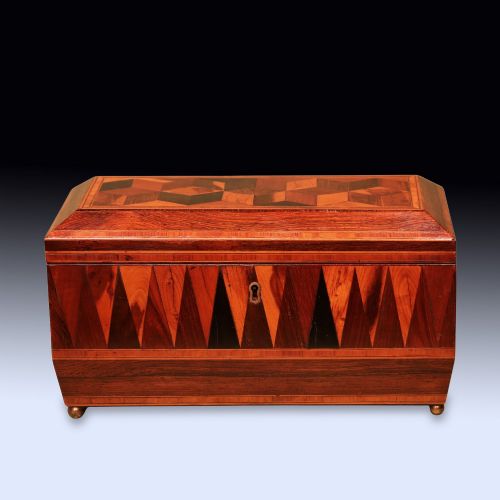
A parquetry tea box is a lidded container designed to store valuable tea leaves safely away from moisture and light during the Georgian, Regency, and Victorian eras. These decorative vessels range from simple rectangular boxes to refined sarcophagus forms featuring fitted interiors for multiple tea canisters.
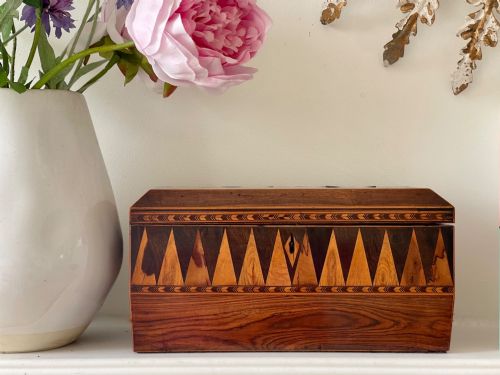
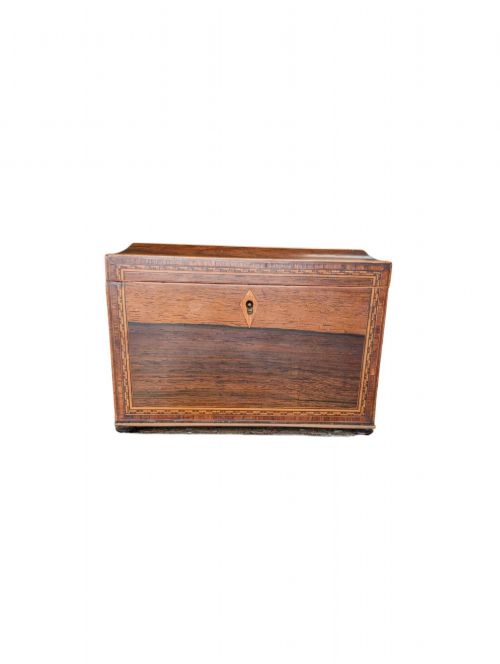
The versions most commonly met on this page date from the nineteenth century, including notable examples of Victorian Tunbridge Ware and Regency rosewood designs. Makers utilised intricate geometric wood mosaics to create striking surface patterns that catch the light.
Each parquetry tea box reflects the domestic habits of a period when tea was an expensive commodity requiring secure storage under lock and key. The survival of these pieces demonstrates the enduring appeal of small-scale decorative woodwork.
Materials and construction
Cabinetmakers constructed these boxes using dense timbers such as rosewood and walnut as a sturdy carcase before applying decorative veneers and surface details. Boxwood, holly, and mixed wood inlays provided the contrasting light and dark tones essential for crisp geometric patterns.
The characteristic mosaic designs of Tunbridge Ware involve assembling thousands of tiny coloured wood blocks into pictorial or geometric strips before slicing them thin for veneer. Brass escutcheons, handles, and occasional mother of pearl details completed the decorative scheme.
Henry Hollamby spent decades turning tiny sliver-thin sticks of British woodland timber into microscopic wooden carpets.
Judging quality and execution
Quality in a parquetry tea box rests on the precision of the wood inlay and the complexity of the geometric arrangement. Finer examples display microscopic attention to detail in the mosaic work, where individual wood species remain sharply defined without visible gaps.
The choice of primary timber and the preservation of original fitted interiors distinguish superior pieces from standard production. Well-balanced proportions and crisp execution elevate the status of a box from simple utility to high decorative art.
Henry Hollamby
The Parquetry Tea Box Glossary
- Parquetry
- A geometric mosaic of wood pieces used for ornamentation on floors or furniture surfaces. It relies on contrasting grain and tone to form patterns.
- Tunbridge Ware
- A distinct form of British woodwork originating from Tunbridge Wells, characterised by tiny mosaic tiles depicting landscapes or geometric designs. Artisans used numerous natural woods to achieve vibrant imagery without paint.
- Sarcophagus form
- A box shape featuring a domed lid and sloping sides reminiscent of a classical stone coffin popular during the Regency period. This architectural profile added visual weight and elegance to small containers.
- Escutcheon
- A flat plate surrounding a keyhole that protects the surrounding wood from wear. They are typically cast from brass on antique tea caddies.
Parquetry Tea Box: Frequently Asked Questions
What is a parquetry tea box?
A parquetry tea box is a lidded wooden container decorated with geometric wood veneers designed to store loose tea safely in the home. These decorative containers date primarily from the eighteenth and nineteenth centuries.
They often feature internal compartments and lids to separate different tea varieties before brewing became standardised.
How were these boxes used?
Owners used these boxes to store expensive black and green teas securely in the parlor or dining room. The mistress of the house typically held the key to regulate consumption.
The fitted interior compartments allowed multiple tea types to be kept dry and fragrant until serving time.
How do I identify a Regency box?
Regency examples frequently display architectural sarcophagus forms, bold rosewood grains, and restrained brass mounts. The proportions favor classical lines influenced by the Greek Revival style.
Contrasting stringing in satinwood or boxwood often outlines the edges of these sophisticated containers.
What is Tunbridge Ware?
Tunbridge Ware is a specialised form of woodwork featuring minute mosaic tiles assembled from various naturally coloured timbers. These tiles create complex geometric patterns or pictorial scenes across the box surface.
Master craftsmen in Kent produced these intricate veneers during the nineteenth century.