



Inlaid Tea Box
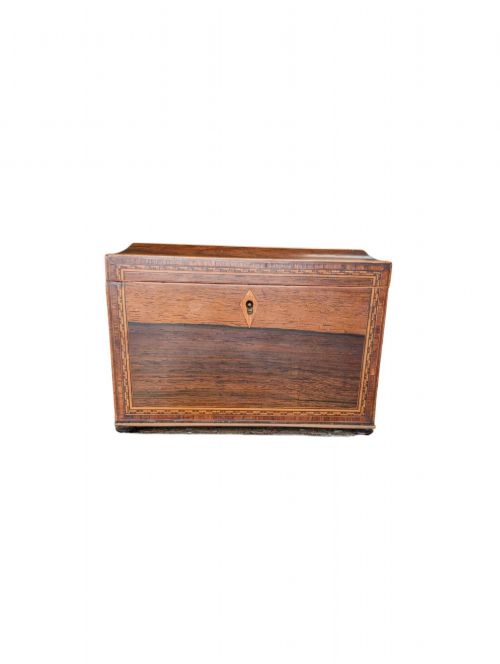
An inlaid tea box is a timber chest built to preserve dry leaf, featuring decorative veneers and contrasting woodwork.
Inlaid Tea Box
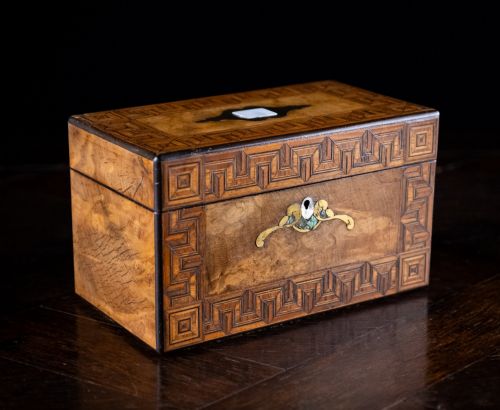
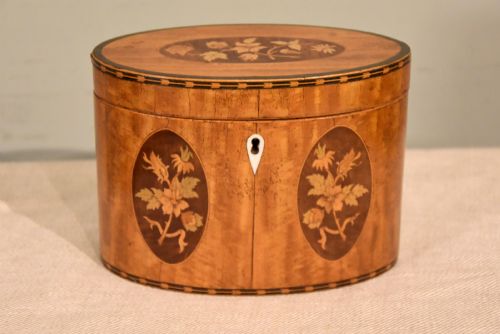
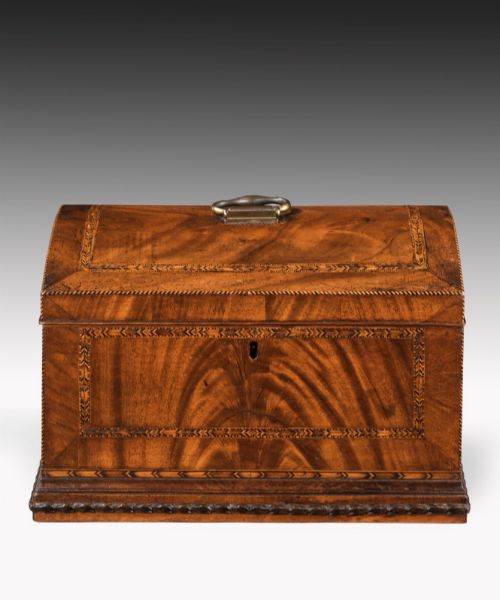
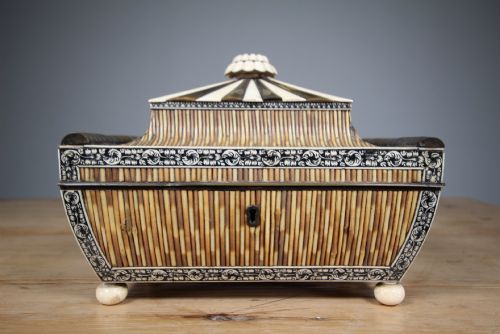
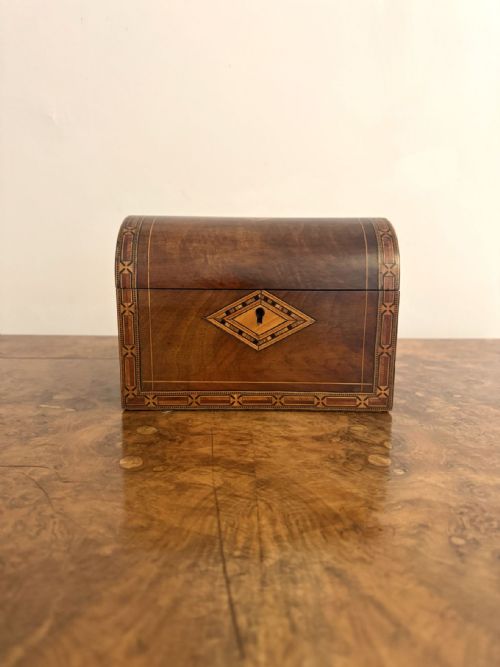
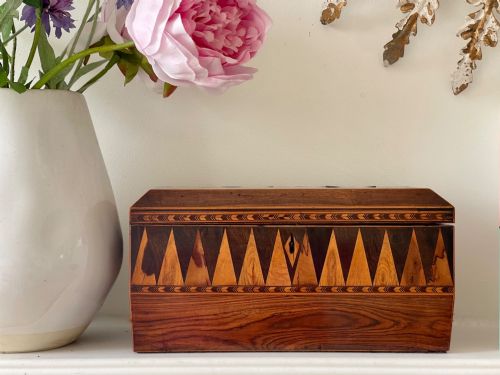
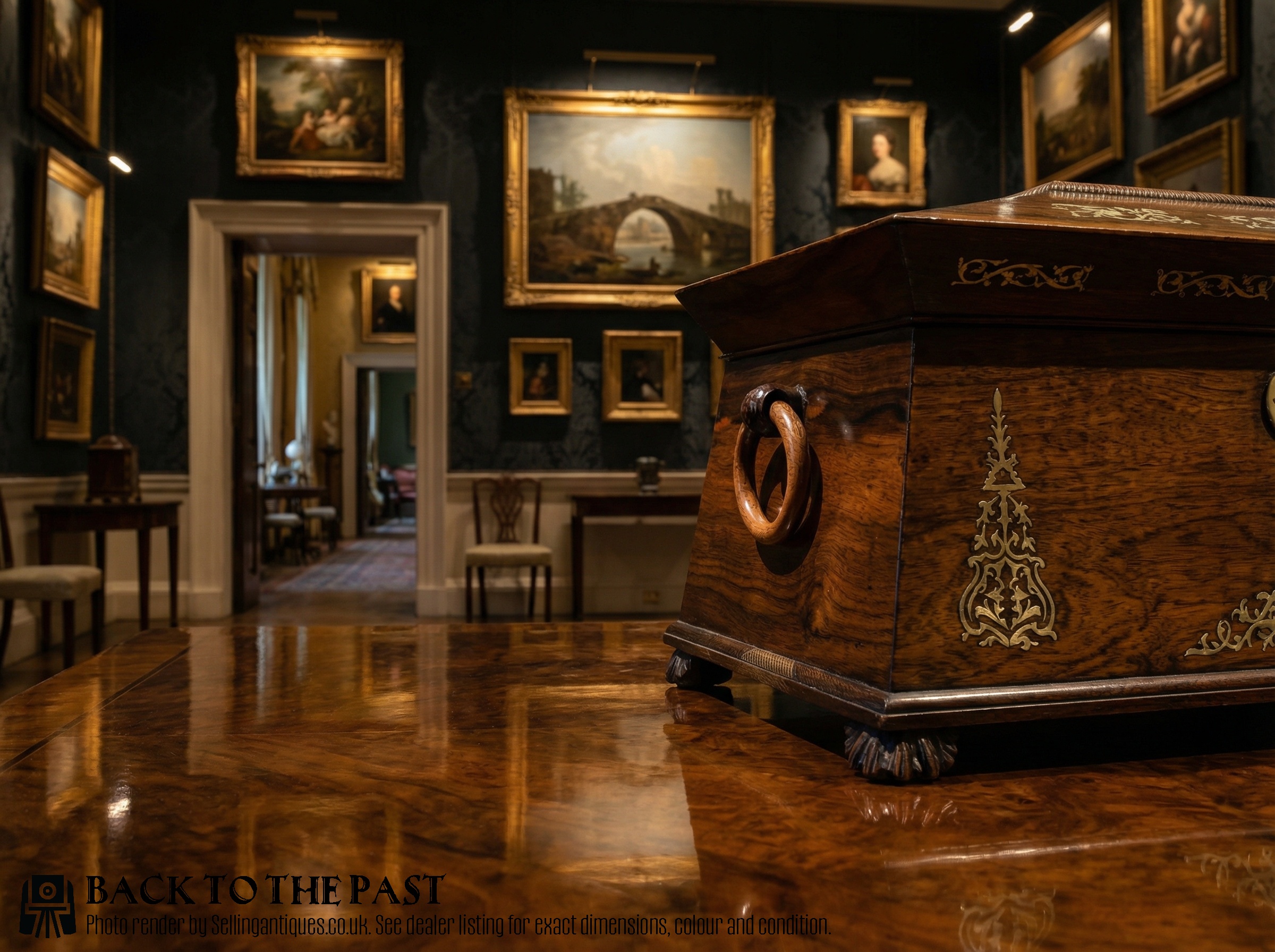
An inlaid tea box takes several architectural shapes, ranging from rectangular and domed lids to sarcophagus forms resting on bun feet or bracket bases.
The pieces appearing here span the Georgian, Regency, and Victorian eras, alongside specific periods such as George III and the late eighteenth century.
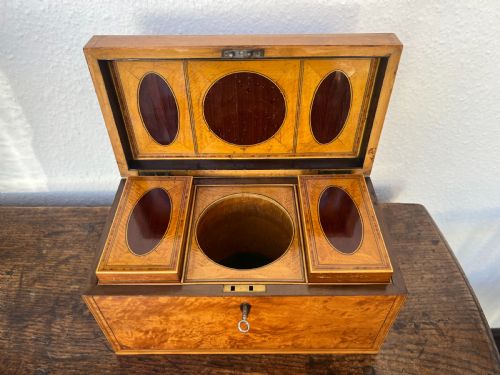
Makers shaped these containers from woods including mahogany, rosewood, satinwood, and walnut, frequently incorporating fitted interior compartments for leaf storage.
Materials and technique
Cabinetmakers constructed these caddies using solid timbers and decorative veneers, applying boxwood, ebony, and fruitwood stringing to accent the panels.
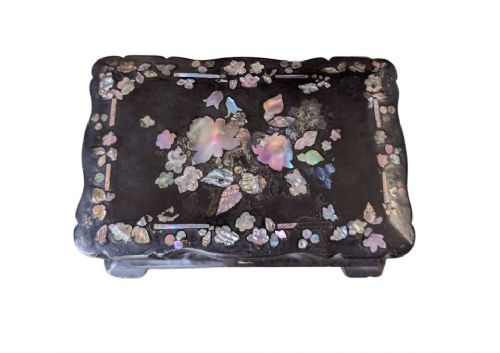
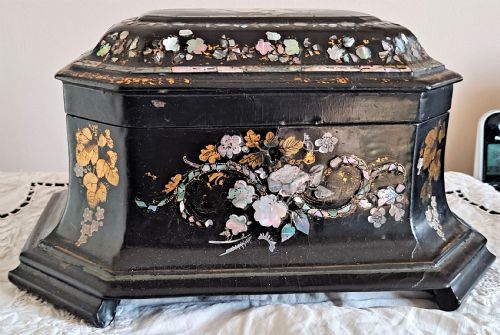
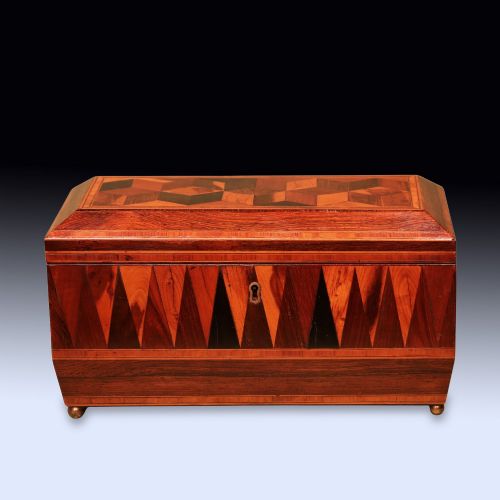
More elaborate decoration involved parquetry, marquetry, and Tunbridge Ware mosaic patterns, sometimes complemented by brass stringing and mother-of-pearl inlay.
Internal elements often feature lidded canisters, glass mixing bowls, and velvet or silk linings within partitioned compartments.
The listings show tea boxes executed in mahogany, satinwood, and rosewood, alongside tortoiseshell and papier-mâché examples.
Evaluating craftsmanship
Design complexity separates standard boxes from ambitious pieces, particularly where pictorial wood mosaics or intricate geometric parquetry cover every surface.
The precision of the timber joints and the crispness of the contrasting stringing indicate the skill applied by the original cabinetmaker.
Survival of original interior elements, working locks with keys, and uncompromised surface patination distinguish the best-preserved examples.
Henry Hollamby
The Inlaid Tea Box Glossary
- Tea caddy
- A small container designed to store loose tea leaves before brewing. These boxes often include internal lids or removable canisters.
- Sarcophagus form
- A box shape featuring a sloping, pedestal-like lid rising to a flat top, popular during the Regency period. This architectural profile added significant weight and presence to the table.
- Stringing
- A thin line of contrasting wood inlaid into the surface of a panel to create a border. Cabinetmakers used boxwood or ebony for this linear detail.
- Tunbridge Ware
- A type of woodwork featuring mosaic patterns assembled from thousands of tiny tinted wood prisms. This technique created detailed pictorial scenes or geometric borders.
- Parquetry
- Geometric mosaic woodwork formed by arranging small veneer blocks into repeating patterns. The resulting surface creates a tiled visual effect across the lid and sides.
- Teapoy
- A larger stand or tall box designed to hold tea canisters, often supported by a central pillar and claw feet. These pieces served a central function in the formal tea service.
Inlaid Tea Box: Frequently Asked Questions
What is an inlaid tea box?
An inlaid tea box is a lidded wooden container built to store expensive dried tea leaves securely under lock and key.
These pieces use contrasting wood veneers, stringing, and geometric parquetry to ornament the exterior surfaces.
How were tea caddies used?
Household staff or the host used these boxes to measure out precise quantities of black or green tea for each social gathering.
Locked lids prevented servants from accessing the valuable leaves, as tea remained an expensive commodity throughout the Georgian and Regency periods.
How do I date an antique tea box?
Dating relies on identifying the prevailing timber choices, cabinet shapes, and inlay techniques associated with specific design eras.
Mahogany and satinwood with simple stringing point to eighteenth-century Georgian origins, while rosewood sarcophagus forms and Tunbridge mosaics indicate nineteenth-century production.
Where should I place a tea box at home?
These decorative boxes sit well on side tables, chest surfaces, or dedicated display stands in a sitting room.
Keeping them out of direct sunlight protects delicate rosewood veneers and prevents the dry wood from cracking over time.