


Burr Walnut Caddy
A burr walnut caddy brings rich, swirling grain patterns and deep amber tones to any surface, holding the legacy of high-status domestic storage.
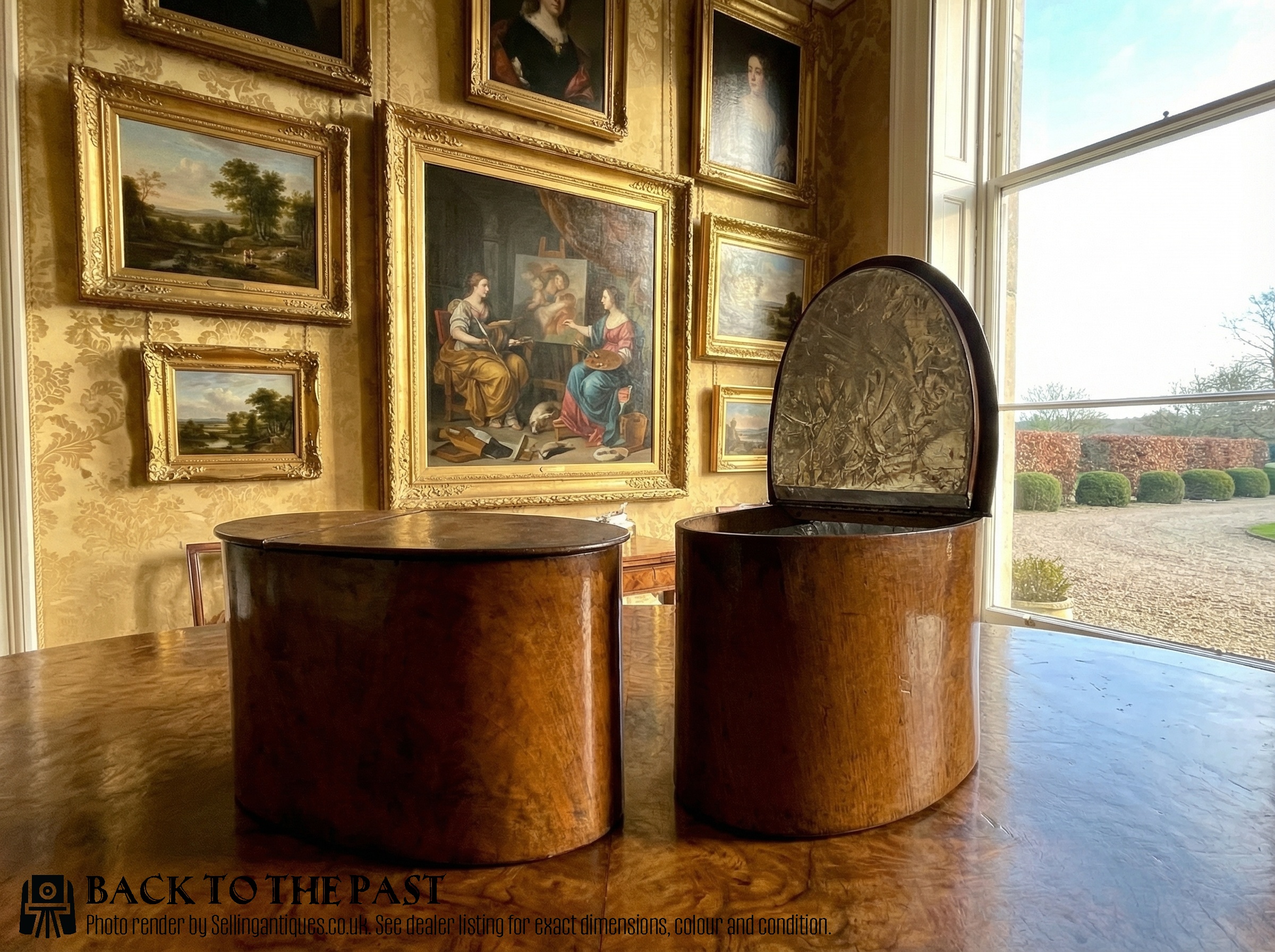
Burr Walnut Caddy
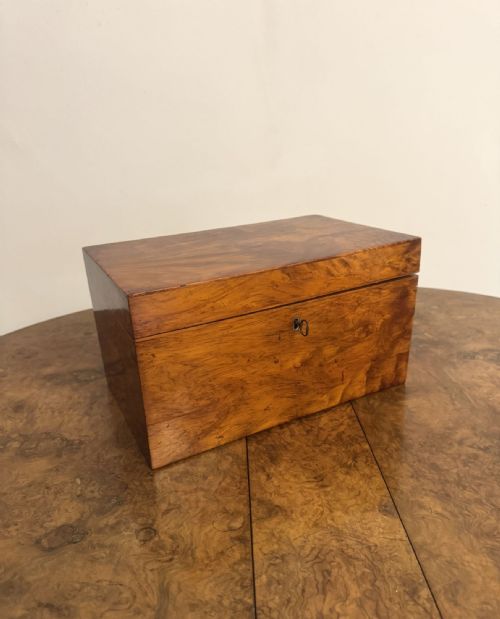
A burr walnut caddy most often appears as a tea storage chest from the Georgian, Regency, and Victorian periods, structured in rectangular, sarcophagus, or dome-topped silhouettes. These pieces originate from domestic workshops operating across the eighteenth and nineteenth centuries, spanning Georgian simplicity through to elaborate Victorian tastes.
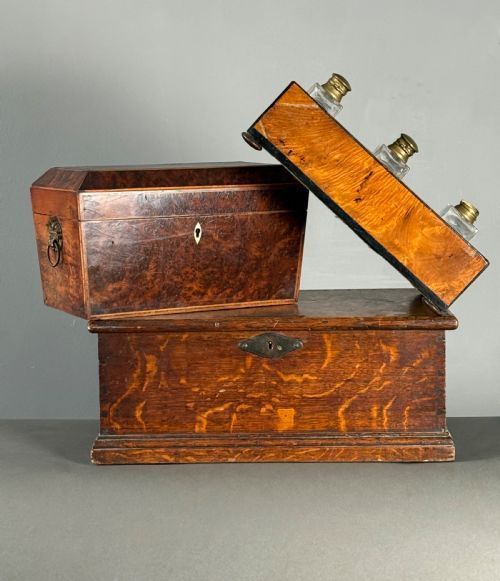
Beyond standard tea vessels, the broader category includes twin-lid compartments, tea poys on stands, and stationery boxes sharing the same distinctive figured wood. Buyers encounter examples featuring fitted interiors, brass mounts, and occasionally glass or porcelain details that reflect their original purpose as prized household containers.
Assessing quality
Quality rests primarily on the density and movement of the burr walnut veneer, where tightly packed, highly figured grain patterns command greater visual presence than plain or flat sections of timber. The skill of the matching along the seams and symmetry of the pattern across the lid reveal the maker's precision.
The sophistication of the internal fittings, such as intact mixing bowls, matching tea canisters, and original brass carrying handles or escutcheons, elevates an example. Structural integrity in the domed or sarcophagus forms and the survival of the original locking mechanism also define the upper tier.
Some Victorian caddies include tiny glass mixing bowls intended for diluting strong brewed tea with hot water before pouring.
Mappin and Webb·Lenzkirch
The Burr Walnut Caddy Glossary
- Burr walnut
- A figured wood grain obtained from tree growths or burls, producing intricate, swirling patterns highly prized in cabinet making. This veneer forms the primary decorative surface on eighteenth and nineteenth-century boxes.
- Tea caddy
- A small container designed originally for storing loose tea leaves when tea was an expensive commodity. These boxes often feature internal lidded compartments to separate different varieties.
- Sarcophagus
- A box shape characterised by a rounded or sloping domed lid and a flared base resembling a stone coffin. This architectural style gained popularity during the Regency and Victorian eras.
- Tea poy
- A tea caddy mounted upon a central pillar and pedestal base or legs, standing as a small occasional piece of furniture. They often incorporate internal canisters for domestic service.
- Escutcheon
- A protective metal plate surrounding a keyhole, frequently cast in brass on these boxes. It serves both a functional purpose and a decorative role on the front panel.
Burr Walnut Caddy: Frequently Asked Questions
What is a burr walnut caddy?
A burr walnut caddy is a lidded wooden box covered in decorative walnut veneer, originally built to store dry tea leaves securely under lock and key. These pieces date principally from the Georgian and Victorian eras.
Cabinet makers selected burr timber specifically for its turbulent, knotty grain patterns, turning utilitarian storage containers into decorative objects for the parlour or drawing room.
How were tea caddies used originally?
In high-status households, tea was an expensive luxury kept under lock by the mistress of the house to prevent theft by servants. The caddy sat in the formal reception rooms ready for the daily tea service.
Many examples feature internal partitions or separate canisters so that green and black teas could be stored side by side and blended to taste before brewing.
How do I date a burr walnut caddy?
Dating relies on architectural proportions, secondary woods, and hardware styles such as brass feet, escutcheons, and handles. Georgian examples often display cleaner geometric lines, whereas Victorian pieces favour elaborate sarcophagus or dome-top shapes.
Examining the interior construction methods and any surviving lining materials also provides clear clues to the decade of manufacture.
How do I care for a burr walnut caddy?
Keep the wood away from direct sunlight, central heating radiators, and damp environments to prevent the delicate veneer from lifting or splitting. Maintaining a stable indoor climate protects both the timber and the polish.
Occasional dusting with a soft, dry cloth is sufficient, avoiding modern silicone sprays or heavy liquid polishes that can penetrate old wood finishes.