

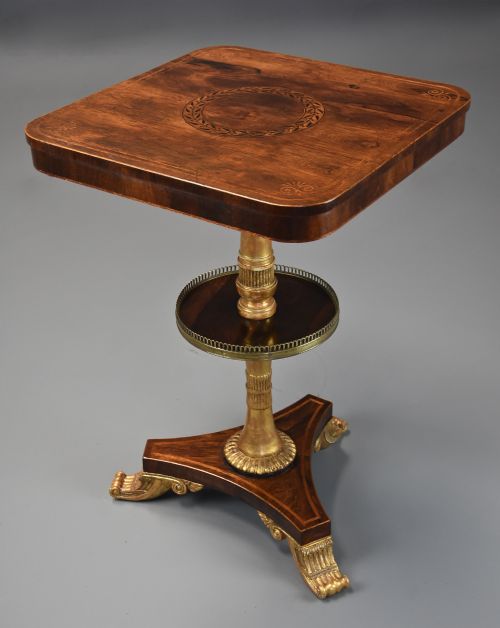
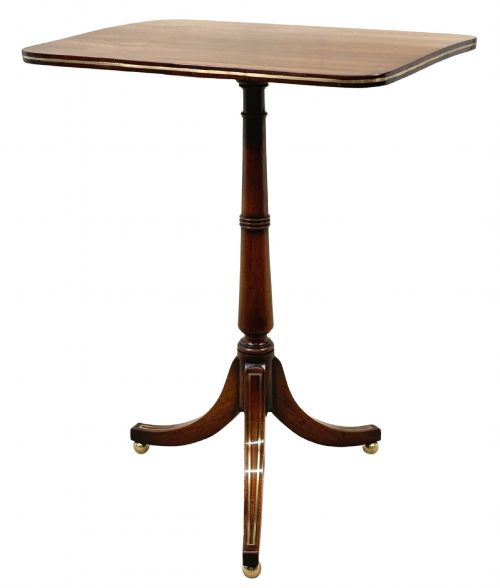

Inlaid Rosewood Pedestal Table
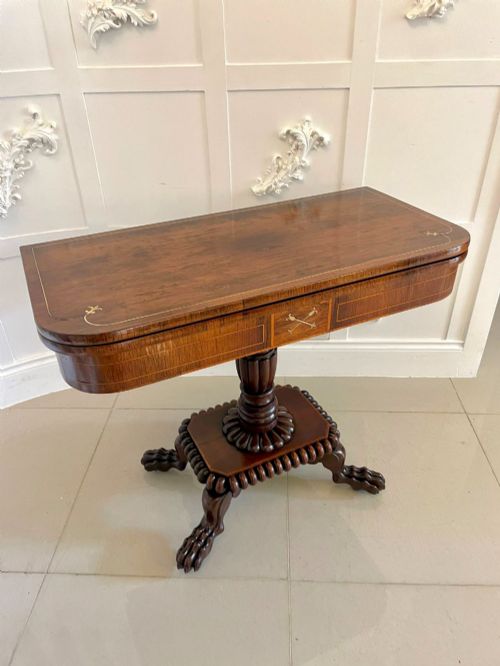
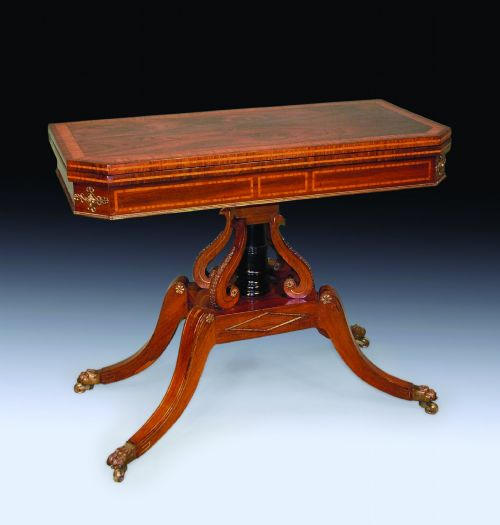
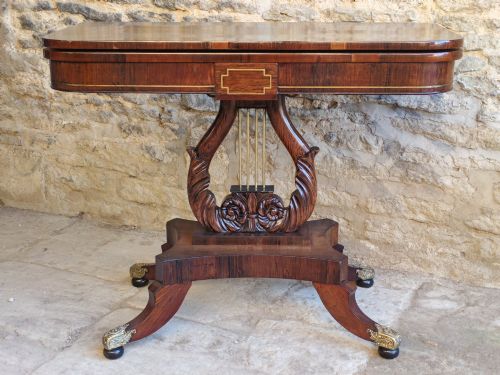
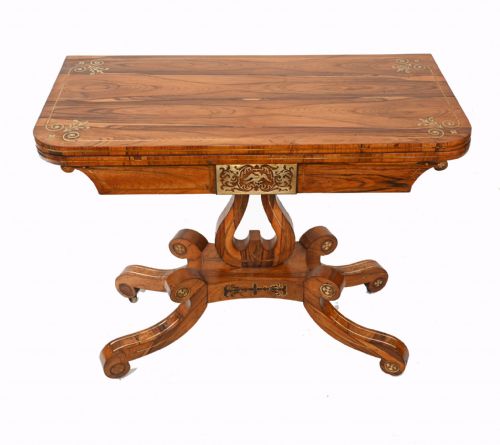
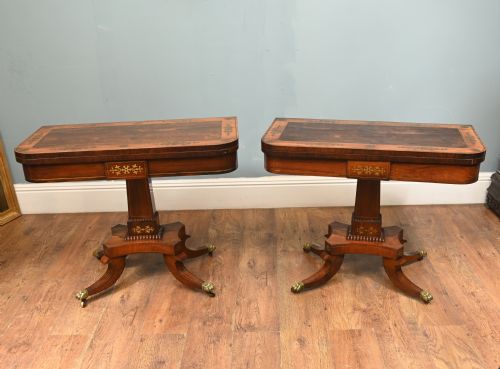
An inlaid rosewood pedestal table brings rich timber figure and sharp contrasting stringing into a room, most often appearing as a card table or occasional piece from the Regency era.
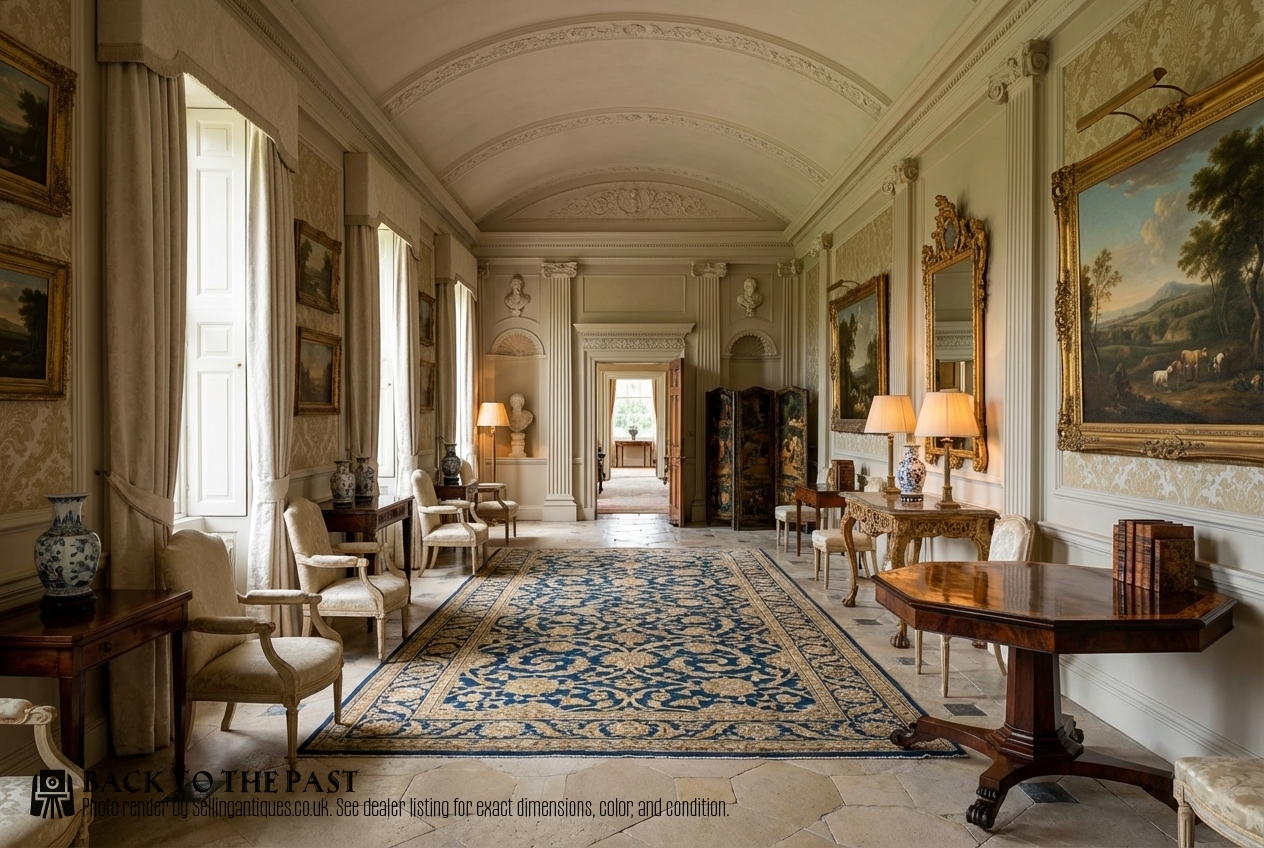
Inlaid Rosewood Pedestal Table
When you search for an inlaid rosewood pedestal table, you are looking at formal furniture designed for display and polite entertainment in wealthy homes. The surviving pieces date mainly from the Georgian, Regency, and Victorian periods, reflecting shifting tastes in domestic reception rooms.
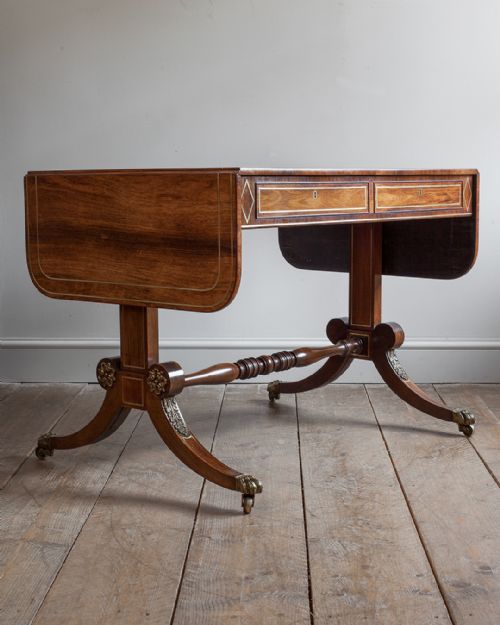
The most common form you will meet on this page is the fold-over card or games table, supported on a central pillar with a platform or sabre legs. Alongside these, the listings show occasional tables, centre tables, and occasional lamp tables utilising similar pedestal structures.
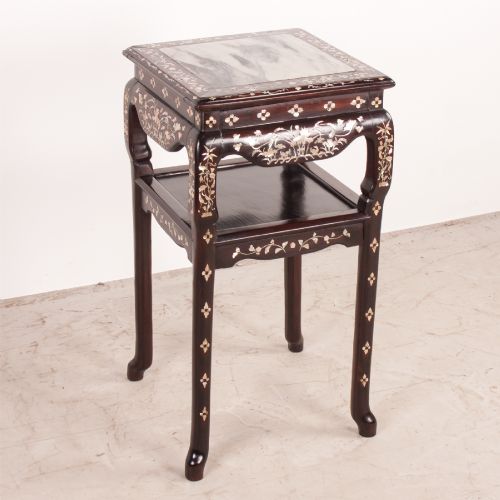
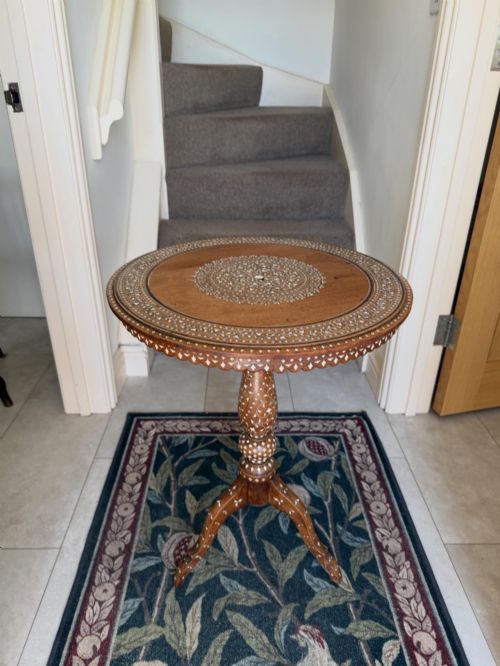
Origins stretch beyond standard English workshops to include Anglo-Indian and Chinese export variants, widening the range of decorative motifs. These regional pieces introduce mother-of-pearl and contrasting hardwoods to the familiar rosewood ground.
Materials and construction
Makers built these tables using dense, heavily figured rosewood veneers laid over secondary structural timbers like mahogany or pine. This dark, richly grained ground provided a strong contrast for lighter decorative elements.
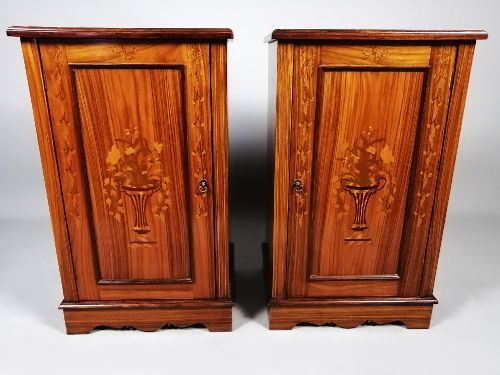
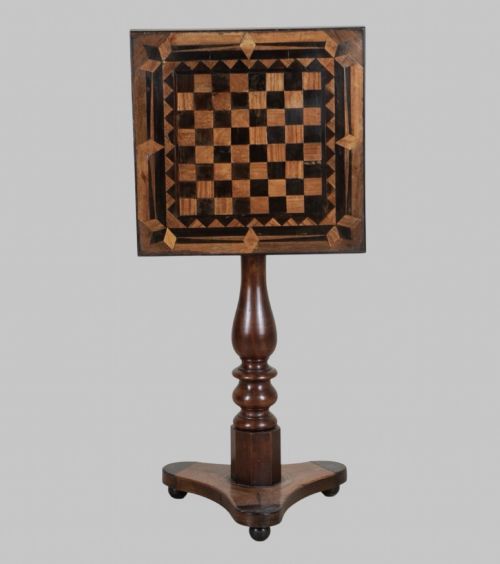
Inlay work relied on contrasting timbers such as satinwood and boxwood, alongside intricate brass stringing or brass inlays cut into geometric and floral patterns. Some examples incorporate mother-of-pearl or parquetry geometric arrangements to enrich the surface.
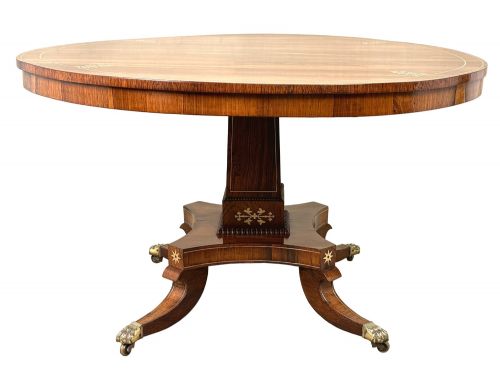
Support structures combined turned or carved pedestals with robust wooden bases, frequently featuring brass castors concealed beneath scroll feet. Card and tea tables utilised pivoting or folding mechanisms supported firmly on the central column.
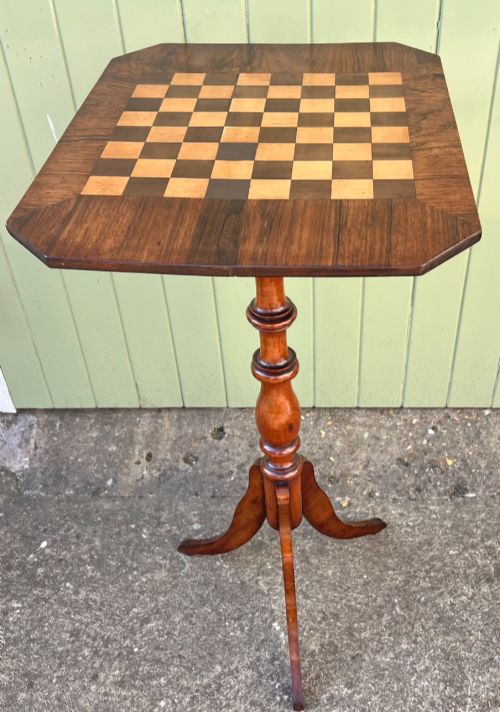
One occasional table incorporates a chess board top, ready for an impromptu match of wits between tea courses.
Judging the quality
Quality rests upon the precision of the inlay and the depth of figure in the rosewood veneer. Crisp, tight brass stringing and finely cut satinwood banding indicate skilled cabinet work rather than hurried production.
Structural stability in the pedestal and base separates better examples from standard domestic pieces. A well-balanced pillar supports the weight of a heavy top without sagging or rocking on its foot.
George Bullock·Hoshiarpur
The Inlaid Rosewood Pedestal Table Glossary
- Rosewood
- A heavy, durable timber with a dark, richly variegated grain. It takes a high polish and forms the primary dark ground for inlaid decoration.
- Pedestal table
- A standalone table supported by a single central column rising from a stable base. This construction leaves floor space clear around the perimeter.
- Brass stringing
- Thin filaments of brass inlaid into narrow channels cut into the wood surface. It creates sharp linear borders around table tops and friezes.
- Marquetry
- Elaborate pictorial or decorative patterning formed by fitting together small pieces of tinted woods and veneers. It differs from simpler line inlay by creating solid areas of design.
- Card table
- A folding table with a hinged top that opens to reveal a baize-lined surface for gaming. These tables frequently feature swivel actions to support the open leaf.
Inlaid Rosewood Pedestal Table: Frequently Asked Questions
What were inlaid rosewood pedestal tables used for?
These tables served primarily in drawing rooms and parlours for polite social activities like card games, tea service, or holding lamps and books. Fold-over versions allowed the furniture to double as a console when not in use.
In larger reception rooms, centre tables stood independently to display decorative objects or specimen marbles. Their presence marked the formal spaces of the home where guests were received.
How do I spot a Regency period table?
Regency pieces typically display classical architectural restraint combined with sharp contrasting brass inlay and bold rosewood grain. Look for central columns supported by carved sabre legs or platform bases with brass paw feet.
Proportions remain crisp and balanced, drawing inspiration from classical antiquity. The use of brass stringing and satinwood banding is particularly characteristic of this era's cabinet work.
How do I live with a rosewood table?
Rosewood appreciates stable room temperatures and protection from direct sunlight, which can fade the deep dark tones of the timber. Keeping the surface lightly waxed maintains the natural sheen of the polish without building heavy residues.
Position the table away from direct heat sources to prevent the veneers from drying and lifting. Use felt pads beneath heavy objects placed on the top to protect the polished wood.
What is the difference between marquetry and parquetry?
Marquetry uses fitted pieces of various coloured woods to create pictorial or flowing floral designs across the surface. It often incorporates satinwood and fruitwoods against the dark rosewood background.
Parquetry builds geometric patterns, such as cubes or chequers, using repeating blocks of timber. Both techniques decorated table tops to showcase the cabinet maker's precision.