


Antique Octagonal Tilt Table
An antique octagonal tilt table is a versatile surface that tips upright for storage, and these examples span Georgian to Victorian periods.
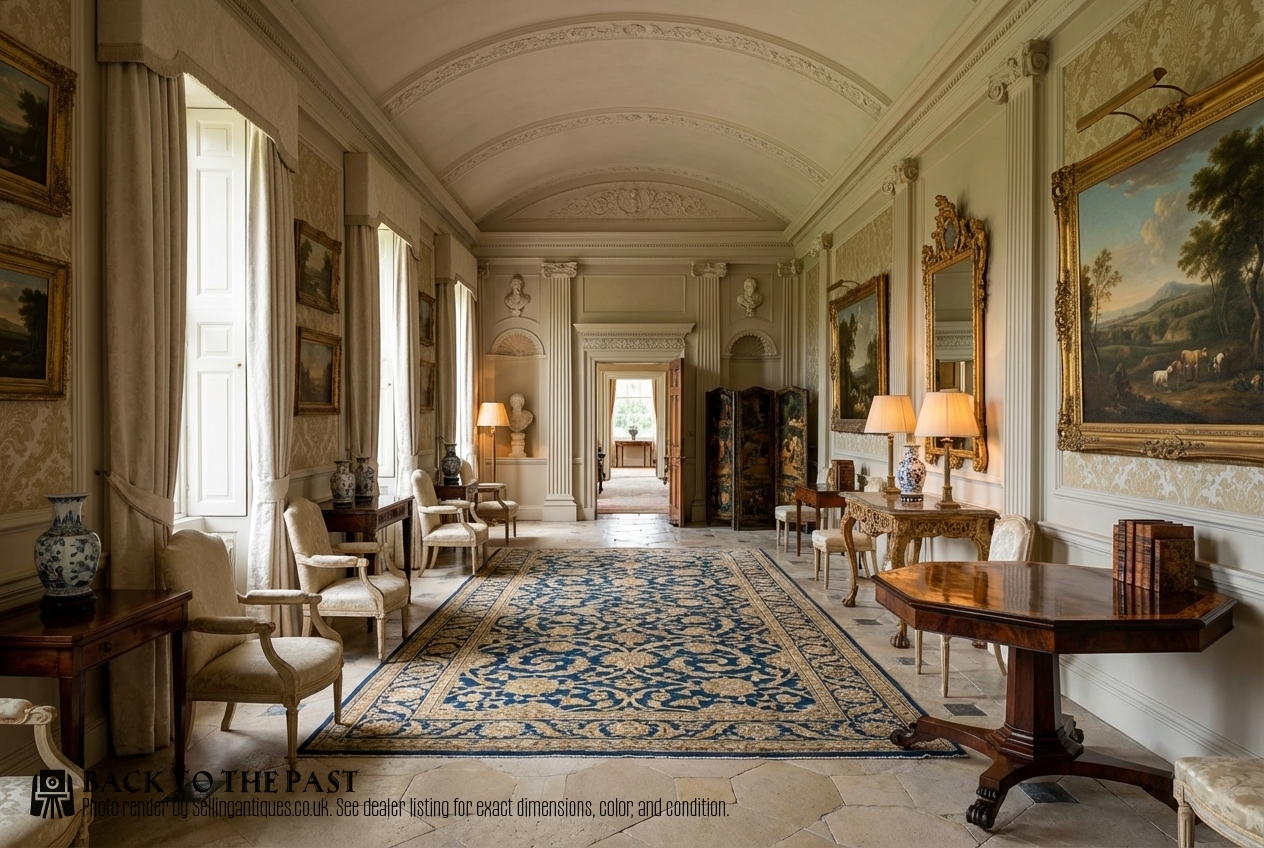
Antique Octagonal Tilt Table
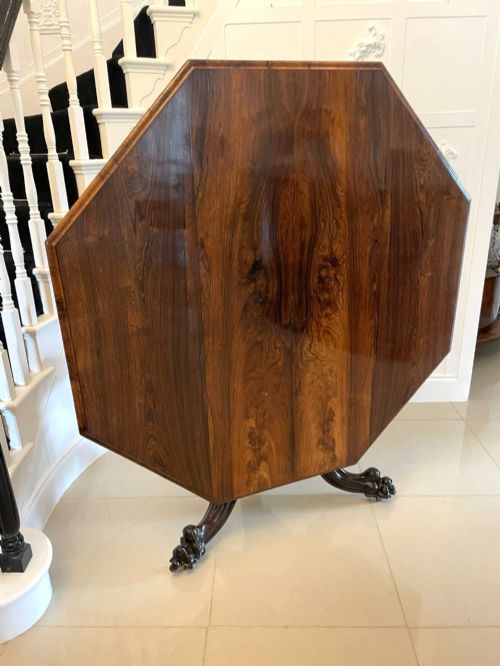
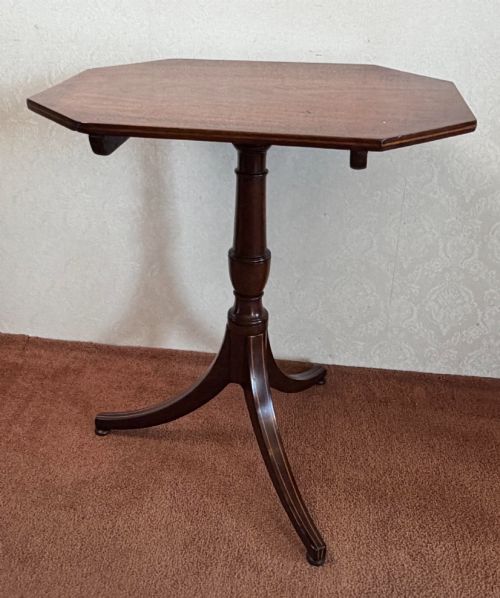
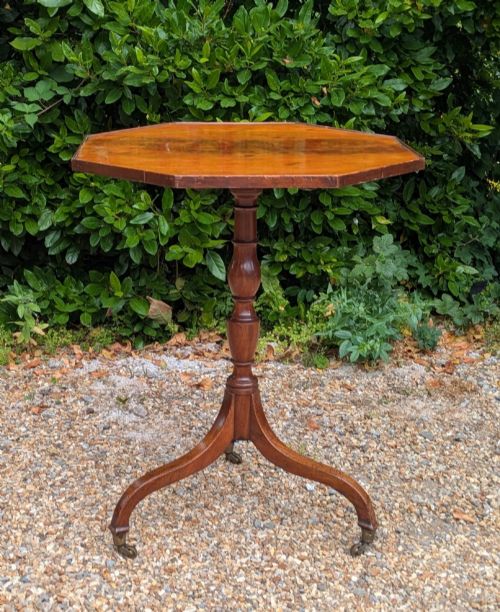
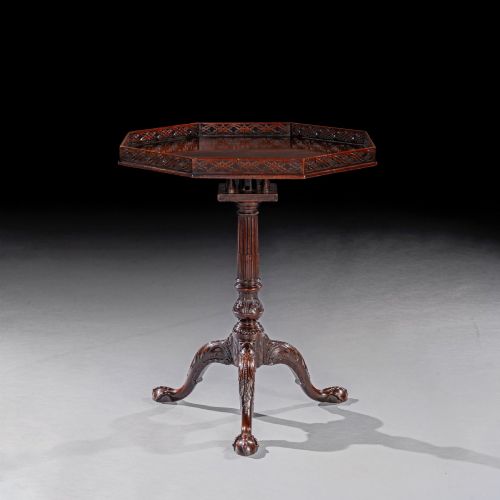
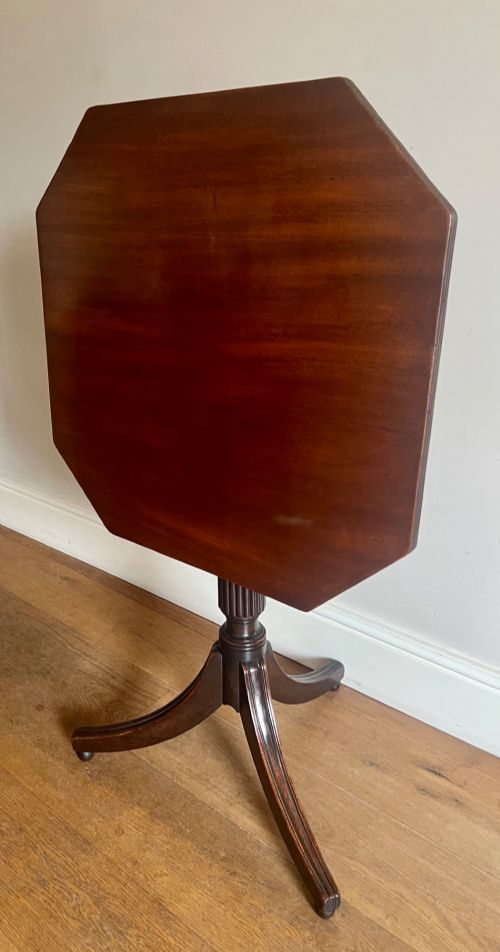
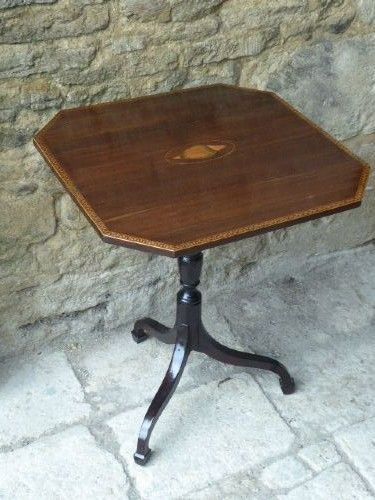
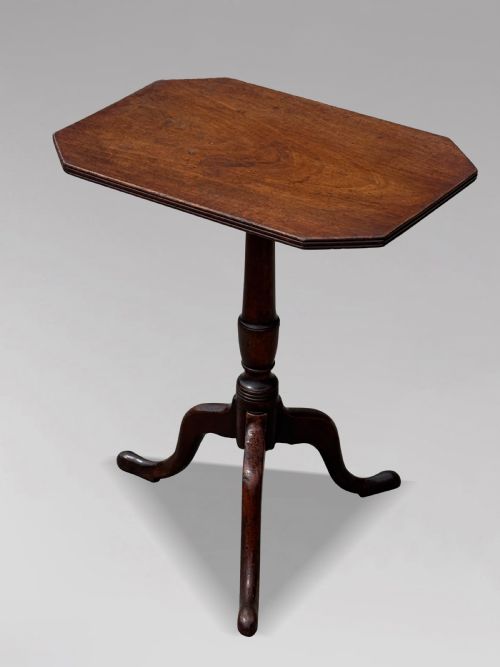
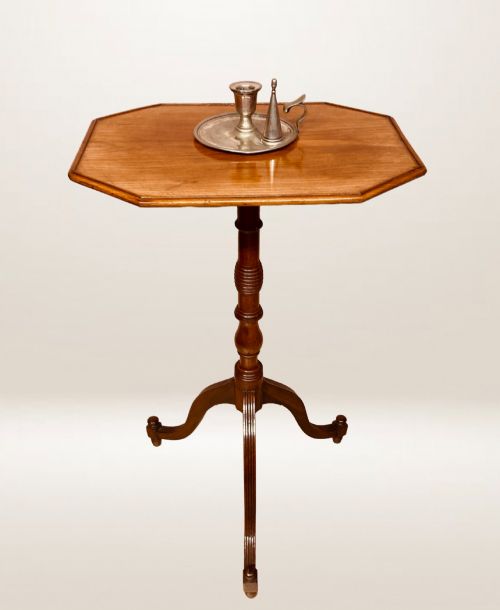
An antique octagonal tilt table combines a polygonal top with a mechanism that pivots the surface flat or vertical when not in use. These pieces appear across Georgian, Regency, and Victorian eras, often taking the form of occasional tables, wine tables, or side tables supported by a central pillar and tripod legs.
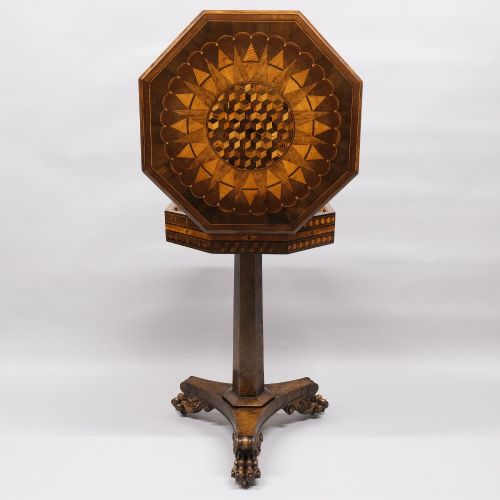
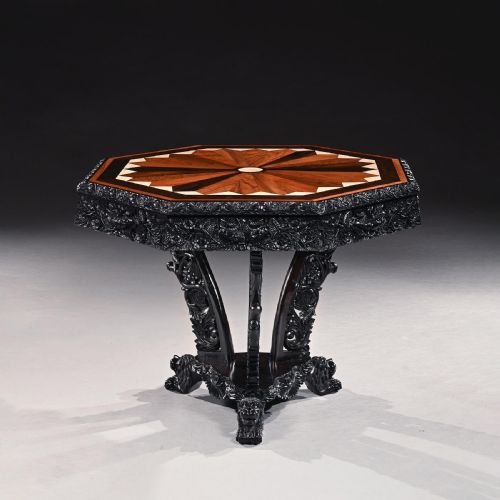
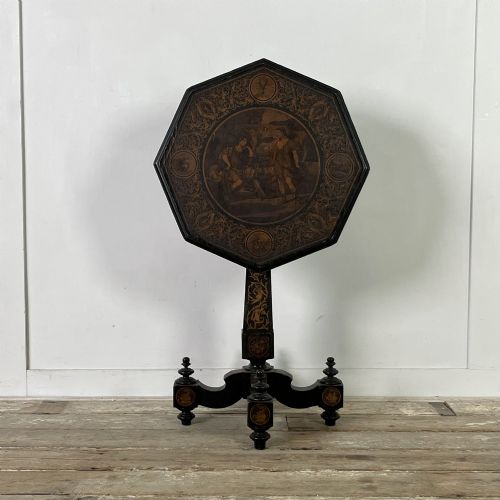
The materials span native timbers like mahogany, walnut, and oak alongside exotic woods including rosewood, satinwood, and ebony. Inlaid decoration appears in boxwood, brass, and specimen woods, particularly in Sorrento and Killarney work.
Construction and materials
Cabinetmakers constructed these tables using solid hardwoods such as mahogany and walnut, frequently applying veneers of rosewood, satinwood, or burr-elm to the top surfaces. Central pillars rested on tripod bases, utilising turning and carving techniques for the columns and legs.
Inlay work involved precise insertion of contrasting materials like boxwood, fruitwood, and brass into the timber ground. Tilt mechanisms relied on clever pivot blocks and brass catches that allowed the top to swing upright safely.
The selection includes Sorrento Ware, Killarney work, and Ceylonese furniture alongside British pieces.
Craftsmanship and design
Quality rests in the crispness of the timber carving, the choice of figured veneers, and the precision of any inlay work. Finer examples display subtle grain matching on the octagonal top and sturdy engineering in the tilt mechanism.
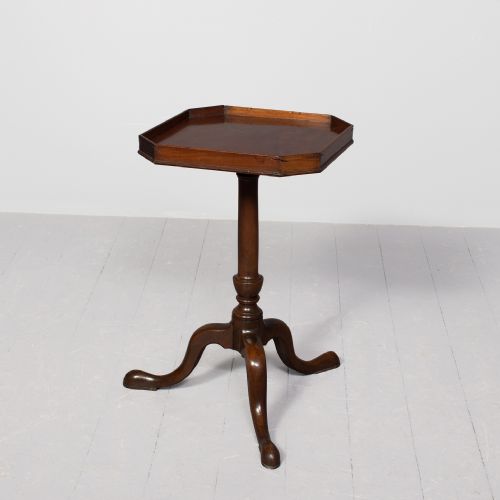
The balance of the tripod base and the proportion of the central pillar dictate the overall elegance. More ambitious pieces incorporate specialised marquetry, specimen woods, or pierced galleries around the edge.
Gillows·Ralph Turnbull·James Winter·Almerico Gargiulo
The Antique Octagonal Tilt Table Glossary
- Tilt top
- A table mechanism that allows the surface to pivot from horizontal to vertical. This design enabled the furniture to stand flat against a wall when not in use.
- Tripod base
- A support structure featuring three legs radiating from a central pillar. This configuration provides stability on uneven floors.
- Marquetry
- Decorative veneer work arranged in pictorial or geometric patterns. Artisans used various coloured woods to create detailed designs on the tabletop.
- Birdcage
- A rotating wooden frame situated beneath the tabletop. This component allows the surface to both tilt and revolve.
Antique Octagonal Tilt Table: Frequently Asked Questions
What is an antique octagonal tilt table?
An antique octagonal tilt table is a small table with an eight-sided top that pivots vertically on its base. This function allowed people to save floor space in domestic rooms when the furniture was idle.
Most examples date from the eighteenth and nineteenth centuries, utilising timbers like mahogany and rosewood. They served various duties as occasional, wine, or lamp tables.
How did people use these tables historically?
These tables functioned as movable surfaces for dining, reading, or drinking wine in parlours and drawing rooms. Servants tilted the tops upward to clear space or move the tables against the walls.
In some instances, specialised versions served as work tables for sewing or writing. Their light construction made them easy to reposition near hearths or windows.
How do I distinguish Georgian from Victorian examples?
Georgian tables tend to show restrained classical proportions with solid mahogany construction and minimal inlay. The carving on the tripod legs is often sharper and more integrated into the structural design.
Victorian pieces frequently employ heavier woods like burr walnut or rosewood, sometimes featuring elaborate marquetry, specimen wood tops, or brass stringing. The pedestals on nineteenth-century versions can be bolder and more heavily turned.
How do I care for a tilt mechanism?
Keep the pivot points clean and avoid forcing the catch if it sticks. Wood movement from humidity changes can occasionally affect how the mechanism latches.
Support the tabletop with both hands when operating the tilt function to prevent strain on the central block. Apply traditional wax polish to the wooden components rather than modern silicone sprays.