


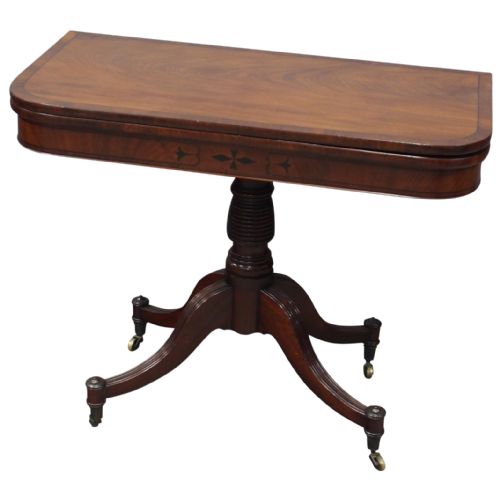


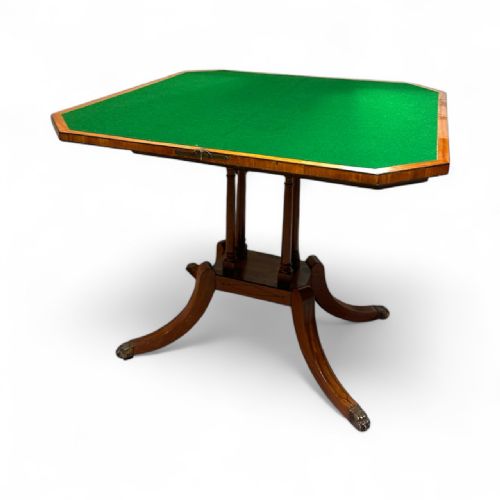
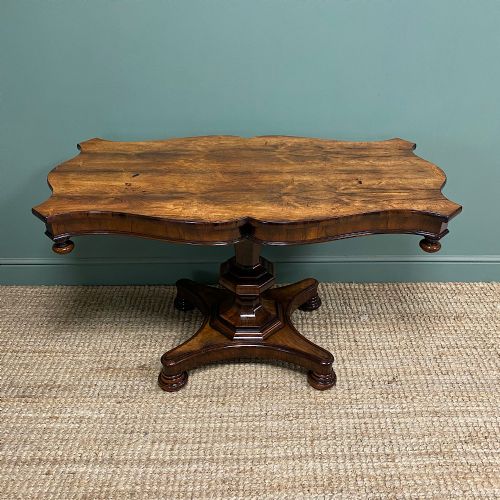

Rosewood Quadruped Pedestal Table
A rosewood quadruped pedestal table brings rich timber grain and architectural balance to a room, driven by a robust four-footed support.
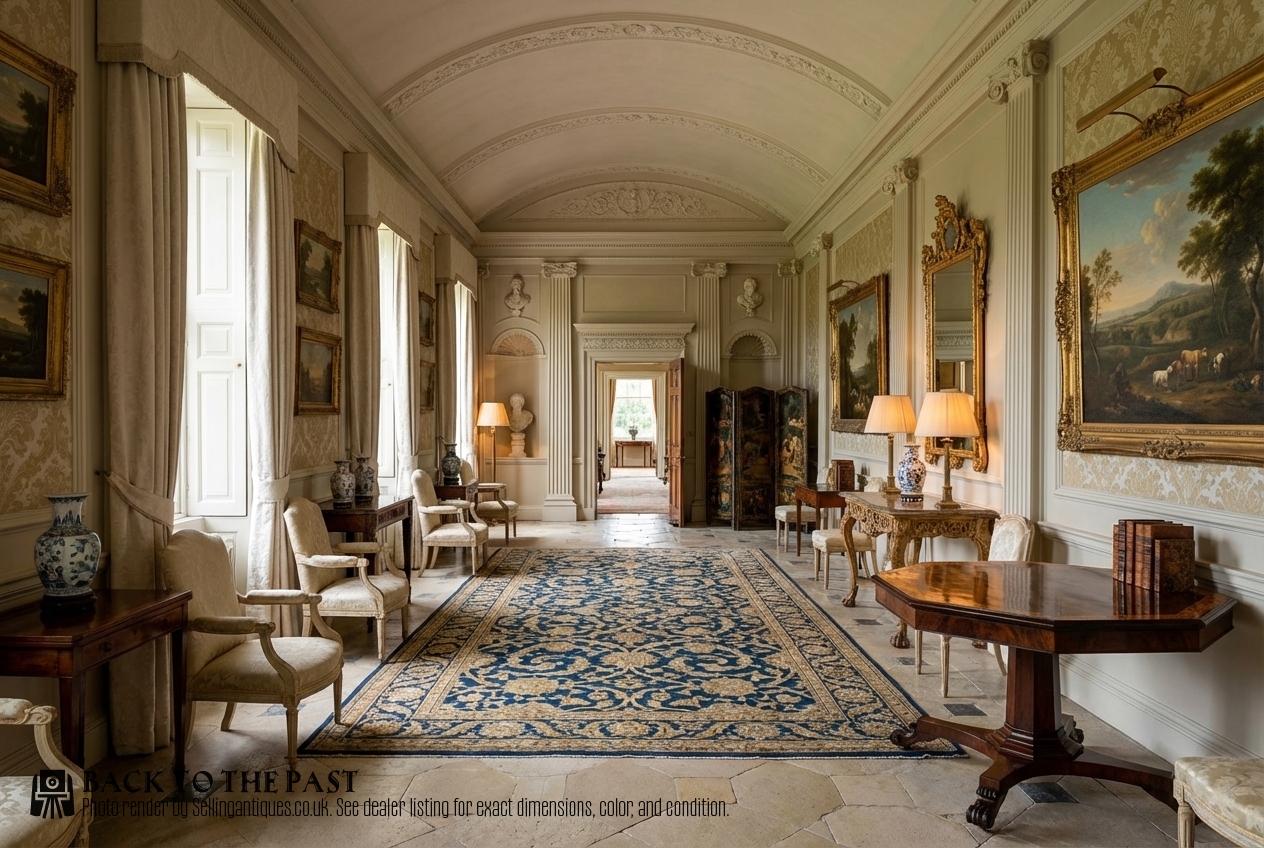
Rosewood Quadruped Pedestal Table
A rosewood quadruped pedestal table relies on a central pillar anchored by four distinct feet, creating a stable and statuesque form. Buyers search for this phrase to find centre tables, card tables, and loo tables that display deep, figured timber surfaces.
The versions most commonly met on this page date from the Regency, George IV, and William IV periods, alongside Victorian interpretations. These forms often feature fold-over tops for games or circular tops designed for the middle of a room.
Cabinet makers utilised dense tropical hardwoods, frequently pairing rosewood with contrasting timbers like satinwood and mahogany. The four-footed base provides both structural support and visual weight beneath the central pillar.
How they were made
Carpenters constructed these tables using solid timber carcases and applied veneers of rosewood, goncalo Alves, or satinwood to showcase dramatic grain patterns. Brass mounts, stringing, and occasional gilding were integrated into the polished surfaces to accentuate the geometric lines.
Support structures combined turned or carved central pedestals with four radiating feet, frequently fitted with brass castors to allow movement. Fold-over mechanisms on card tables utilised wooden hinges and pivoting frames to support the opened leaf.
Rosewood Quadruped Pedestal Table Retail Price Guide 2026
Typical asking prices for rosewood quadruped pedestal table among the pieces listed under this phrase on Sellingantiques today, from the lower quarter to the upper quarter. They describe what is for sale here now, not the wider market.
Card tables often conceal secret compartments beneath their folding tops, originally intended for hiding stray counters and losing streaks from polite society.
What varies in quality
The ambition of the timber selection separates standard items from superior examples, particularly where book-matched rosewood veneers or contrasting crossbanding are employed. Richer figuring and meticulous alignment of the grain across fold-over leaves demonstrate greater workshop skill.
The carving and proportion of the quadruped base dictate the architectural success of the piece, as heavier, clumsy feet detract from the elegance of the central pillar. High-grade brass mounts and finely cast castors indicate a more costly commission.
The Rosewood Quadruped Pedestal Table Glossary
- Quadruped
- Having four feet. In table construction, this refers to a pedestal base supported by four radiating legs rather than a tripod.
- Centre table
- A freestanding table designed to be viewed from all sides. These pieces typically sit in the middle of a room rather than against a wall.
- Card table
- A folding table designed for playing games. They feature a hinged top that opens to reveal a baize-lined playing surface.
- Crossbanding
- A border of veneer laid perpendicular to the grain of the main surface. This technique frames the top and adds visual definition.
- Goncalo Alves
- A dense exotic hardwood with striking dark brown and pale contrasting stripes. Cabinet makers used it alongside rosewood during the nineteenth century.
Rosewood Quadruped Pedestal Table: Frequently Asked Questions
What is a rosewood quadruped pedestal table?
A rosewood quadruped pedestal table is a nineteenth-century freestanding table supported by a central pillar and four distinct feet. These pieces showcase rich timber veneers and were built as centre tables or card tables.
The quadruped base provides a wide, stable footprint while keeping the floor space beneath the table largely open. This design became prominent during the Regency and William IV eras.
How do I use a centre table?
A centre table stands in the middle of a room rather than against a wall, serving as a visual anchor. They provide a surface for lamps, books, or decorative objects.
Because these tables are finished on all sides, they allow circulation around them and work well in larger reception rooms or entrance halls.
How do I care for rosewood furniture?
Rosewood surfaces benefit from regular dusting with a soft, dry cloth and protection from direct sunlight. Excessive heat and moisture can dry out the timber or damage the traditional polish.
Applying a specialist wax occasionally helps nourish the wood and maintain its natural lustre without building up heavy residues.
How can I tell the period of these tables?
The period is indicated by the combination of timber choices, carving styles, and structural proportions. Regency and George IV pieces often incorporate brass inlay and classical pedestal designs.
Victorian and later nineteenth-century examples tend towards heavier proportions and simpler turned pedestals without the precise brass mountings of earlier decades.