

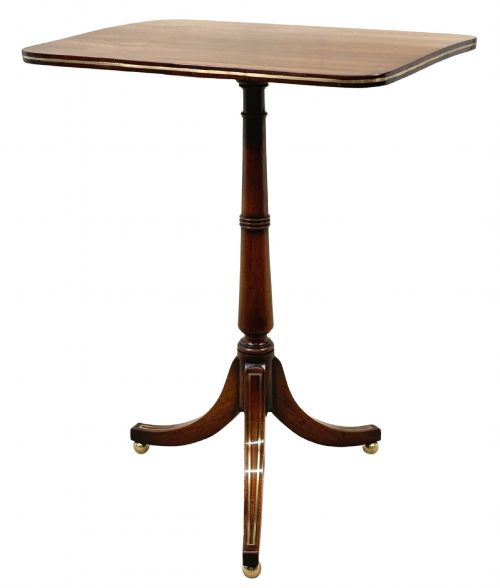


Inlaid Rosewood Lamp Table
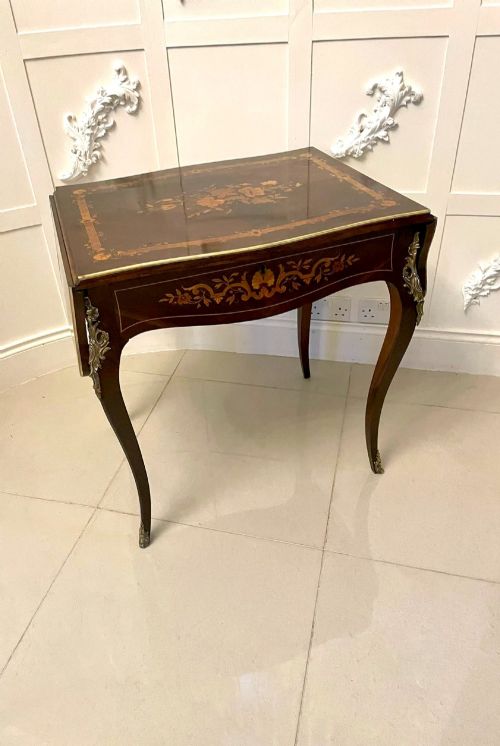
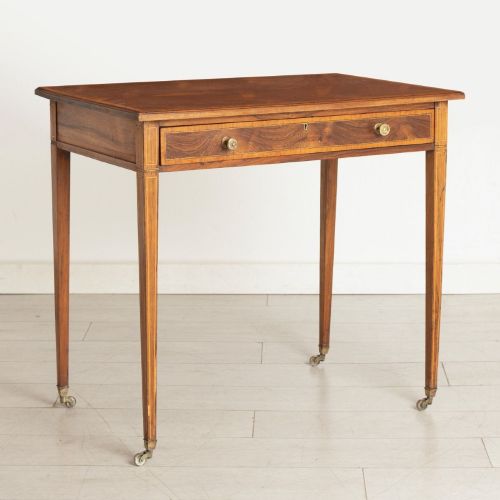
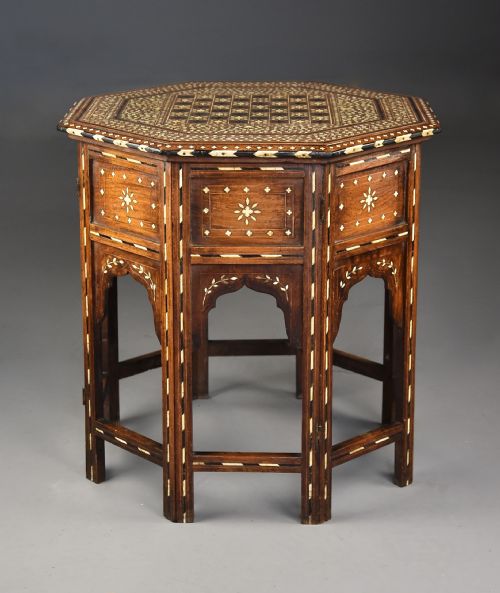
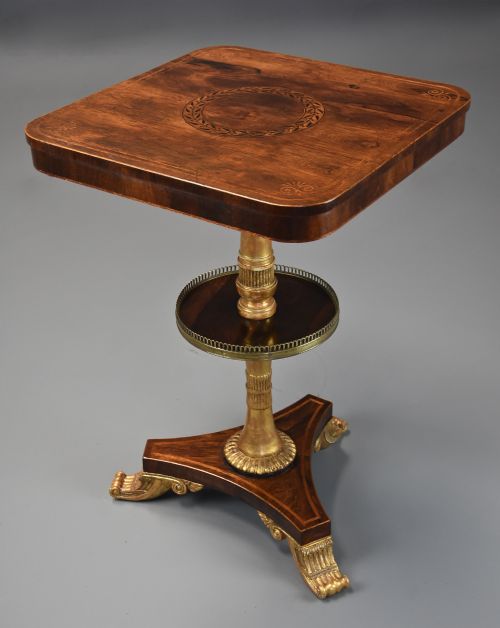
An inlaid rosewood lamp table brings rich timber and precise detail to a corner, functioning as a compact surface for evening light.
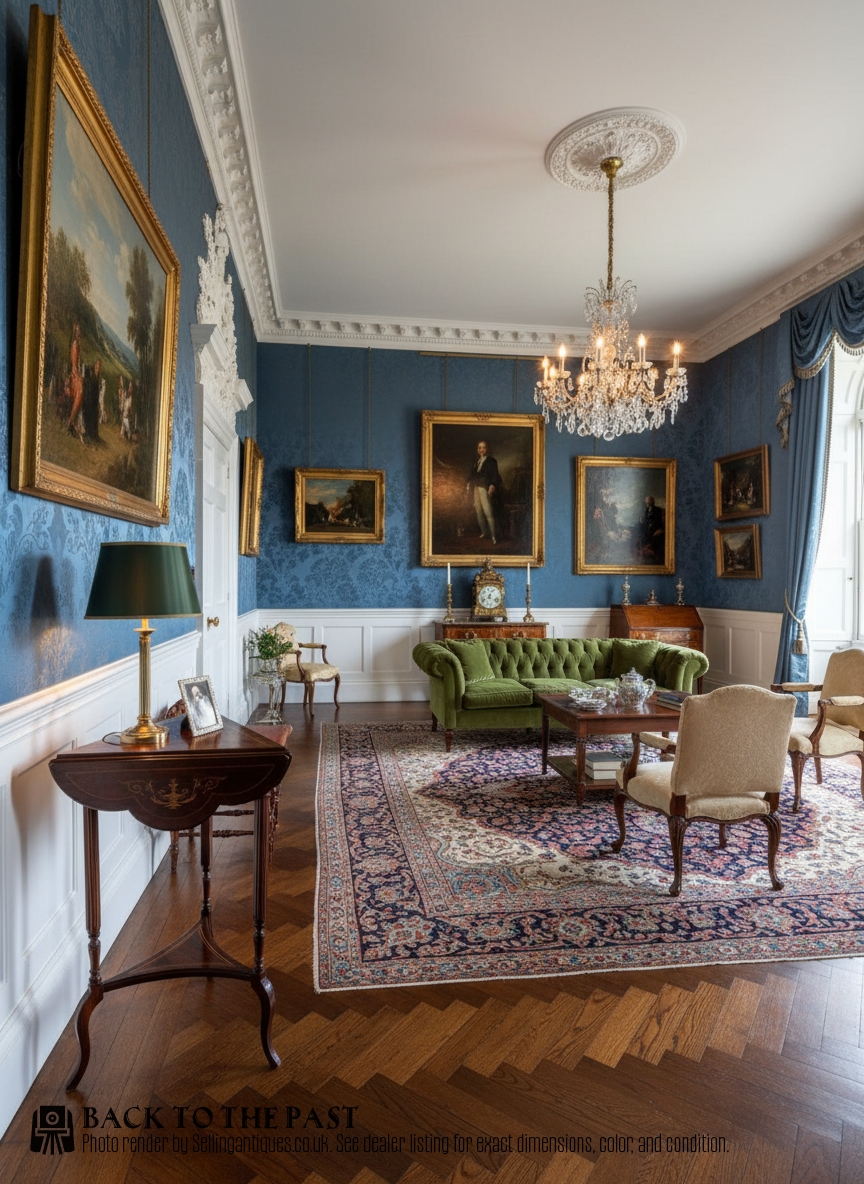
How they were made
Cabinetmakers constructed these tables using solid rosewood or pine carcasses faced with figured rosewood veneers. Tops received intricate patterns through hand-cut marquetry and contrasting wood inlays.
Brass stringing and brass inlays were let directly into channels carved into the timber surface. Multi-tiered frames relied on turned columns, slender pedestals, or splayed legs joined with sturdy stretchers.
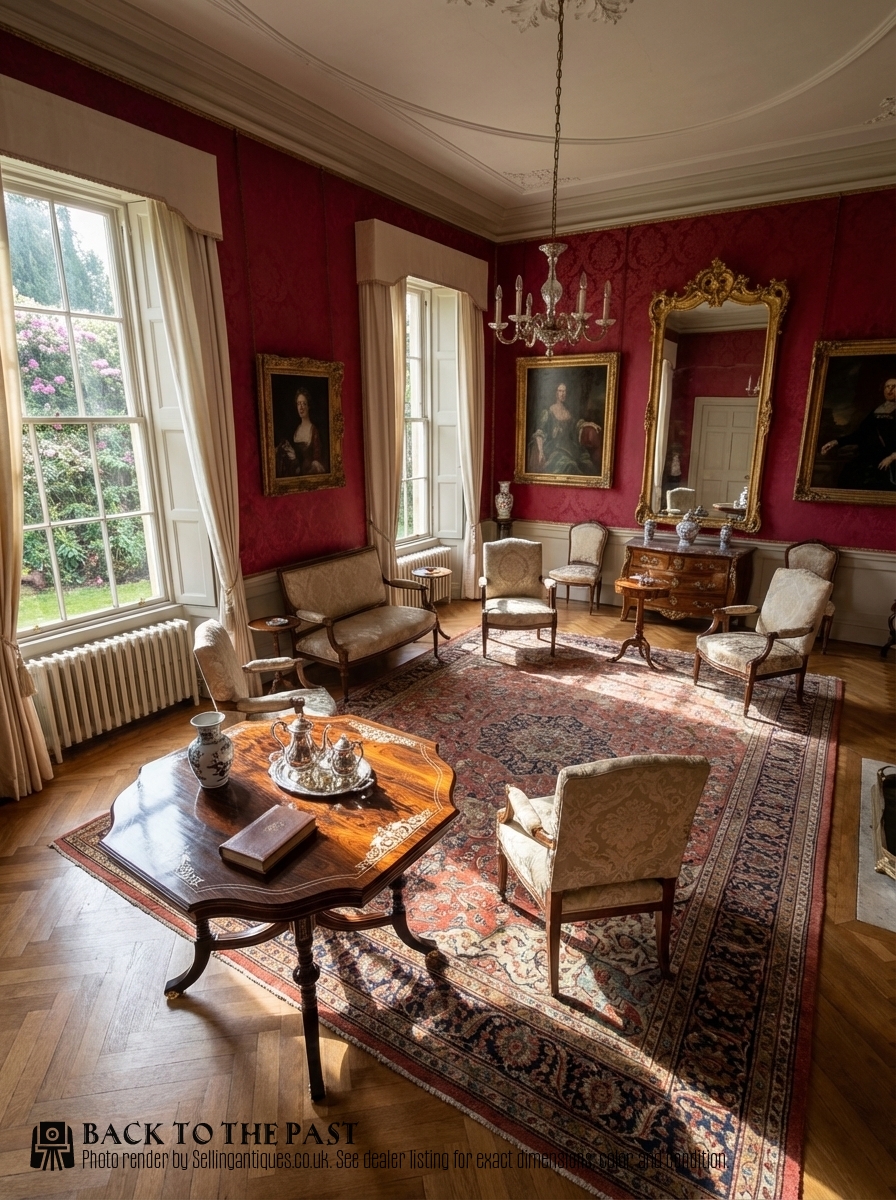
What varies in quality
Quality rests in the crispness of the timber inlay and the depth of the rosewood grain. Master makers achieved seamless junctions between contrasting satinwood, boxwood, and the dark ground timber.
Structural integrity dictates value through stable pedestals, well-fitted joints, and original brass mounts. Tables bearing maker signatures or labels from noted firms demonstrate superior workshop provenance.
Inlaid Rosewood Lamp Table Retail Price Guide 2026
Typical asking prices for inlaid rosewood lamp table among the pieces listed under this phrase on Sellingantiques today, from the lower quarter to the upper quarter. They describe what is for sale here now, not the wider market.
Some tables feature secret folding leaves and drop sides, perfect for hiding clandestine letters or midnight snacks.
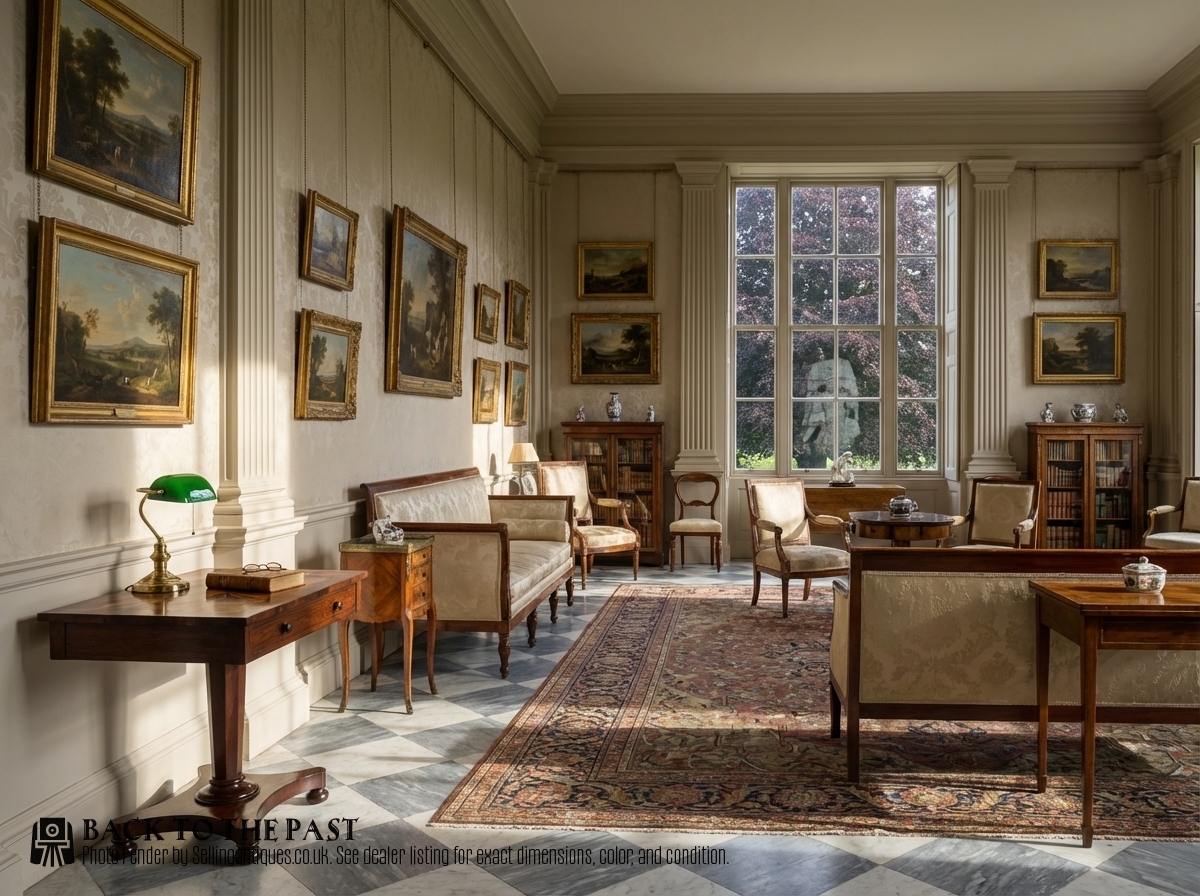
Collinson and Lock·Haentgos Freres Paris·Majorelle·Shoolbred and Co
The Inlaid Rosewood Lamp Table Glossary
- Rosewood
- A dense, heavily grained tropical timber with a dark purplish-brown colour often marked with black streaks. It takes a high polish and forms the primary carcass material for these tables.
- Inlay
- A technique where contrasting materials are inserted into recessed cavities on a wooden surface to form a decorative pattern. Common contrasting woods include boxwood and satinwood.
- Marquetry
- Elaborate veneer work assembled to form pictorial or geometric designs across a table top. Craftsmen cut various thin woods together to create complex floral or scroll motifs.
- Brass Stringing
- Fine inlaid threads of brass set into narrow channels along the edges or legs of furniture. This method highlights the geometric outlines of Regency and Victorian pieces.
- Occasional Table
- A small, movable table designed for a specific, intermittent use such as holding a lamp or book. These pieces easily relocate around a drawing room or parlour.
Inlaid Rosewood Lamp Table: Frequently Asked Questions
What is an inlaid rosewood lamp table?
An inlaid rosewood lamp table is a compact nineteenth or early twentieth century stand built to support a table lamp beside a chair or sofa. These pieces combine rich dark rosewood with contrasting light wood inlays.
They appear in various shapes including circular, octagonal, and rectangular forms with pedestal or four-leg bases. Their small scale allowed them to move easily around period drawing rooms.
How do I date a rosewood lamp table?
Dating relies on stylistic clues and construction methods visible in the timber and legs. Regency examples frequently feature bold brass inlay and sabre legs, while Edwardian versions use lighter satinwood banding and slender tapering supports.
Looking underneath reveals the age of the screws, secondary woods, and joinery techniques. Dated hardware or maker signatures also help confirm the exact period of manufacture.
Where were these tables used originally?
These tables stood primarily in drawing rooms, libraries, and parlours next to seating areas. They provided a stable surface for oil lamps, candelabras, and reading materials before electric lighting became common.
Some specialised versions included drop leaves or tiered shelves for holding books and sewing accessories. Their portability meant servants shifted them around the house as daily needs changed.
How do I care for rosewood furniture?
Rosewood requires protection from direct sunlight and extreme humidity changes to prevent timber splitting and veneer lifting. Regular dusting with a soft, dry cloth maintains the polished finish without building up residue.
Applying a traditional beeswax polish occasionally nourishes the timber and preserves the depth of the grain. Avoid placing wet items or unshielded hot lamp bases directly on the antique surface.