



Inlaid Oval Side Table
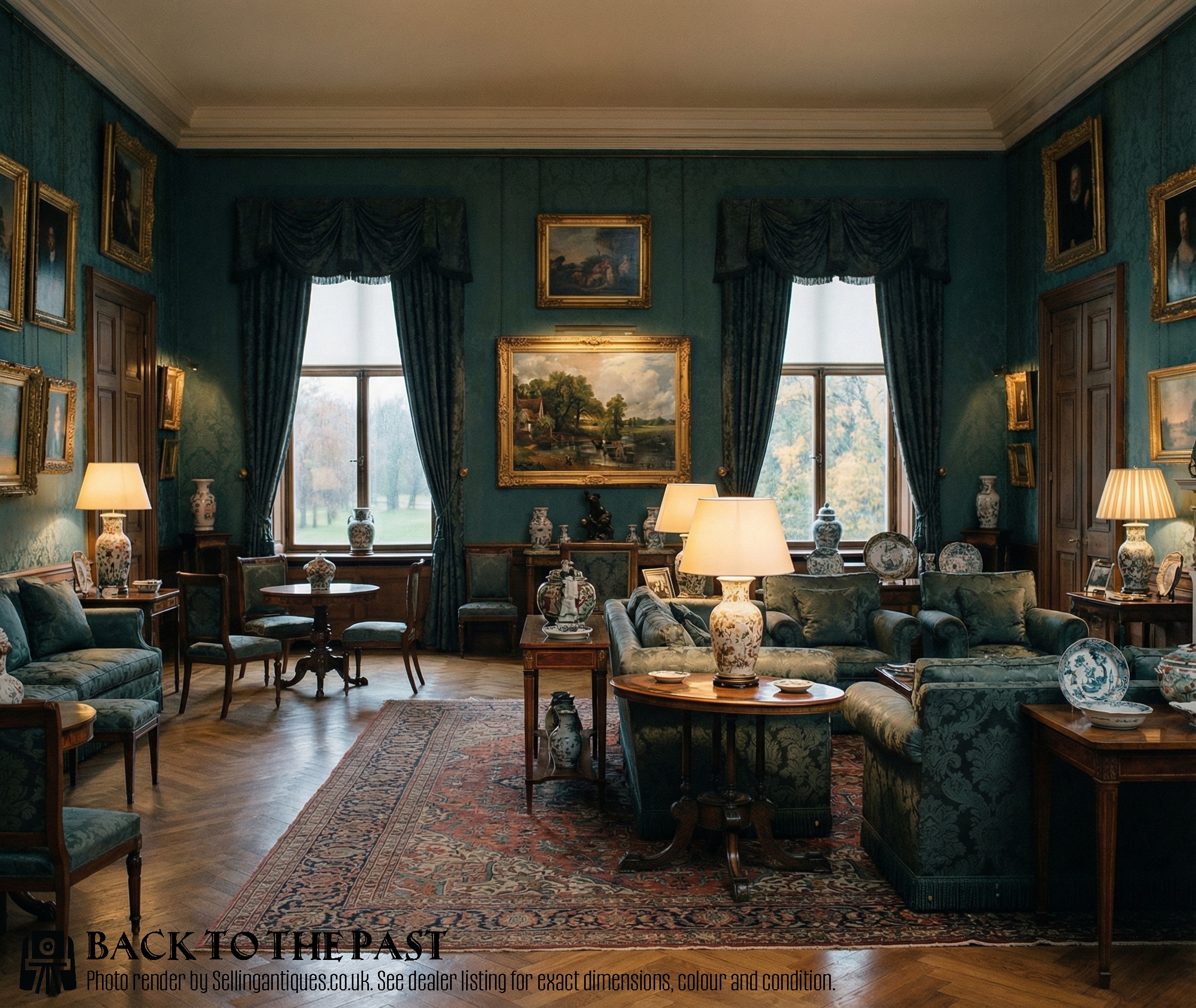
An inlaid oval side table brings subtle curves and intricate woodwork into a room, offering a functional surface shaped by Georgian, Victorian, and Edwardian hands.
Inlaid Oval Side Table
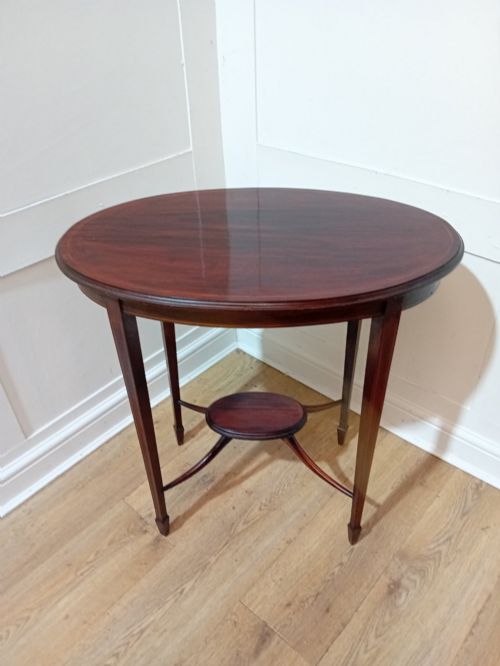
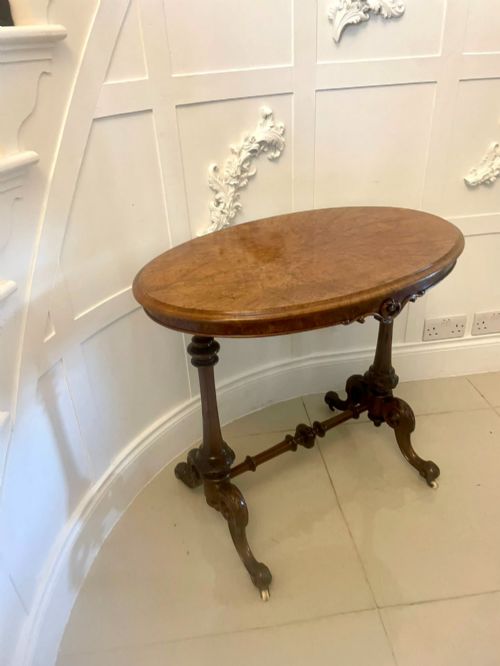
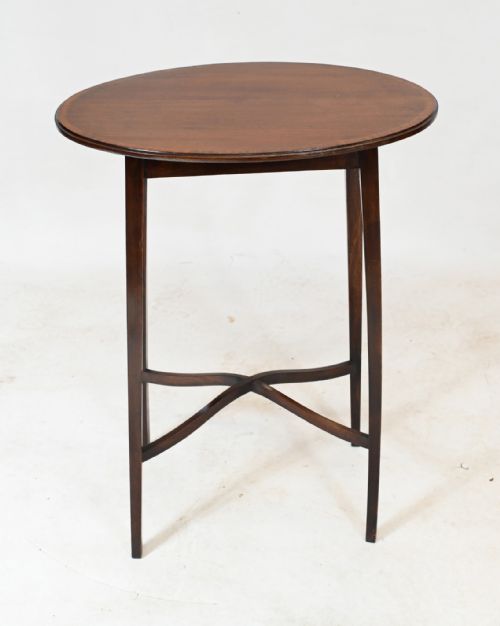
An inlaid oval side table functions as an occasional, lamp, or wine table, shaped with curved edges that soften the geometry of a room. The pieces found here span the Georgian, Victorian, and Edwardian eras, alongside Regency and Sheraton Revival periods.
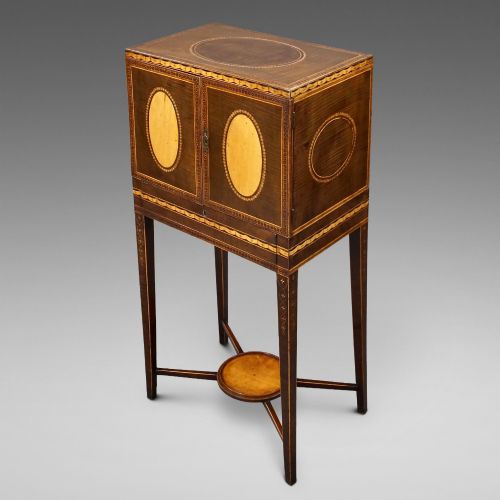
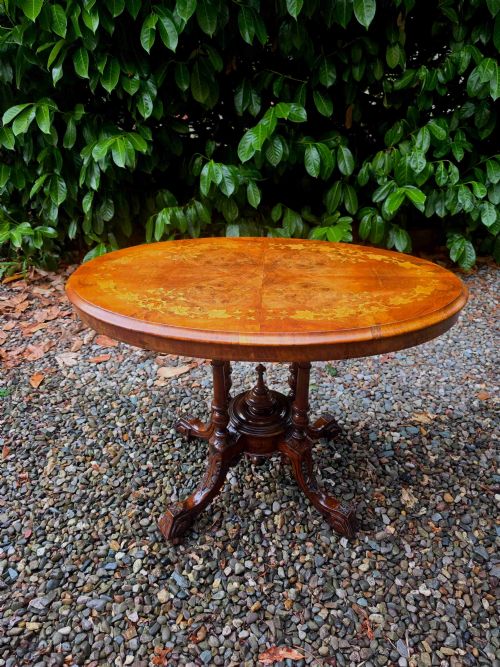
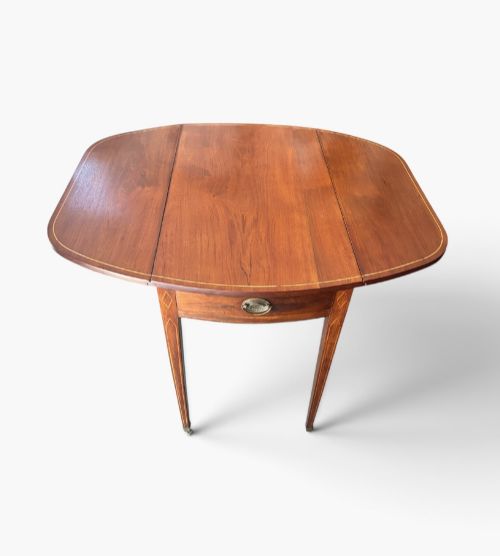
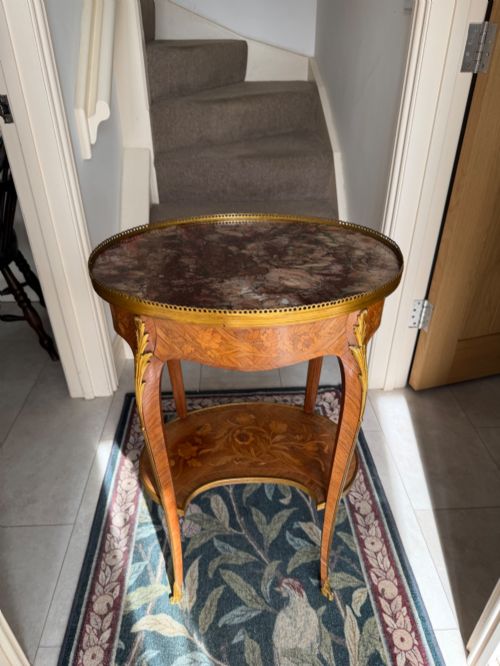
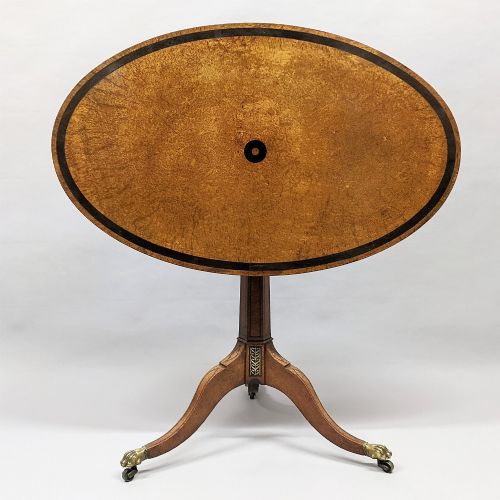
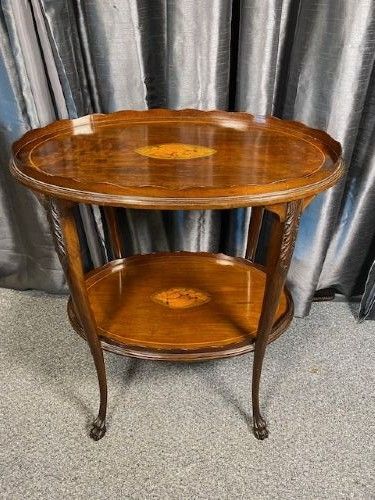
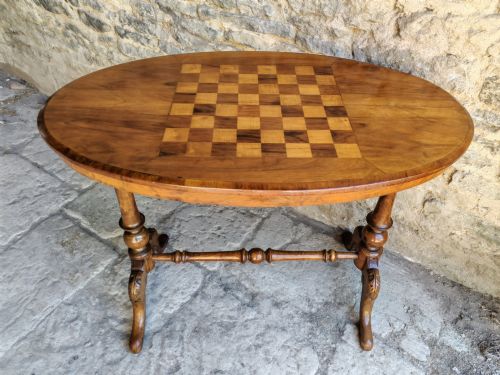
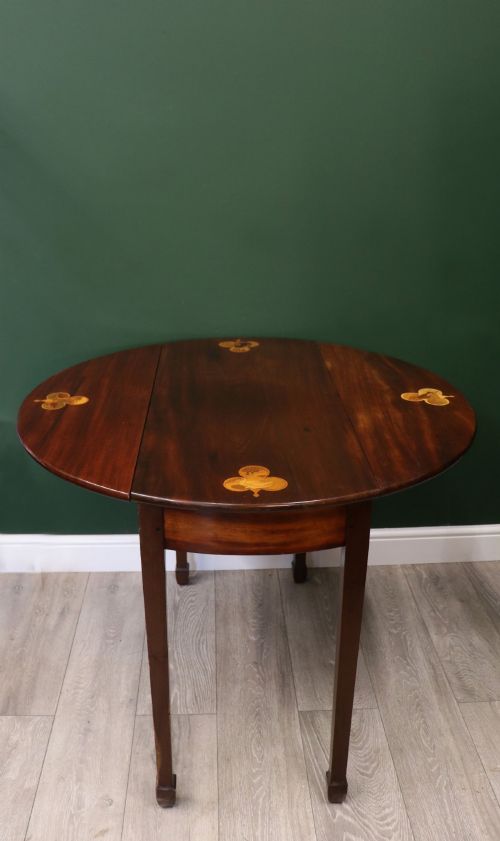
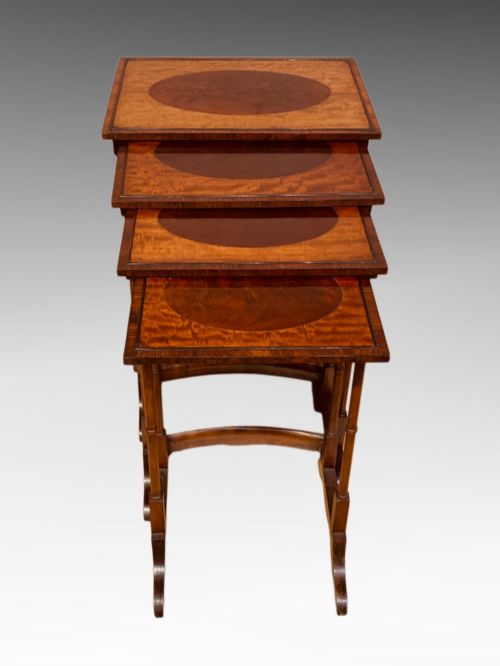
Mahogany and burr walnut dominate the forms, frequently enriched with satinwood, boxwood, and floral marquetry. Makers of these periods utilised the oval shape for Pembroke drop-leaf tables, two-tier étagères, and tilt-top tripod designs.
Edwardian satinwood and mahogany versions appear alongside 19th-century walnut examples, showing how domestic tables evolved from functional Georgian drop-flap designs into decorative Edwardian occasional pieces.
How they were made
Cabinet makers constructed carcases in solid mahogany, walnut, or satinwood, applying decorative veneers of burr walnut or kingwood to the top surface. Timber selection dictated the grain pattern, providing a figured background for subsequent ornamentation.
Wood inlay and marquetry employed contrasting species such as boxwood, ebony, and harewood, cut into delicate motifs and fitted into recesses within the primary surface. Edges frequently incorporated stringing lines to frame the oval top.
Listings span the Georgian, Victorian, and Edwardian periods, featuring mahogany, satinwood, and burr walnut in various occasional table formats.
What varies in quality
Quality rests in the precision of the timber matching and the crispness of the inlay work. Finer examples display tightly fitted contrasting woods with minimal filler, whereas simpler pieces rely on painted or stamped decoration rather than genuine cut veneer.
Structural integrity marks the division between everyday utility and finer cabinet work, particularly in the joinery of the tripod legs or the stability of drop-leaf hinged flaps. Secondary woods used underneath reveal the underlying workshop standards of the period.
The Inlaid Oval Side Table Glossary
- Marquetry
- Elaborate patterns formed by fitting together decorative wood veneers on a carcase. This technique creates pictorial or floral designs across the table top.
- Stringing
- Thin lines of contrasting wood inlay used to outline borders and geometric shapes. It frames the central panel of the table top.
- Pembroke table
- A small table with hinged drop leaves on either side. It was developed during the 18th century for versatility in smaller rooms.
- Étagère
- A set of open shelves or a tiered side table used for display. These pieces often feature two or three levels supported by slender columns.
- Tilt-top
- A tabletop mounted on a mechanism allowing it to pivot vertically when not in use. This design saved space in period interiors.
Inlaid Oval Side Table: Frequently Asked Questions
How do I date an inlaid oval side table?
Dating relies on timber choice, secondary woods, and the stylistic vocabulary of the period. Georgian and Regency pieces show heavier structural framing, while Edwardian examples often utilise lighter satinwood and simpler internal construction.
Hardware, screw types, and construction methods under the top further anchor the piece to a specific decade, distinguishing 19th-century revival work from earlier Georgian originals.
Where should I place an oval side table?
The curved footprint makes these tables suitable beside sofas, armchairs, or in narrow hallways where sharp corners would obstruct movement. Their finished backs and polished tops also allow placement in the centre of a room as lamp or wine stands.
Multi-tiered versions and étagères work well for displaying small decorative objects, while Pembroke variants offer expandable surfaces when the leaves are raised.
How do I care for antique wood veneer?
Protect the polished surface from direct sunlight and heat sources to prevent the underlying veneer from lifting or cracking. Regular dusting with a dry, soft cloth maintains the finish without moisture damage.
Occasional applications of appropriate wax feed the timber and preserve the contrast of the inlaid boxwood or satinwood elements against the darker mahogany or walnut background.
What is the difference between inlay and marquetry?
Inlay involves inserting pieces of wood into pre-cut cavities within a solid ground to form lines or geometric patterns. It provides crisp, linear definition around the borders of a table top.
Marquetry assembles an entire pictorial or floral mosaic of veneer sheets on a backing board before application to the carcase. This creates complex botanical scenes rather than simple geometric borders.