

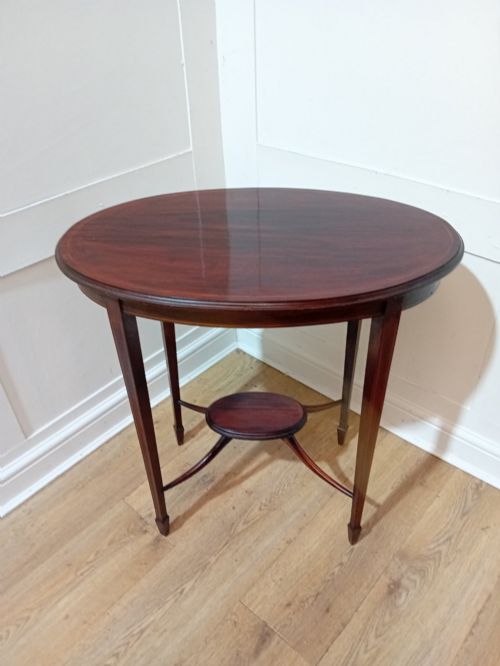
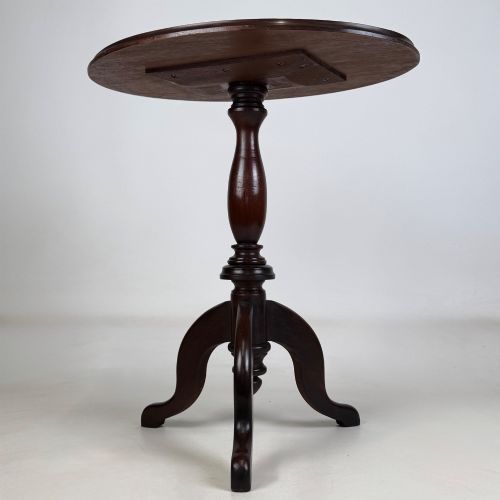
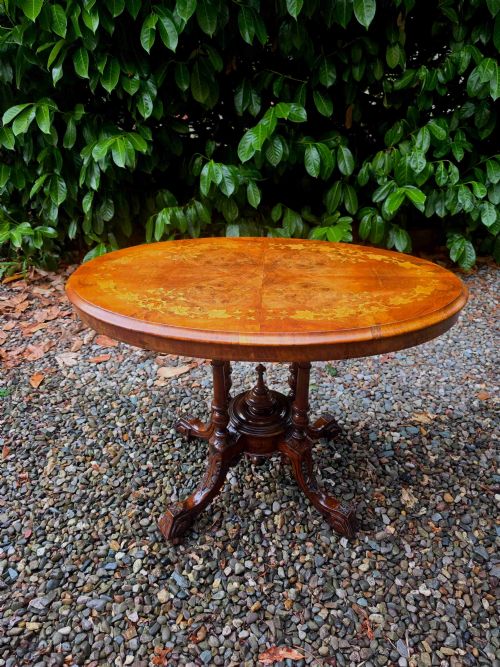

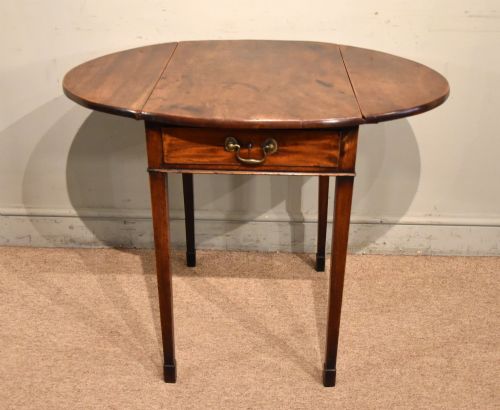
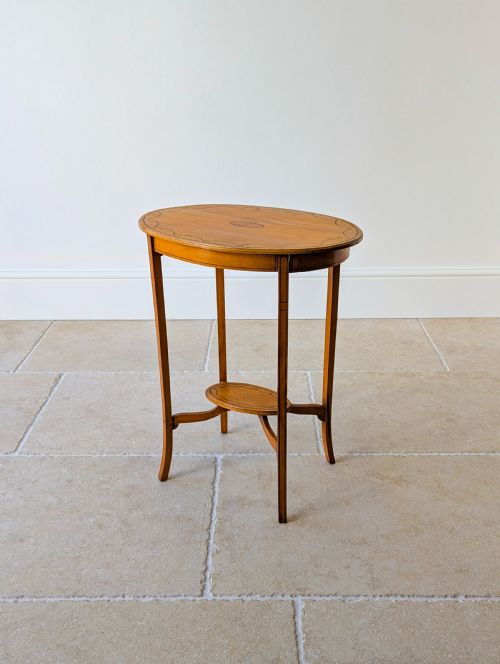

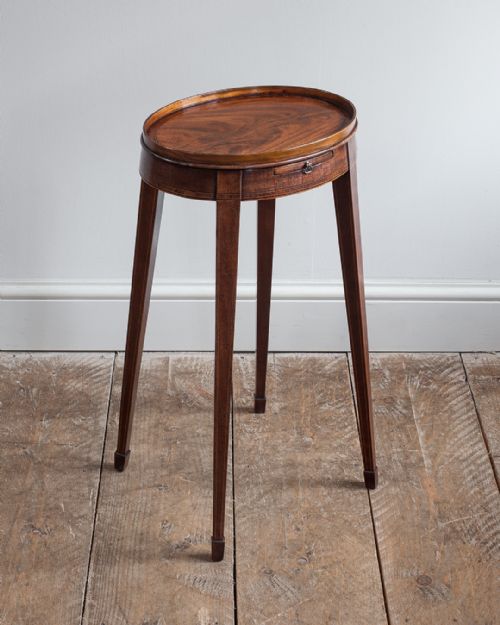
Small Oval Occasional Table
A small oval occasional table offers a compact surface that fits easily beside a chair or in a corner.
Small Oval Occasional Table
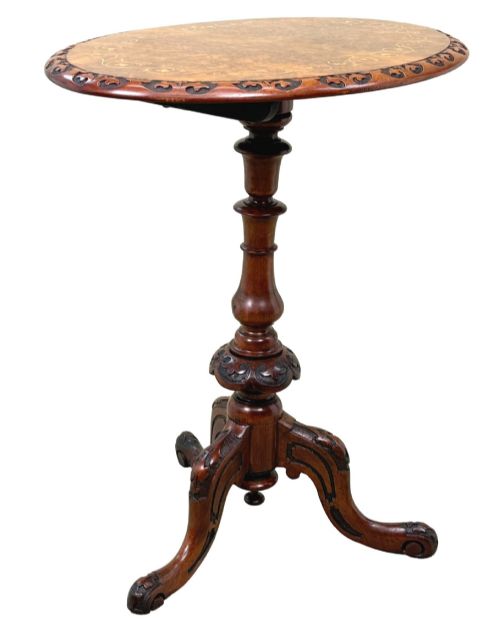
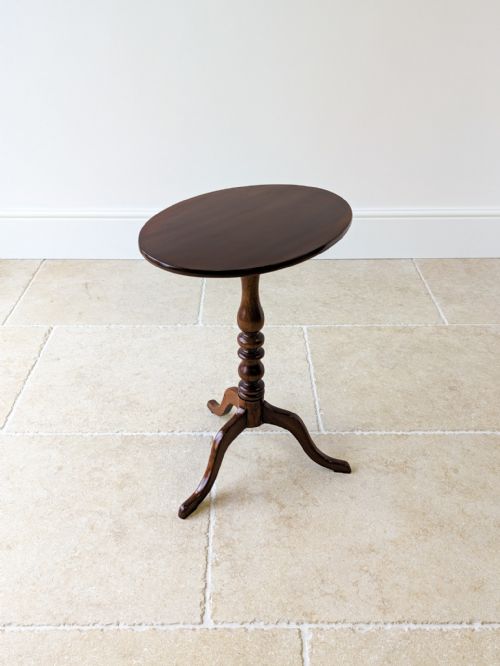
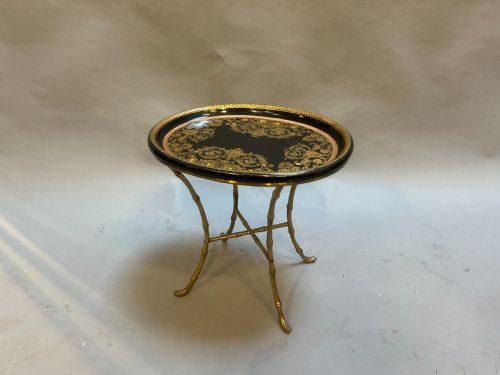
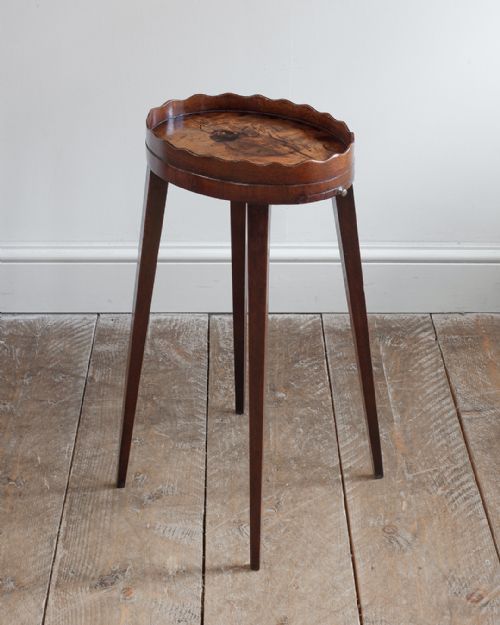
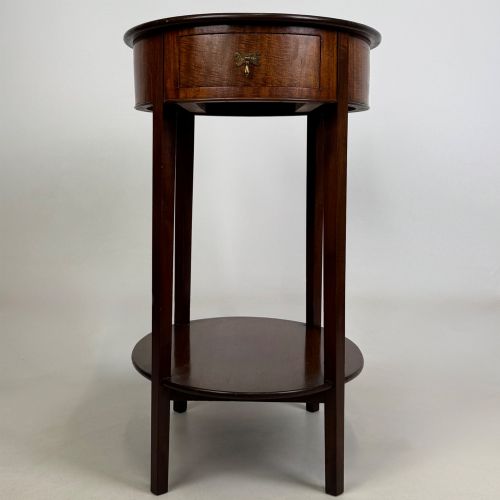
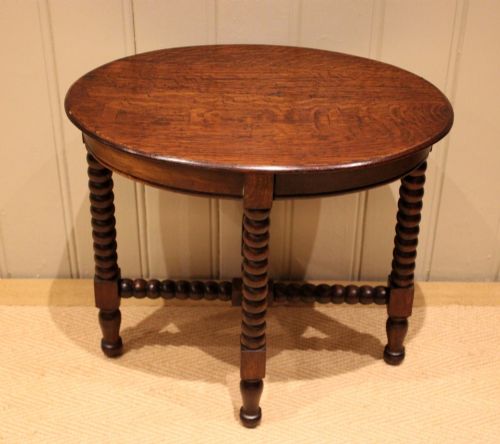
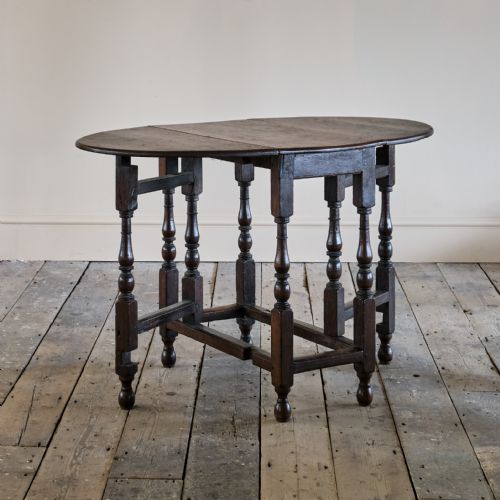
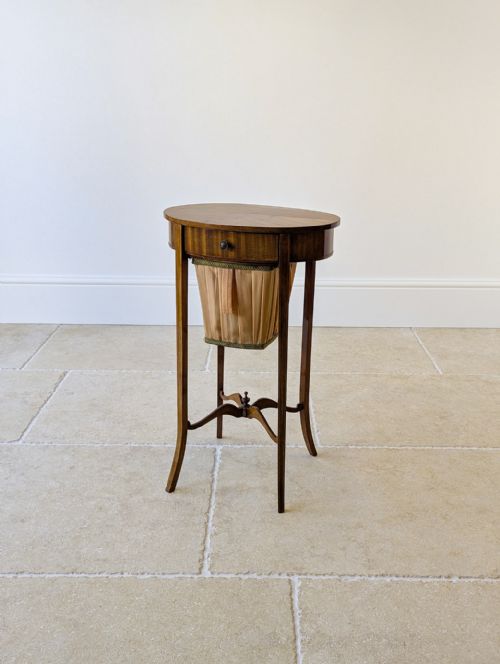
A small oval occasional table serves as a versatile piece of furniture designed for placement beside seating or in smaller spaces. When searching for a small oval occasional table, buyers encounter examples spanning the eighteenth, nineteenth, and early twentieth centuries. These tables appear in various forms such as wine tables, lamp tables, work tables, and drop-leaf variations.
The Edwardian and Victorian periods provide the largest share of these pieces, alongside earlier Georgian and later oak or mahogany examples. Makers during these eras utilised native and exotic timbers to construct compact surfaces suited for domestic use. The curved outline softens room layouts while providing a practical resting place for lamps or books.
Materials and construction
Craftsmen built these tables using solid hardwoods and decorative veneers, notably mahogany, walnut, burr walnut, and oak. Satinwood and rosewood also feature prominently, often enhanced by boxwood inlay or marquetry work.
Joinery methods varied according to the period and form, ranging from turned legs on gate-leg and Sutherland tables to slender pillars on wine tables. Polished timber surfaces display the natural grain, sometimes framed by raised pie crust edges or wooden galleries.
Small Oval Occasional Table Retail Price Guide 2026
Typical asking prices for small oval occasional table among the pieces listed under this phrase on Sellingantiques today, from the lower quarter to the upper quarter. They describe what is for sale here now, not the wider market.
Some nineteenth-century tables arrive with secret drop-leaves designed to hold tea cups rather than gossip.
Assessing quality and finish
The distinction between standard and superior pieces rests on the choice of timber and the precision of the cabinetwork. Fine examples exhibit carefully matched burr walnut veneers or detailed satinwood inlay rather than plain secondary woods.
Structural stability and the crispness of turned or carved details define the overall standard of execution. Tables that retain their original polished finish and sound underlying joinery demonstrate greater integrity.
The Small Oval Occasional Table Glossary
- Occasional table
- A small movable table intended for intermittent use around a sitting room.
- Burr walnut
- A highly figured timber veneer prized for its swirling grain patterns and rich tone.
- Sutherland table
- A narrow drop-leaf table with hinged flaps supported by swinging gate legs.
- Wine table
- A small pedestal table originally designed for holding drinks during social gatherings.
- Marquetry
- Decorative patterns formed by fitting together thin pieces of wood veneer on a surface.
Small Oval Occasional Table: Frequently Asked Questions
Where do I put a small oval table?
These compact tables fit comfortably beside armchairs, beside sofas, or within hallway corners where surface space is limited. Their curved edges allow them to sit smoothly in tighter layouts without blocking walkways.
They also function effectively as lamp stands or display surfaces for decorative objects in domestic interiors.
Are drop-leaf tables sturdy?
Drop-leaf and gate-leg variations utilise swinging wooden supports that lock securely into position beneath the folding flaps. When properly adjusted, these mechanisms provide reliable support for everyday use.
Regular checking of the hinge pins and leg joints ensures the folding sections remain stable over time.
What is burr walnut?
Burr walnut is taken from a tree growth or knot where the grain grows in a deformed, swirling pattern. Cabinetmakers slice this wood into thin veneers to create highly decorative patterned surfaces on tabletops.
This material was favoured during the Victorian and Edwardian periods for finer occasional furniture.