


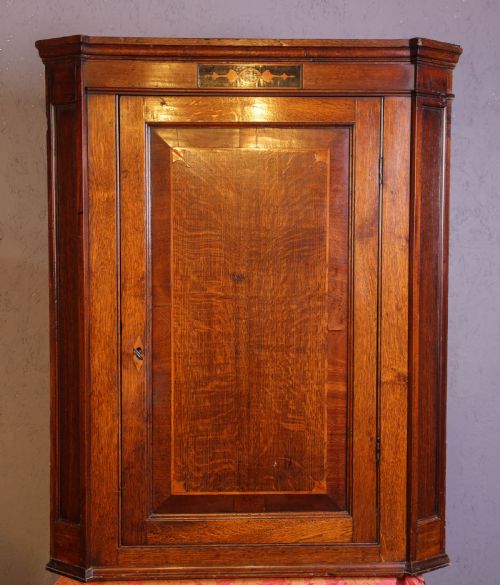


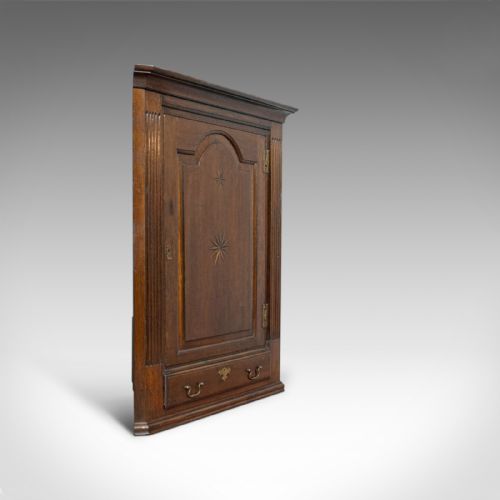

Inlaid Oak Wall Cabinet
An inlaid oak wall cabinet brings robust country craftsmanship and subtle surface detail to any interior.
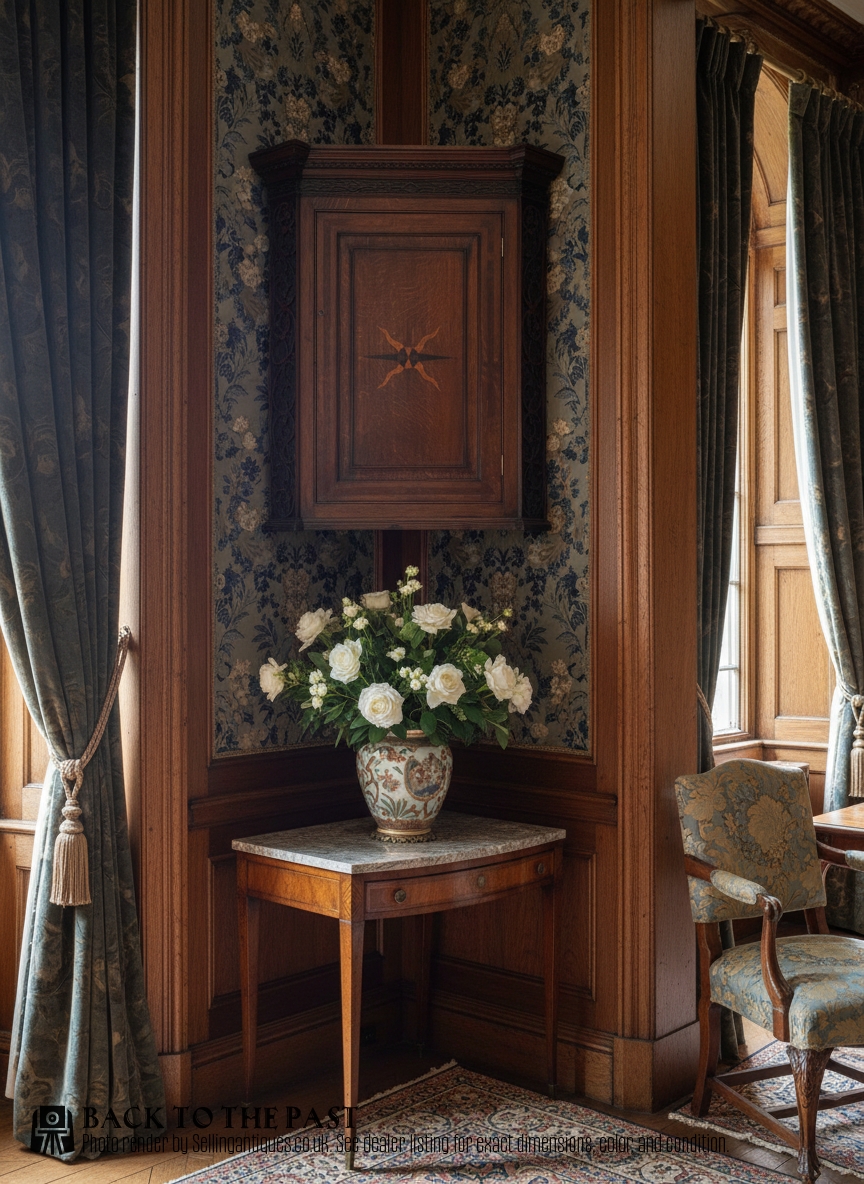
Inlaid Oak Wall Cabinet
When you search for an inlaid oak wall cabinet, you encounter sturdy hanging pieces designed to maximise corner space or mount flush to a room. The vast majority of these items date from the eighteenth century, spanning the Georgian and George III eras, alongside provincial nineteenth-century examples.
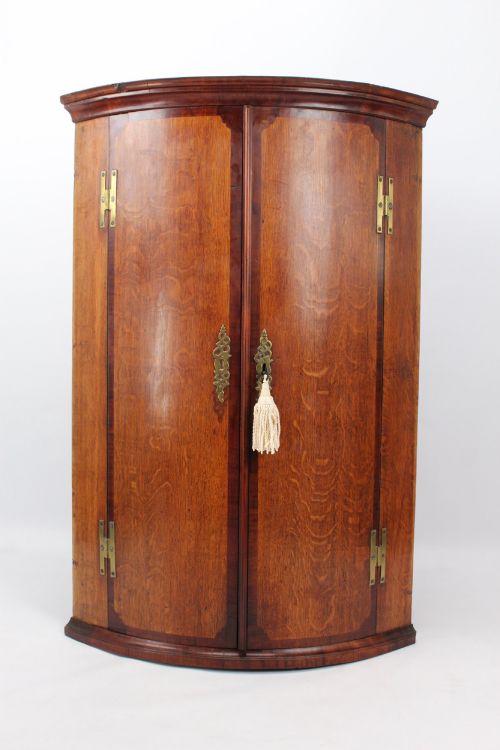
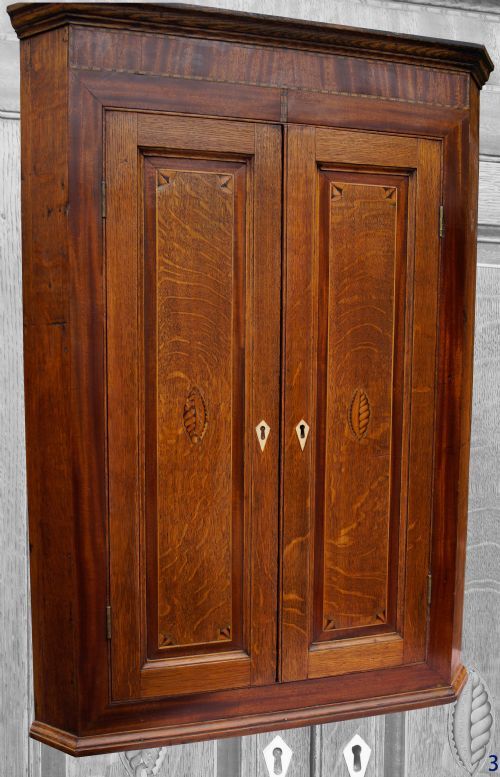
The dominant forms are corner cupboards and hanging wall cabinets, often constructed with bow fronts or panelled doors. These pieces served practical domestic storage needs in period homes, frequently housing tableware, provisions, or household items.
Continental Baroque pieces also appear occasionally, offering bolder proportions and carved details. Most items on this page, however, belong to the English provincial and Georgian vernacular traditions.
Materials and Construction
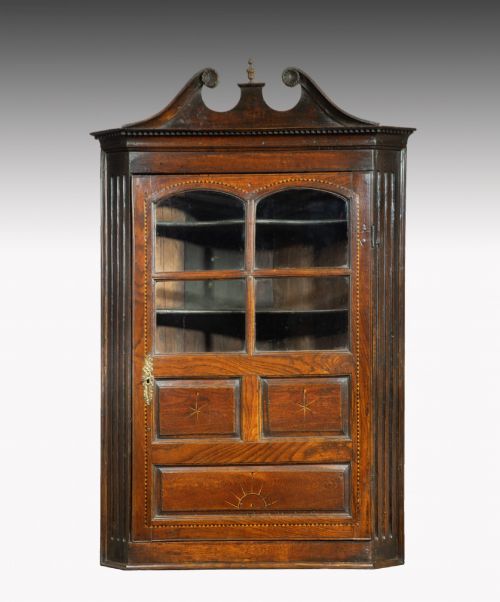
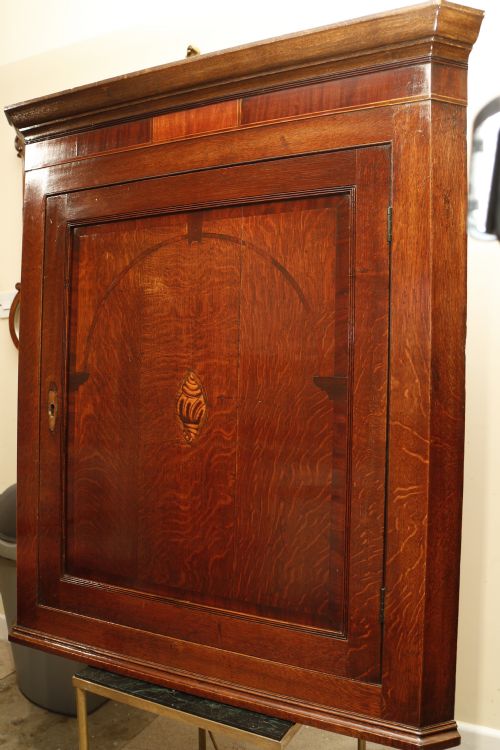
The primary material underpinning these items is solid oak, complemented by contrasting woods utilised for decorative surface effects. Cabinetmakers incorporated mahogany crossbanding, fruitwood, and satinwood to create marquetry and wood inlay patterns across doors and friezes.
Brass fittings such as H-hinges, escutcheons, and working locks provide structural integrity and functional contrast to the timber. Glass panels sometimes feature in upper doors, while interior shelving provides fitted storage within the carcass.
One unusual survivor on record is a dedicated kitchen knife hanging box, proving that eighteenth-century cutlery storage had its own specialised wall-mounted architecture.
Judging Quality
Quality in these wall cabinets rests upon the crispness of the timber selection and the precision of the inlay work. Finer examples display harmonious grain patterns in the oak, alongside sharply executed crossbanding and meticulous wood inlay that remains flush with the surrounding surface.
Proportion and architectural detailing also dictate distinction, separating standard utility pieces from more ambitious cabinetmaking. Superior items exhibit balanced cornices, well-figured panels, and original brass hardware that complement the overall scale.
The Inlaid Oak Wall Cabinet Glossary
- Crossbanding
- A border technique where thin strips of veneer are laid with the grain running perpendicular to the surrounding timber. This frames the main panel and adds a refined visual boundary.
- Marquetry inlay
- An elaborate technique of forming decorative pictures or geometric patterns using various tinted woods. It sits flush within the primary oak ground of the door or cabinet front.
- Bow front
- A convex curved cabinet face that softens the hard angles of a room or corner. This shape required specialist joinery to bend or shape the timber frames.
- Escutcheon
- A protective brass plate surrounding a keyhole that prevents the timber from wearing around the lock. It frequently doubles as a decorative focal point on the cupboard door.
Inlaid Oak Wall Cabinet: Frequently Asked Questions
Where were these cabinets hung in period homes?
These wall-hanging pieces were typically positioned in dining rooms, parlours, or kitchens to store ceramics, dry goods, or kitchen implements safely out of the way.
Corner designs made efficient use of awkward domestic angles, keeping floor space clear while remaining within easy reach of the household.
How do I distinguish George III pieces from later ones?
George III pieces usually display finer proportions, restrained mahogany crossbanding, and more delicate fruitwood or satinwood inlay work.
Later nineteenth-century country versions tend to be heavier in build, utilising simpler construction methods and bolder, less refined decorative detailing.
Are the interior shelves usually fixed or adjustable?
Interior shelving in these cabinets is almost invariably fixed into housings cut directly into the side walls of the carcass. This traditional construction method ensured maximum stability for heavy earthenware and glass stored within.
Can these cabinets support everyday use today?
Their original robust oak construction means these pieces remain structurally sound for contemporary storage needs. Proper wall fixings matched to the weight of the timber ensure safe mounting in modern interiors.