
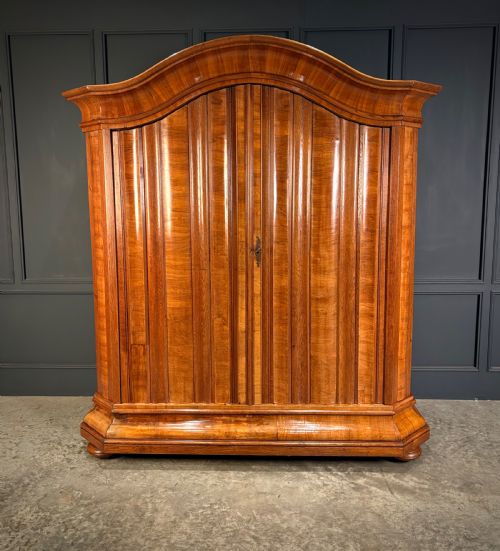
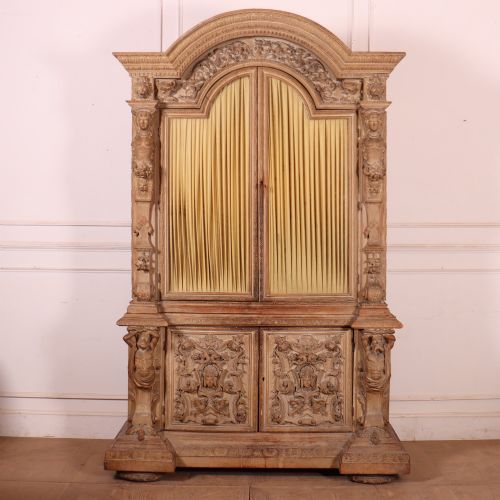


Baroque Carved Oak Cabinet
A baroque carved oak cabinet brings seventeenth and eighteenth-century continental craftsmanship into a room with heavy timber, deep mouldings and regional character.
Baroque Carved Oak Cabinet
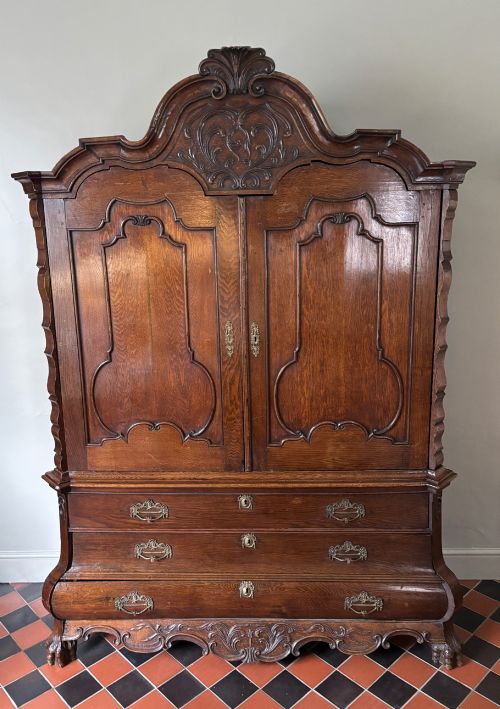
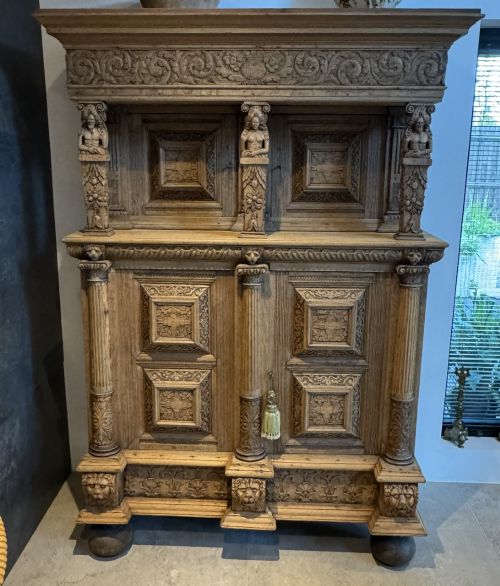
A baroque carved oak cabinet encompasses heavy storage forms built across seventeenth and eighteenth-century Europe, including Dutch linen presses, Spanish Basque housekeeper cupboards and Norwegian bureau bookcases. These large case pieces provide substantial architectural presence through deep paneling and regional decorative motifs.
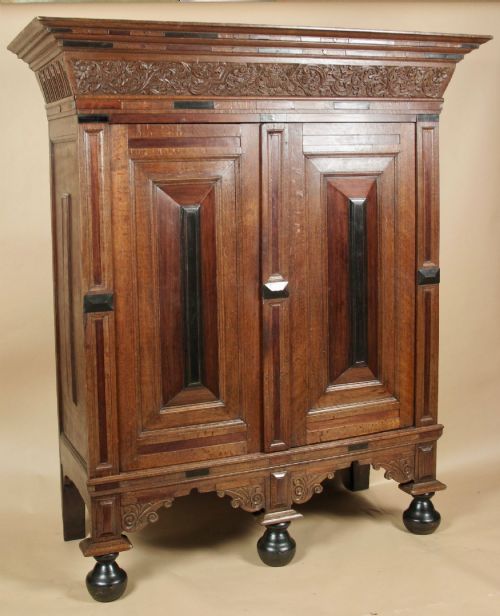
The versions most commonly met on this page are Flemish and Dutch kasts or linen presses made from oak, often accented with rosewood or ebony. Such pieces reflect continental baroque traditions, combining functional storage with sculptural facades and prominent cornices.
Other variations appearing here include Italian vitrines, continental side cabinets and transitional Victorian interpretations built in the baroque style. Each object serves as a primary storage unit while displaying the regional carving styles of its origin.
How they were made
Makers constructed these cabinets primarily using solid oak frames and panels, frequently applying secondary timbers such as walnut, ebony and rosewood for contrast and inlay. Iron and brass hardware, including heavy hinges and keyplates, secured the large doors and drawers.
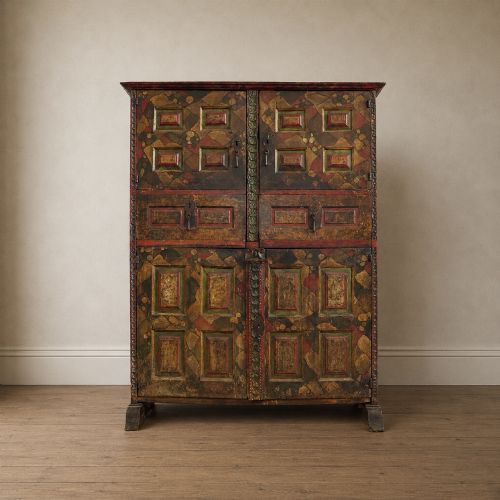
Carving and polychrome pigment formed the main decorative techniques, seen in the raised cushion panels of Gelderse kussenkasts and the painted surfaces of Spanish pieces. Joinery relied on traditional pegged mortise and tenon frames to support the immense weight of the timber.
Listings feature seventeenth and eighteenth-century periods alongside Victorian interpretations, constructed from oak, walnut, ebony, rosewood and iron.
What varies in quality
Quality in a baroque carved oak cabinet rests on the crispness of the timber carving and the architectural proportion of the mouldings and cornices. Pieces with deeply sculpted panels and balanced regional proportions stand above simpler, plainer constructions.
The selection of secondary timbers and the integrity of the original brass or iron mounts also separate standard vernacular storage from exceptional continental examples. Surviving polychrome pigment or untouched original surfaces further elevate a piece's standing.
The Baroque Carved Oak Cabinet Glossary
- Kast
- A large Dutch or Flemish wardrobe and linen cupboard featuring substantial panel doors and deep cornices. These monumental pieces formed the primary storage furniture of prosperous seventeenth-century households.
- Linen Press
- A tall case piece designed for storing folded textiles, combining upper cupboard doors with lower drawer sections. They utilise sturdy oak construction to bear the weight of heavy linens.
- Bureau Bookcase
- A combination writing desk and enclosed shelving unit, often fitted with sloping fall-fronts and multiple internal compartments. Norwegian and continental examples demonstrate sophisticated joinery.
- Vitrine
- A glass-fronted display cabinet intended for showing porcelain and curiosities. Italian and continental variations apply carved wood frames to glass panels.
- Polychrome
- Painted decoration utilising multiple colours to highlight carved wooden surfaces. Spanish Basque pieces employ this technique to add visual depth to housekeeper cupboards.
Baroque Carved Oak Cabinet: Frequently Asked Questions
What is a kussenkast?
A kussenkast is a large Dutch wardrobe characterised by prominent cushion-moulded panels on the doors. These seventeenth-century pieces showcase contrasting woods like ebony and rosewood set against oak.
They served as status symbols for wealthy merchants and provided deep storage for household linens.
How do I place a large oak cabinet?
These monumental cabinets require substantial wall space and a structurally sound floor to support their heavy timber frames. Positioning them away from direct heat sources protects the old oak and secondary veneers.
Allowing adequate clearance for wide opening doors ensures functional access to internal shelving and presses.
How do I date a baroque cabinet?
Dating relies on examining regional construction methods, timber choice, and stylistic markers such as Flemish or Dutch baroque moulding profiles. Seventeenth-century examples often feature peg construction and heavy cushion panels.
Later Victorian interpretations in the baroque style display different internal framing techniques and machine-sawn timber indicators.
What is a housekeeper's cupboard?
A housekeeper's cupboard is a utilitarian storage piece used in large domestic kitchens or service rooms for provisions and linens. Spanish Basque versions incorporate polychrome painted surfaces over robust oak structures.
They combine practical, enclosed shelving with decorative regional painting traditions.