

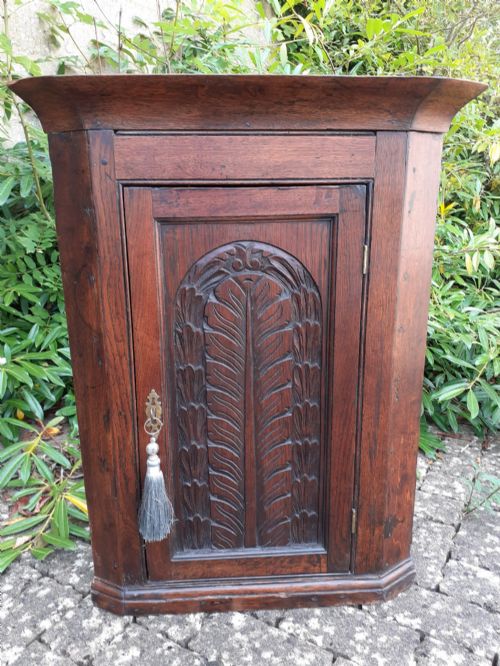


Carved Oak Hanging Cabinet
A carved oak hanging cabinet brings solid timber utility and rich historic texture directly to your walls, saving floor space while anchoring a room.

Carved Oak Hanging Cabinet
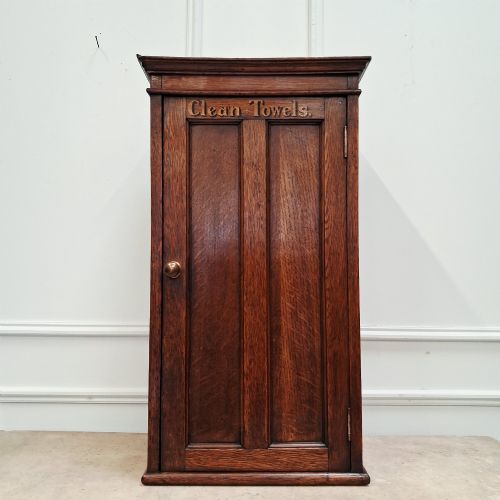
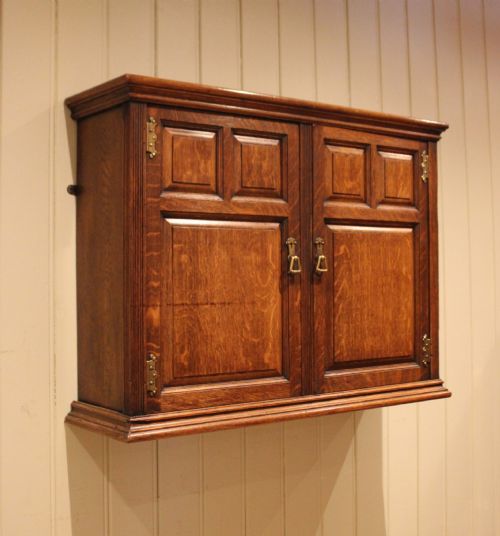
When you search for a carved oak hanging cabinet, you encounter sturdy wall-mounted storage pieces designed to mount securely above floor level. These containers served historic domestic interiors as food cupboards, spice lockers, and corner cupboards.
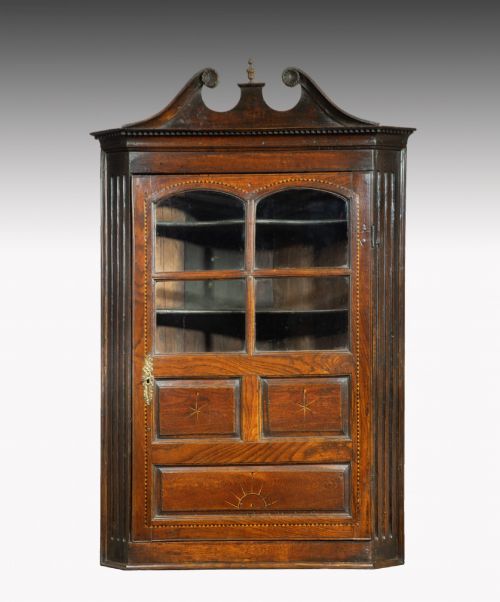
The versions most common on this page span the seventeenth, eighteenth, and nineteenth centuries, often taking the form of corner cupboards or flat wall cabinets. Many examples display regional British characteristics alongside Continental French Provincial and Gothic Revival styles.
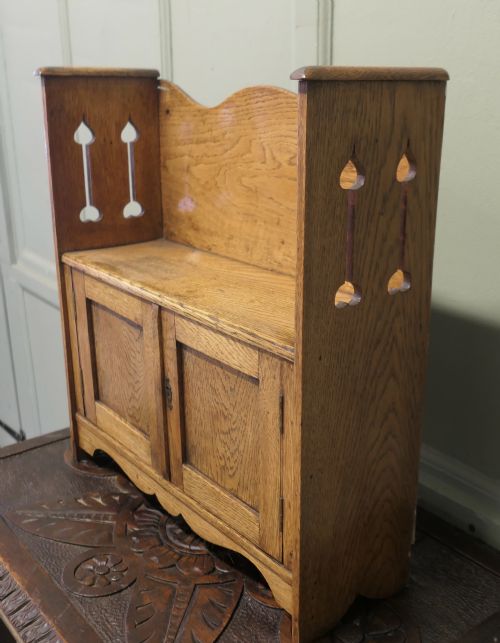
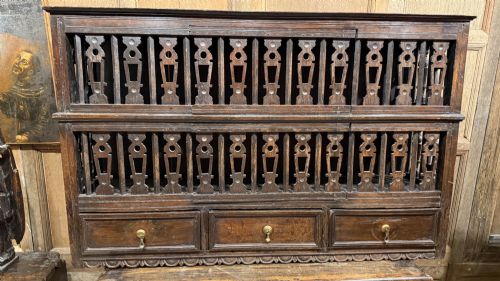
Makers shaped these items for practical storage in kitchens, hallways, and living spaces, utilising solid timber construction to endure centuries of daily domestic use. Their formats range from simple panelled doors to elaborately carved surfaces featuring fruitwood inlay and brass hardware.
How They Were Made
Craftsmen built these cabinets predominantly from solid oak, sometimes combining secondary timbers like beech or incorporating fruitwood inlay for visual contrast. Construction relied on traditional joinery methods such as mortise and tenon frames, securing heavy doors and internal shelves without synthetic adhesives.
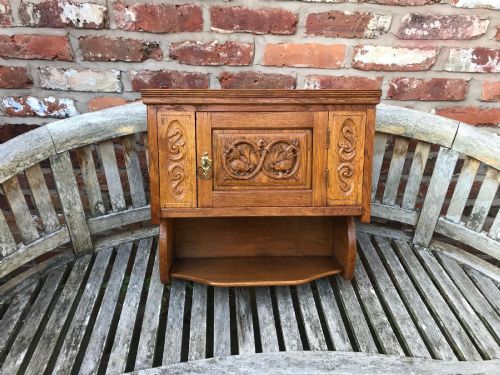
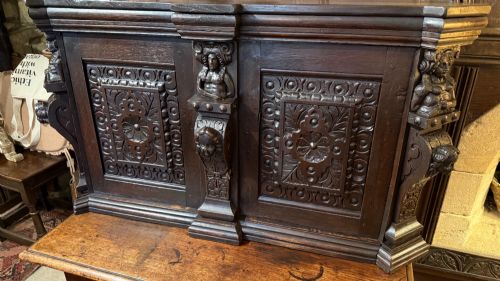
Surface ornamentation involved hand carving directly into the timber, utilising gouges and chisels to create geometric strapwork, floral motifs, and raised panels. Iron hinges, brass escutcheons, and latches provided functional reinforcement while adding decorative metallic detail to the wooden facades.
Materials recorded across these wall-mounted items include solid oak, brass, iron, glass, ceramic, pigment, and fruitwood inlay.
What Varies in Quality
The distinction between ordinary and superior pieces rests upon the depth and crispness of the hand carving, alongside the selection of timber figure. Cabinets possessing well-defined grain patterns, crisp mouldings, and integrated original brass or iron hardware command greater appreciation among collectors.
Structural integrity also separates examples, as pieces retaining their original backboards, hanging fixings, and stable door joints demonstrate superior survival. Finer items exhibit thoughtful proportion and balanced geometric or floral ornament that complements the natural density of the oak.
John Moyr Smith
The Carved Oak Hanging Cabinet Glossary
- Raised panel
- A central wooden insert with bevelled edges designed to fit loosely within a grooved frame, allowing the timber to expand and contract safely with humidity changes.
- Corner cupboard
- A specialised storage unit constructed with a triangular footprint to fit neatly into the junction of two walls, maximising awkward domestic angles.
- Fruitwood inlay
- The technique of recessing contrasting lighter or darker fruitwoods into the primary oak surface to create geometric patterns or pictorial motifs.
- Barley twist
- A decorative turning style featuring a helical twist resembling a spiral rope, frequently found on the upright supports or door stiles of seventeenth and nineteenth-century furniture.
- Escutcheon
- A protective metal plate surrounding a keyhole, usually fashioned from brass or iron to prevent the surrounding wood from wearing down through repeated use.
Carved Oak Hanging Cabinet: Frequently Asked Questions
How were hanging cabinets mounted historically?
Historic cabinets attached to walls using heavy internal fixing points, heavy iron strap hinges, or sturdy timber brackets secured directly into wall studs or masonry.
Modern buyers should inspect these original mounting points carefully to ensure they can safely support the considerable weight of solid oak timber.
What is the difference between flat wall and corner cabinets?
Flat wall cabinets feature a rectangular back designed for straight stretches of walling, whereas corner cupboards utilise a triangular footprint built specifically to occupy room angles.
Both formats served identical domestic storage needs, but corner variants offered a clever way to utilise dead space in smaller historic rooms.
How do I date an antique oak cabinet?
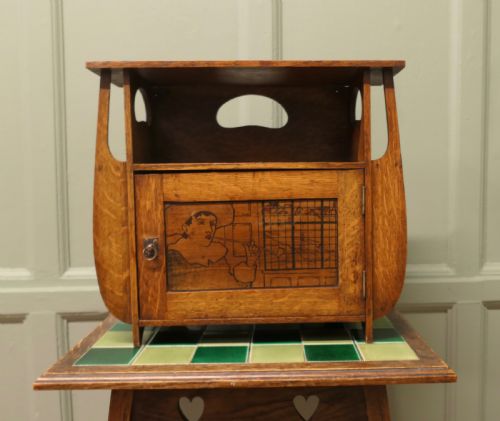
Dating relies on observing construction methods, timber preparation toolmarks, hardware types, and stylistic motifs such as Georgian raised panels or Arts and Crafts pokerwork.
Examining the backboards and internal secondary woods often reveals clues about the period of manufacture and whether components have undergone later restoration.
Where should I hang an oak cabinet at home?
These pieces suit kitchens, hallways, and dining areas where wall space allows them to function as display shelves, key cabinets, or general storage cupboards.
Avoid positioning antique oak directly above heat sources or in areas of intense dampness to protect the historic timber and traditional joinery.