
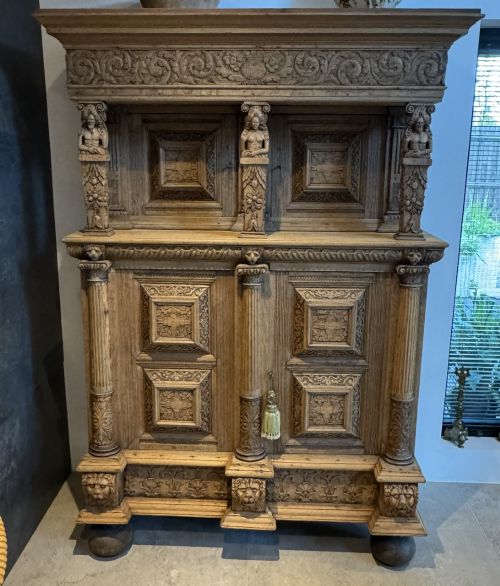


Flemish Oak Furniture
Flemish oak furniture brings heavy timber and deep carving into a room, offering practical storage through seventeenth-century tradition.
Flemish Oak Furniture
Flemish oak furniture comprises seating, storage and dining pieces spanning from the seventeenth century through to the Edwardian period, often taking the form of heavy sideboards, cabinets on stand, and settles. These items draw on Renaissance Revival, Baroque, and Jacobean Revival styles, bringing distinct architectural presence to an interior.
Buyers encountering this search phrase meet a mix of genuine seventeenth-century survivals and nineteenth-century revival pieces, including Victorian hall stands and dining suites. Oak serves as the primary structural timber, frequently enriched with carved details such as lion masks and green man motifs.
How these pieces were made
Construction relies heavily on solid oak timbers, joined using traditional methods that allow the dense wood to remain stable over centuries. Secondary materials such as brass, iron, glass, and leather appear in hardware, hinges, glazed doors, and upholstered elements.
Carving defines the surface work on these pieces, executed directly into the solid oak to create high-relief panels, figural masks, and architectural mouldings. Selected pieces incorporate contrasting woods like rosewood and ebony alongside zinc linings or stained glass panels.
Listings feature oak combined with brass, glass, leather, zinc, iron, rosewood, and ebony across various centuries.
What varies in quality
Quality in these pieces rests upon the depth and crispness of the carving, where deep, well-defined figural work and balanced proportions distinguish finer examples from simpler production. The choice and integration of secondary timbers, such as rosewood or ebony accents, also separate standard items from more ambitious workshops.
The integrity of the structural oak and the preservation of original hardware, glass, and leather elements dictate the overall standing of a piece. Earlier seventeenth-century examples derive their standing from age and historical survival, while nineteenth-century revivals depend on the fidelity and weight of their execution.
The Flemish Oak Furniture Glossary
- Kast
- A large, heavy storage cupboard or wardrobe originating in the Low Countries, typically constructed from oak or rosewood with deep paneling. These substantial pieces provide significant interior space and stand on distinct feet or plinths.
- Green Man
- A sculptural motif depicting a human face intertwined with or sprouting foliage, vines, or branches. This decorative element appears frequently within the carved woodwork of nineteenth-century revival pieces.
- Lion Mask
- A carved sculptural representation of a lion's face, often holding a ring in its mouth or serving as a drawer pull and structural embellishment. Such motifs underscore the Baroque and Renaissance Revival influences on the timber.
- Settle
- A wooden bench featuring high backrests, solid side arms, and frequently a box compartment beneath the seat for storage. These items offer both seating and draught protection in traditional interiors.
Flemish Oak Furniture: Frequently Asked Questions
What is Flemish oak furniture?
Flemish oak furniture encompasses tables, cabinets, settles, and sideboards originating from the Low Countries or styled after seventeenth-century Flemish traditions. These items use heavy oak timber and feature deep, sculptural carving.
The category includes authentic seventeenth-century pieces alongside nineteenth-century revival works from the Victorian and Edwardian eras. Common decorative elements include lion masks, green man motifs, and architectural paneling.
How do I date a piece?
Dating relies on examining the construction methods, tool marks, timber shrinkage, and stylistic conventions present in the oak. Seventeenth-century items show authentic age-related wear and joinery techniques distinct from later revival work.
Nineteenth-century revival pieces, such as those from the Victorian period or around eighteen-eighty, often combine historic Flemish motifs with contemporary hardware and assembly methods.
How do I care for oak?
Solid oak furniture benefits from stable indoor humidity levels and protection from direct heat sources that can dry out the timber. Regular dusting with a dry cloth keeps the surface clean without damaging the polished finish.
Period wax can be applied sparingly to nourish the wood and maintain its natural lustre over time. Avoid modern silicone sprays, which build up on antique carved surfaces.
Where were these pieces used?
Historically, large oak cabinets, kasts, and sideboards served primary storage functions in the main rooms of substantial houses and merchant dwellings. Dining sets and settles furnished communal spaces for dining and gathering.
Today, these substantial items suit hallways, dining rooms, and living spaces where their scale and deep relief carving provide both function and a strong focal point.