
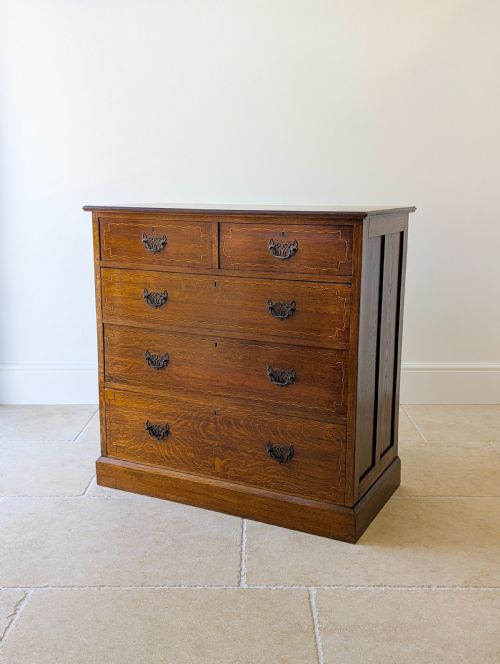


Inlaid Oak Storage Chest
An inlaid oak storage chest brings centuries of domestic history into a room, offering robust utility through traditional timber and decorative marquetry.
Inlaid Oak Storage Chest
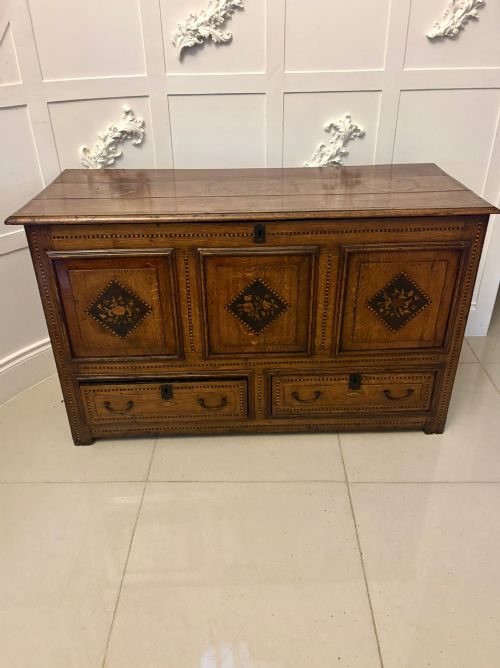
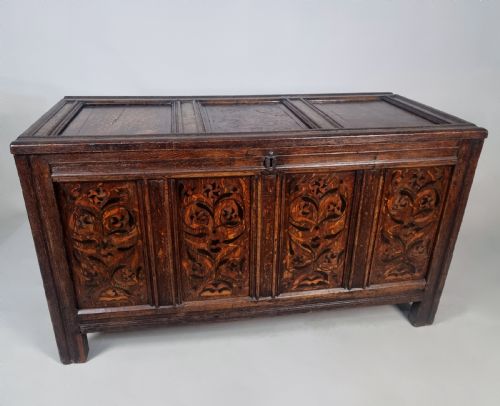
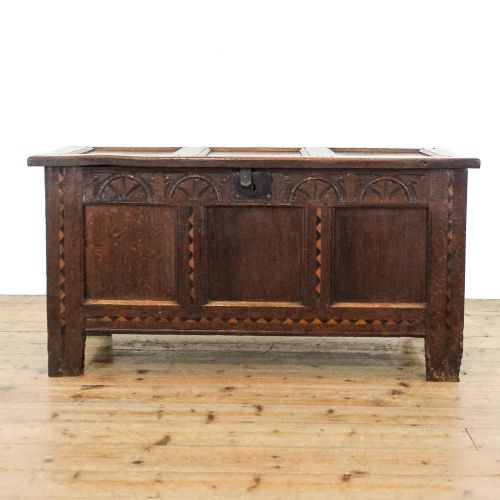
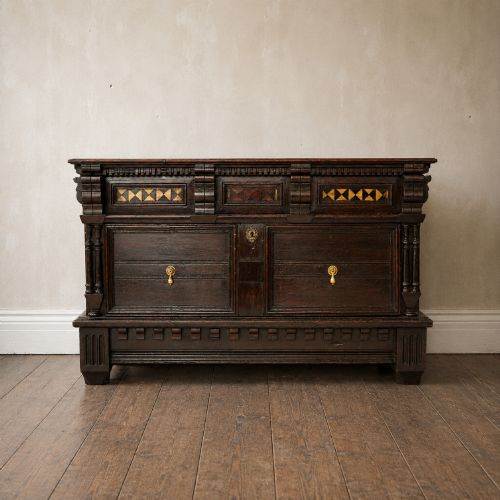
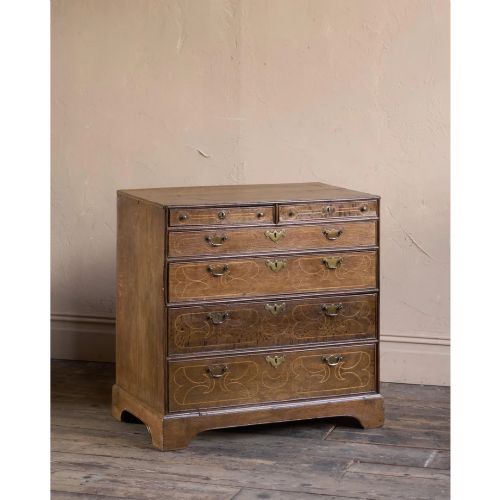
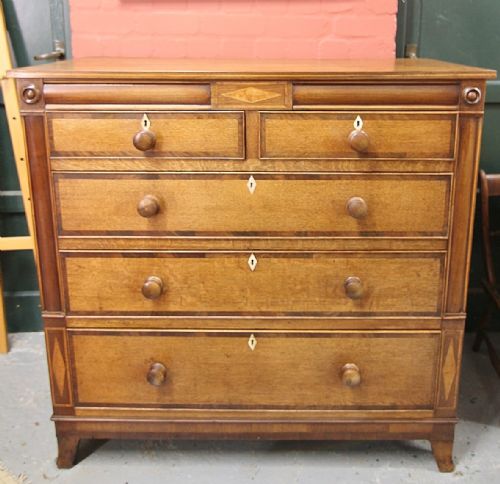
An inlaid oak storage chest encompasses sturdy coffers, mule chests, and chests of drawers produced across several centuries. The sixteenth and seventeenth centuries provide many of the earliest coffers, whilst eighteenth and nineteenth-century examples often incorporate drawer configurations or regional vernacular designs.
The buyer frequently encounters seventeenth-century coffering alongside Georgian chests of drawers and Welsh vernacular pieces. These domestic receptacles served primary roles in holding linens, valuables, and family documents before fitted wardrobes became common.
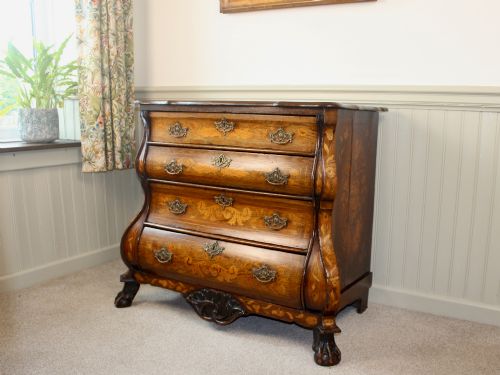
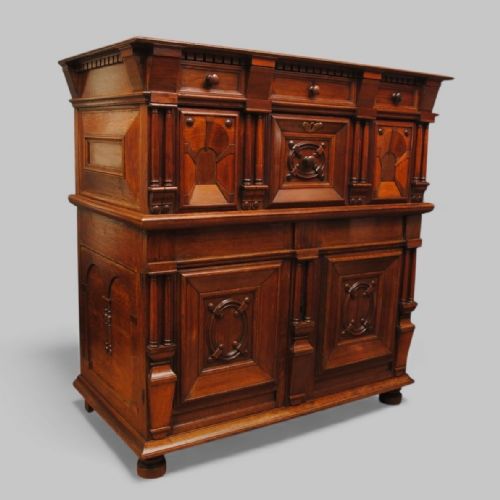
Regional variations appear across the selection, including Welsh examples known as coffor bach alongside English and Dutch interpretations. Construction styles range from simple six-board boxes to complex two-part chests and press cupboards utilising native hardwoods.
Materials and Technique
Makers built these pieces primarily using solid oak timbers, often supplemented by secondary woods such as walnut, mahogany, and fruitwood. Panels were joined using traditional frame-and-panel construction to accommodate the natural expansion and contraction of timber over time.
Inlay work employs techniques like marquetry, fruitwood inlay, and oyster veneering, utilising contrasting botanical materials to create geometric or floral patterns. Iron and brass hinges, lock plates, and handles provide functional reinforcement and secure storage.
Carving frequently accompanies the inlay, utilising gouges and chisels to produce arcaded panels and geometric reliefs on the primary facade. Surfaces finished with historic wax or polish display the natural grain structure of the oak.
Some seventeenth-century chests hide secret drawers cunningly built behind decorative friezes to guard family gold.
Assessing Quality
The standard of craftsmanship shows in the precision of the joinery and the complexity of the inlay work. Finer examples display tightly fitted dovetails, well-aligned panels, and intricate botanical marquetry that remains flush with the surrounding oak surface.
Originality of components dictates much of the standing of a piece, particularly regarding feet, lids, locks, and metal hardware. Retaining the primary timber surfaces without excessive modern intervention preserves the historic character valued by collectors.
The Inlaid Oak Storage Chest Glossary
- Coffer
- A large wooden box used for storage, typically hinged at the top and predating standard drawer chests. Early versions often feature heavy framing and carved decoration.
- Mule chest
- A storage chest fitted with one or more drawers beneath the main internal compartment. This form bridges the traditional coffer and the modern chest of drawers.
- Marquetry
- The art of applying decorative pieces of veneer to a structural surface to form intricate pictures or geometric patterns. Makers used contrasting woods like fruitwood and holly to achieve tonal depth.
- Oyster veneering
- A technique of slicing small branches cross-wise to produce circular or oval veneer patterns resembling oyster shells. This decorative surface treatment appears on seventeenth and eighteenth-century furniture.
- Coffor bach
- A small Welsh box or miniature chest featuring feet and drawers, traditionally made as a presentation piece or dowry chest.
Inlaid Oak Storage Chest: Frequently Asked Questions
What is a mule chest?
A mule chest combines the deep top compartment of a traditional coffer with one or more drawers built into the base. This hybrid design emerged to provide easier access to stored clothing without requiring items to be lifted out from the top.
Craftsmen often embellished the drawer fronts and facade panels with contrasting wood inlay, making these pieces both practical furniture and decorative focal points in domestic rooms.
How do I date an oak chest?
Dating relies on examining construction methods, timber selection, and decorative styles such as Jacobean arcading or Georgian proportions. Hand-cut joinery, iron hardware, and the presence of pegged mortise and tenon joints typically point to earlier centuries.
Later Victorian and Edwardian pieces often reveal mechanical saw marks and standardised fixings hidden inside drawer linings or beneath the main body.
How were these chests used?
Households utilised these heavy wooden containers primarily for storing valuable textiles, heavy woolen blankets, and personal documents. The sturdy lockable lids protected contents from moths, dust, and theft in eras before fitted bedroom closets existed.
Over time, many functioned as dowry chests or presentation boxes given to mark marriages and important family milestones, accumulating history through daily domestic service.
How should I care for oak furniture?
Maintaining historic oak requires stable room humidity and protection from direct sunlight to prevent the timber from drying and splitting. Regular dusting with a dry, soft cloth preserves the natural finish without introducing moisture.
Applying traditional beeswax occasionally helps nourish the aged wood and maintains the subtle sheen developed over centuries of handling and use.