


Inlaid Oak Blanket Box
An inlaid oak blanket box provides sturdy, timber-framed storage rooted in centuries of vernacular British woodworking tradition.
Inlaid Oak Blanket Box
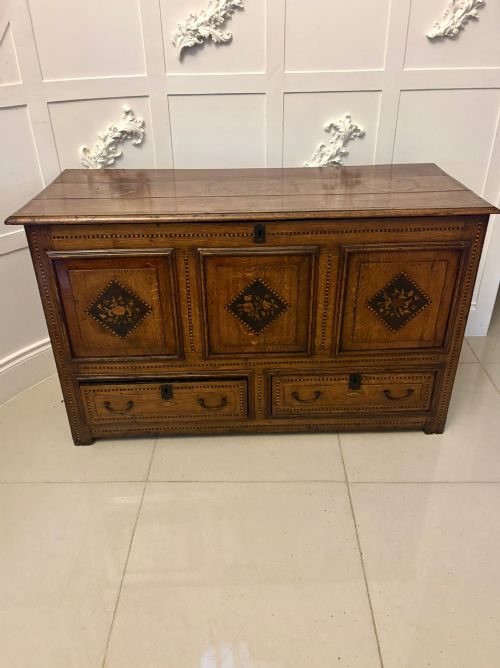
An inlaid oak blanket box is a capacious storage piece designed to hold household linens, garments, and valuables. The pieces found here span functional seventeenth-century coffers, eighteenth-century mule chests fitted with lower drawers, and smaller Welsh coffor bach designs.
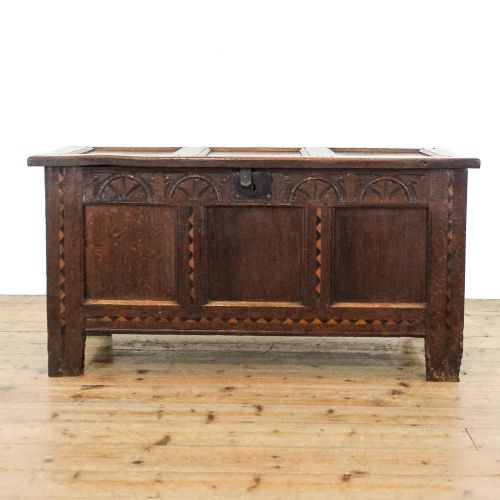
Most examples originate from domestic vernacular traditions, shifting from early arcaded and carved panels to later geometric marquetry and fruitwood embellishments. Buyers encounter everything from robust sixteenth-century trunks to Georgian regional variants and later revival pieces.
How they were made
These pieces rely on solid oak frameworks joined with traditional pegging, framing heavy panelled lids and sides designed to withstand heavy domestic use. Cabinet makers integrated iron and brass hardware such as hinges and locks to secure the contents.
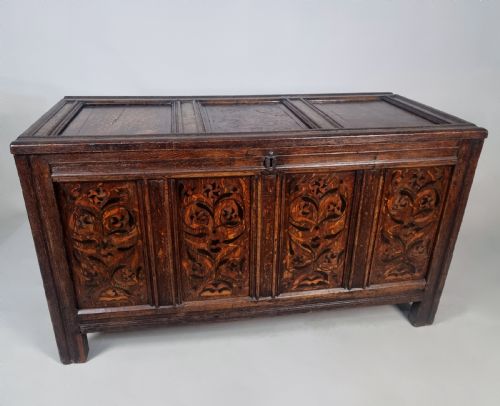
Surface decoration incorporates wood inlay, fruitwood inlay, and marquetry inlay techniques to create contrasting geometric or floral patterns across the timber. Craftsmen carved panels directly into the structural oak or applied contrasting timbers to enrich the visual depth.
Miniature coffor bach chests were often made as apprentice pieces or special gifts, holding secrets rather than heavy blankets.
What varies in quality
The sophistication of the timber preparation and the crispness of the carving distinguish finer examples from simpler vernacular boxes. Early pieces with intact original board lids, substantial timber thickness, and well-preserved structural joinery command greater attention from collectors.
The precision and complexity of the marquetry and fruitwood inlay indicate the maker's skill, where tightly fitted geometric or floral motifs elevate a utilitarian storage trunk. Surviving original surface patination and minimal timber replacement preserve the historical integrity of the piece.
The Inlaid Oak Blanket Box Glossary
- Cofer
- A large timber chest traditionally used for storing valuables and household goods. These heavy storage pieces form the primary structural ancestor of the modern blanket box.
- Mule chest
- A storage chest featuring one or more drawers built into the base beneath the main compartment. This regional form bridges the gap between the traditional coffer and the chest of drawers.
- Marquetry
- The art of applying decorative veneer pieces to a structural surface to form pictorial or geometric patterns. Makers utilised contrasting wood types to achieve distinct visual depth on the front panels.
- Arcaded
- A decorative motif carved to resemble a succession of arches supported by columns. This architectural detail frequently appears on early seventeenth-century panels.
Inlaid Oak Blanket Box: Frequently Asked Questions
How were these chests used originally?
These pieces served primarily for storing heavy textiles, woollen blankets, and valuable family garments in domestic settings. Their sturdy construction also allowed them to function as makeshift seating or tables within the home.
Over time, regional variations like mule chests incorporated lower drawers to separate smaller garments from bulkier linens stored in the main upper compartment.
How do I date an antique oak coffer?
Dating relies on examining the construction methods, joinery techniques, and prevailing decorative styles of the period. Early seventeenth-century examples typically display heavy panel-and-frame construction with hand-carved arcading, whilst eighteenth-century pieces often introduce secondary drawers and lighter fruitwood inlay.
Changes in hardware, such as wrought iron hinges and brasses, alongside the evolution of regional Welsh or English vernacular designs, further narrow down the era of manufacture.
What is the difference between a coffer and a mule chest?
A traditional coffer consists of a single deep storage compartment accessed exclusively via a hinged lid on the top. A mule chest retains this top-loading compartment but adds one or more drawers built into the base of the structure.
This evolutionary step in cabinet making made frequently accessed items easier to reach without disturbing the main contents stored on top.
Where were these wooden chests made?
The majority of these pieces originate from English and Welsh regional workshops, reflecting local vernacular styles and available timber supplies. Specific areas like Lancashire and various Welsh districts developed distinct traditions in carving and inlay work.
Cabinet makers utilised native oak alongside imported or secondary fruitwoods to execute regional decorative motifs unique to their local guilds.
How do I care for an antique oak box?
Keep the timber away from direct heat sources and dramatic humidity fluctuations to prevent the oak panels from splitting or warping. Regular dusting with a dry, soft cloth maintains the surface without stripping the historic patina accumulated over centuries.
Applying a light, traditional wax polish occasionally helps nourish the dry timber and protects the delicate marquetry inlay.