
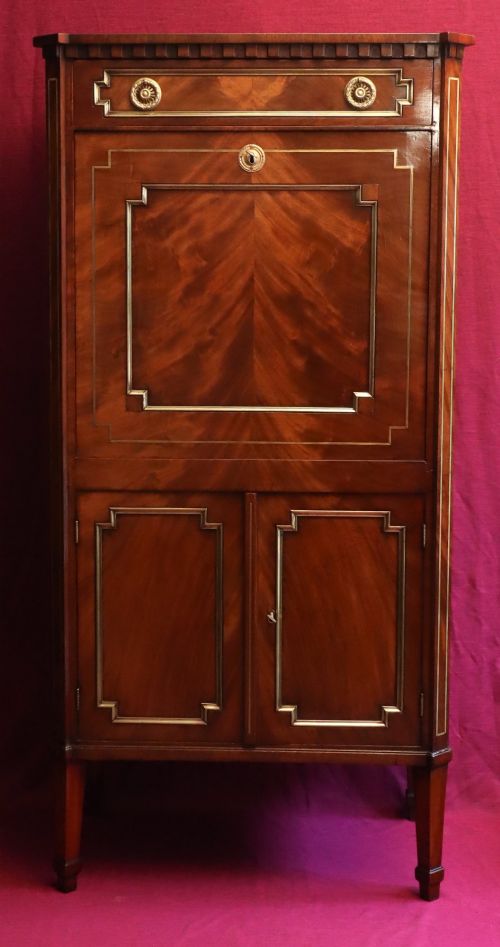
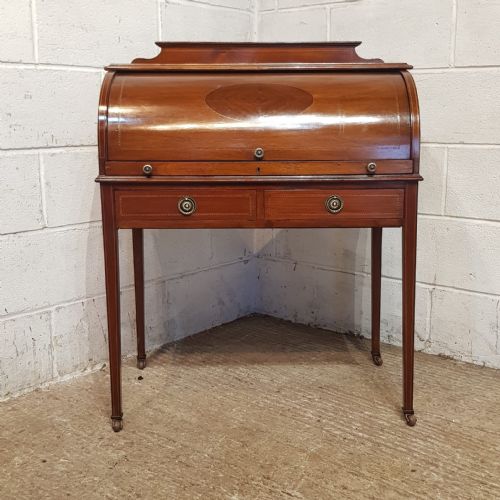
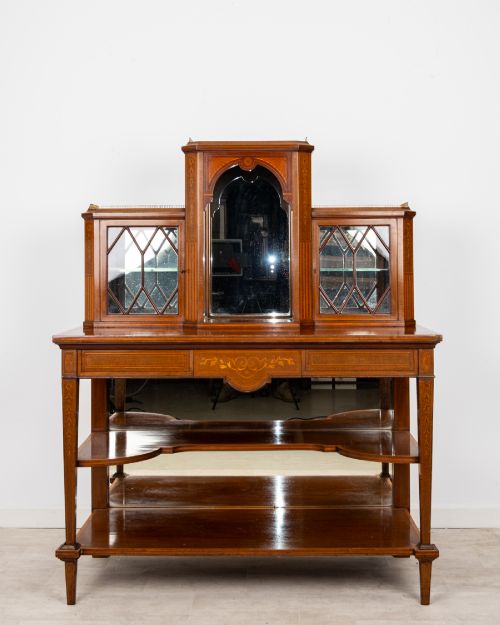
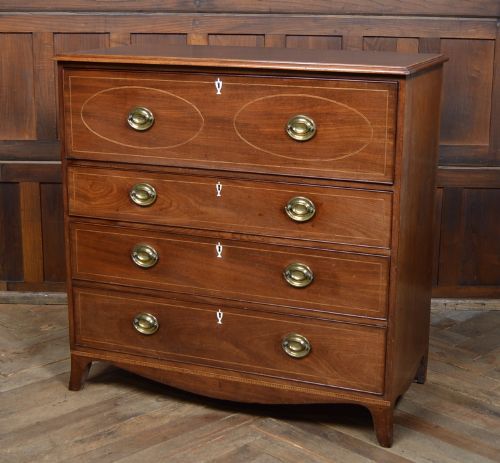


Inlaid Mahogany Secretary Desk
An inlaid mahogany secretary desk combines architectural presence with hidden writing surfaces, offering compartments for correspondence inside rich timbers.
Inlaid Mahogany Secretary Desk
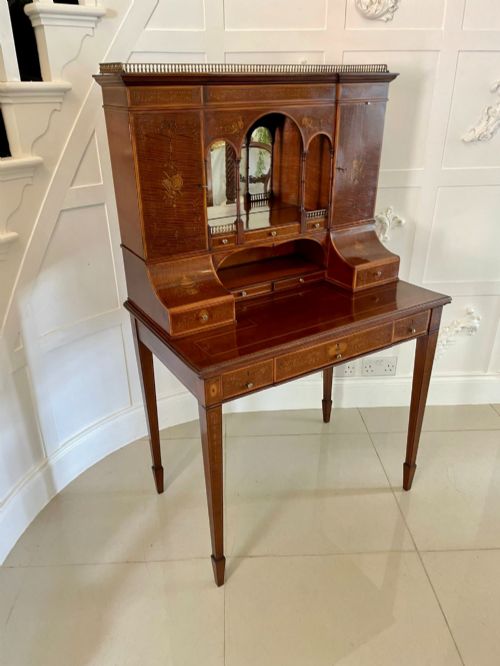
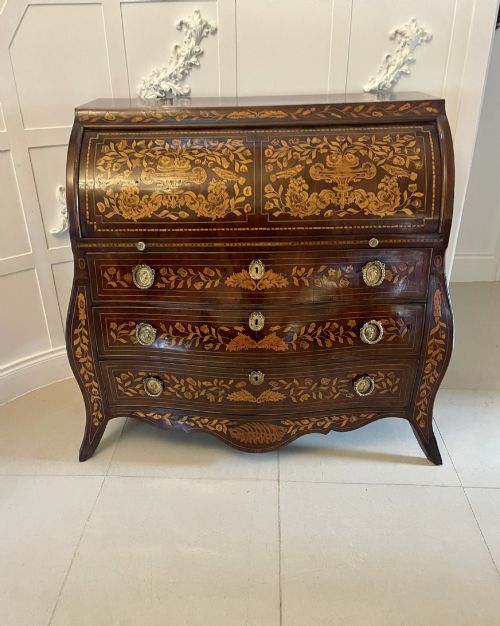
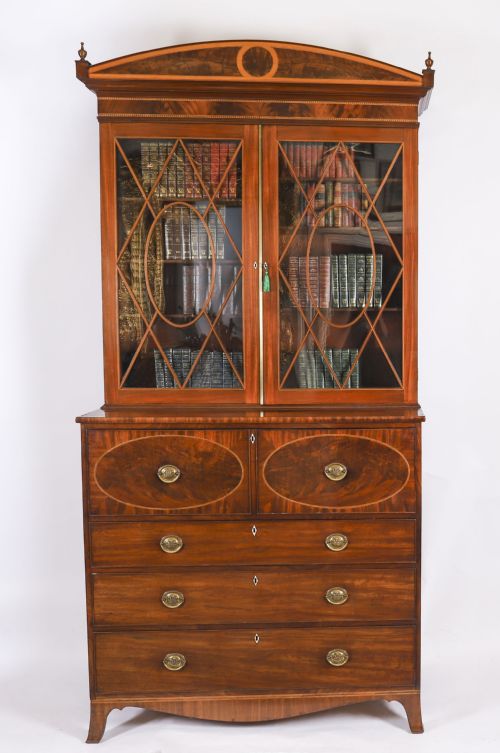
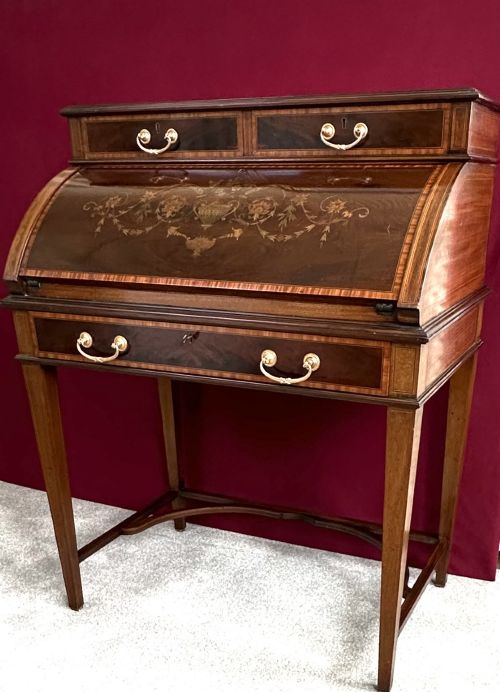
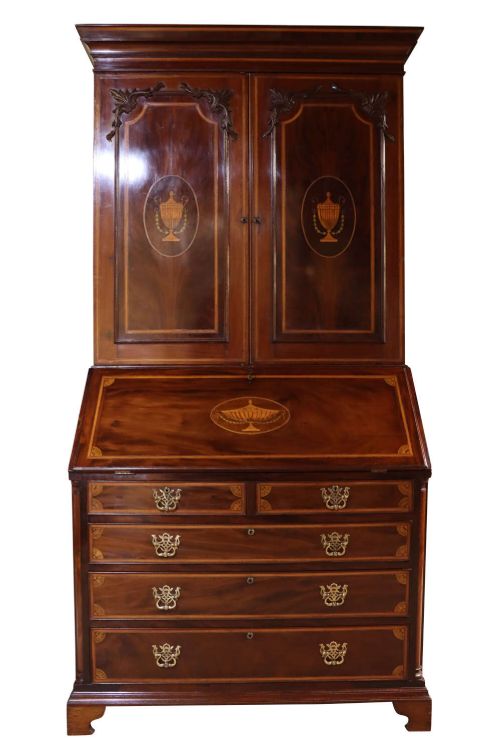
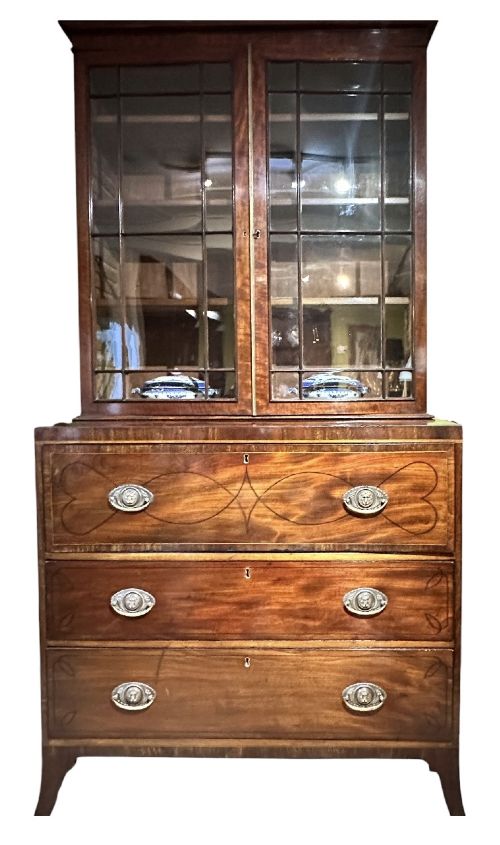
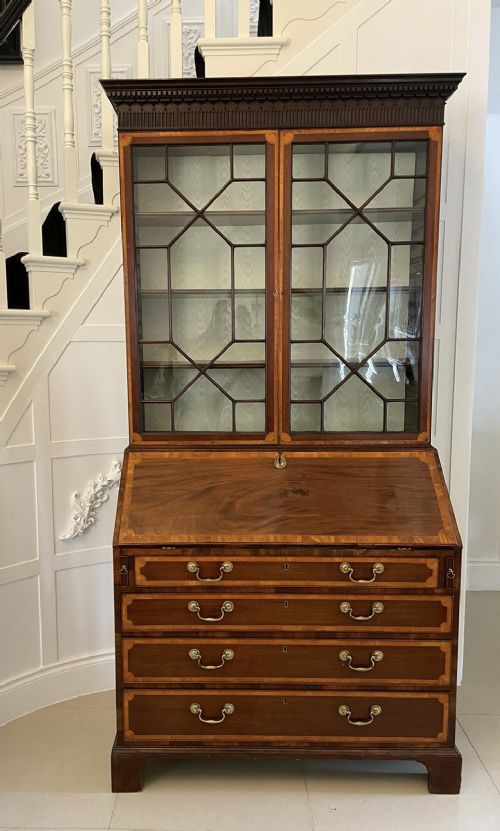
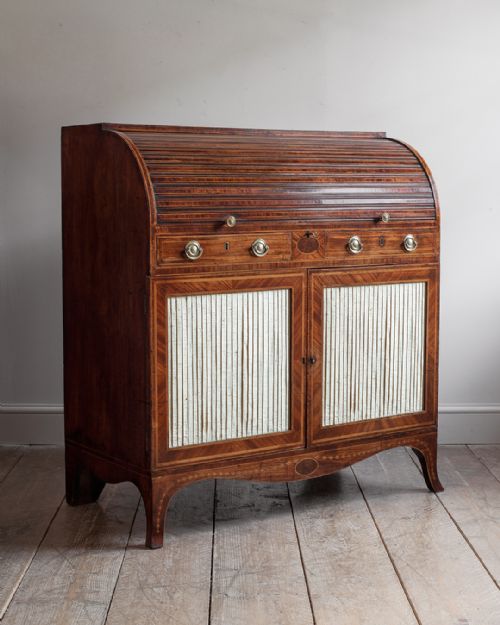
An inlaid mahogany secretary desk spans several centuries of cabinet making, appearing in forms from tall bureau bookcases with glazed upper doors to compact writing cabinets and cylinder desks. The selection includes pieces spanning the Georgian, Regency, Victorian and Edwardian eras, reflecting changing domestic requirements for storage and correspondence.
Bureau bookcases and secretaire chests dominate the forms, offering drop fronts or pull out drawers that conceal fitted pigeonholes and small drawers. These variants provide substantial workspace alongside enclosed shelving, bridging the gap between a display cabinet and a functional writing station.
Originating in domestic workshops and larger cabinet houses across Britain, these pieces draw on traditional proportions. The integration of satinwood, fruitwood and floral marquetry provides decorative contrast to the darker primary timber.
Materials and construction
Makers utilised solid mahogany and flame mahogany veneers over secondary timbers, constructing carcases designed to withstand decades of daily use. Brass fittings such as drop handles, escutcheons and hinges secure drawers and drop fronts.
Inlay work incorporates contrasting satinwood and fruitwood arranged in geometric stringing, floral marquetry or shell motifs. Interior fittings often feature carefully dovetailed small drawers, pigeonholes and sometimes tambour shutters or cylinder mechanisms.
Listings span periods from the eighteenth century through Georgian, Regency and Victorian eras up to Edwardian Sheraton Revival examples.
Judging quality and craftsmanship
The choice of primary timber dictates visual depth, with figured flame mahogany and crisp satinwood inlay marking out superior examples. Precision in the marquetry cut and the tightness of veneer joints indicate the skill of the original workshop.
Internal complexity sets finer pieces apart, particularly those featuring well engineered cylinder actions, tambour doors or secret compartments concealed within fitted pigeonholes. Original brass hardware, sound drawer linings and smooth drop front hinges contribute to lasting integrity.
Edwards & Roberts
The Inlaid Mahogany Secretary Desk Glossary
- Secretaire
- A desk or cabinet featuring a concealed writing drawer or a drop front writing surface. It often combines the storage capacity of a chest of drawers with a dedicated workspace.
- Marquetry
- Decorative veneer work forming pictures or ornamental patterns using various tinted woods. Craftsmen cut thin slices of timber and fitted them together like a puzzle before gluing them to the carcase.
- Cylinder bureau
- A writing desk featuring a curving quarter circle wooden shutter that rolls back to reveal the writing surface and interior pigeonholes. This mechanism conceals correspondence neatly when not in use.
- Flame mahogany
- Timber cut from the fork of the mahogany tree, displaying a distinctive undulating flame pattern. Cabinet makers reserved this highly figured veneer for prominent drawer fronts and fall fronts.
- Bonheur du jour
- A light lady's writing desk originating in the eighteenth century, often fitted with small drawers or a cabinet on the upper surface. These refined pieces sit on slender legs and frequently feature delicate inlay.
Inlaid Mahogany Secretary Desk: Frequently Asked Questions
How do I use a secretary desk?
The primary writing surface drops forward or pulls out from the main body, supported by wooden arms or brackets to create a stable desk. Inside, small drawers and pigeonholes organise letters and writing materials.
When writing is finished, correspondence goes back into the internal compartments before closing the fall front or rolling the cylinder shut. This keeps papers out of sight and presents a tidy cabinet facade.
Where should I place it?
These pieces suit reception rooms, studies or bedrooms where their dual function as storage and writing furniture adds both utility and architectural interest. Freestanding models can occupy wall spaces or sit away from partitions depending on the finish of the back panels.
Position the desk away from direct sunlight and heat sources to protect the mahogany finish and prevent timber shrinkage. Adequate room must be allowed in front of the piece for the drop front or drawer to extend fully.
How do I tell Georgian from Edwardian?
Georgian pieces generally display heavier proportions, dense timber weight and hand cut dovetails within drawer construction. The inlay work tends to feature simple stringing or classic shell motifs executed in satinwood.
Edwardian examples often show lighter framing, Sheraton Revival influences and machine produced accuracy in the internal joints. The satinwood inlay can be more elaborate, reflecting late nineteenth and early twentieth century revival tastes.
What is a cylinder bureau?
A cylinder bureau is a desk featuring a rounded wooden shutter that slides backward into the body of the furniture to open. This mechanism exposes the writing surface and interior compartments in a single smooth movement.
Closing the cylinder hides the entire writing area while keeping documents secure inside. This design became popular during the late eighteenth century and returned during later revival periods.