
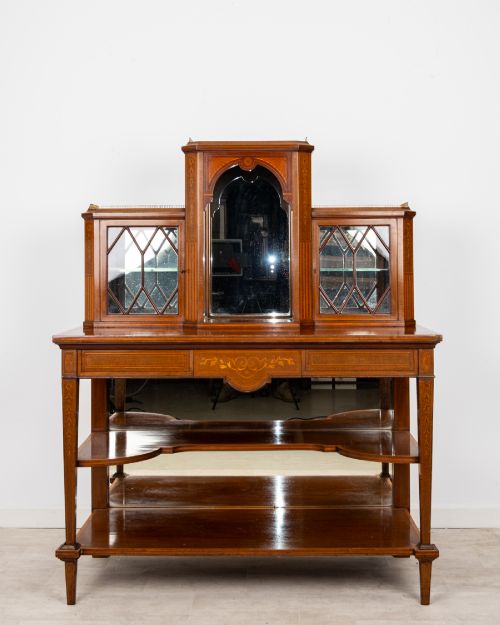
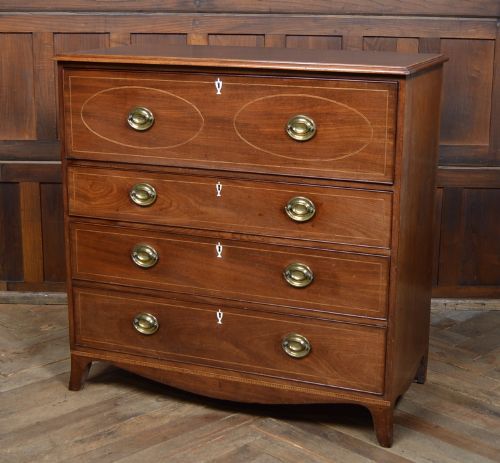

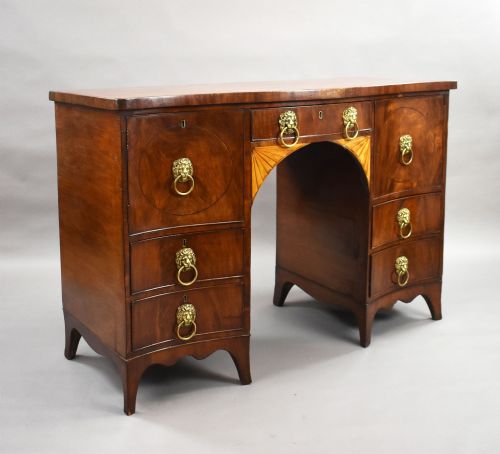
Inlaid Mahogany Desk Cabinet
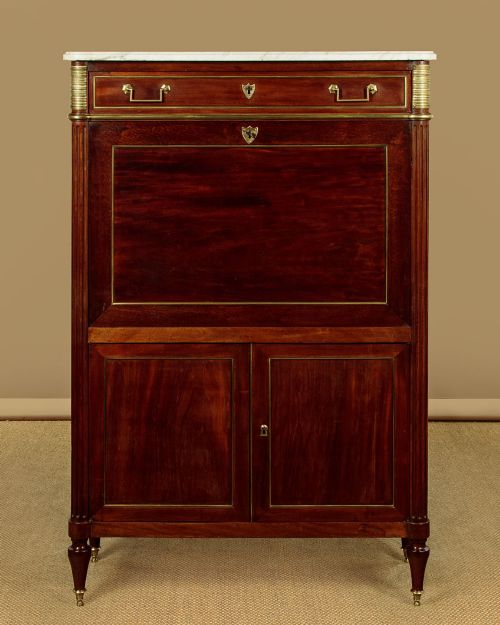
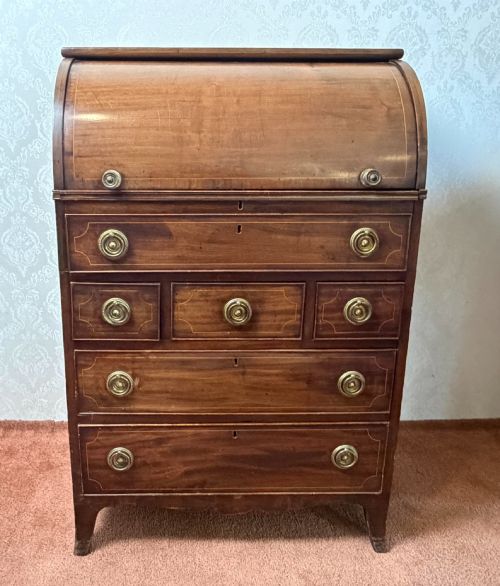
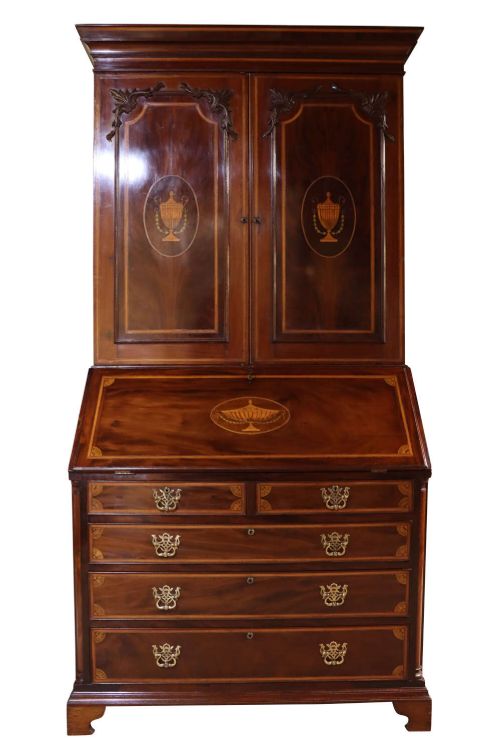
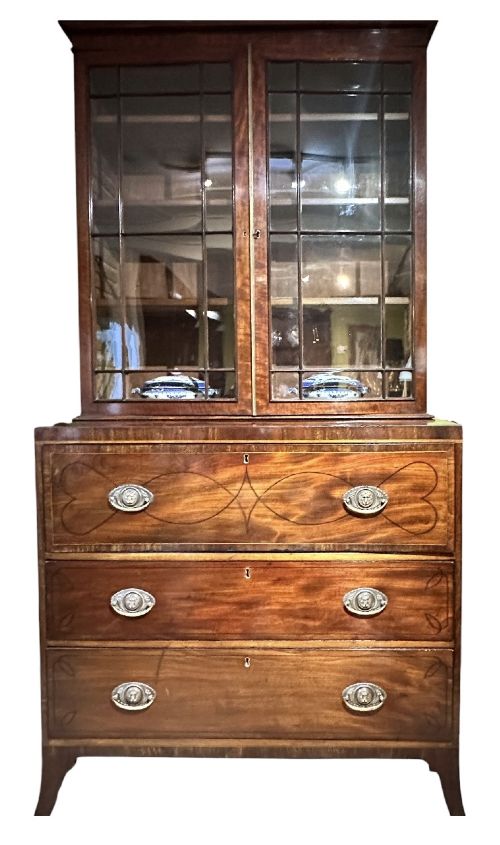
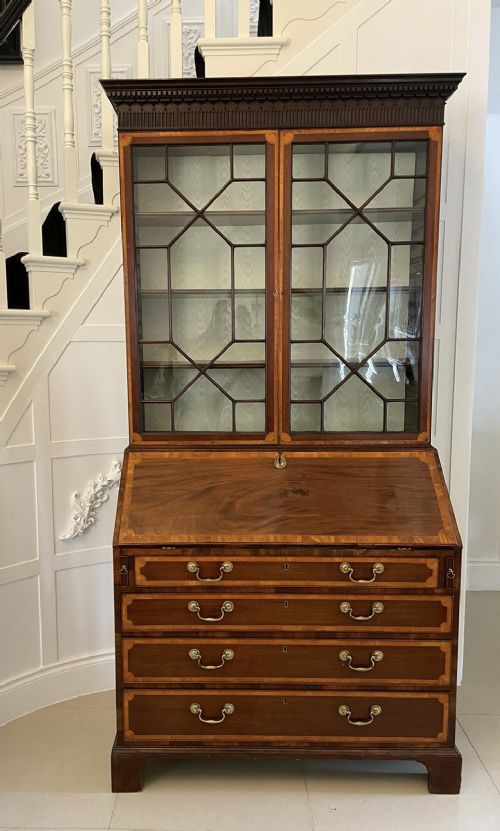
An inlaid mahogany desk cabinet brings together fitted writing compartments and display shelving within figured timber framed by delicate contrasting stringing.
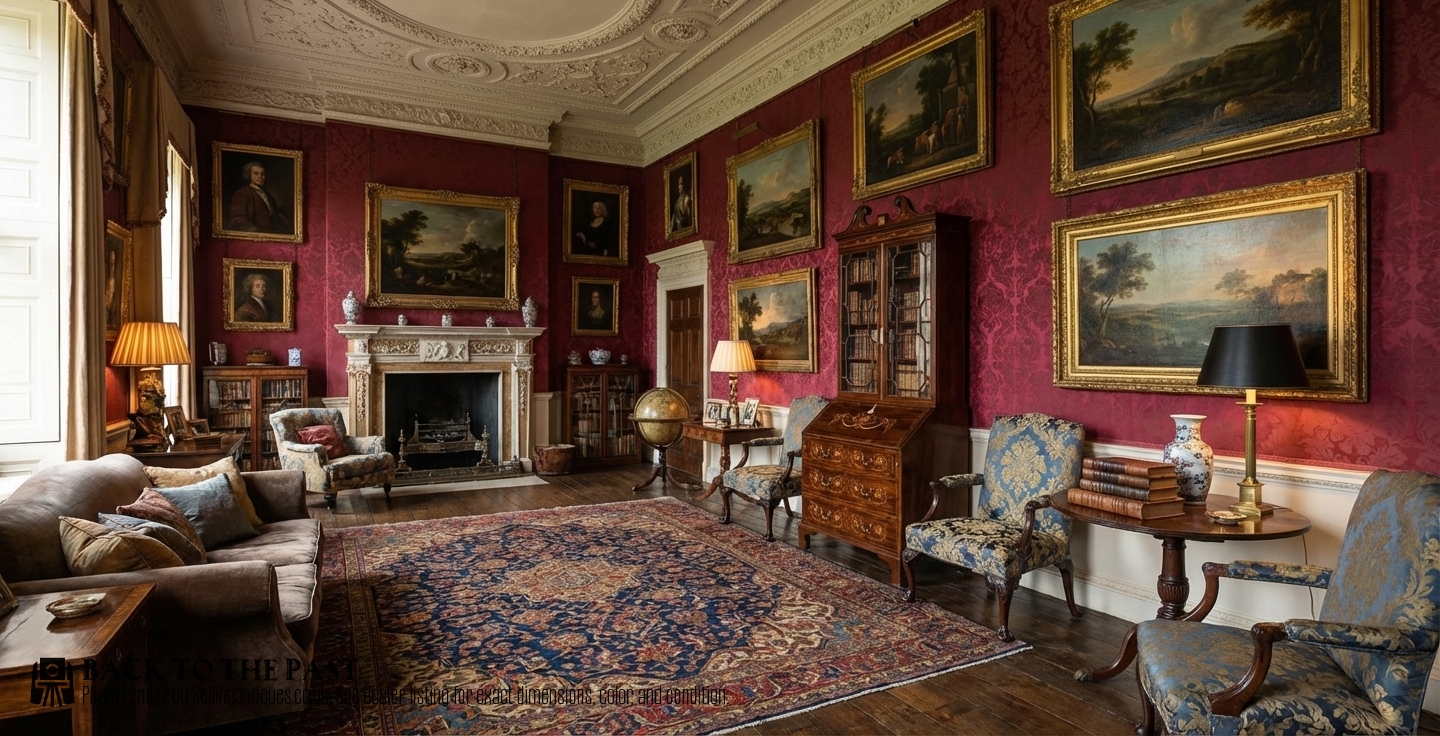
Inlaid Mahogany Desk Cabinet
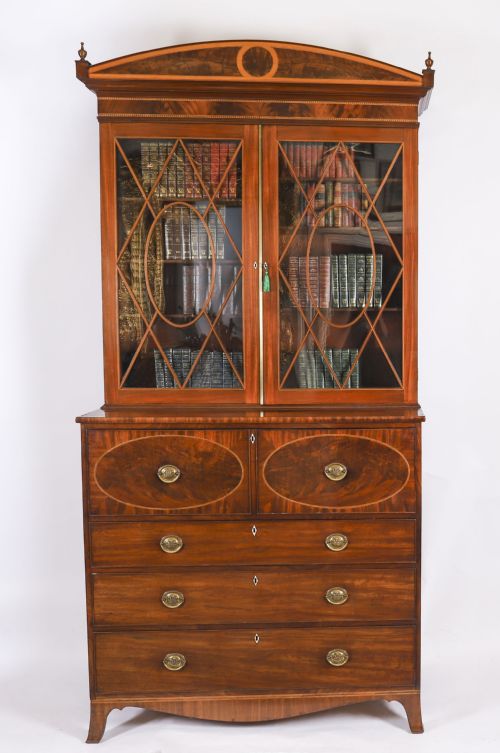
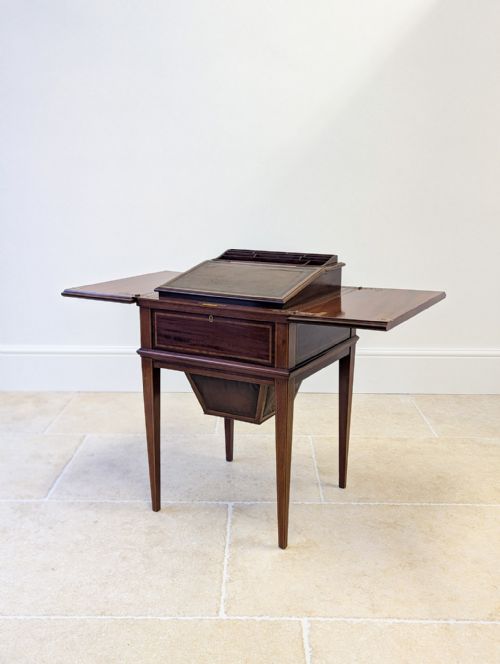
An inlaid mahogany desk cabinet spans several distinct forms designed for correspondence and storage, ranging from compact stationery boxes and writing tables to towering bureau bookcases. When searching for an inlaid mahogany desk cabinet, a buyer encounters everything from Georgian secretaire chests to Edwardian bureau bookcases and tabletop desk tidies.
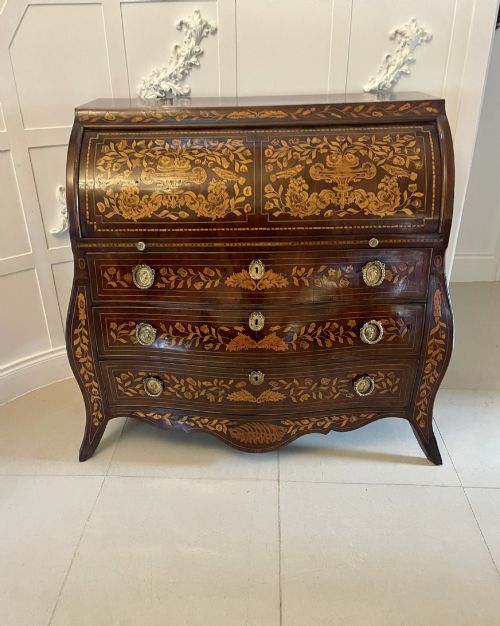
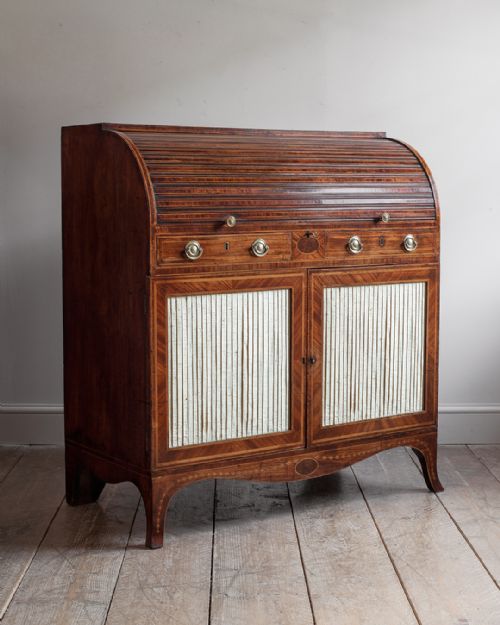
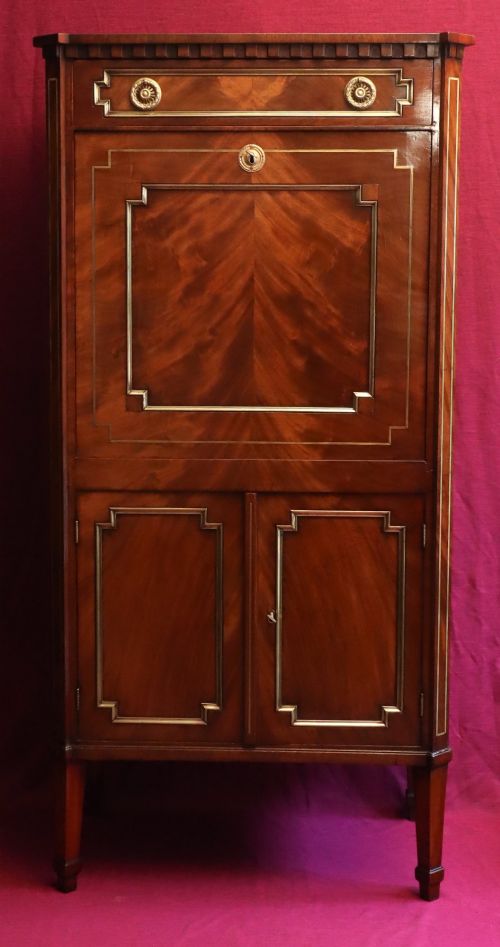
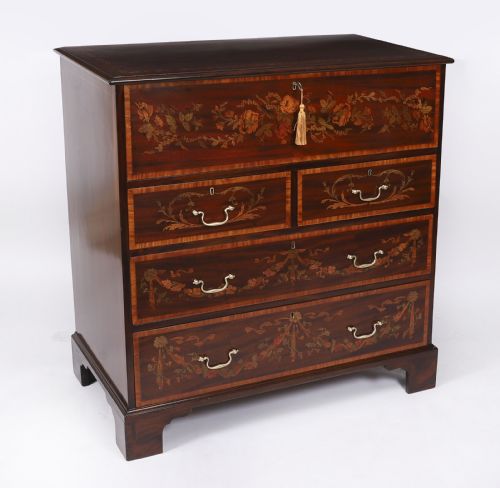
The material vocabulary centres on rich mahogany timber enhanced with satinwood inlay, boxwood stringing, and occasional brass details. Cabinetmakers utilised these contrasting woods to frame drawer fronts, doors, and writing surfaces with geometric banding or floral marquetry.
Origins stretch across the eighteenth, nineteenth, and early twentieth centuries, with substantial representation from the Georgian, Regency, and Edwardian periods. Pieces from these eras combine architectural glass doors, fall-front writing drawers, and tambour shutters within domestic furniture.
Materials and construction
Cabinetmakers selected dense mahogany logs, often choosing flame veneers for prominent exterior panels to display rich figuring. This primary timber received structural support from secondary native woods used in drawer linings and internal dividers.
Decorative detailing relied on precision cutting of contrasting light woods such as satinwood and boxwood for stringing and floral marquetry panels. Craftsmen inlaid these materials flush into the mahogany ground to create borders and medallions.
Functional hardware integrated brass handles, escutcheons, and hinges alongside specialised mechanisms for tambour shutters, folding writing flaps, and metamorphic desk actions.
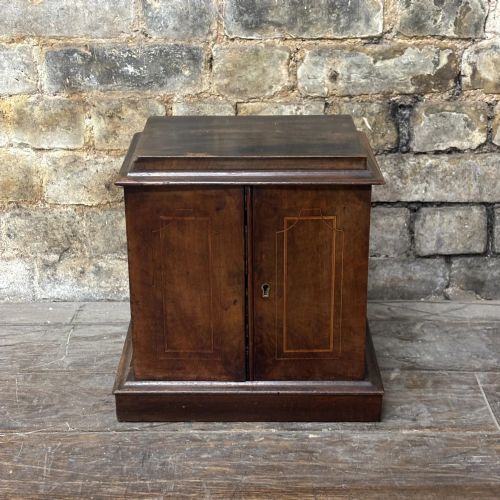
Edwardian stationery boxes include hinged-lid desk tidies designed to keep loose nibs from rolling away.
Evaluating workmanship
Quality rests upon the crispness of the inlay and the selection of the mahogany veneer. Finer examples display tightly figured flame mahogany matched symmetrically across doors and drawers, bordered by hand-cut stringing without gaps.
Internal engineering distinguishes workshop standards. Superior pieces feature smoothly operating tambour doors, accurately dovetailed secondary timber drawers, and tightly fitted writing compartments that close without binding.
Edwards & Roberts
The Inlaid Mahogany Desk Cabinet Glossary
- Secretaire
- A piece of furniture containing a concealed writing drawer or fold-down writing flap. This fall-front reveals pigeonholes and small drawers inside.
- Tambour
- Slats of wood glued to a canvas backing allowing a desktop or cabinet door to slide around a curved track. It conceals internal compartments when closed.
- Marquetry
- Veneering technique using various coloured woods to form decorative pictures or patterns. Craftsmen cut pieces from thin sheets and assemble them onto a ground.
- Stringing
- Thin inlay lines of contrasting wood set into grooves on furniture surfaces. It outlines drawers, panels, and table edges.
- Bonheur du jour
- A small, light ladies writing desk featuring a small cabinet or set of drawers on top. The form emerged during the eighteenth century.
Inlaid Mahogany Desk Cabinet: Frequently Asked Questions
What is a secretaire bookcase?
A secretaire bookcase combines a shelved upper cabinet with a lower section housing a pull-out writing drawer that drops down to form a desk.
Inside the drop-front, small drawers and pigeonholes provide storage for writing equipment and correspondence while concealing the working surface when closed.
How do I date an Edwardian piece?
Edwardian items date from the reign of Edward VII between 1901 and 1910, often showing lighter proportions and Sheraton Revival influence.
Construction methods during this period combined traditional hand dovetailing with early machine-sawn elements and distinct satinwood inlay patterns.
How does a tambour desk work?
A tambour desk uses narrow strips of wood attached to a flexible fabric backing to slide horizontally or vertically around a curved groove.
This mechanism allows the user to cover the entire writing surface and pigeonholes without needing clearance for swinging doors.