


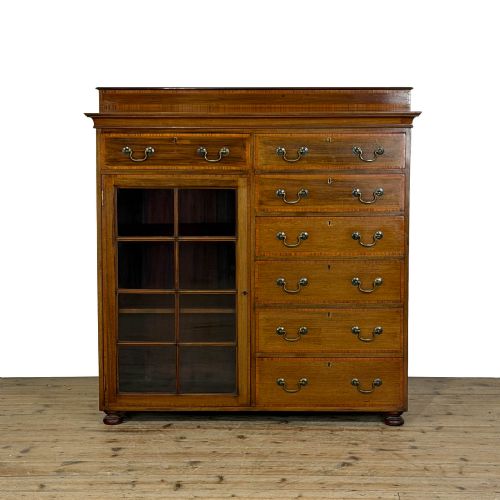
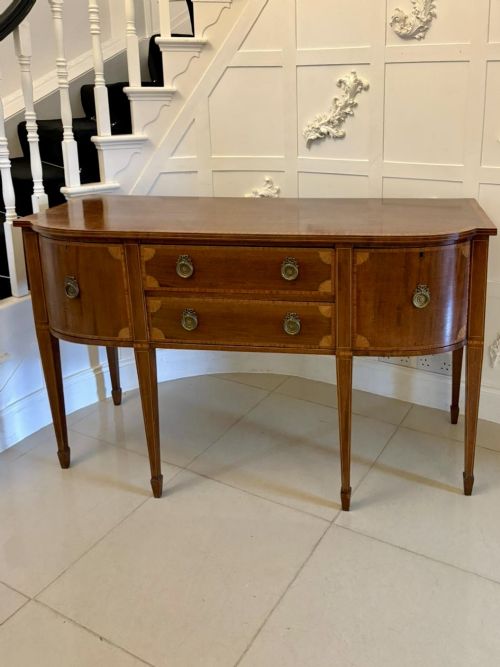
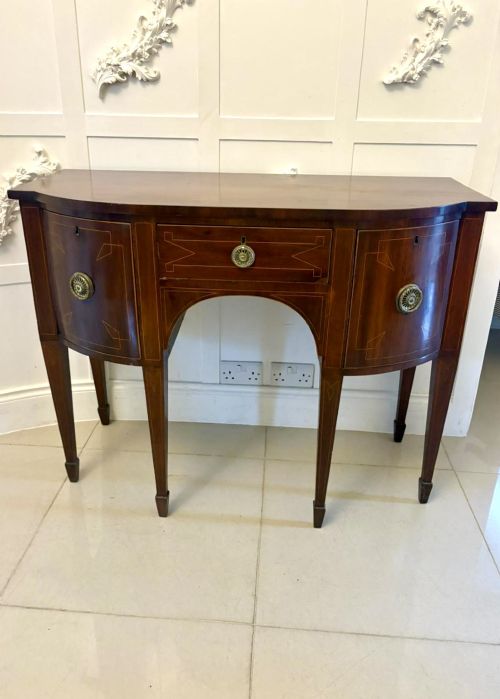
Inlaid Mahogany Buffet
An inlaid mahogany buffet brings architectural balance to a dining room, offering deep timber grain and precise contrasting stringing.

Inlaid Mahogany Buffet
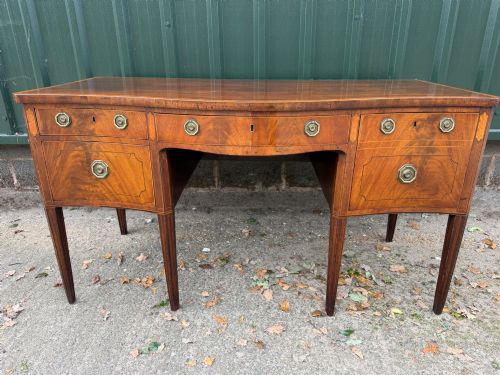
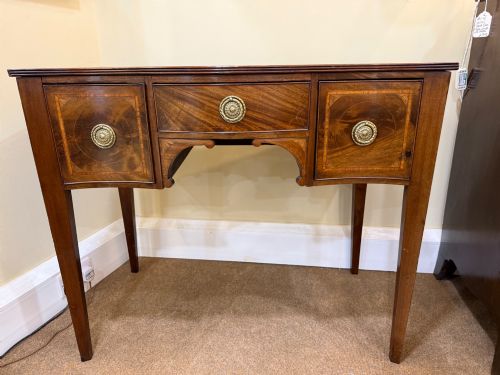
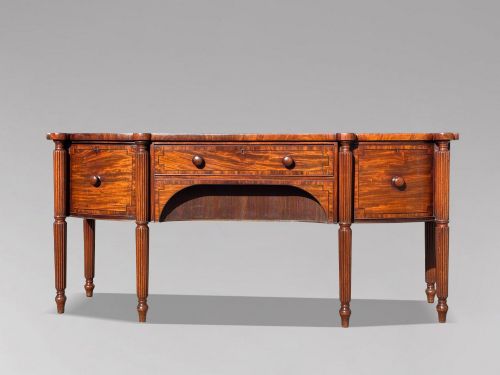
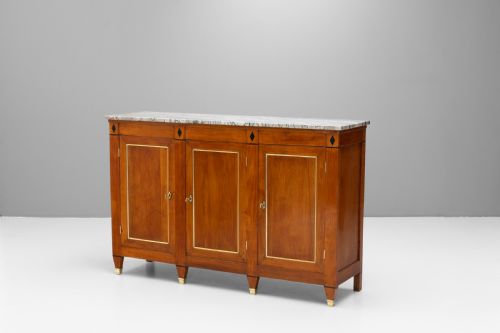
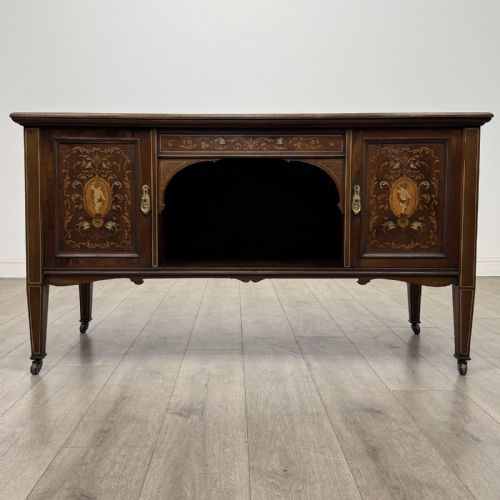
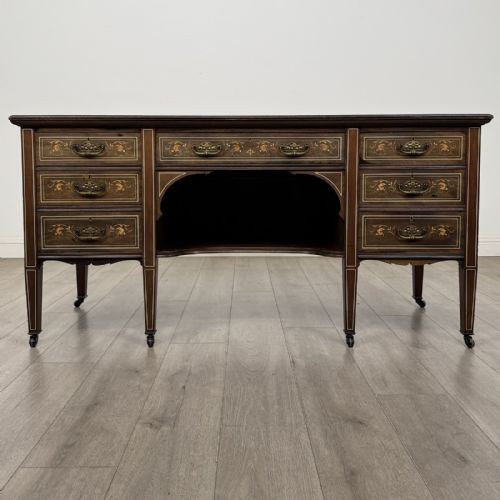
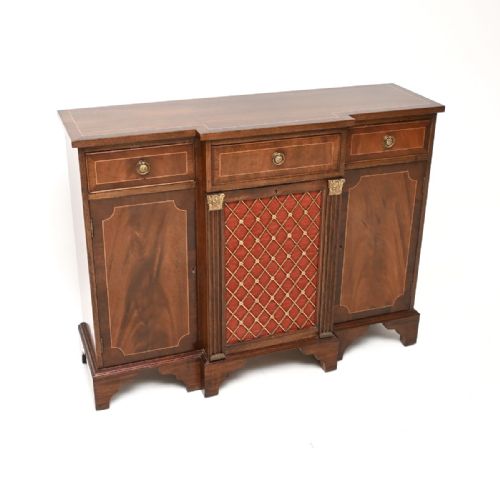
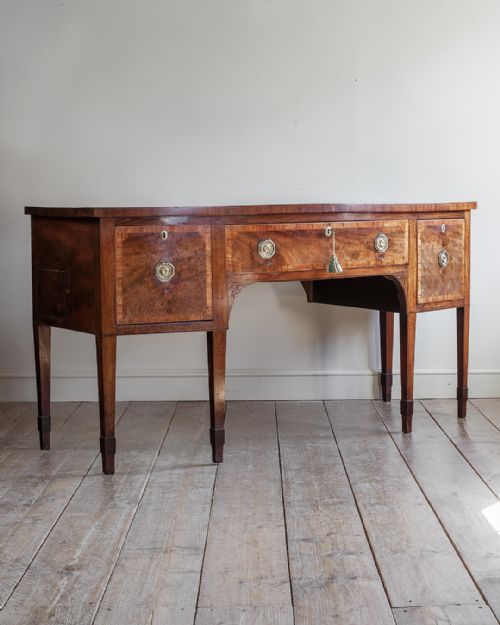
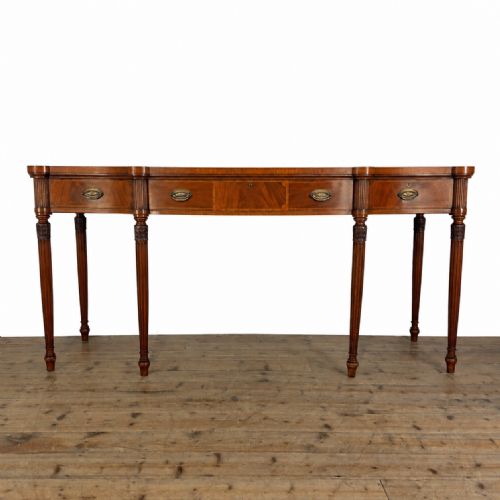
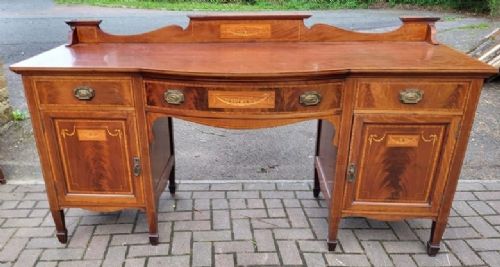
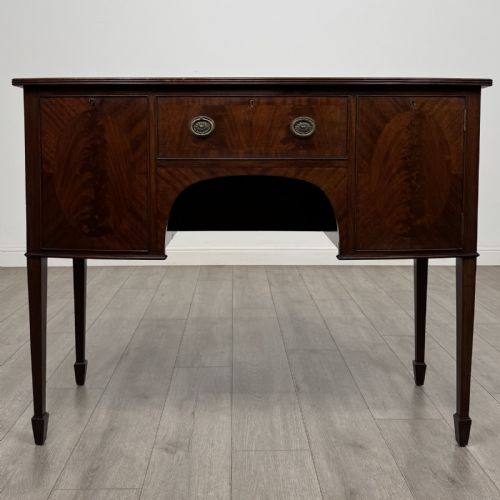
An inlaid mahogany buffet encompasses serving pieces, sideboards, and servers from the Georgian, Regency, and Edwardian periods. These forms provide deep storage alongside formal dining surfaces.
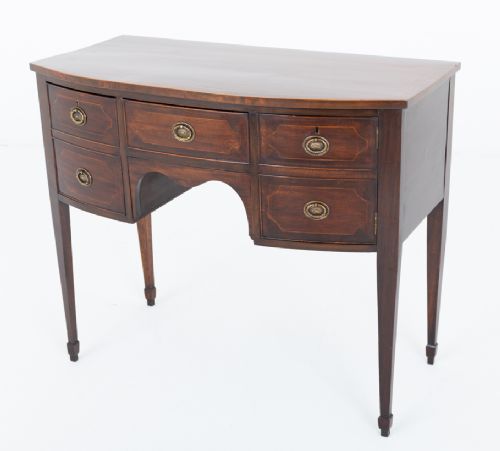
You will most commonly encounter Georgian and Regency examples, alongside later Sheraton Revival pieces from the Edwardian era. These typically take bow-front or serpentine shapes.
Makers utilised dense timber figures to give the principal surfaces character, framing the main panels with lighter contrasting woods.

Materials and construction methods
Cabinet makers selected solid mahogany and flame mahogany veneers for the main structure, laying the grain carefully to catch the light across the front panels.
Satinwood and boxwood provided the pale contrast for delicate stringing lines and marquetry motifs, while brass fittings added structural accenting.
Inlaid Mahogany Buffet Retail Price Guide 2026
Typical asking prices for inlaid mahogany buffet among the pieces listed under this phrase on Sellingantiques today, from the lower quarter to the upper quarter. They describe what is for sale here now, not the wider market.
Common forms on this page include serpentine serving tables, stage-back sideboards, and bow-front servers.
Assessing craftsmanship and proportion
Superior pieces display exceptional harmony in their serpentine or bow fronts, where the timber grain flows naturally around the curves without distortion.
The precision of the boxwood and satinwood inlay separates standard production from masterwork cabinetry, requiring tight joints and clean geometric borders.
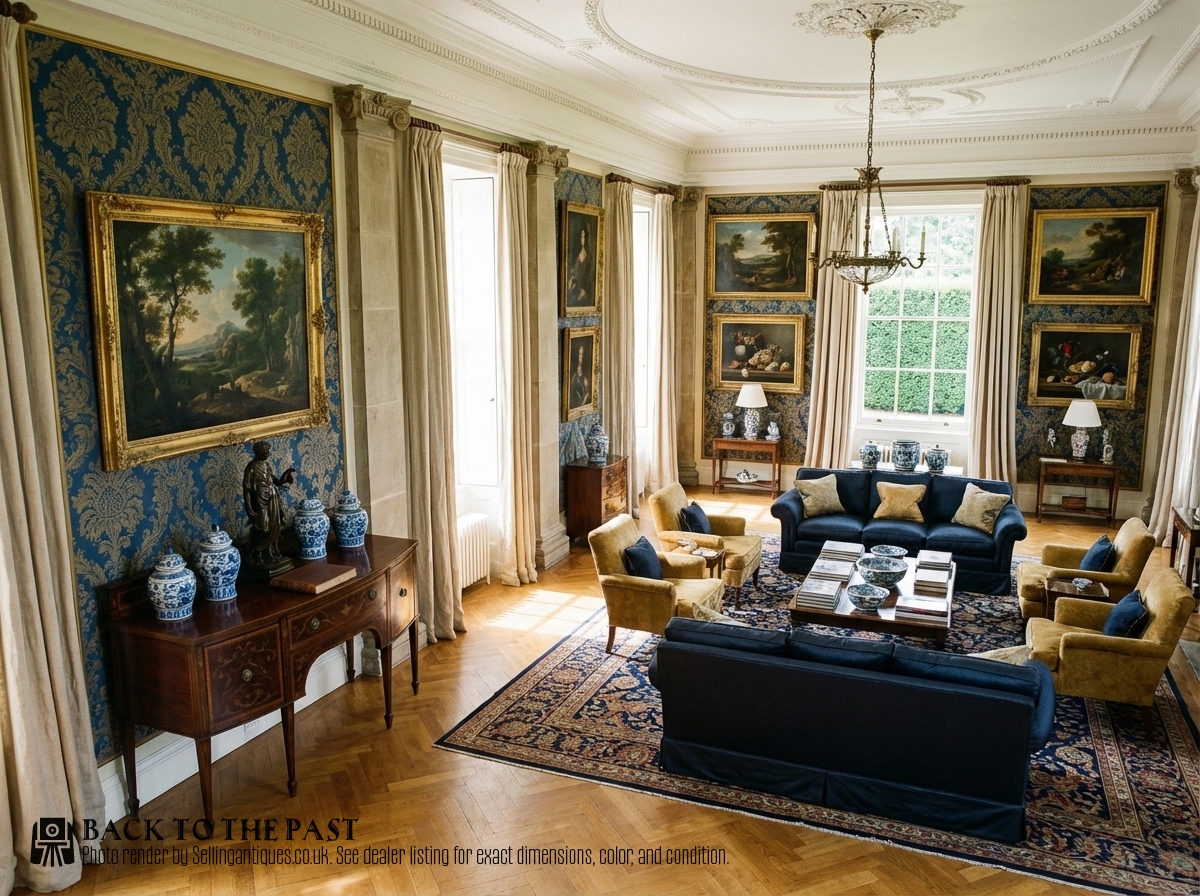
Hewetsons London
The Inlaid Mahogany Buffet Glossary
- Bow-front
- A convex curved cabinet front that projects outward in a smooth arc. This shape became popular during the Georgian period to soften rigid room corners.
- Serpentine
- A front profile defined by a central convex curve flanked by two concave sweeps. It demands expert woodworking to maintain alignment across the drawers.
- Crossbanding
- A narrow strip of veneer laid perpendicular to the surrounding grain. This technique frames the primary panels of the buffet.
- Marquetry
- Elaborate decorative patterns formed by fitting together small pieces of various coloured woods. It often appears on the top surface or central drawer.
- Stringing
- Very thin lines of contrasting light wood inlaid into channels cut into the mahogany. It creates delicate geometric borders around the edges.
Inlaid Mahogany Buffet: Frequently Asked Questions
How do I spot a Georgian piece?
Examine the timber selection and the sharpness of the hand-cut dovetails inside the drawers. Georgian pieces rely on dense, heavy mahogany and restrained boxwood stringing.
Check the underside and backboards for tool marks and timber shrinkage that indicate proper age. Later revivals often use machine-cut elements and lighter secondary woods.
Where should I place a buffet?
Position the piece against a principal dining room wall where its length and curved front can be fully appreciated. Ensure adequate clearance for opening side cupboards and drawers.
Keep the timber away from direct heat sources and strong sunlight to prevent the mahogany finish from fading or the veneers from lifting.
How do I clean the surface?
Dust the mahogany regularly with a soft, dry lint-free cloth to prevent particulate accumulation in the carved details and stringing channels. Avoid silicone sprays.
Apply a traditional beeswax polish occasionally to nourish the timber and maintain the soft sheen of the historic finish.