


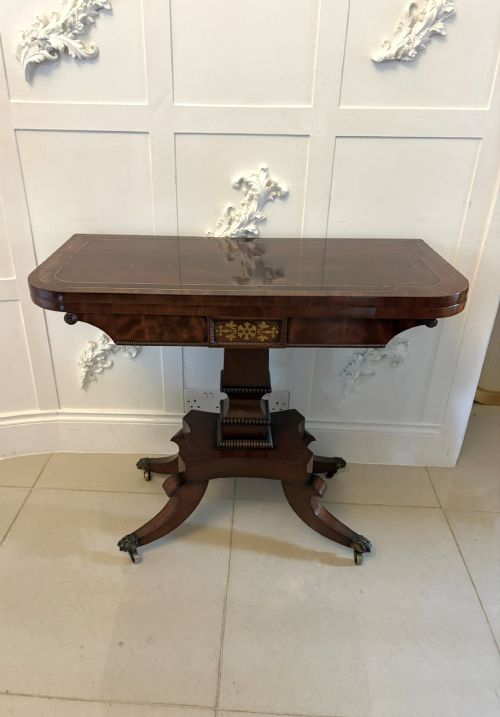
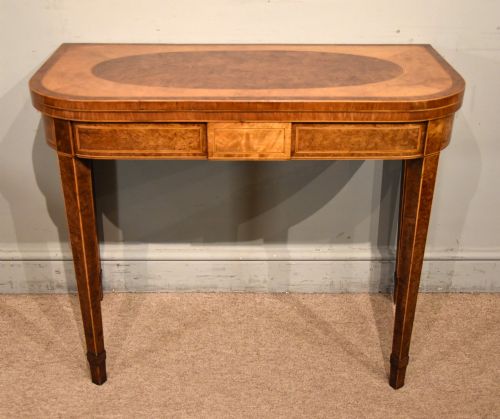
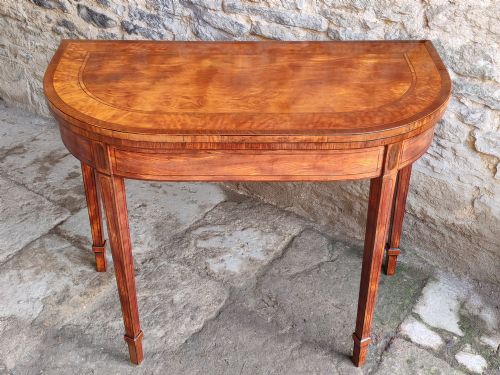
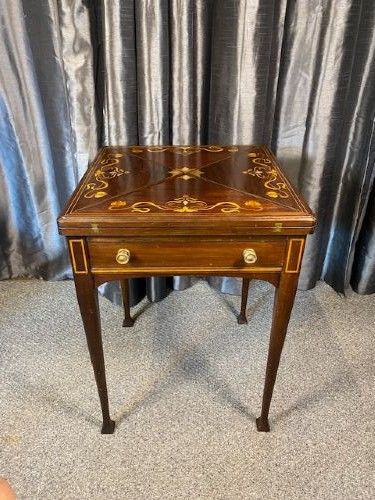
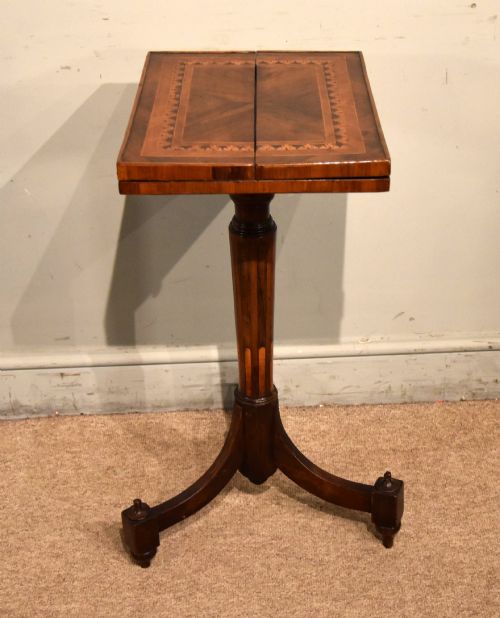
Inlaid Folding Card Table
An inlaid folding card table offers a clever surface for gaming and social life, shaped across Georgian, Regency and Victorian periods.
Inlaid Folding Card Table
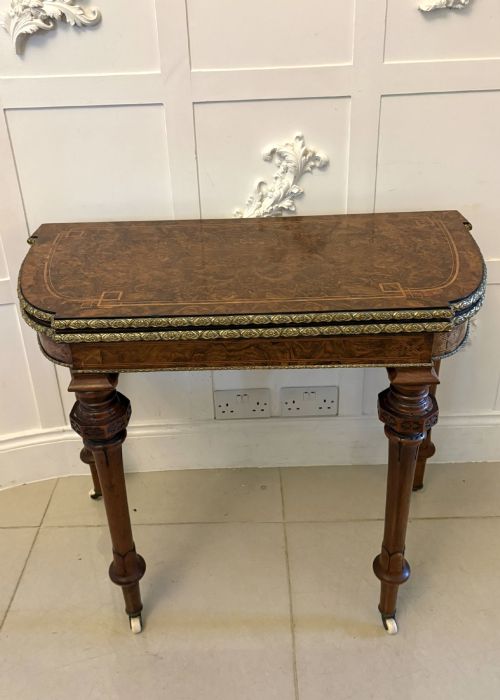
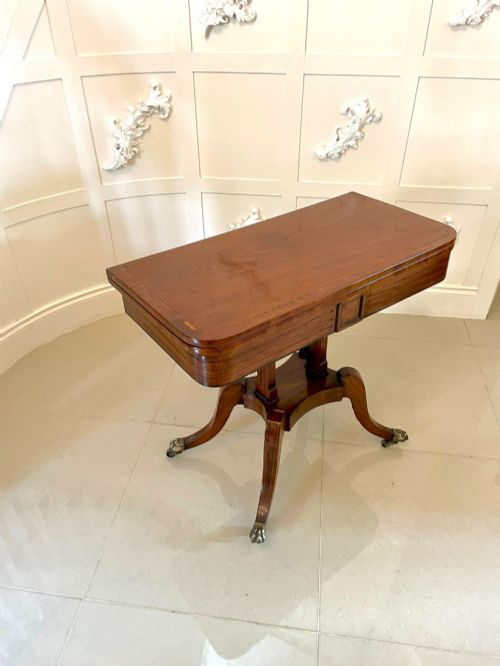
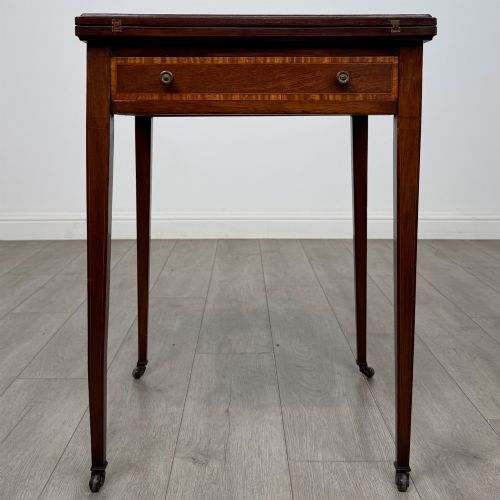
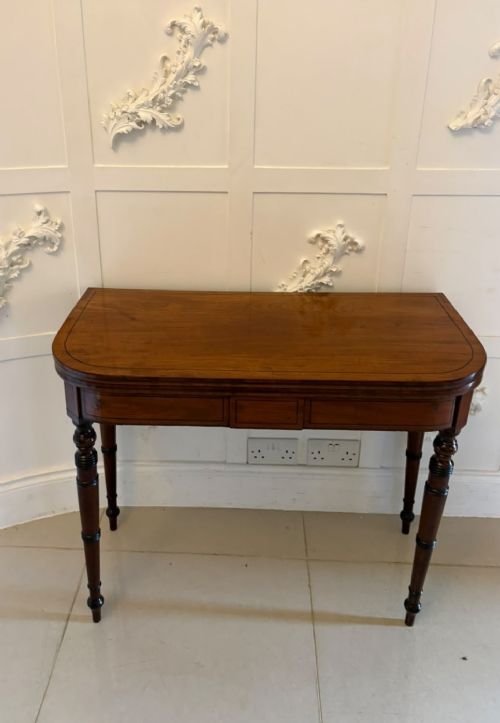
An inlaid folding card table is a multi-functional piece designed for domestic leisure, operating as a console or side table when closed and opening to reveal a baize-lined playing surface. You will frequently encounter Georgian, Regency and Victorian examples on this page, spanning centuries of changing social habits and cabinet-making traditions.
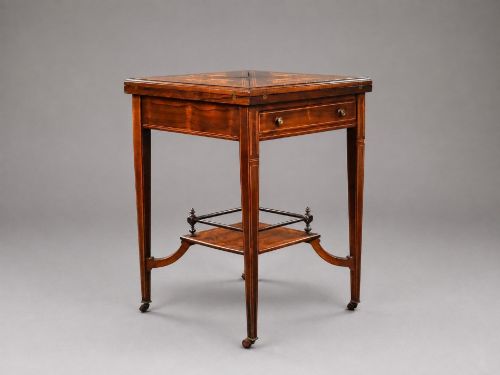
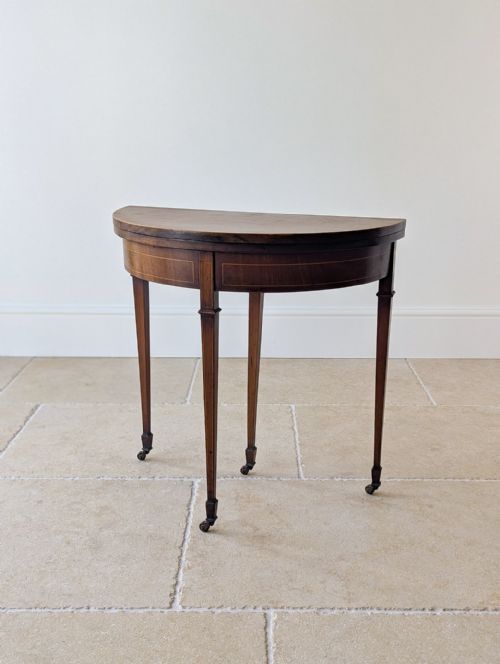
The forms vary from demi-lune shapes and rectangular fold-over tops to sophisticated envelope designs and swivel tops. Alongside standard card tables, the listings encompass games tables equipped for chess and backgammon, as well as occasional tea tables that share the same clever folding mechanism.
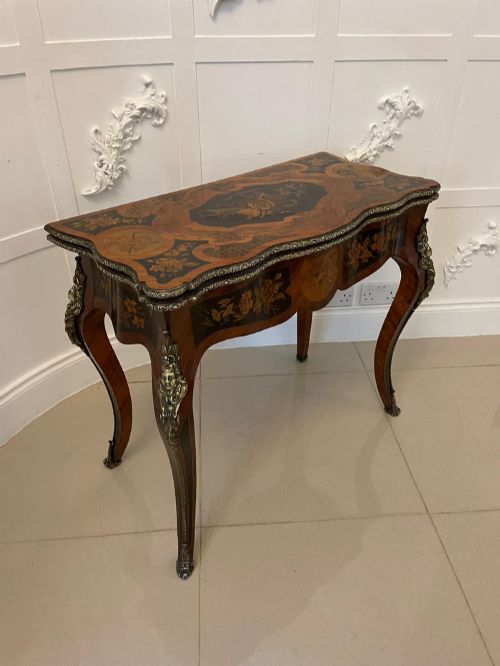
Origins stretch from English workshops to French Louis XV revival pieces and Dutch marquetry works, demonstrating a broad European appetite for domestic gaming furniture. These tables served both practical and decorative roles in the principal rooms of period houses.
How they were made
Cabinet-makers relied on sturdy foundational timbers like mahogany and walnut, applying decorative veneers of satinwood, rosewood, kingwood, burr yew and amboyna to the visible surfaces. Timber selection governed both the structural integrity and the aesthetic presence of the piece.
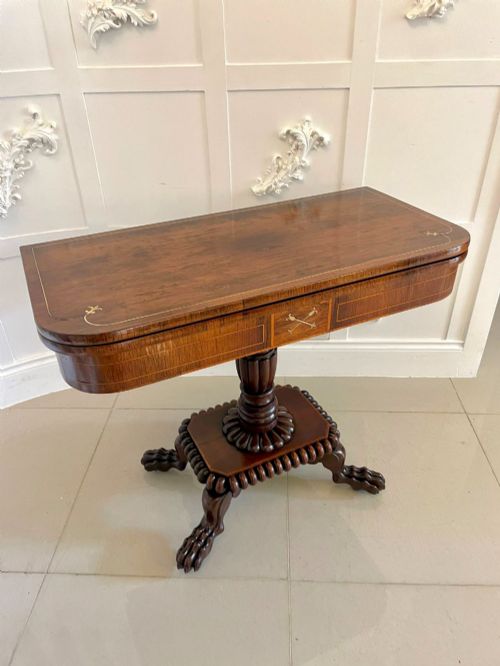
Inlay and marquetry formed central decorative vocabulary, utilising contrasting woods, boxwood and brass stringing to articulate geometric patterns, floral motifs and classical swags. Ormolu mounts appeared on later Victorian and French revival pieces to accent corners and aprons.
Hinges, pivots and swivel mechanisms enabled the top leaves to rotate and unfold smoothly without straining the timber joints. Craftsmanship focused on balancing the heavy fold-over action against slender pedestal bases, lyre supports or tapering legs.
Many surviving tables still whisper of past losses through faint scratches on the baize, where eighteenth-century gentlemen misjudged their whist hands.
What varies in quality
Quality reveals itself in the harmony of timber selection, where highly figured burrs and matched veneers demonstrate superior material cost and cabinet-making ambition. The precision of the wood inlay and the crispness of brass stringing distinguish standard workshop output from exceptional examples.
Constructional cleverness separates fine tables from heavier, clunkier alternatives, particularly in the smoothness of the folding or swivelling mechanism and the stability of the open top. Refined carving on pedestal bases, legs and console supports indicates an elevated commission.
The presence of documented makers or distinct regional characteristics elevates certain tables above anonymous production. Preservation of original surfaces and harmonious ageing across the veneers carry substantial weight in establishing the tier of a piece.
George Bullock·Bruce & Burns of Edinburgh
The Inlaid Folding Card Table Glossary
- Demi-lune
- A half-moon shape used for table tops and console bases. This profile allowed tables to sit flush against a wall when closed.
- Marquetry
- Elaborate patterns created by fitting thin slices of various coloured woods into a veneer ground. It differs from simple inlay by covering the entire surface in pictorial or geometric designs.
- Envelope table
- A square card table with four triangular flaps that fold diagonally towards the centre to open. This clever mechanism became popular during the Edwardian period.
- Ormolu
- Gilded bronze mounts applied to furniture for decorative enrichment. It is frequently seen on nineteenth-century French revival pieces.
- Stringing
- Thin lines of contrasting wood or brass inlaid into channels cut into the solid timber or veneer. This technique outlines drawers, borders and table edges.
Inlaid Folding Card Table: Frequently Asked Questions
What are folding card tables?
These pieces are dual-purpose furniture designed to serve as decorative console or side tables against a wall when closed. Opening the hinged or swivelling top reveals a baize-lined surface intended for card games and social entertainment.
Craftsmen built them across the Georgian, Regency and Victorian eras, adapting the forms to suit changing domestic fashions and interior spaces.
How do I tell periods apart?
Georgian tables often display restrained mahogany veneers, straight tapering legs and subtle stringing. Regency examples introduce rosewood, brass inlay and bolder pedestal bases or lyre supports.
Victorian and Edwardian versions lean towards burr walnut, kingwood, ormolu mounts and complex envelope mechanisms, reflecting heavier ornamentation and varied timber palettes.
Where were these tables used?
Card tables occupied principal entertaining spaces such as drawing rooms, parlours and formal living areas. Their ability to transform from slim console tables into stable gaming surfaces made them indispensable for evening gatherings.
During the day they held decorative objects, tea caddies or lamps before being cleared for play.