

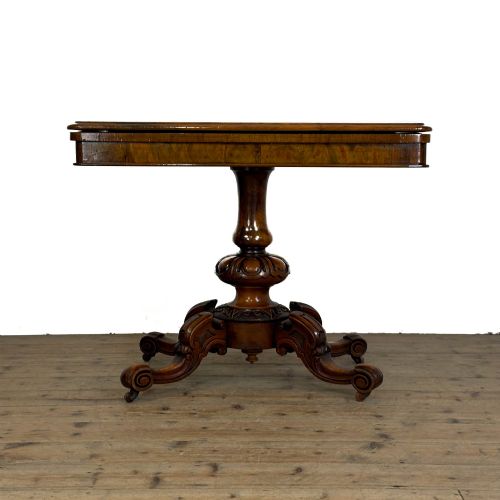
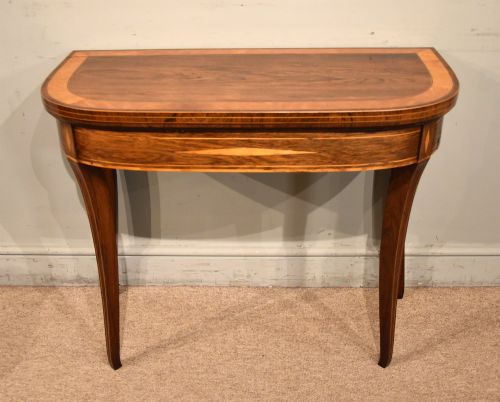
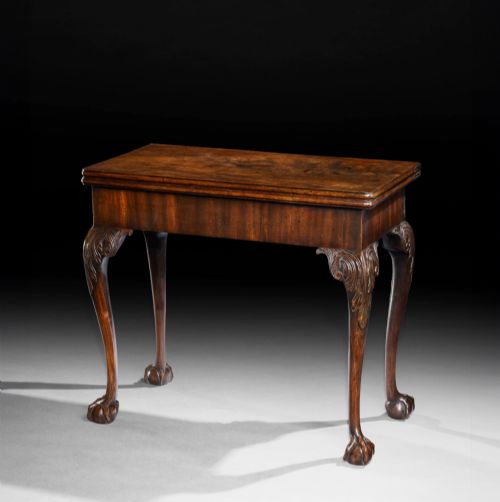
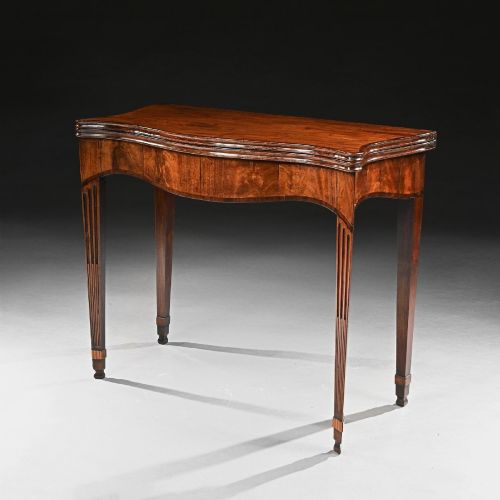

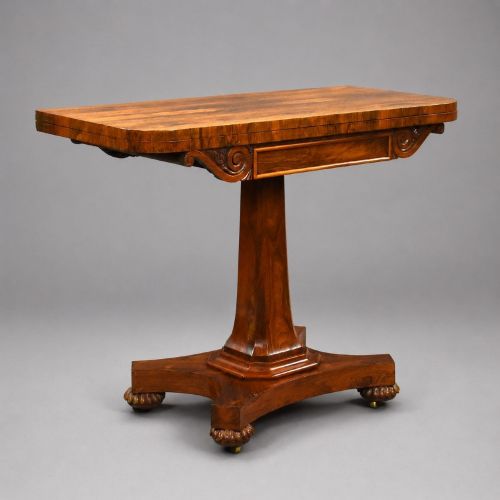
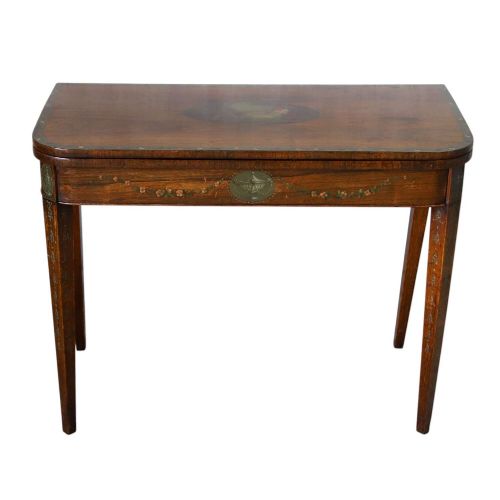
Foldover Games Table
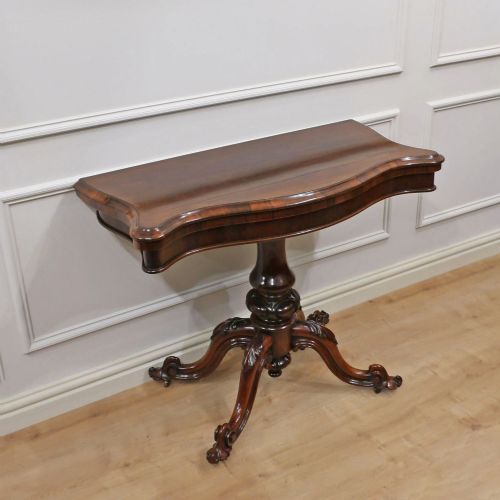
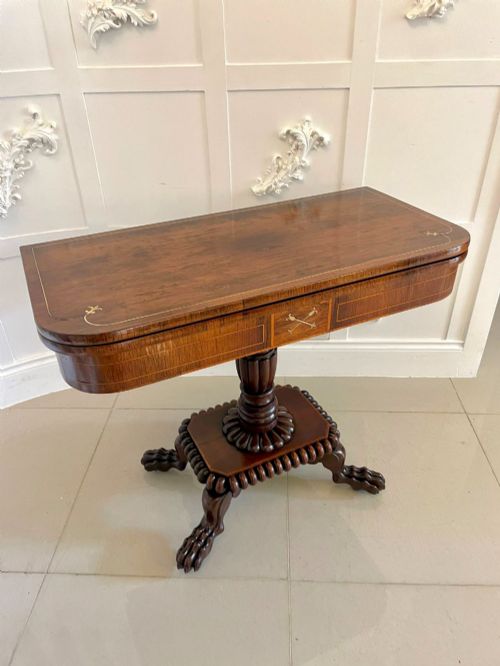
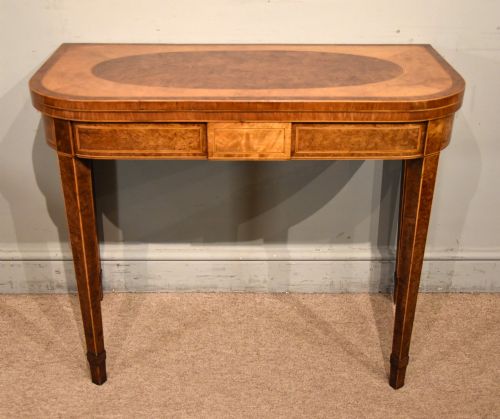
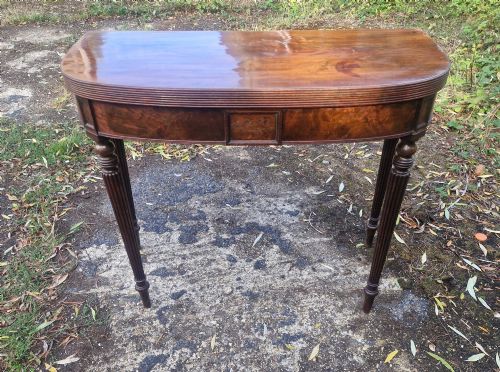
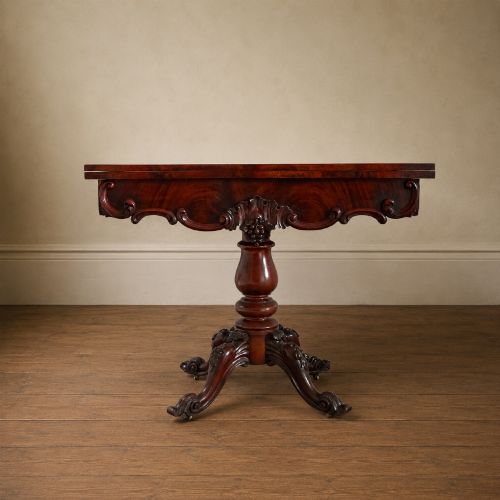
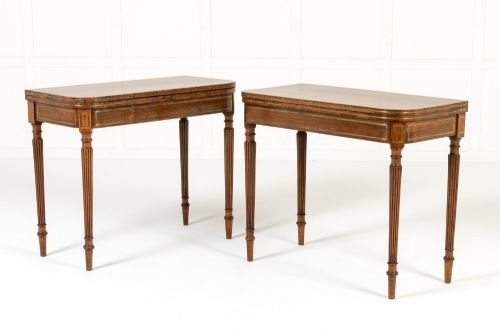
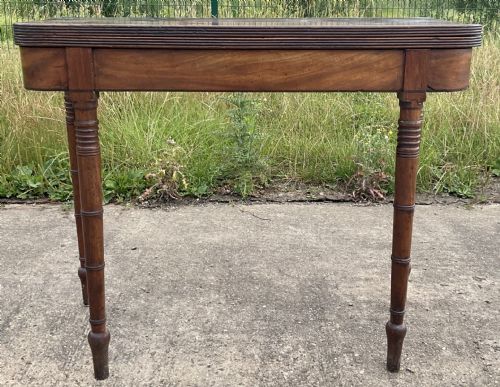
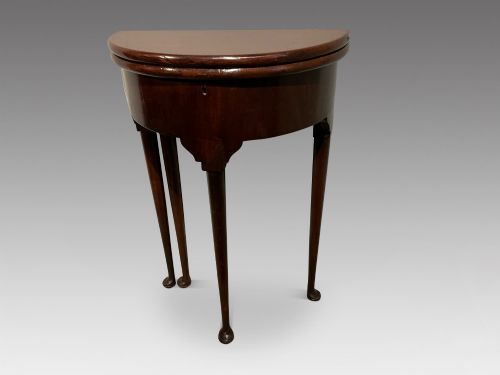
A foldover games table provides a discreet surface for cards that pivots or unfolds to reveal a baize-lined interior.
Foldover Games Table
A foldover games table is encountered across Georgian, Regency, and Victorian periods, often taking the form of a card table, tea table, or console table with a turnover top.
The pieces span the 18th and 19th centuries, utilising demi-lune, rectangular, and serpentine shapes that double as side tables when closed against a wall.
Quality and execution
The distinction between tiers rests upon the crispness of carved woodwork, the choice of figured timber, and the precision of concertina or turnover hinge mechanisms.
Superior examples demonstrate meticulous brass inlay and coherent proportions that maintain structural stability whether open for play or closed.
Listings feature woods spanning mahogany, rosewood, walnut, satinwood, burr walnut, and boxwood.
George Bullock·Edwards & Roberts
The Foldover Games Table Glossary
- Concertina action
- An expanding frame that supports all four corners of a foldover top when open. This mechanism requires complex framing beneath the surface.
- Demi-lune
- A half-moon shape used for console and card tables designed to stand flat against a wall. The straight edge incorporates the hinge.
- Baize
- A coarse woolen fabric used to line the playing surface of card tables. It provides a soft texture for dealing cards.
- Sabot
- A metal sleeve fitted to the foot of a table leg. It protects the timber from wear on floors.
- Marquetry
- Decorative patterns formed by fitting contrasting veneers into a primary background. It appears extensively on Victorian and Georgian tops.
Foldover Games Table: Frequently Asked Questions
How do I use a foldover games table today?
These tables function well as console or side tables against a living room wall when the top is folded shut.
Opening the turnover leaf reveals a baize surface suitable for card games, puzzle building, or occasional writing.
Were these tables only used for cards?
Many examples served multiple domestic purposes, doubling as tea tables or general side tables in Georgian and Victorian parlours.
Some specialist variants combined the games surface with storage compartments for workboxes or writing materials.
How do I tell a Georgian table from a Victorian one?
Georgian pieces often feature cleaner lines in mahogany or satinwood, sometimes utilising concertina actions to support the open leaf.
Victorian iterations lean towards figured walnut and rosewood, frequently incorporating heavy marquetry inlay and carved pedestal bases.
What woods should I expect to see?
Mahogany dominates the 18th-century and early Georgian items, while rosewood and walnut become prevalent during the Regency and Victorian eras.
Secondary timbers like satinwood, burr yew, and boxwood appear as contrasting veneers and stringing details across the top surfaces.