


Antique Games Table Castors
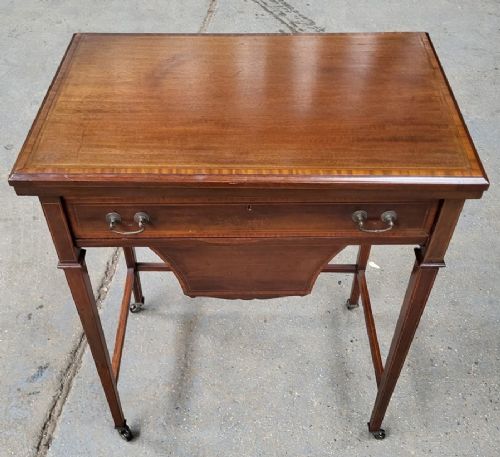
Antique games table castors anchor the feet of folding card and tea tables from the Georgian, Regency, and Victorian periods.
Antique Games Table Castors
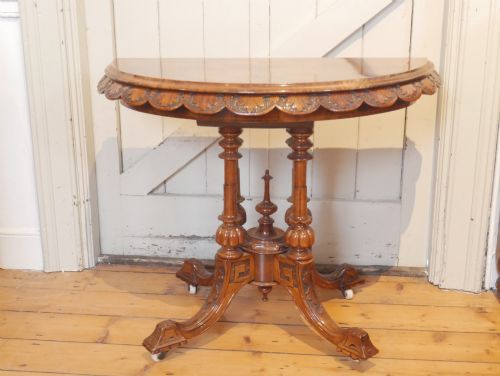
When you search for antique games table castors, you are looking at the small wheel fittings attached to the base of fold-over card tables, tea tables, and work tables. These items span the Georgian, Regency, William IV, Victorian, and Edwardian periods, appearing alongside related forms like side tables and occasional tables.
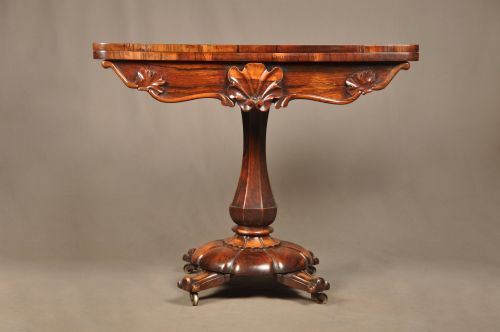
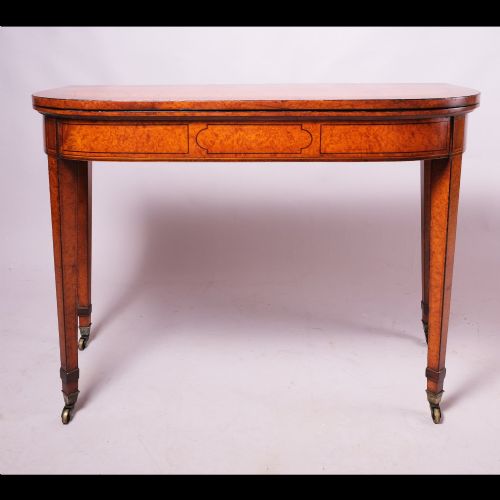
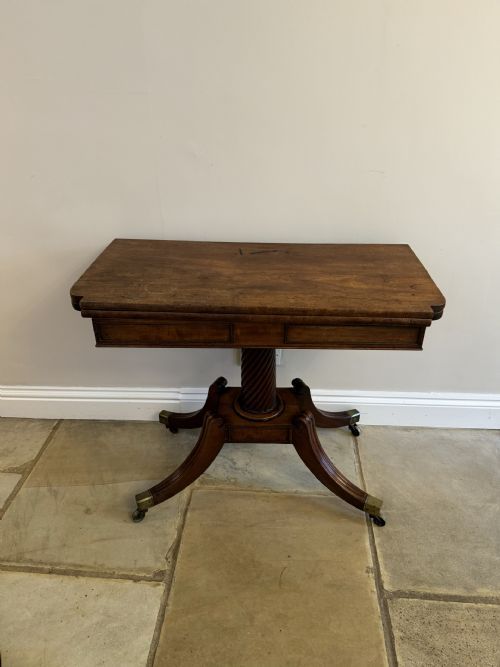
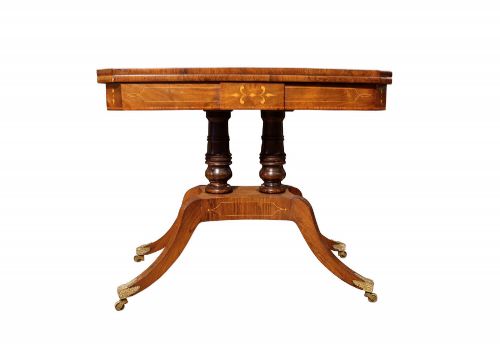
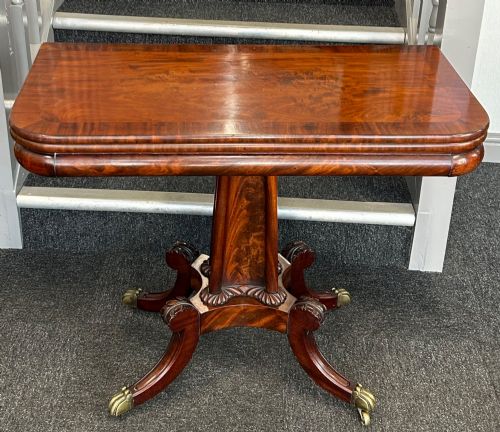
The most common examples encountered on this page are mounted on Regency rosewood and mahogany card tables. These pieces often feature brass fittings, sabots, and inlaid details in satinwood, ebony, or boxwood, reflecting the cabinet-making standards of the early nineteenth century.
Materials and construction
Cabinet makers utilised dense timbers such as mahogany, rosewood, walnut, and burr walnut for the primary frames and folding tops, often embellishing surfaces with satinwood, ebony, and boxwood inlay or cross-banding. Amboyna also appears among the select hardwoods used in these tables.
Metalwork played a functional and decorative role, with brass utilised for the castors and sabots that allowed heavy timber tables to move easily across carpets and floors. Solid mahogany and construction methods typical of nineteenth-century workshops ensured these folding mechanisms remained stable.
Listings feature mahogany, rosewood, walnut, and satinwood across Regency, Victorian, and Edwardian periods.
Distinctions in quality
The standard of a piece rests on the crispness of the timber inlay, the choice of figured veneers like burr walnut or rosewood, and the integration of brass mounts. Finer examples display meticulous grain matching across the fold-over top and precise fitting of the internal hinges and castor mounts.
Design ambition separates standard production items from exceptional workshop output. Tables attributed to specific makers or exhibiting eccentric design, refined brass inlays, and well-cast sabots demonstrate a higher level of craftsmanship than plain utilitarian equivalents.
Gillows·William Trotter of Edinburgh
The Antique Games Table Castors Glossary
- Castor
- A small wheel fitted to the foot of a piece of furniture to allow easy movement. They are frequently made of brass and attached to the legs of Regency card and tea tables.
- Sabot
- A metal sleeve or mount fitted over the foot of a furniture leg. In Regency pieces, these are usually brass and often coordinate with the design of the castors.
- Card Table
- A folding table designed specifically for playing cards, featuring a hinged top that opens to reveal a baize-lined surface. Many examples from the Georgian and Victorian eras incorporate castors for repositioning.
- Cross-Banding
- A border technique where thin strips of veneer are laid running perpendicular to the grain of the main surface. This method appears frequently on the edges of Edwardian and Regency table tops.
- Fold-Over
- A table top construction where the upper surface splits and folds out to double its area. This design requires sturdy leg support and reliable castors to bear the shifted weight.
Antique Games Table Castors: Frequently Asked Questions
What is a games table castor?
A games table castor is a small wheel mechanism fitted to the base of a fold-over card or tea table. It allowed heavy timber furniture to be repositioned easily within a drawing room.
These fittings are typically cast from brass and are often accompanied by matching sabots on the feet.
How do I identify a Regency games table?
Regency tables generally date from the early nineteenth century and feature dark hardwoods like rosewood or mahogany. Look for classical restraint, brass inlay, and distinct castor fittings.
Many examples include fold-over tops supported by pillar and plinth bases rather than four conventional legs.
Were castors original to these tables?
Castors on Georgian, Regency, and Victorian tables were integral to their function as moveable drawing room furniture. They enabled tables to be pushed aside when card games concluded.
Original brass fittings show consistent wear and patination matching the age of the timber frame.
How should I care for a folding card table?
Protect the polished timber surfaces from direct sunlight and excessive moisture changes. Avoid dragging the table across uncarpeted floors to protect the original castors.
Lift the piece slightly when moving it rather than relying entirely on the antique wheels for transit.