



Mahogany Concertina Table
A mahogany concertina table brings ingenious expanding frames and rich timber into domestic spaces, offering both generous surfaces and classic proportions.
Mahogany Concertina Table
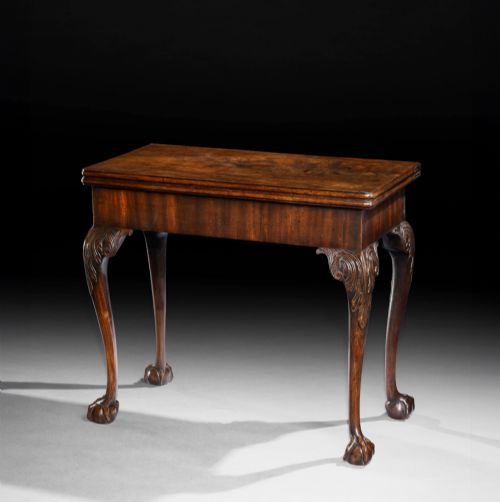
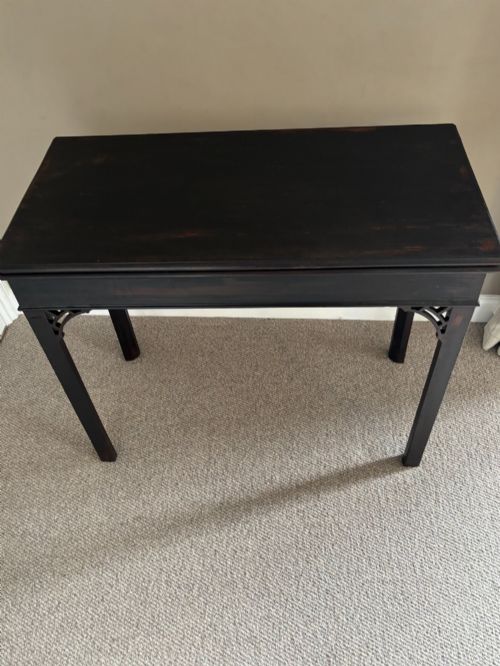
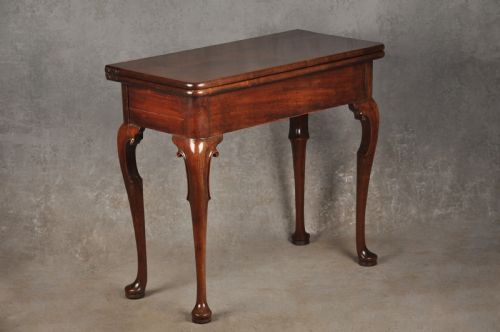
A mahogany concertina table is a versatile piece designed with an expanding frame that supports a folding top, making it ideal for card games, tea service or dining. When searching for a mahogany concertina table, buyers encounter examples ranging from mid-eighteenth-century George II and Chippendale designs to later Regency interpretations.
The form typically manifests as a card table, games table or tea table, alongside occasional and dining variations. Most pieces on this page reflect eighteenth-century craftsmanship and the Regency period, showing how these tables adapted to various social uses over generations.
Makers and workshops produced these tables with clever concertina actions that allowed the rear legs to extend outward synchronously with the opening leaf. This mechanical brilliance ensures the table top remains fully supported without relying on a swinging gate leg.
Materials and construction
Cabinet makers utilised dense, richly figured mahogany timber as the primary medium for both solid structural elements and decorative wood veneers. Brass fittings frequently reinforced the expanding concertina joints and hinges, ensuring smooth mechanical movement during extension.
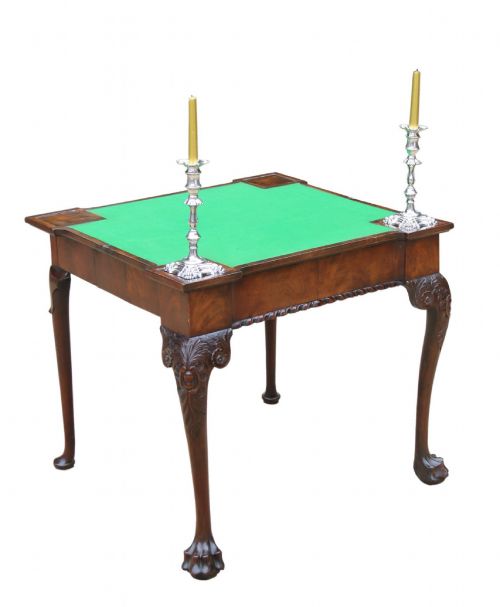
Surfaces intended for card playing or games were often lined with baize to provide a tactile playing field beneath the folding top. Expert joinery governed the complex concertina action, requiring precise carpentry to allow the rear legs to pull out and lock flush with the frame.
Mahogany Concertina Table Retail Price Guide 2026
Typical asking prices for mahogany concertina table among the pieces listed under this phrase on Sellingantiques today, from the lower quarter to the upper quarter. They describe what is for sale here now, not the wider market.
Concertina tables secretly moonlighted as the ultimate eighteenth-century folding furniture, ready to expand instantly for unexpected guests or high-stakes card games.
Markers of distinction
The standard of a mahogany concertina table rests upon the precision of its expanding frame and the crispness of its carved details. Superior examples exhibit fluid mechanical movement in the concertina action, where joints fit tightly without sagging when the leaves are fully extended.
Timber selection and surface figure define the visual hierarchy, with well-matched mahogany veneers and deep natural patination commanding greater admiration. Furthermore, the refinement of carved cabriole legs or reeded Regency supports distinguishes master cabinet work from simpler vernacular output.
Giles Grendey·Howard & Sons
The Mahogany Concertina Table Glossary
- Concertina action
- An expanding frame mechanism that allows a table rear legs to pull outward in a bellows-like motion to support a folding top. This clever engineering ensures weight is distributed evenly across all four corners when opened.
- Baize
- A coarse woollen fabric, traditionally green, used to line the playing surfaces of card and games tables. It offers a durable and soft texture for handling cards.
- Veneer
- A thin slice of figured mahogany applied over a secondary wood base to create decorative patterned surfaces. Skilled cabinet makers matched these grains symmetrically across the table top.
- Turnover top
- A hinged table top that folds flat for compact use or opens outward to double its surface area. It rests securely upon the extended concertina frame.
- Cabriole leg
- A furniture leg featuring a double curve, bulging outward at the knee and tapering inward at the foot. This style dominated mid-eighteenth-century seating and table design.
Mahogany Concertina Table: Frequently Asked Questions
What were these tables used for?
They served primarily as multi-purpose furniture for card games, tea drinking and formal dining in eighteenth and nineteenth-century homes. The expanding top allowed households to save space during the day and enlarge surfaces for evening gatherings.
Card and games tables often featured interior wells or corners for storing counters, candles and coins during play.
How do I date a mahogany table?
Dating relies on observing structural characteristics, timber species, and stylistic details such as cabriole legs or reeded Regency frames. Eighteenth-century pieces often display distinct joinery methods and rich, dark patination built up over generations of care.
Hardware like brass hinges and the specific execution of the concertina mechanism also offer clues regarding the period of manufacture.
Can I use an antique card table daily?
These tables accommodate regular daily use provided they are treated with care and kept away from excessive moisture and direct sunlight. The concertina mechanism should be operated gently to avoid straining historical joints and timber hinges.
Placing coasters on the surface protects the antique polish and baize linings from accidental spills.