
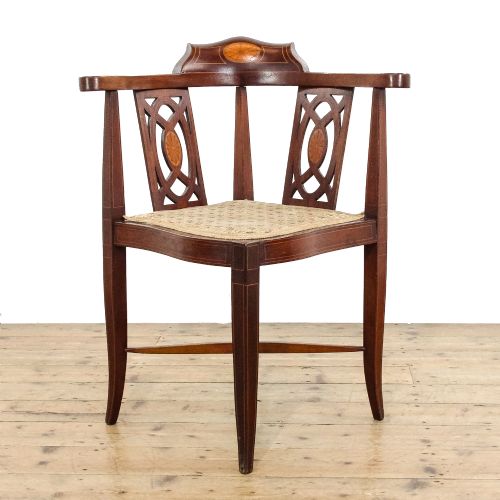
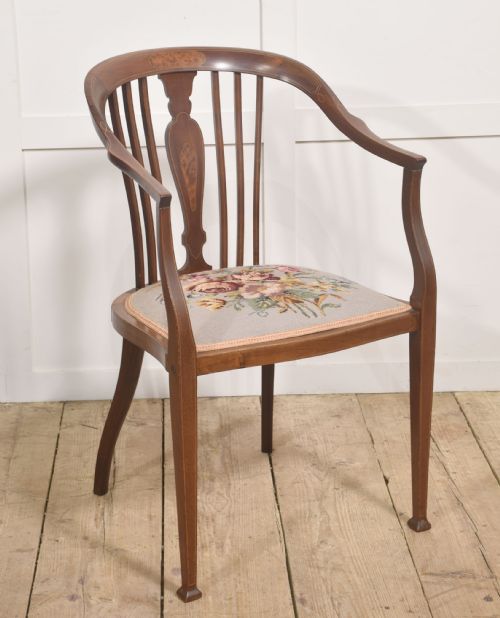


Inlaid Elbow Chair
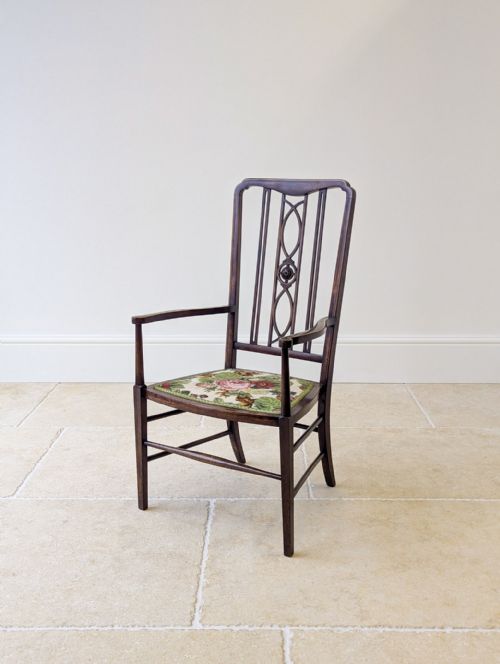
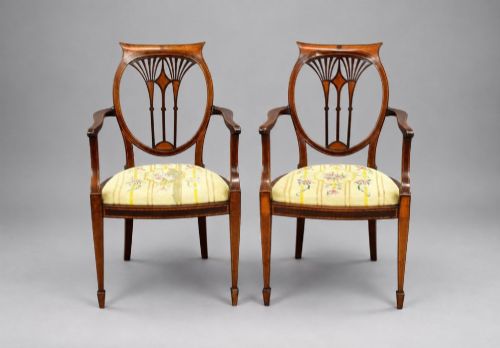
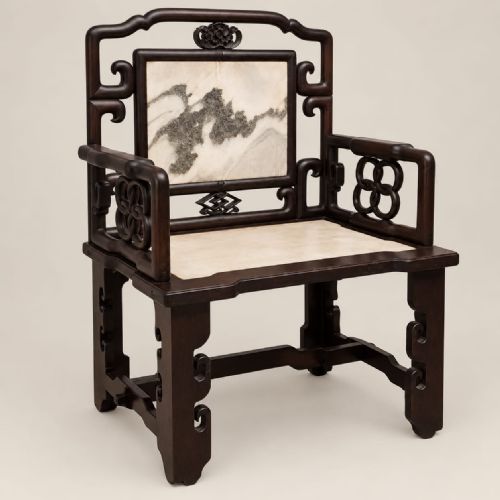
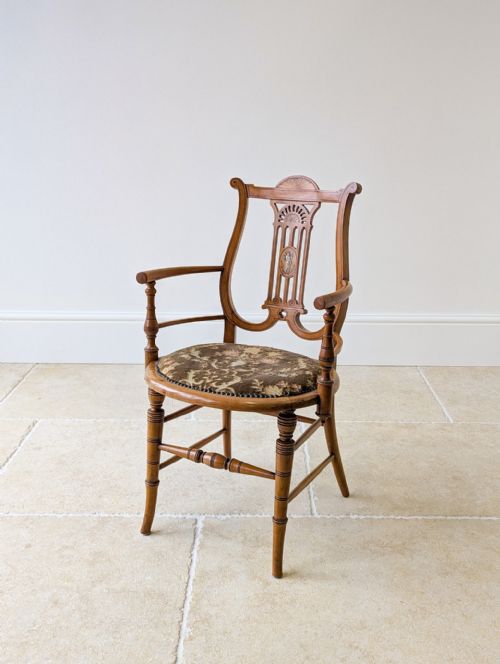
An inlaid elbow chair brings refined woodwork and comfortable seating to a study or drawing room.
Inlaid Elbow Chair
When you search for an inlaid elbow chair, you encounter sturdy armchairs designed for desks, salons, and libraries. The selection spans the nineteenth and early twentieth centuries, with Edwardian and Victorian examples appearing most frequently alongside Regency pieces.
These seats serve multiple domestic uses, functioning as desk chairs, library carvers, or occasional seating. The frame construction typically incorporates supportive armrests and open backs, creating a practical seat for daily use.
Materials and Techniques
Cabinet makers utilised dense hardwoods such as mahogany and rosewood as the primary structural frame. Satinwood, boxwood, and brass provide contrasting tones for detailed surface enrichment.
Wood inlay and marquetry techniques form decorative patterns across the splats and crest rails. Upholstered pads in various fabrics complete the seating surface.
Arts and Crafts examples in this selection utilise oak alongside more conventional cabinet timbers.
Judging Quality
The distinction between standard examples and superior pieces rests upon the crispness of the inlay work and the depth of the timber grain. Finer workshops employed intricate contrasting woods rather than simple surface lines.
Structural integrity of the joints and arm supports determines the resilience of the chair over time. Original upholstery specifications and well-preserved timber patination elevate the standing of an individual piece.
Shoolbred·Jenks and Wood·Henry Maxwell
The Inlaid Elbow Chair Glossary
- Elbow chair
- An armchair featuring wooden armrests designed to support the arms while seated at a desk or table.
- Marquetry
- Decorative veneer applied to furniture in mosaic patterns using various woods and contrasting materials.
- Carver
- A traditional term for an armchair that matches a set of smaller dining or side chairs.
- Satinwood
- A lustrous yellowish timber utilised extensively for contrasting details and decorative inlays.
Inlaid Elbow Chair: Frequently Asked Questions
Where should I place an inlaid elbow chair?
These chairs suit studies, writing rooms, or bedrooms as functional seating. Their decorative backs also allow them to sit effectively away from walls in open spaces.
Matching them with existing mahogany or walnut furniture helps maintain visual continuity within a traditional interior scheme.
How do I identify a Regency period piece?
Regency examples frequently display brass inlay against dark mahogany or rosewood surfaces. The structural lines tend to reflect classical architectural influences.
Examining the construction methods underneath often reveals period specific timber preparation and joinery techniques.
Are Edwardian chairs sturdy enough for daily use?
Edwardian versions constructed around nineteen hundred utilise solid mahogany frames built for domestic service. Regular checking of the leg joints ensures they remain stable under normal weight.
Upholstered pads can be renewed if the internal webbing loses tension over decades of sitting.
What is the difference between an armchair and an elbow chair?
The terms describe similar seating forms featuring integrated armrests for upper body support. Elbow chair specifically highlights the curved wooden supports where the arms rest.
These pieces often functioned as companion seats to larger dining or office suites.