



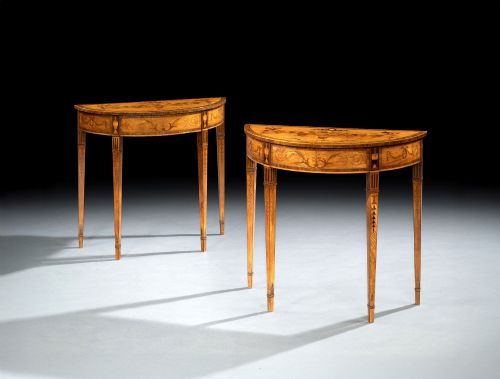
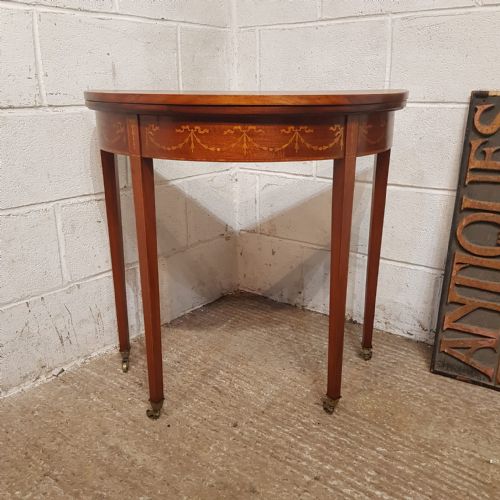

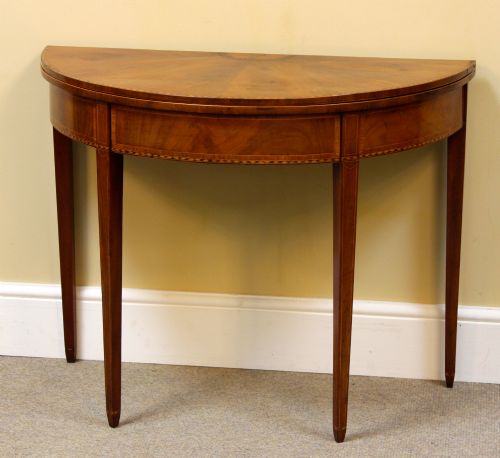


Inlaid Demi Lune Table
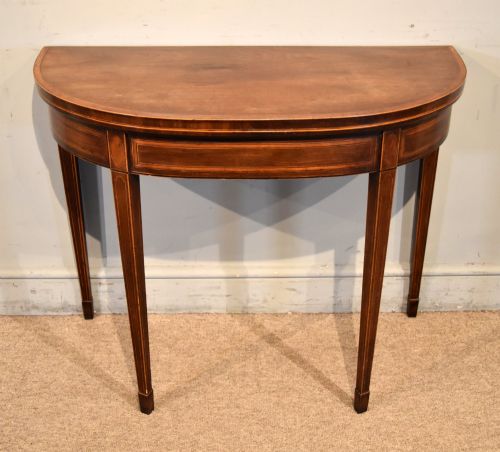
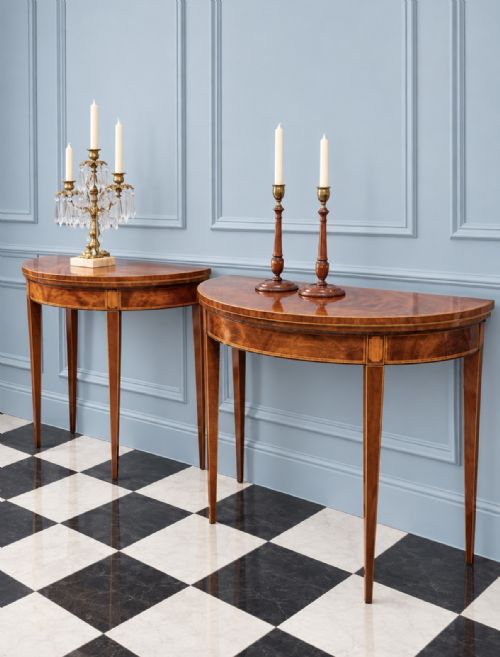
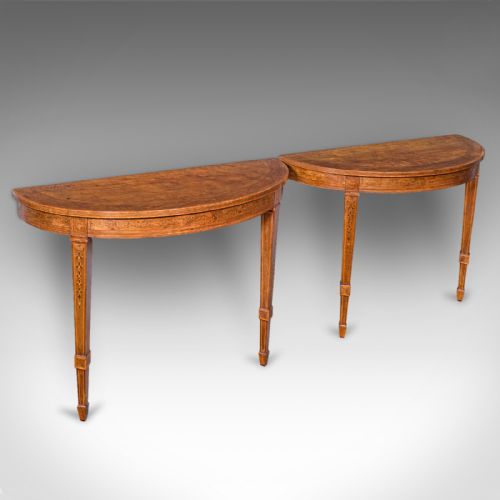
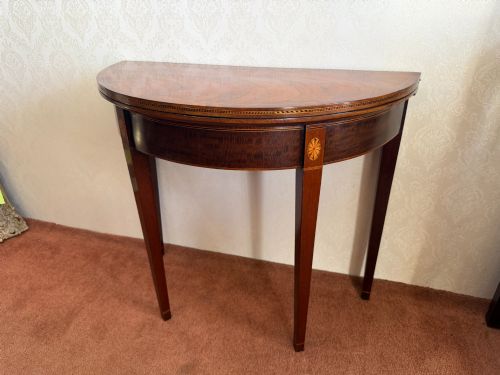
When searching for an inlaid demi lune table, you are looking at half-circle furniture designed to sit flat against a wall with decorative surface work.
Inlaid Demi Lune Table
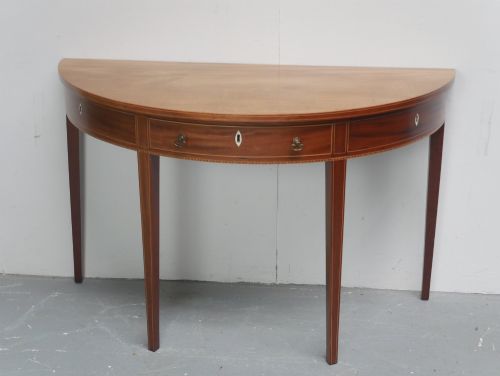
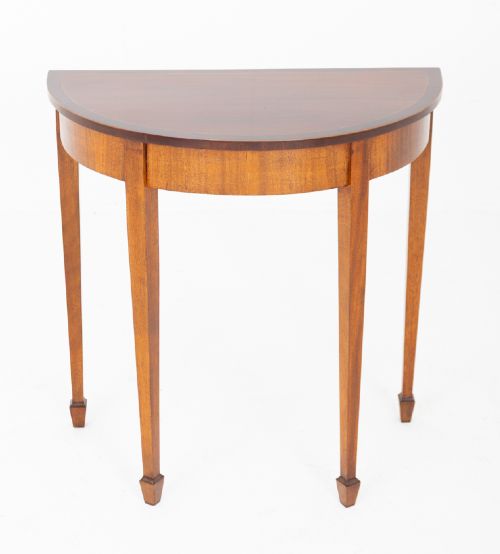
An inlaid demi lune table presents a distinctive semicircular footprint that functions as a console, a serving piece, or a fold-over card and games table in a reception room.
The material record shows strong representation from the Georgian and George III periods, alongside later Victorian, Edwardian, and Regency interpretations.
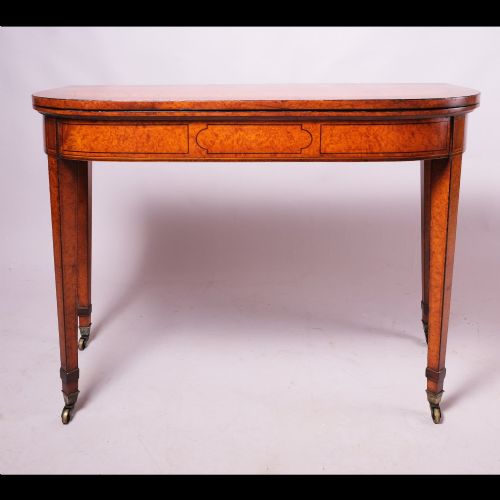
Many examples double their surface area through hinged tops, pivoting from a slim wall console into a fully revealed circular gaming or tea surface.
Materials and Techniques
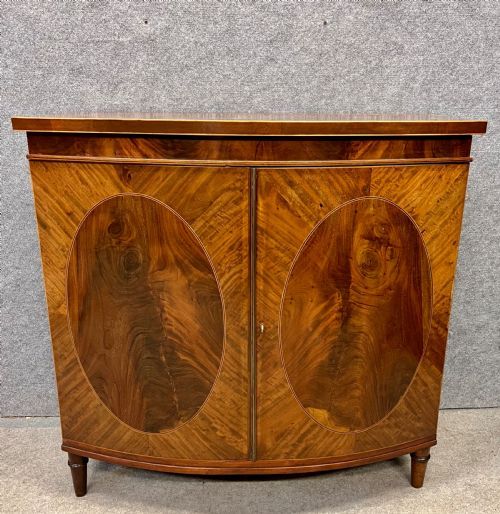
Cabinet makers utilised solid and veneered timbers such as mahogany, satinwood, fruitwood, and burr walnut as the primary structural bodies for these semicircular frames.
Decorative surface enrichment relies on contrasting botanical elements, employing boxwood, satinwood, and rosewood inlay alongside complex marquetry panels and crossbanding.
Inlaid Demi Lune Table Retail Price Guide 2026
Typical asking prices for inlaid demi lune table among the pieces listed under this phrase on Sellingantiques today, from the lower quarter to the upper quarter. They describe what is for sale here now, not the wider market.
Listings feature woods such as mahogany, satinwood, fruitwood, and burr walnut, alongside boxwood inlay and marquetry.
Distinctions in Standard
The tier of a piece depends heavily on the precision of the timber matching and the intricacy of the contrasting wood inlays across the curved top and tapered legs.
Structural integrity during the transition from a console to an expanded card or games table dictates the upper echelon of surviving examples.
Edwards & Roberts·Pietro Ferrario
The Inlaid Demi Lune Table Glossary
- Demi-lune
- A half-moon shape or semicircular form. This profile allows the furniture to fit snugly against interior walls.
- Marquetry
- Elaborate veneer work arranged in pictorial or geometric patterns. Different coloured woods are cut and fitted together to create surface pictures.
- Crossbanding
- A border of veneer laid around the edge of a tabletop so that the grain runs perpendicular to the centre. It provides a neat framing effect.
- Fold-over
- A hinged tabletop construction that opens to double the usable surface area. This mechanism often conceals a baize-lined interior for card games.
Inlaid Demi Lune Table: Frequently Asked Questions
What were inlaid demi lune tables used for?
These semicircular tables served multiple domestic purposes in period homes, functioning primarily as decorative wall consoles or serving surfaces in hallways and drawing rooms.
Many versions also incorporate hinged tops that unfold to reveal baize-lined surfaces dedicated to card games and tea drinking.
How do I place a demi lune table in a room?
The flat straight edge sits directly flush against a vertical wall, allowing the curved front to project outward into the room without obstructing primary walkways.
They work effectively beneath wall mirrors or windows where a full rectangular table would project too far into the floor space.
How can I tell a Georgian table from a later revival?
Authentic 18th-century and George III pieces generally display period timber characteristics, hand-cut joinery, and natural patina developed over generations of use.
Revival pieces from the Edwardian and Victorian eras often utilise machine-prepared veneers and specific revival design markers associated with Sheraton or Hepplewhite revivals.