




Eighteenth Century Card Table
An eighteenth century card table brings folding tops and polished mahogany into a room, offering a functional surface that transforms for play.
Eighteenth Century Card Table
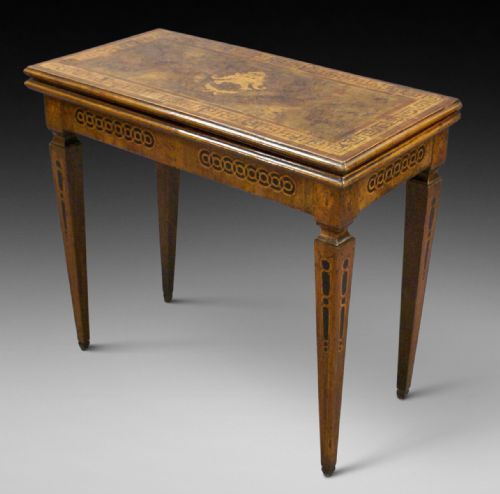
An eighteenth century card table is a specialised piece of antique furniture designed for social gaming, featuring a fold-over top that conceals a baize-lined playing surface when opened. The examples found here span the Georgian and George III periods, alongside later nineteenth century interpretations of earlier forms.
Most pieces on this page take the demi-lune or semicircular shape, constructed from mahogany, Cuban mahogany, or rosewood. Makers configured these tables to stand flat against a wall as console or tea tables when closed, pivoting or folding outward on hinged legs to support card players.
Origin variations include English workshops working in the Chinese Chippendale style as well as continental examples, such as neoclassical Italian inlaid games tables. Collectors encounter variants equipped with counter wells or specialised tea table adaptations, reflecting the domestic habits of the period.
How they were made
Cabinetmakers built these tables using solid timbers and wood veneer over secondary woods, selecting dense Cuban mahogany or rich rosewood for primary surfaces. Timber selection governed the structural integrity of the folding mechanism and the stability of the legs during active play.
Decorative detailing relied on fine boxwood inlay and intricate marquetry, contrasting light and dark woods to create geometric borders or central motifs. Craftsmen utilised precision joinery for the fold-over leaves, ensuring the top sat flush both closed and open.
Eighteenth Century Card Table Retail Price Guide 2026
Typical asking prices for eighteenth century card table among the pieces listed under this phrase on Sellingantiques today, from the lower quarter to the upper quarter. They describe what is for sale here now, not the wider market.
Some tables include hidden counter wells so small that losing a single gaming coin required a very steady hand.
What varies in quality
The sophistication of the timber figure and the crispness of the boxwood inlay define the upper tier of these tables. Superior examples display carefully matched veneer grains across the fold-over top and refined carving on the legs.
The Eighteenth Century Card Table Glossary
- Demi-lune
- A half-moon shape used for table tops and frames. This design allowed furniture to sit neatly against a wall when closed.
- Fold over
- A hinged table top design that doubles the surface area when opened. It provides a stable platform for games or tea.
- Marquetry
- Decorative patterns formed by fitted wood veneers. Craftsmen used various coloured timbers to create pictorial designs.
- Counter well
- A small recessed compartment carved into the playing surface. These held gaming counters or coins during play.
- Cuban mahogany
- A dense, dark timber imported from the Caribbean during the Georgian period. It is prized for its rich grain and durability.
Eighteenth Century Card Table: Frequently Asked Questions
What is an eighteenth century card table?
These pieces are specialised folding furniture designed for domestic card games and social gatherings during the Georgian era. They function as console or tea tables when closed against a wall.
When opened, the hinged top reveals a baize-lined surface often equipped with counter wells or corner candle recesses. They represent the high standards of eighteenth century cabinetmaking.
How do you use a card table?
Owners place these tables against a drawing room wall as decorative side furniture when not in use. For entertaining, the top folds or pivots outward to create a sturdy gaming surface.
They accommodate card players while keeping tea accessories or gaming pieces organised in built-in wells. The dual-purpose design makes them practical for modern living spaces.
How do I tell periods apart?
Georgian and George III pieces display distinct timber choices like Cuban mahogany alongside precise boxwood inlay and marquetry. Construction methods and joinery styles shift across the decades represented.
Later nineteenth century pieces often interpret these earlier aesthetics with different proportions or stylistic revivals. Examining the secondary woods and hinge mechanisms helps clarify the actual date of manufacture.
What woods were used?
Cabinetmakers primarily utilised mahogany, including dense Cuban mahogany varieties, for structural stability and rich surface figuring. Rosewood also appears in specific regional pieces from Scottish workshops.
Decorative accents incorporated boxwood inlay and varied wood veneers to create contrasting geometric borders. These natural materials develop a deep patina over centuries of polish and handling.