


Inlaid Cylinder Writing Desk
An inlaid cylinder writing desk conceals its working parts beneath a curved wooden shell, offering a concealed surface for correspondence.
Inlaid Cylinder Writing Desk
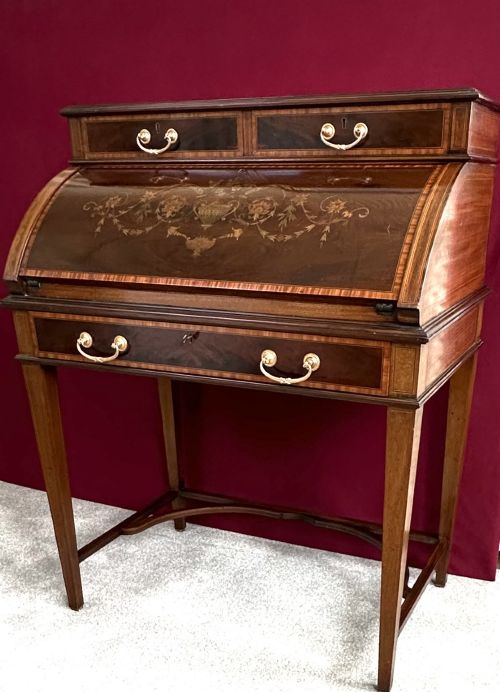
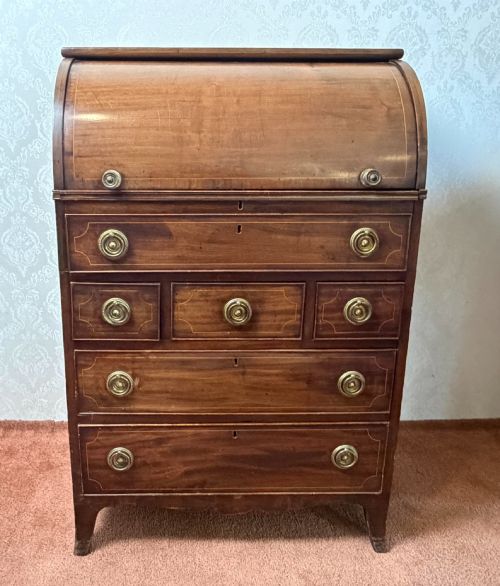
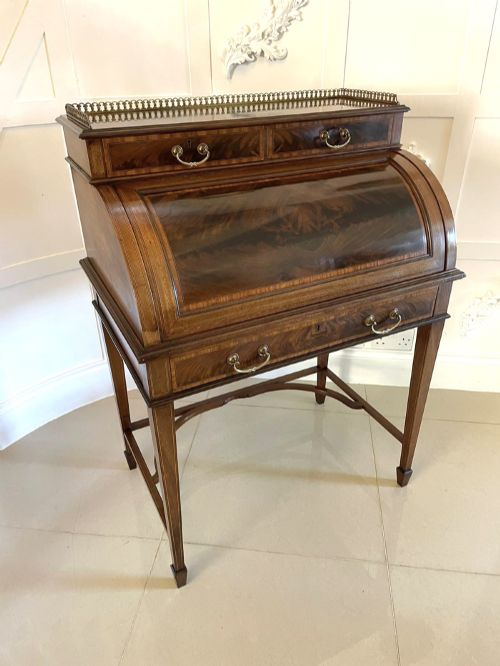
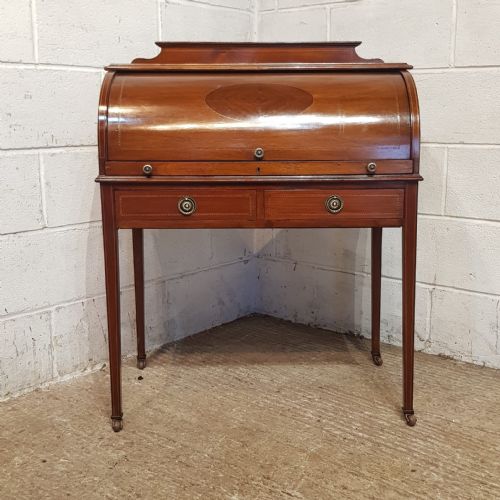
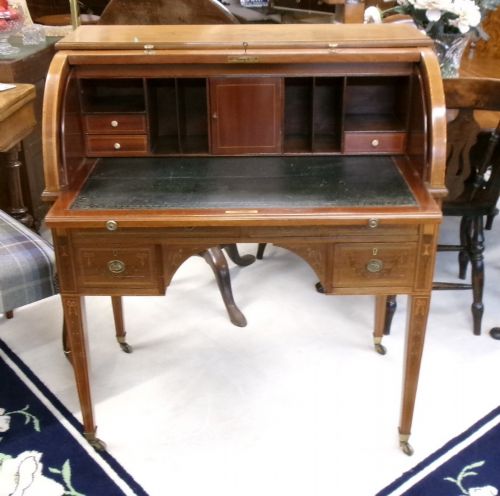
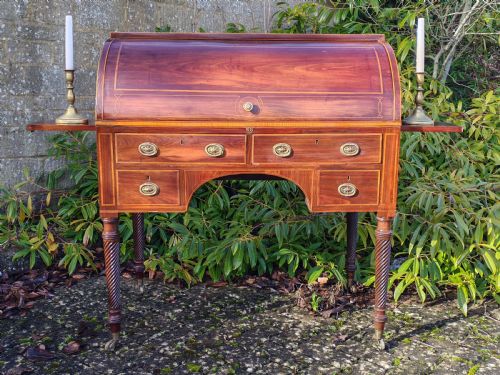
An inlaid cylinder writing desk brings together the mechanical action of a curved roll top and the decorative appeal of period cabinet work. These pieces emerge most frequently from Edwardian workshops and the Georgian era, shaped from mahogany, satinwood, and walnut.
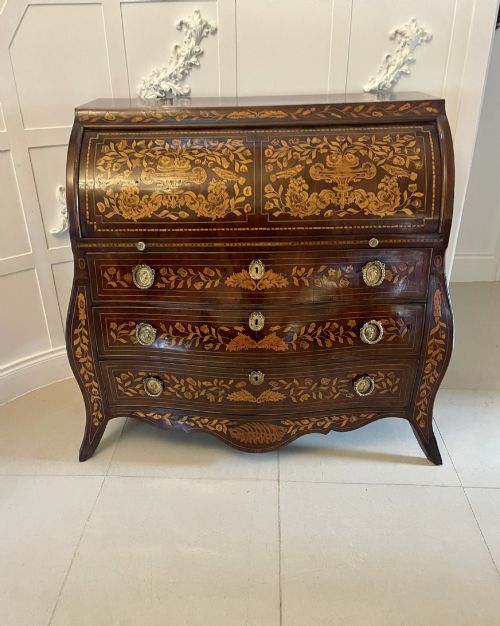
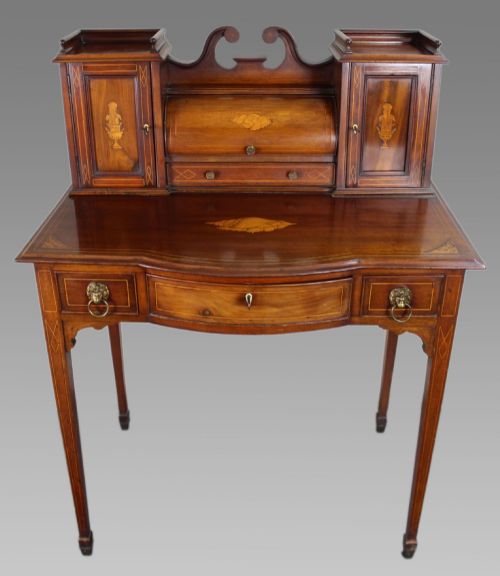
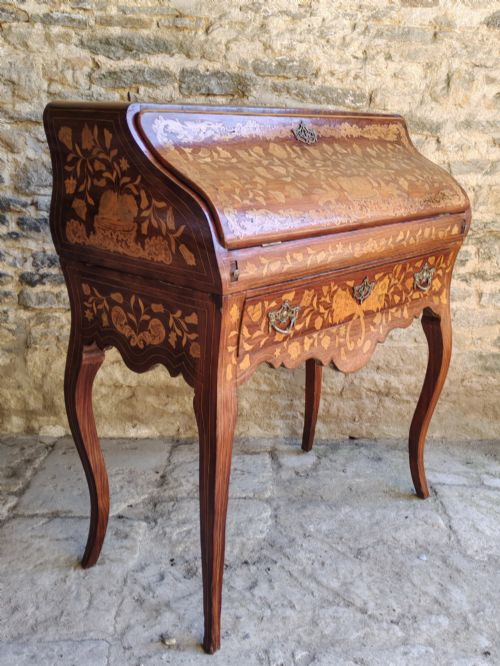
Buyers encounter variations ranging from freestanding Edwardian cylinder desks in mahogany to elaborate George III satinwood secretaire cabinets and Dutch marquetry bureau bookcases. The form relies on a rotating wooden cylinder that lifts as the interior pull-out writing slide extends.
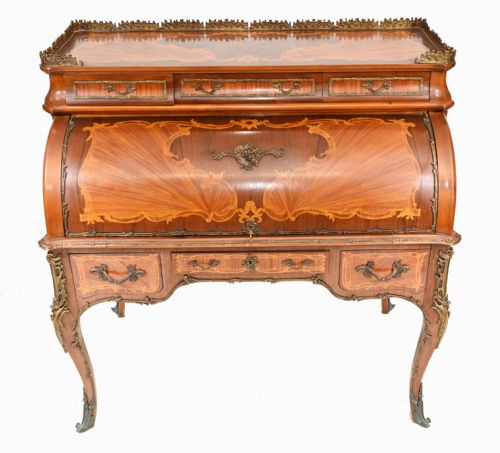
Regional differences surface clearly across the selection, contrasting English Sheraton Revival refinement with continental floral marquetry and bombe fronts. The form serves as both a practical writing cabinet and a display of intricate wood veneers.
Materials and Construction
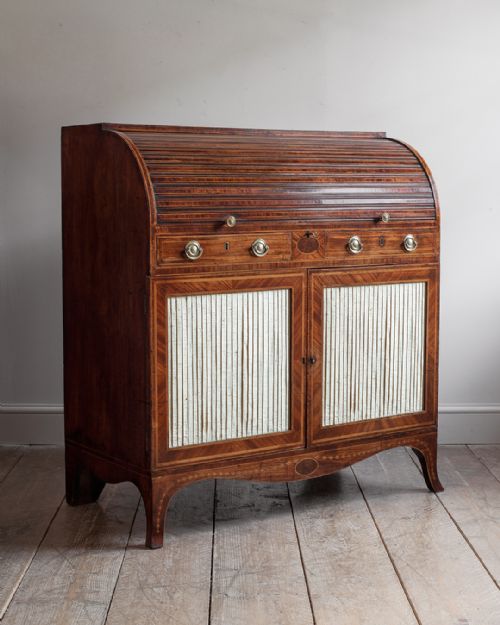
Cabinet makers constructed the curved cylinder from narrow vertical slats glued to a flexible backing fabric or canvas, allowing the roll top to slide smoothly within concealed side grooves. The primary carcases utilise solid mahogany, walnut, or fruitwood frameworks.
Surface decoration relies on contrasting veneers, incorporating satinwood, partridgewood, and rosewood alongside detailed floral marquetry. Brass handles, rings, and leather writing inserts complete the functional fittings of the desk interior.
The listings show examples spanning the eighteenth, nineteenth, and early twentieth centuries, constructed in mahogany, satinwood, walnut, and rosewood.
Distinctions in Quality
The sophistication of the timber selection dictates the visual standing of each piece, distinguishing simple mahogany carcases from figured satinwood, burr walnut, and elaborate floral marquetry. Grain matching across the rotating cylinder requires precise cabinet work.
The smoothness of the mechanical action separates standard production from superior examples, as the cylinder and writing slide should operate in unison without binding. Finer pieces incorporate well-fitted internal pigeon holes, small drawers, and secret compartments.
Maple & Co. London·Edwards & Roberts·John Mclean
The Inlaid Cylinder Writing Desk Glossary
- Cylinder
- A curved wooden roll top that conceals the desk interior when closed and slides backward into the carcase when the writing surface pulls forward.
- Marquetry
- Inlaid patterns formed from different coloured wood veneers arranged to create pictorial or floral designs across the furniture surface.
- Tambour
- A flexible sliding shutter formed from narrow wooden strips attached to canvas, utilised on writing desks in place of a solid cylinder.
- Secretaire
- A cabinet or desk featuring a pull-out writing drawer or drop-front writing flap containing internal stationery compartments.
- Bureau Bookcase
- A tall combination piece uniting a writing desk base with upper shelving enclosed by glazed or wooden doors.
Inlaid Cylinder Writing Desk: Frequently Asked Questions
How does a cylinder desk work?
Pulling the leather-lined writing slide forward causes the curved wooden cylinder to rotate upward and slide backward into the body of the desk.
This mechanical movement exposes the inner pigeon holes and small drawers simultaneously without requiring separate doors to open.
Where were these desks placed?
These pieces served as private writing stations in the principal rooms or studies of period houses, often positioned freestanding in the centre of a room.
Smaller Edwardian ladies desks were frequently designed to fit compact boudoirs and drawing rooms.
How do I care for the leather insert?
The leather writing surface benefits from occasional light cleaning with a damp cloth followed by neutral leather balm to prevent drying and cracking.
Avoiding direct sunlight helps preserve both the dyed leather and the surrounding wood veneers.
How do I distinguish Edwardian from Georgian pieces?
Georgian examples display tighter cabinet proportions, hand-cut dovetails, and rich satinwood or mahogany patination developed over centuries of age.
Edwardian Sheraton Revival pieces often utilise lighter satinwoodbanding, machine-finished drawer construction, and brighter decorative marquetry.