
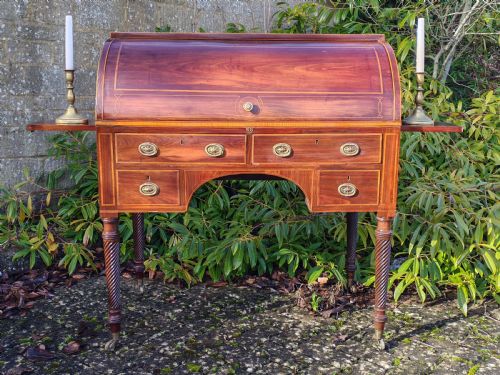
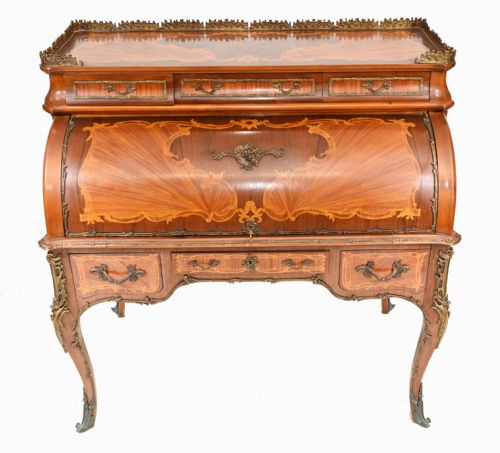


Inlaid Cylinder Top Desk
An inlaid cylinder top desk conceals papers behind a rolling curved shutter, offering elegant hidden storage for a writer.
Inlaid Cylinder Top Desk
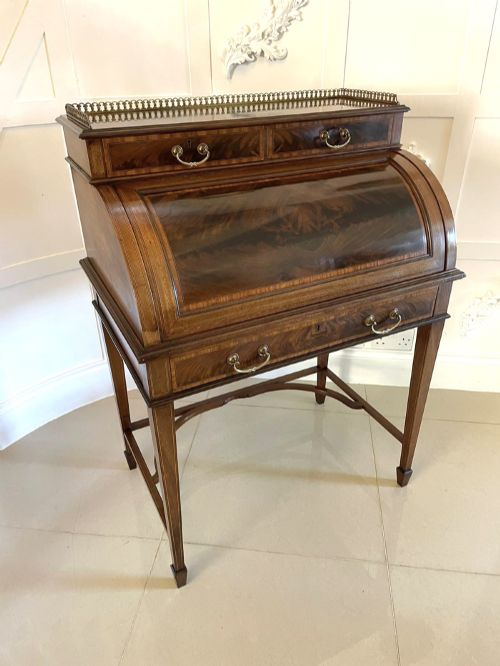
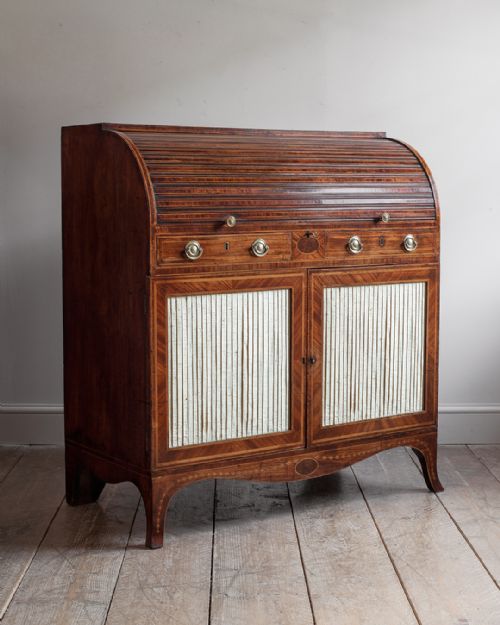
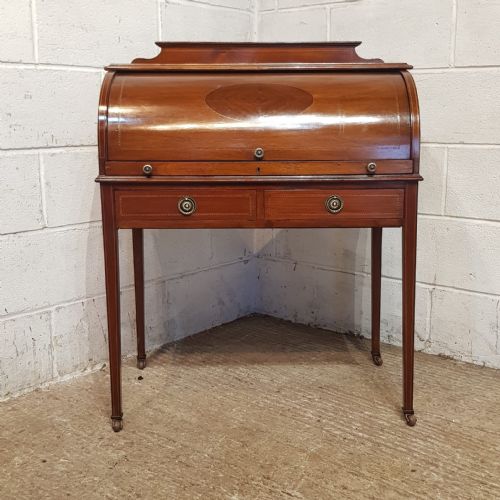
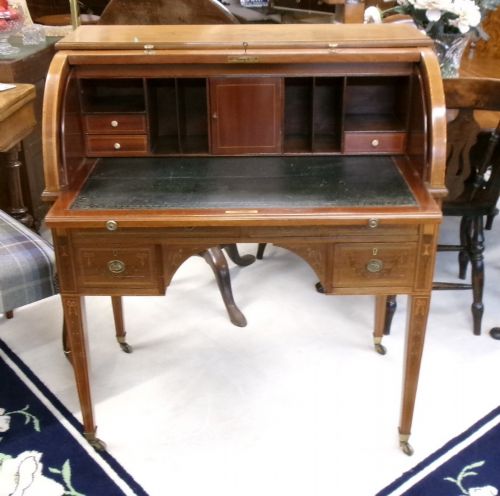
An inlaid cylinder top desk presents a curved wooden barrel closure that retracts to reveal a fitted writing surface and pigeonholes. These writing pieces emerge across Georgian, Regency, and Edwardian periods, frequently executed in mahogany, satinwood, and walnut.
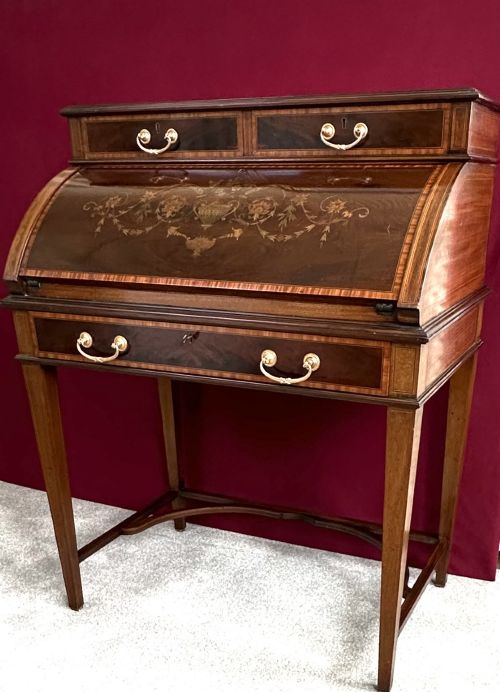
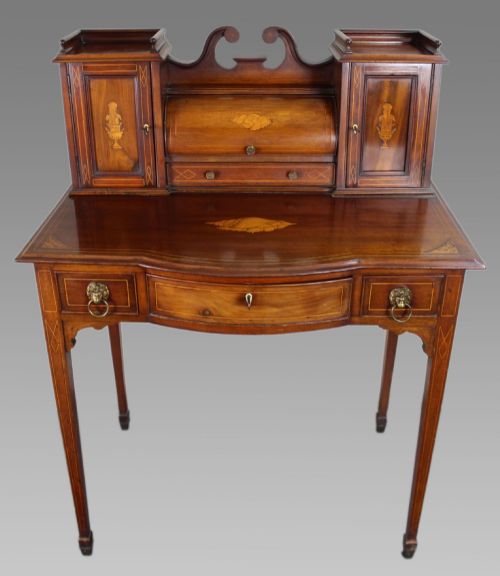
The Edwardian Sheraton Revival examples dominate the selection, bringing lighter woods and delicate floral or ribbon marquetry to the form. Earlier George III pieces often display meticulous satinwood banding and fitted drawers behind the sliding cylinder.
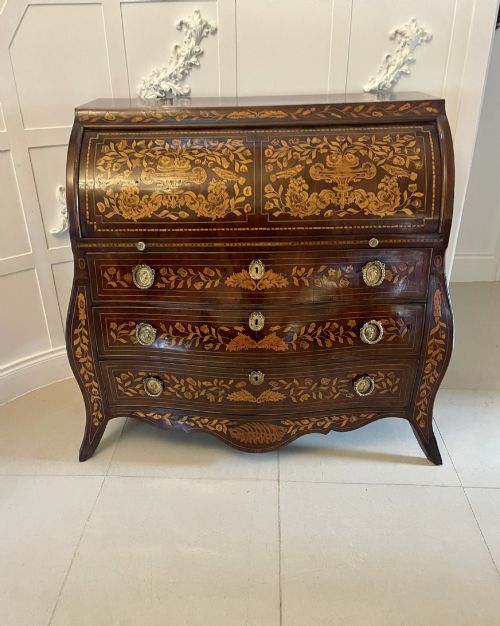
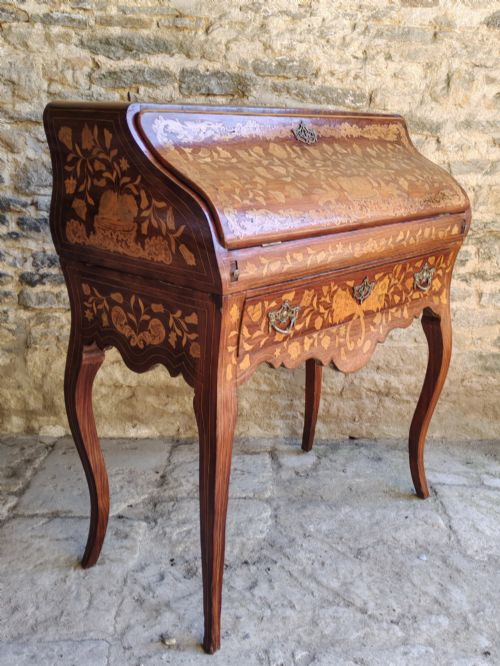
Continental versions also appear, most notably Dutch marquetry interpretations featuring elaborate floral inlays across bombé fronts. Compact ladies desks and larger freestanding estate cabinets round out the varieties found in this category.
Craftsmanship and proportion
Quality rests in the smoothness of the mechanical cylinder action and the precision of the internal pigeonholes and pull-out writing slide. Superior examples maintain tight joints and seamless veneer work along the curved shutter without binding or warping.
Makers known for exceptional retail premises produced marked pieces that command attention through refined bronze or brass mounts and harmonious proportions. The fineness of the marquetry shading and the selection of figured timbers distinguish workshop execution across the periods.
A secret compartment hidden behind tiny pigeonholes often awaits discovery when the internal drawers are pulled right out.
Maple & Co London·Jas Shoolbred·Edwards & Roberts
The Inlaid Cylinder Top Desk Glossary
- Cylinder top
- A curved wooden shutter that rolls back to enclose the writing surface and interior compartments. It differs from a flat fall-front bureau by operating on a track.
- Marquetry
- Decorative patterns formed by fitting together contrasting veneers into wood panels. Floral and urn motifs frequently ornament these surfaces.
- Tambour
- A flexible shutter made from narrow vertical strips of wood glued to fabric backing. This technique achieves the tight curve required for rolling desk tops.
- Secretaire
- A cabinet or desk incorporating a concealed writing drawer or fold-down flap. These often feature nested miniature drawers and pigeonholes.
- Stringing
- Thin inlaid lines of contrasting wood or light-coloured timber used to outline panels and drawers. It defines the geometric boundaries on satinwood and mahogany surfaces.
Inlaid Cylinder Top Desk: Frequently Asked Questions
How do I operate the cylinder top?
Pushing or pulling the curved wooden shutter guides it along internal tracks to reveal or conceal the desk interior.
Most mechanisms link the rolling action directly to the pull-out writing slide below, so extending the writing surface automatically retracts the cylinder.
Where were these desks placed?
Freestanding examples often occupied the centre of a library or large study, finished with polished mahogany panels on the reverse.
Smaller Edwardian and ladies versions typically stood against drawing room walls or beneath windows to catch natural daylight.
How do I care for the leather writing surface?
Dust the leather regularly with a soft dry cloth and avoid placing damp items directly onto the writing hide.
Applying specialised leather dressing sparingly maintains suppleness and prevents the vintage material from cracking over time.
How do I distinguish Edwardian from Georgian pieces?
Georgian desks utilise dense solid timbers with heavy brass hardware and restrained crossbanding. Edwardian Sheraton Revival pieces display lighter construction, satinwood veneers, and more delicate floral marquetry.
Construction methods inside the drawers also help date the piece, with machine-cut elements pointing to later manufacture.