
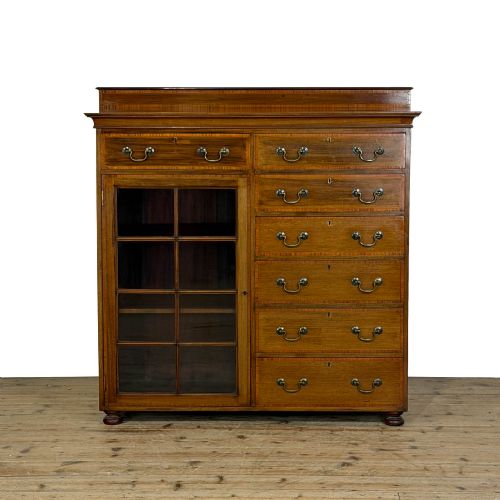
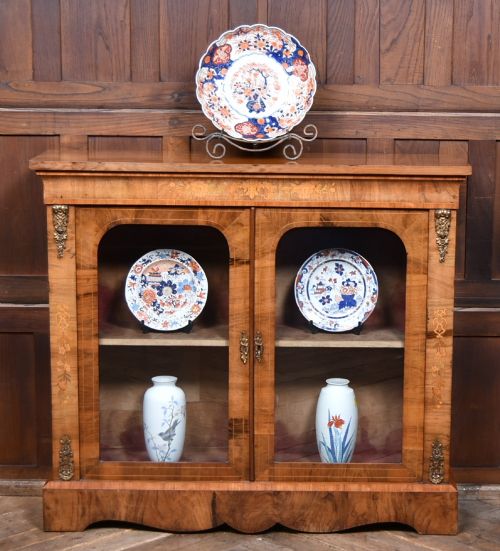
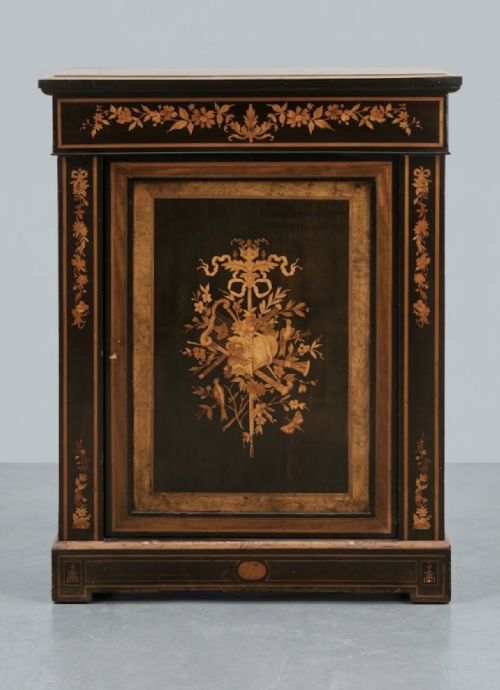
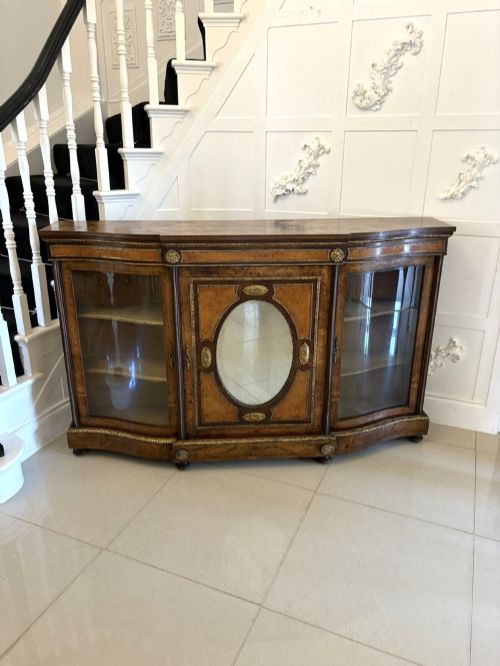
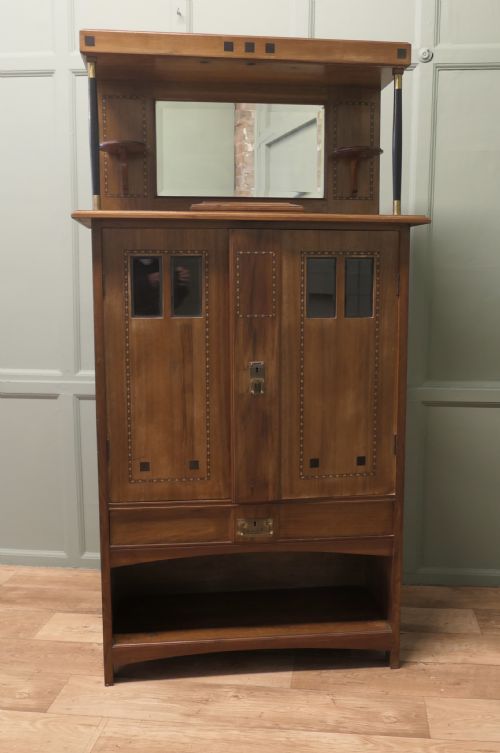
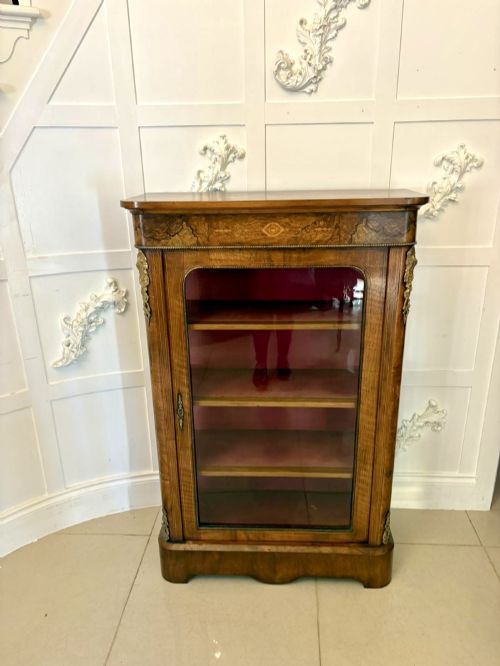
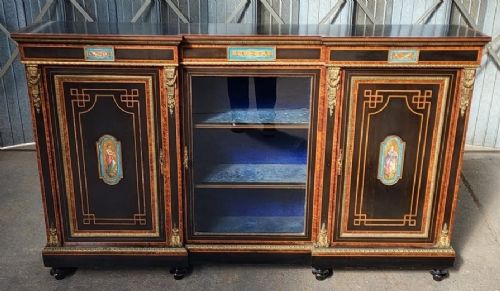
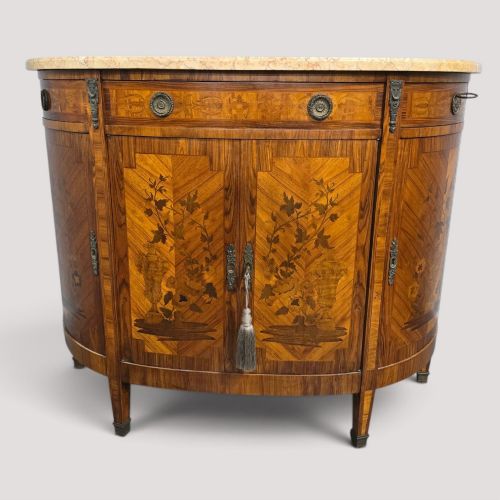
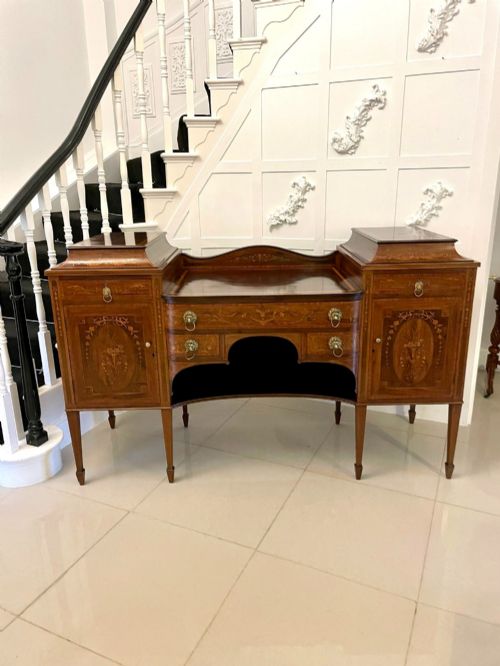

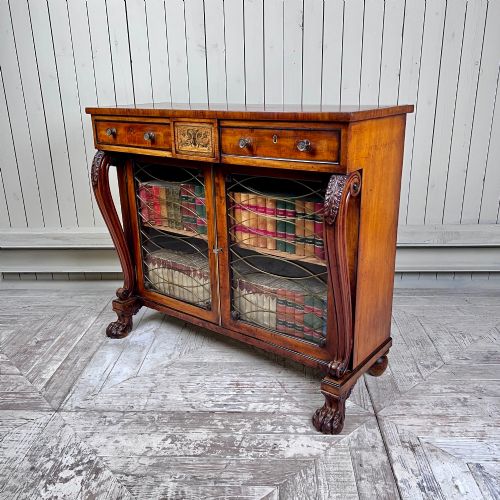
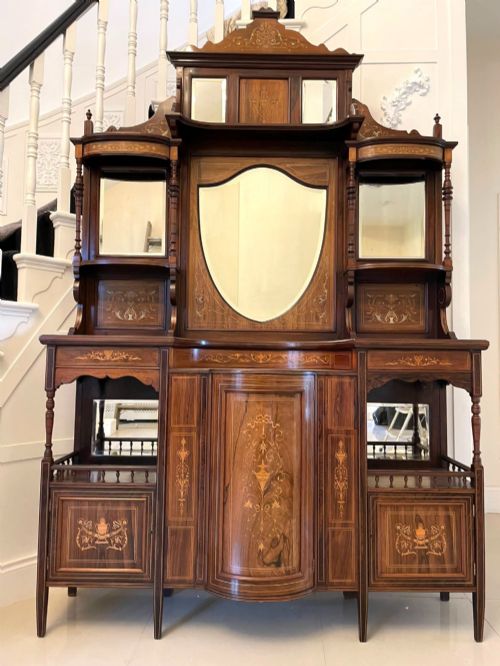
Inlaid Credenza Cabinet
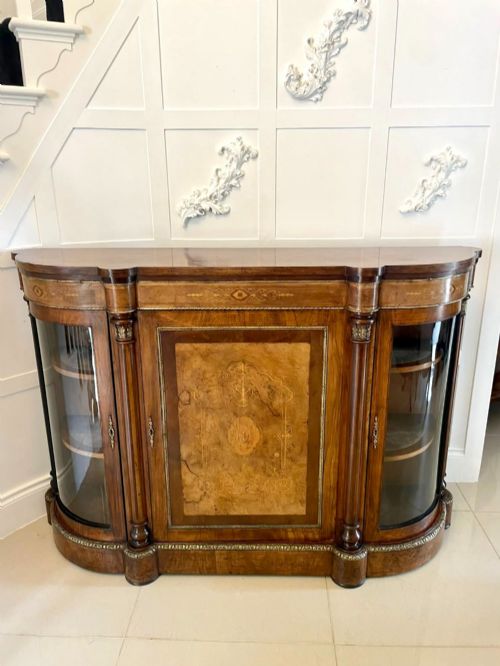
An inlaid credenza cabinet is a low, display-focused storage piece defined by meticulous surface decoration, prized for bringing Victorian and Georgian elegance into a room.
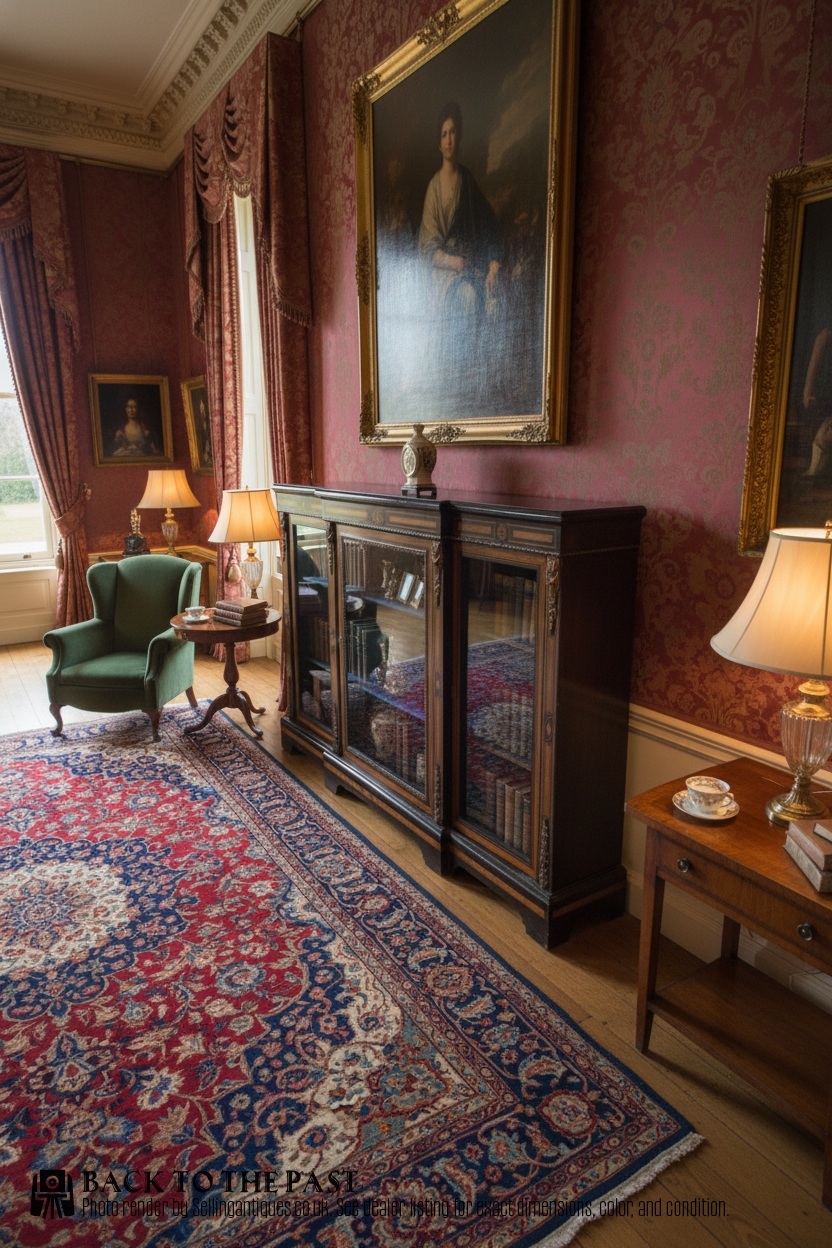
Inlaid Credenza Cabinet
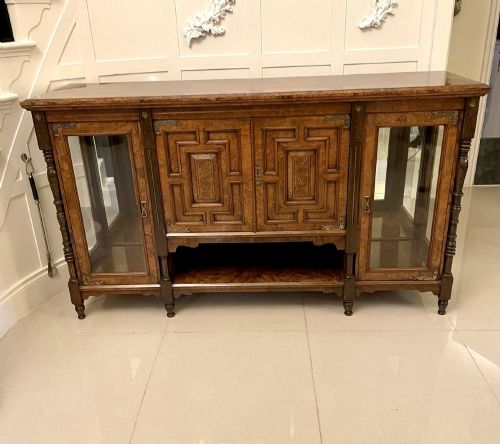
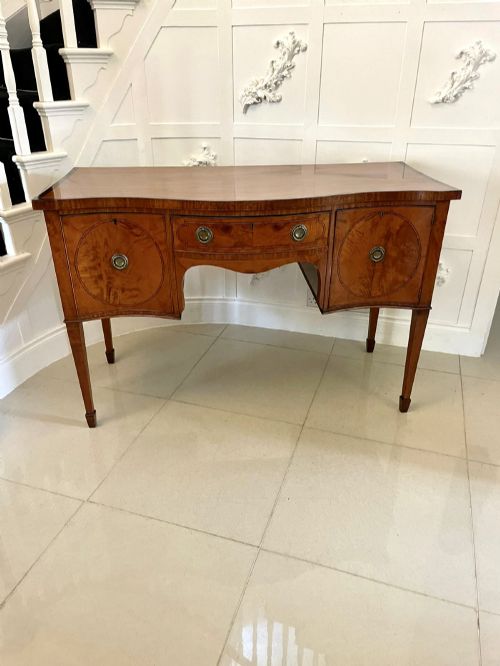
When you search for an inlaid credenza cabinet, you encounter low-profile storage furniture spanning the Georgian, Regency, and Victorian periods.
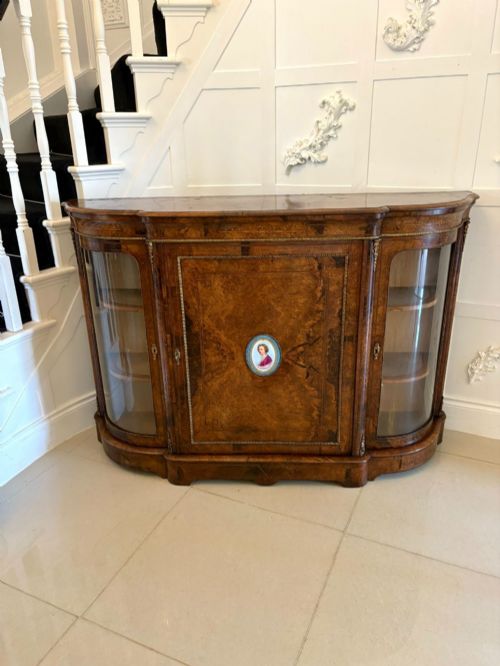
The most common examples on this page are Victorian burr walnut credenzas, often featuring curved serpentine fronts and glazed side doors.
These pieces originated as formal drawing room furnishings designed to display porcelain and books while anchoring a wall.
Materials and Technique
Cabinetmakers used richly figured timbers like burr walnut, satinwood, and mahogany as a canvas for intricate floral and geometric marquetry.
Many examples incorporate cast ormolu mounts, brass stringing, and glazed panels to frame the central cabinet doors.
Surfaces were finished with French polish to highlight the natural grain patterns and contrast the inlaid botanical motifs.
Many Victorian credenzas hide internal shelves lined with faded velvet, once meant to cushion fragile tea services from the clatter of horse-drawn carriages outside.
Judging Quality
The distinction between ordinary and exceptional pieces lies in the crispness of the marquetry and the depth of the timber's figure.
Superior examples feature heavy gilt bronze or ormolu mounts, well-modelled porcelain plaques, and unbroken symmetry in the wood grain.
Subtle details such as curved glass doors and secondary timbers inside the carcase reveal the maker's commitment to construction.
Hewetsons London·Collinson and Lock·Gillows·Lamb of Manchester·Louis Constantin Le Gaigneur·Edwards and Roberts
The Inlaid Credenza Cabinet Glossary
- Credenza
- A low cabinet, typically enclosed by doors, originating from the Italian Renaissance and revived in the nineteenth century. It sits low against a wall and often includes glass-fronted side sections.
- Marquetry
- The art of applying thin veneers of various woods, and occasionally mother-of-pearl or ivory, to form decorative pictures and patterns. It requires immense precision to ensure the pieces fit tightly together.
- Ormolu
- Gilt bronze mounts used extensively on nineteenth-century furniture for decorative borders and feet. The process involves applying a mercury and gold amalgam to bronze.
- Serpentine
- A furniture front curved with a convex centre flanked by concave sides. This shape demands advanced woodworking skill to veneer accurately.
- Pier Cabinet
- A narrow display cabinet designed to fit the wall space between windows. These pieces often feature glass doors and velvet-lined interiors for displaying delicate ceramics.
Inlaid Credenza Cabinet: Frequently Asked Questions
What is an inlaid credenza cabinet used for?
These low cabinets served primarily in formal nineteenth-century drawing rooms for displaying valuable porcelain, glassware, and decorative objects behind glass doors.
The enclosed cupboards also provided practical storage for linens or books while maintaining a low profile that preserved sightlines in the room.
How do I tell a Victorian credenza from a Georgian one?
Georgian versions typically rely on straight lines, rich mahogany, and subtle brass stringing, reflecting classical architectural proportions.
Victorian pieces, by contrast, frequently utilise burr walnut, elaborate floral marquetry, curved serpentine shapes, and gilt metal mounts.
How do I fit a credenza into a modern interior?
The low height of these cabinets makes them ideal surface areas for lamps, art, or a television while offering deep enclosed storage below.
Pairing the rich tones of burr walnut or rosewood with minimalist contemporary decor creates a striking contrast that highlights the antique marquetry.