



Ebonised and Amboyna Cabinet
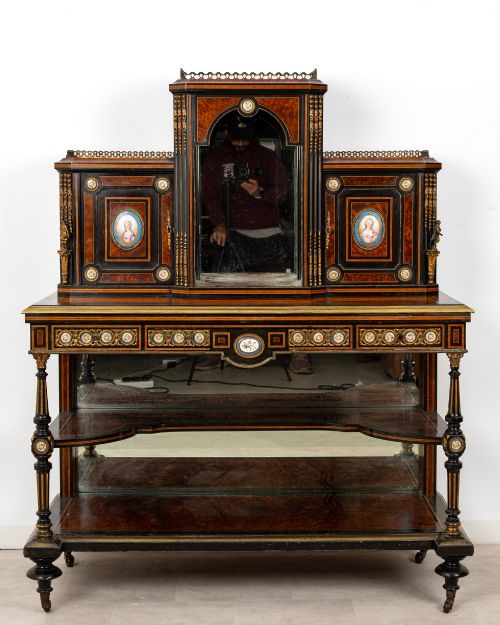
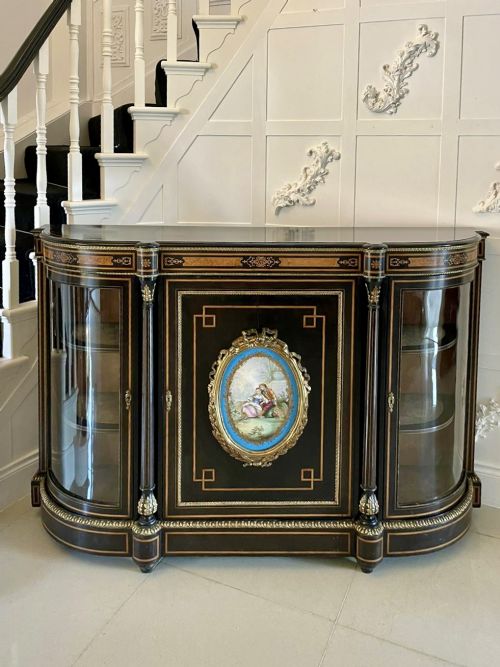
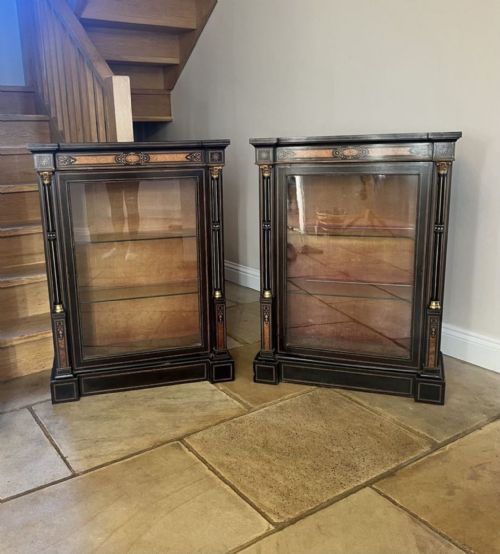
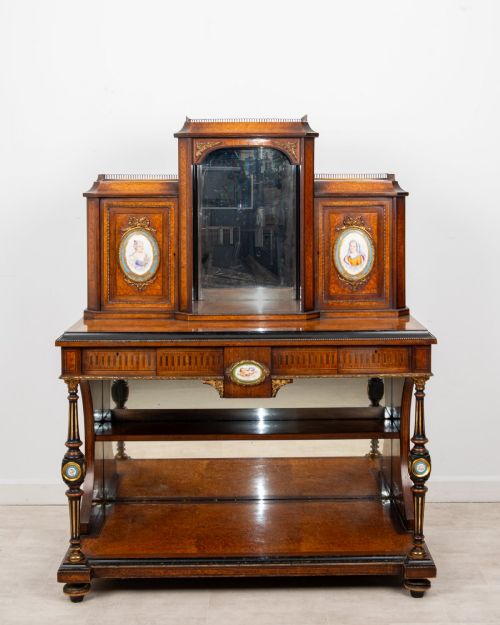
These ebonised and amboyna cabinets bring together dark contrasting timber and rich exotic veneer to anchor a formal interior.
Ebonised and Amboyna Cabinet
An ebonised and amboyna cabinet is a nineteenth-century form defined by its use of black-finished wood alongside the mottled, golden-brown grain of amboyna veneer. You encounter these primarily as credenzas, pier display cabinets, and writing desks produced during the Victorian era and the Napoleon III period.
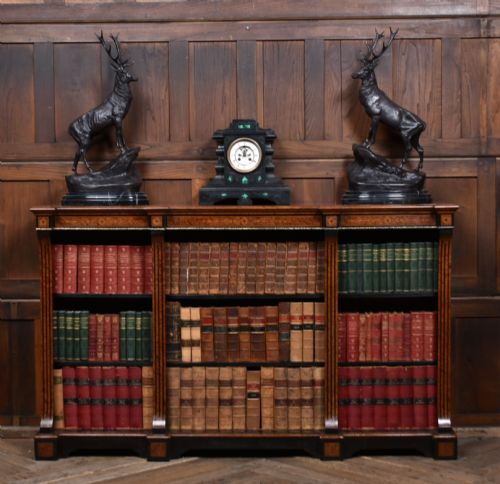
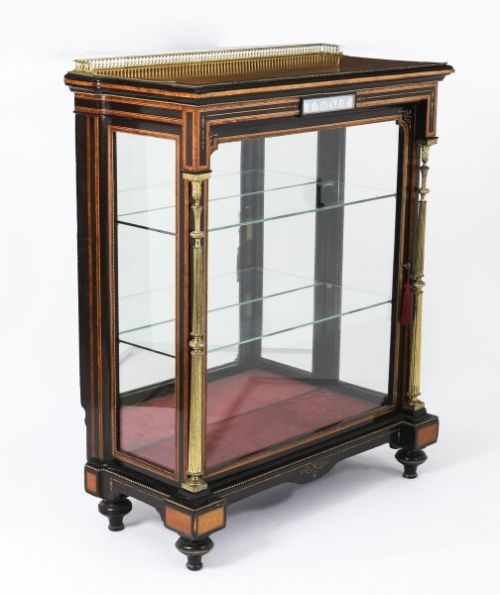
The selection ranges from glazed display furniture designed to house porcelain to breakfront bookcases and compact music cabinets. Side cabinets and credenzas appear frequently, often featuring inlaid details and brass or ormolu mounts that reflect revival styles like the Aesthetic Movement and neoclassical designs.
How they were made
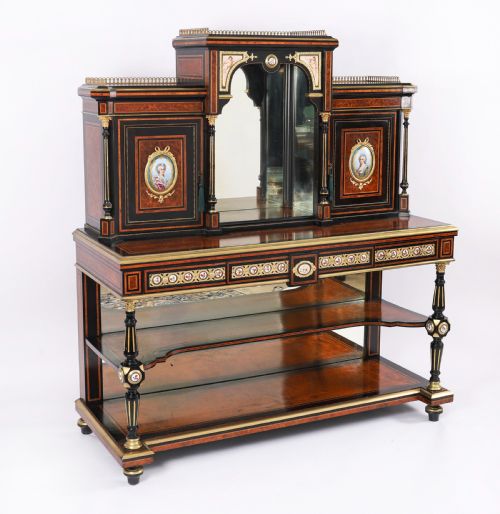
Cabinetmakers constructed these pieces using solid timber frames finished with ebonisation to mimic ebony, paired with amboyna veneer applied to prominent surfaces. Workshops utilised burr walnut, brass, and porcelain plaques as secondary materials for inlay and decoration.
The construction relies on precision cabinetmaking techniques, incorporating glass panels for display units and gilt metal mounts to accentuate the contrast between the dark ebonised framework and the figured amboyna grain.
Listings feature Victorian and nineteenth-century pieces alongside Napoleon III and Aesthetic Movement examples, utilising ebonised wood, amboyna veneer, and porcelain.
What varies in quality
Quality rests upon the selection and matching of the amboyna veneer, where richer figuring and symmetrical grain patterns distinguish finer examples. The crispness of the ebonised finish and the precision of inlaid details further separate standard production from exhibition pieces.
The integration of gilt metal mounts, ormolu, and inset porcelain plaques dictates the tier of the piece. Superior examples exhibit harmonious proportions alongside refined carving and heavier, more substantial construction.
Lamb of Manchester
The Ebonised and Amboyna Cabinet Glossary
- Ebonised
- Wood treated with a dark finish to replicate the appearance of solid ebony. This technique gained widespread popularity in nineteenth-century furniture design.
- Credenza
- A low cabinet, frequently fitted with doors and glass panels, used for storage and display. Nineteenth-century versions often incorporate breakfront configurations.
- Pier Cabinet
- A narrow display cabinet designed to fit against the wall space between windows. These pieces typically feature glazed doors for showcasing porcelain.
- Ormolu
- Gilt bronze mounts applied to furniture for decorative effect. The technique adds metallic contrast to dark timber frames.
Ebonised and Amboyna Cabinet: Frequently Asked Questions
What is an ebonised and amboyna cabinet?
It is a nineteenth-century furniture piece combining black-finished wood with figured amboyna veneer. These items encompass credenzas, bookcases, and display cabinets.
They emerged during the Victorian era and the Napoleon III period, often featuring intricate inlay and metal mounts.
How were these cabinets used originally?
Owners utilised them in formal reception rooms to display ceramics, books, and decorative objects behind glass doors. Writing desks and music cabinets served specialised domestic functions.
The surface tops provided space for decorative ornaments and lamps within period interiors.
How do I identify a Victorian piece?
Look for characteristic construction methods, timber combinations, and revival styles associated with the nineteenth century. The presence of ebonised wood alongside amboyna veneer points directly to this era.
Details like porcelain plaques and ormolu mounts further align these items with Victorian aesthetic and neoclassical revivals.
Where should I place one at home?
These cabinets suit drawing rooms, studies, or hallways where their dark timber and figured veneer provide a strong visual anchor. Pier cabinets fit narrow wall spaces effectively.
Pair them with complementary nineteenth-century furniture to maintain historical context in a room.