
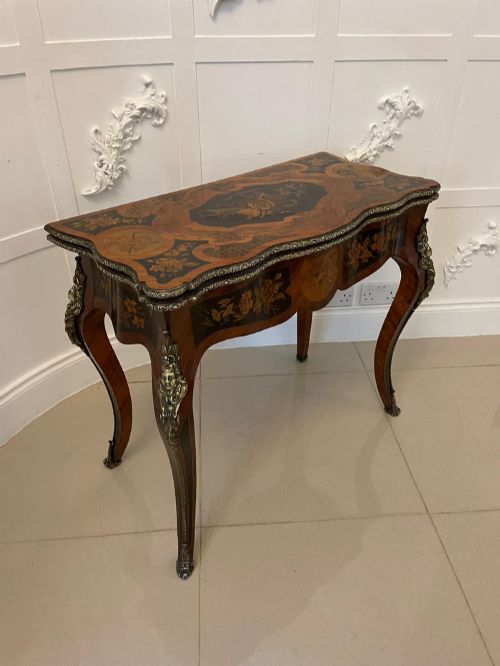

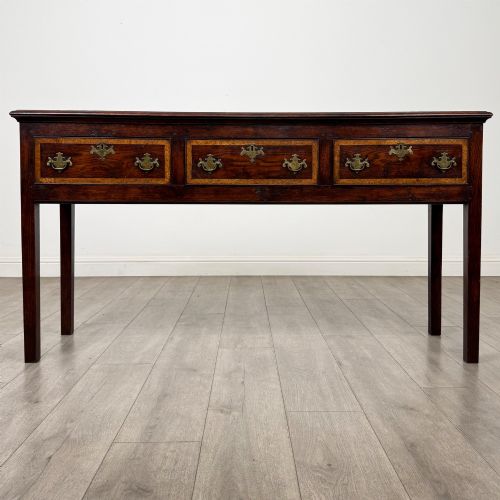
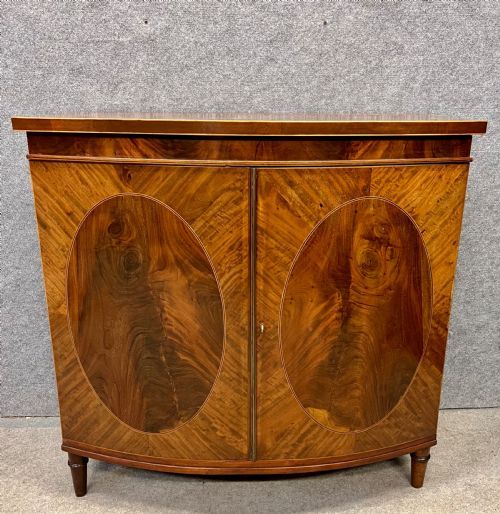
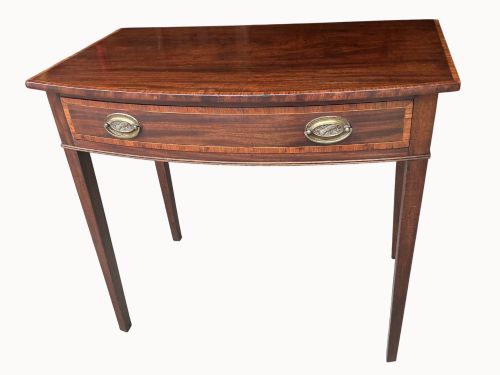
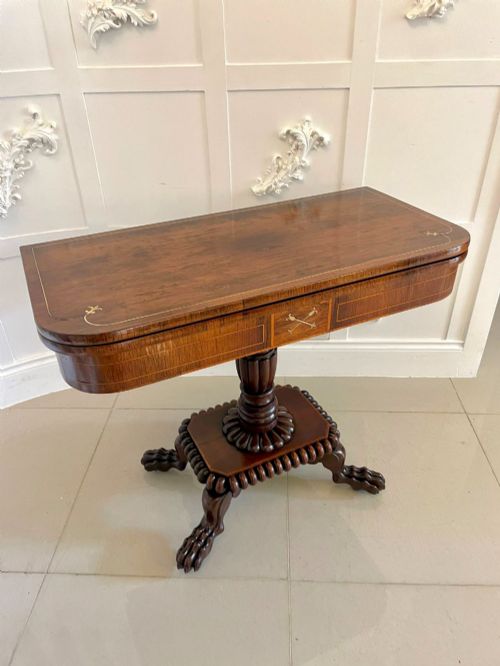
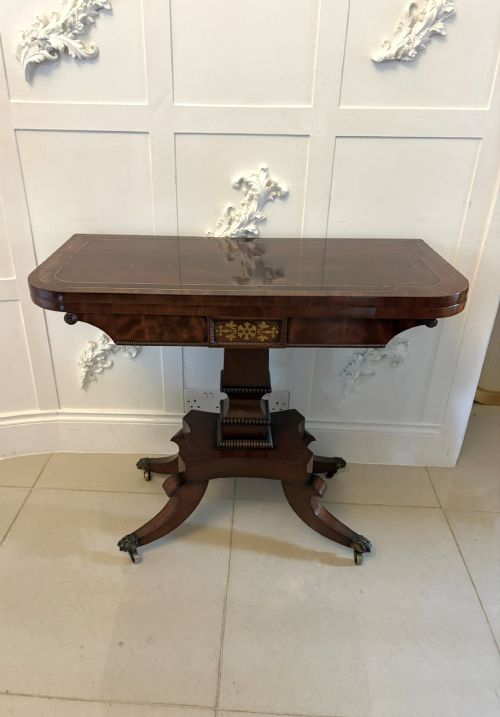
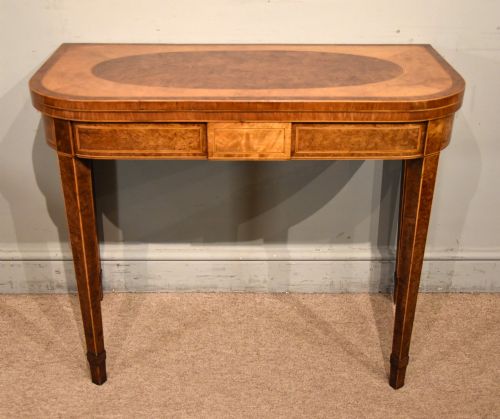
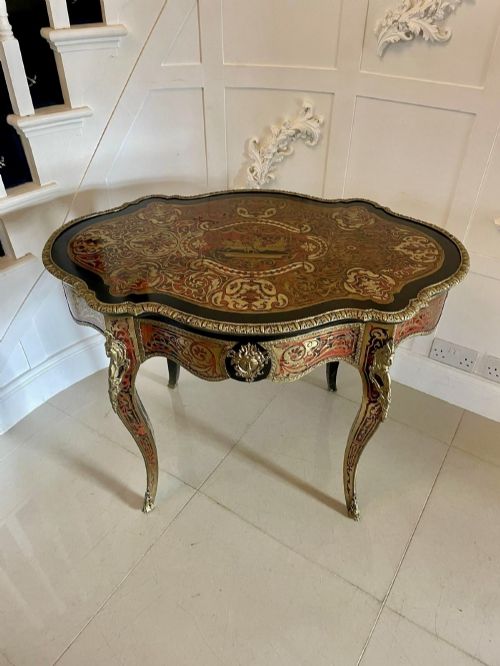
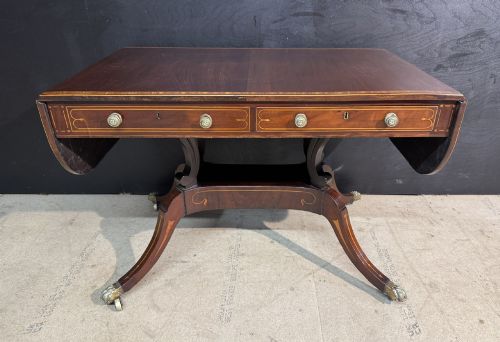
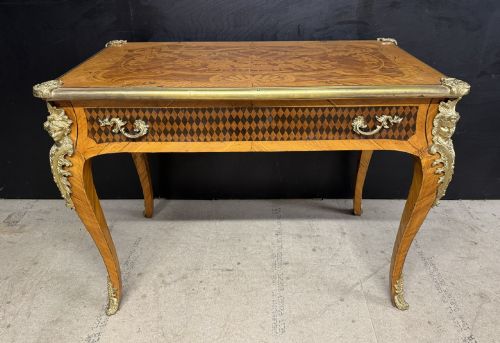
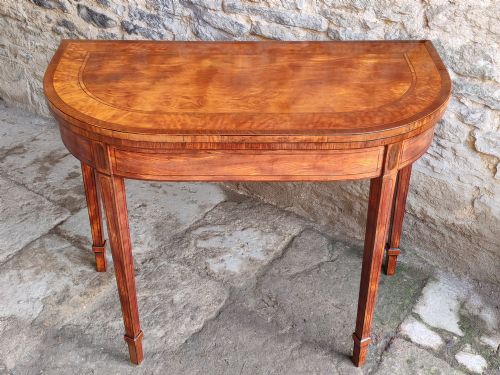
Inlaid Console Table
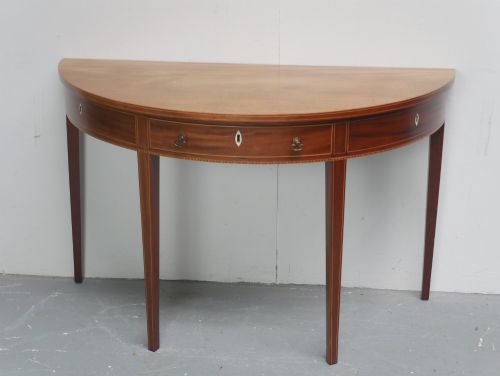
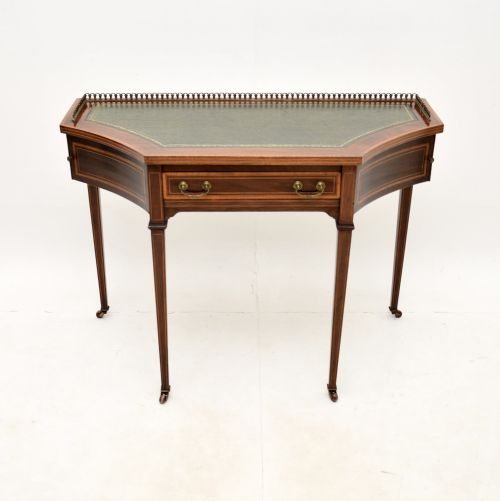
An inlaid console table brings together fine cabinet-making and intricate surface decoration across Georgian, Regency and Edwardian eras.
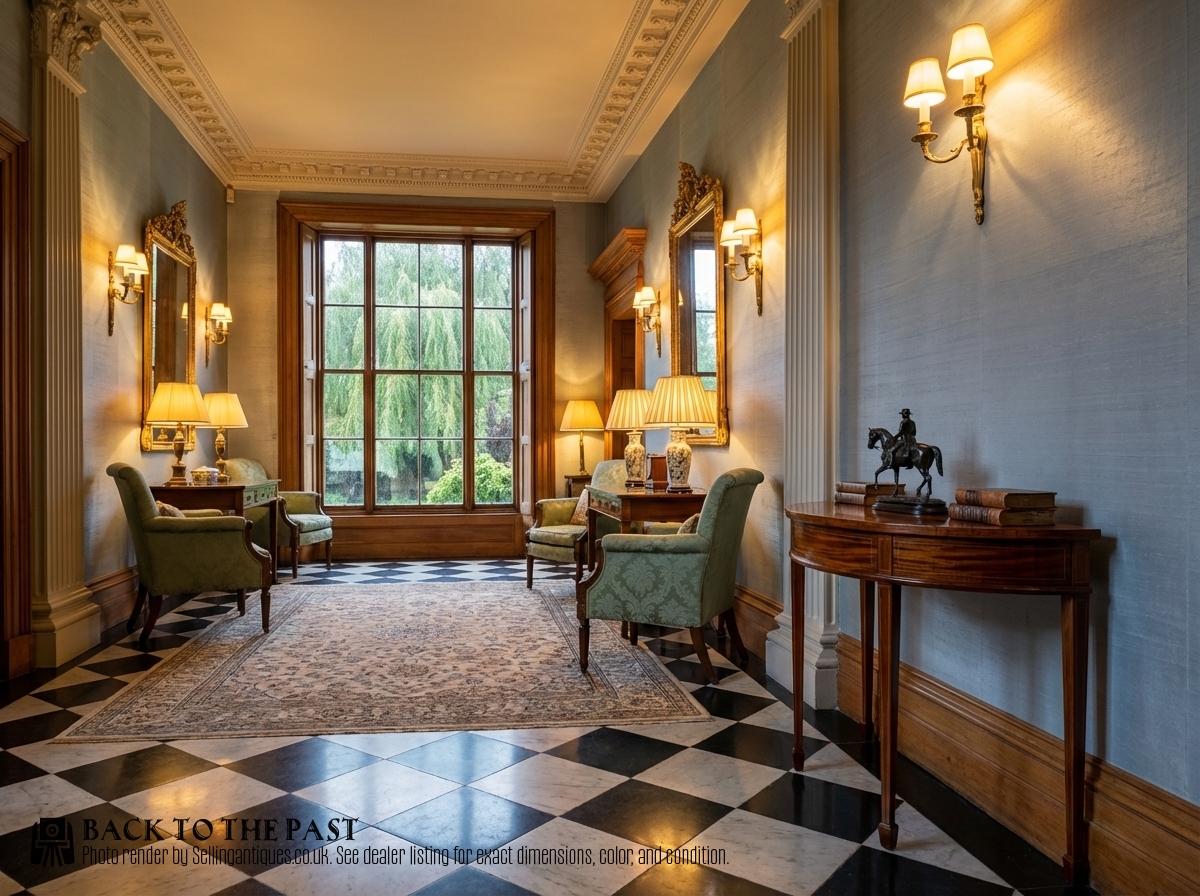
Inlaid Console Table
When you search for an inlaid console table, you encounter pieces designed to sit flat against a wall, frequently taking a semicircular demi-lune shape or a rectangular profile.
The selection spans formal Georgian and George III mahogany examples, Regency rosewood designs with brass stringing, and lighter Edwardian satinwood pieces.
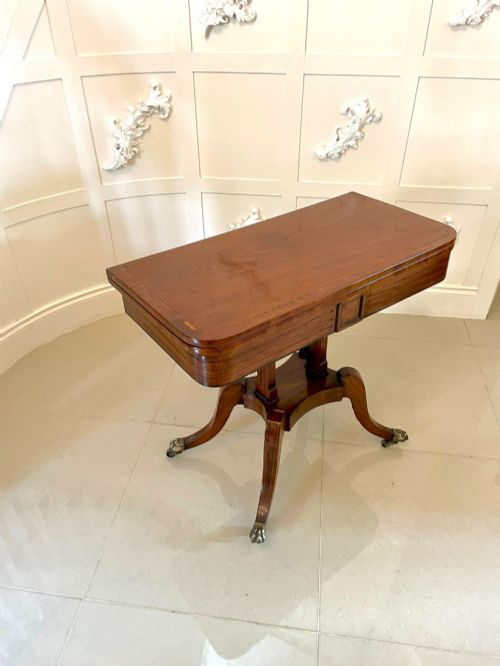
Many items in this category double as fold-over card tables or tea tables, functioning as versatile side furniture in reception rooms.
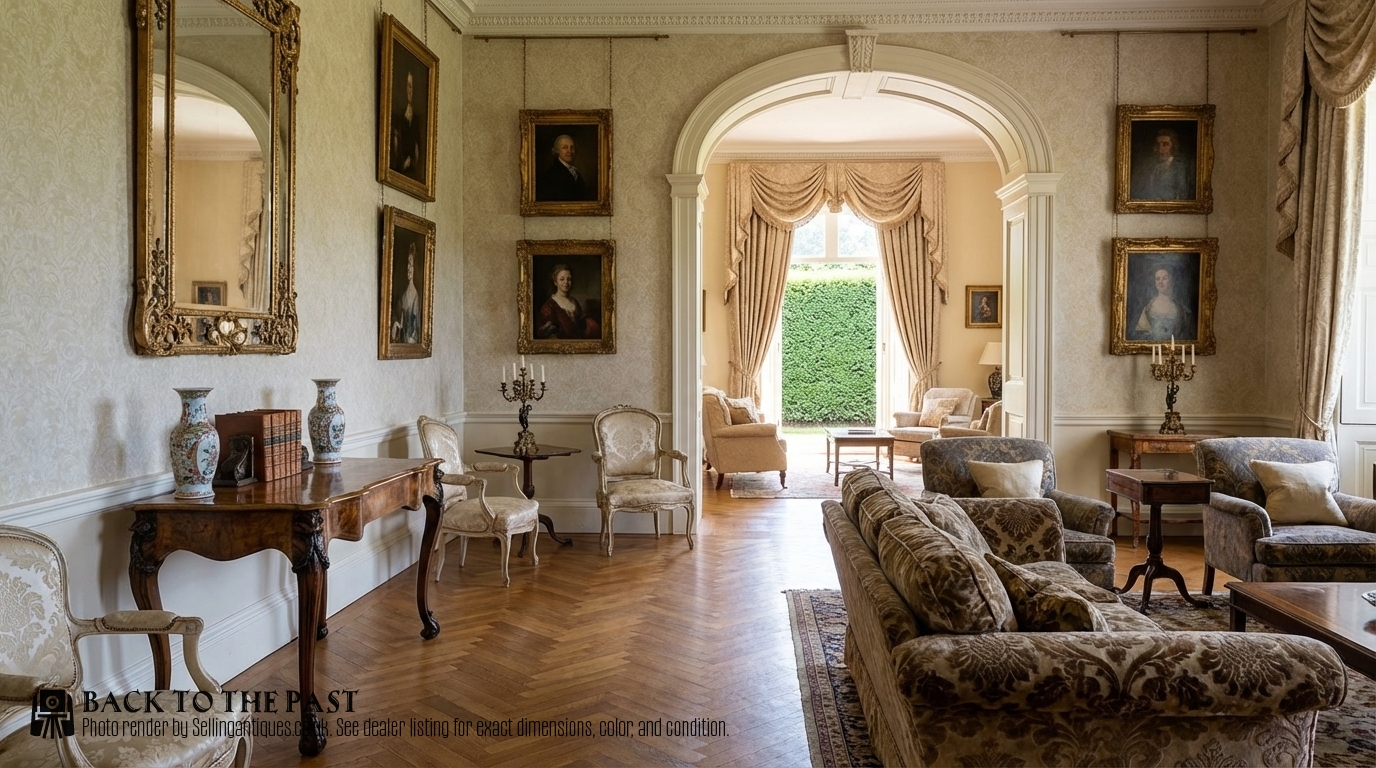
Materials and Construction
Cabinet-makers relied on native mahogany and exotic timbers like rosewood, kingwood and satinwood, laid as veneers over sturdy underlying carcases.
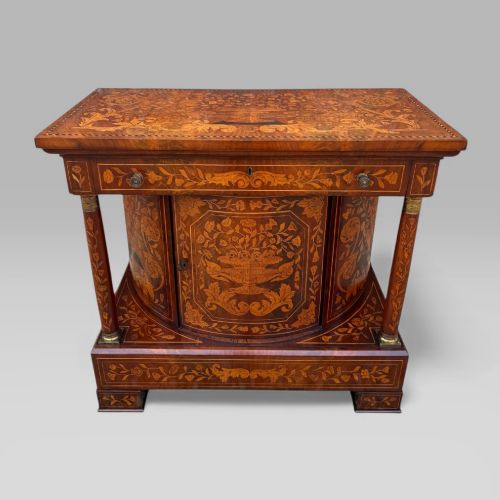
Surface ornamentation involved contrasting wood inlay, marquetry pictorial scenes, parquetry geometric patterns and fine brass stringing or ormolu mounts.
Inlaid Console Table Retail Price Guide 2026
Typical asking prices for inlaid console table among the pieces listed under this phrase on Sellingantiques today, from the lower quarter to the upper quarter. They describe what is for sale here now, not the wider market.
Some nineteenth-century card tables hide secret compartments beneath their rotating tops for storing counters and coins.
Judging the Standard
Quality rests on the precision of the timber selection, such as figured mahogany or burr walnut, and the crispness of the floral or geometric marquetry.
Master craftsmen ensured that brass inlays sat completely flush with the surrounding wood and that hinged leaves on card tables aligned perfectly when opened.
George Bullock·Amleto Bertoni
The Inlaid Console Table Glossary
- Demi-lune
- A half-moon shape characteristic of many console and card tables designed to stand flat against a wall. This profile allowed tables to occupy minimal floor space in narrower hallways.
- Marquetry
- The art of forming decorative patterns using fitted pieces of various coloured woods, veneers and other materials. Craftsmen cut these elements from thin sheets to create floral or pictorial scenes.
- Stringing
- Fine, narrow lines of contrasting wood or brass embedded into the surface of furniture to create geometric borders. It highlights the structural outlines of tabletops and drawer fronts.
- Crossbanding
- A border of veneer laid around the edge of a tabletop with the wood grain running perpendicular to the central panel. This technique frames the primary timber and adds visual contrast.
- Boulle
- A style of marquetry using tortoiseshell and brass or pewter inlaid in elaborate scrollwork patterns. Developed in France, it appears on nineteenth-century centre tables and writing desks.
Inlaid Console Table: Frequently Asked Questions
What is a console table?
A console table is a decorative piece of furniture traditionally designed to stand against a wall, often supported by brackets or slender legs.
In period interiors, these tables held ornamental items or served as serving surfaces in hallways and formal drawing rooms.
How do I use a fold over table?
Fold-over tables operate with a hinged top that opens out to double the surface area when needed for card games or tea.
When closed, they function as compact console tables against a wall, making them practical for smaller rooms.
How do I distinguish Georgian from Edwardian pieces?
Georgian pieces from the eighteenth and early nineteenth centuries feature dense, heavy timbers like solid mahogany with restrained crossbanding and handmade structural joints.
Edwardian interpretations from the early twentieth century often utilise lighter satinwood, delicate painted or inlaid decoration, and more uniform factory preparation.
What is the difference between marquetry and inlay?
Inlay involves setting pieces of wood, brass, or other materials into hollowed-out recesses on a solid wood surface.
Marquetry covers the entire surface in a mosaic of various wood veneers assembled together to form pictorial or geometric designs before application.