


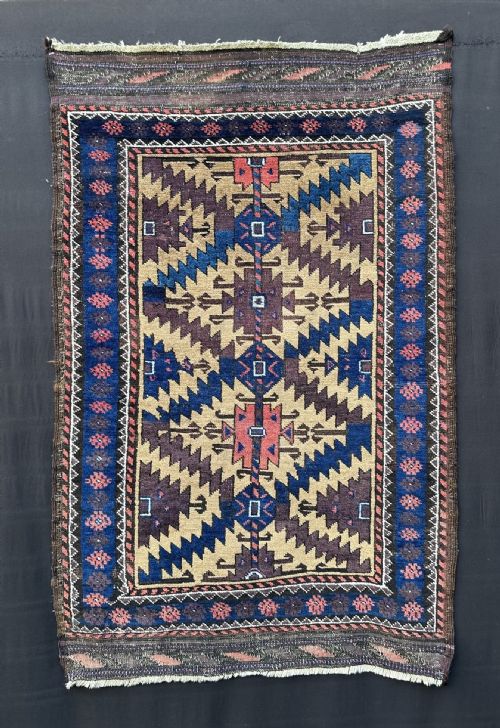
Indigo Baluch Carpet
An indigo baluch carpet brings deep tribal character and rich blues into a room, offering authentic nomadic weave traditions from the nineteenth and early twentieth centuries.
Indigo Baluch Carpet
When you search for an indigo baluch carpet, you encounter nomadic and village floor coverings originating from tribal groups across regions such as Western Afghanistan, Khorasan, and Ferdows Province. These textiles include main carpets, smaller area rugs, prayer rugs featuring mihrabs, flatweave kilims, and utilitarian sofrah eating cloths. Most examples date from the late nineteenth century up to the 1920s, reflecting traditional tribal weaving patterns.
The aesthetic relies heavily on dark blue grounds complemented by distinct motifs like the kalam donneh pencil box design, box medallions, repeat stars in octagons, and mushwani patterns. Buyers frequently discover prayer rugs with single or multiple mihrabs alongside larger format tribal carpets. Each piece represents the specific regional identity of the weaver, whether inspired by Turkmen motifs or local village traditions.
How they were made
The construction of these carpets relies on hand-spun wool and goat hair utilised for foundations and pile, combined with natural dyes that create deep indigo grounds. Weavers employed traditional upright or horizontal looms within tribal settlements to produce both knotted pile rugs and flatweave kilims. The inclusion of natural dye materials ensures the characteristic depth of colour found across these antique pieces.
Structural variations include two-part kilims and sturdy village formats designed for daily domestic use by nomadic groups. Artisans incorporated durable materials like goat hair for selvedges and heavy wool for the main body to withstand wear. The technical execution directly links each rug to the specific geographical area of its production.
Listings feature wool, natural dyes, goat hair, and hand-spun wool across pieces dated from 1870 through 1920.
What varies in quality
Quality in these tribal textiles rests upon the handle of the wool, the precision of the tribal design execution, and the saturation of the natural dyes. Superior examples exhibit tightly packed foundations and finely spun yarn that retain resilience despite age. The clarity of specific motifs, such as repeat star patterns or crisp mihrab outlines, distinguishes finer weaving from standard village output.
The depth and consistency of the indigo ground colour also influence the visual impact of the rug. Pieces featuring scarce formats, such as unusual prayer formats or well-executed main carpets, demonstrate higher weaving ambition. The integrity of the original borders and the fineness of the knotting separate standard utility rugs from exceptional tribal works.
The Indigo Baluch Carpet Glossary
- Mihrab
- The arched niche design found on prayer rugs, directing the user toward Mecca during daily worship. This architectural motif often incorporates rams horns or star details.
- Sofrah
- A woven cloth utilised for serving meals or processing bread within nomadic households. These functional textiles often display distinctive tribal layouts.
- Kilim
- A flatweave textile produced without a pile by tightly interweaving warp and weft threads. Such pieces serve as lighter floor coverings or tent dividers.
- Kalam Donneh
- A traditional pencil box motif frequently observed in Timuri and Baluch main carpets. The repeated boteh-like form creates a structured field pattern.
Indigo Baluch Carpet: Frequently Asked Questions
What is a baluch carpet?
A baluch carpet is a tribal floor covering made by nomadic and village weavers originating from regions spanning Afghanistan, Persia, and Khorasan. These textiles typically date from the nineteenth and early twentieth centuries.
They utilise hand-spun wool, goat hair, and natural dyes, frequently featuring dark indigo grounds and geometric motifs such as box medallions and star patterns.
How do I identify a prayer rug?
Prayer rugs are distinguished by a mihrab, which is an arched niche design at one end of the field. These rugs were traditionally used for daily personal devotion.
On this page, you will find examples displaying single mihrabs, multiple mihrabs, and rams horn motifs within the arch.
Where were these carpets made?
The pieces originate from tribal and village groups located in Western Afghanistan, Khorasan, Ferdows Province, and the Herat region. Different tribes adapted local motifs influenced by Turkmen and Persian traditions.
Geographic attribution is often indicated by specific structural designs like mushwani patterns or classic main carpet formats.
How should I care for an antique rug?
Antique wool rugs require gentle maintenance, including regular light vacuuming without a rotating brush bar. Keeping them out of direct sunlight helps protect the natural dyes.
Professional cleaning suited for antique textiles should be utilised when deep cleaning becomes necessary to preserve the hand-spun wool foundation.