

Indian Teak Furniture
Indian teak furniture brings dense, durable timber and intricate carving into British homes, carrying the distinct marks of colonial craftsmanship and regional traditions.
Indian Teak Furniture
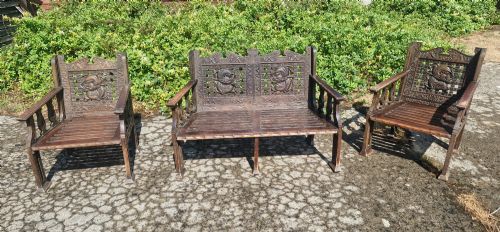
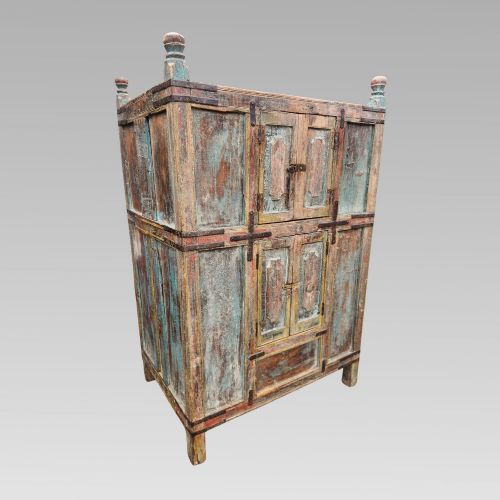
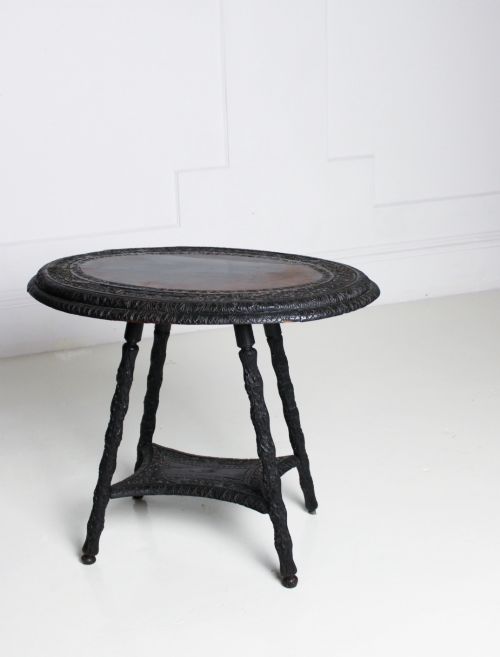
Indian teak furniture encompasses a wide variety of domestic objects, ranging from small occasional tables to large storage cupboards and seating suites. The pieces bridge traditional local craftsmanship and colonial utility, reflecting the tastes of the nineteenth and early twentieth centuries.
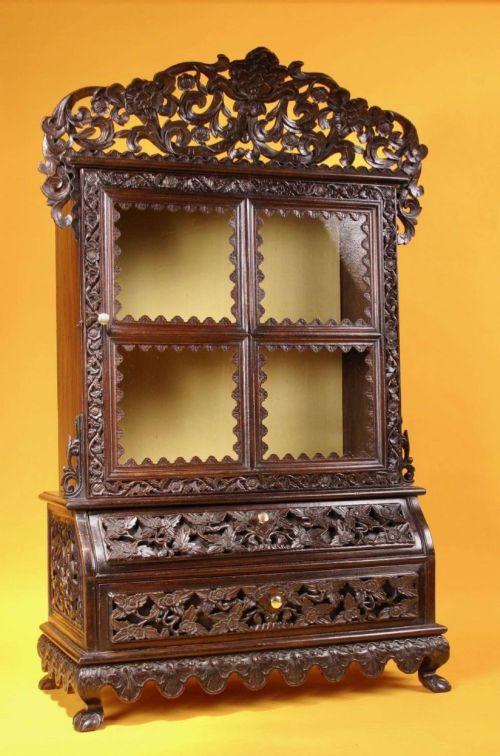
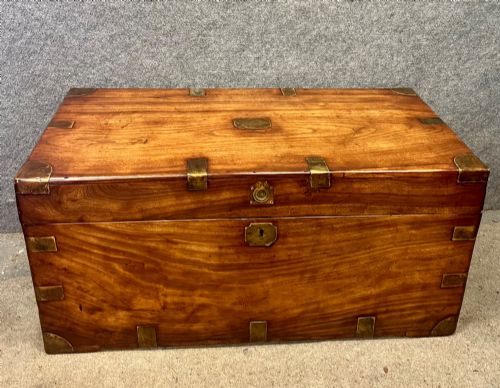
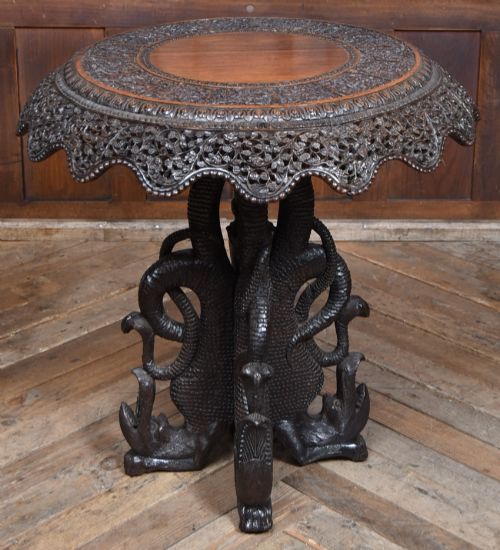
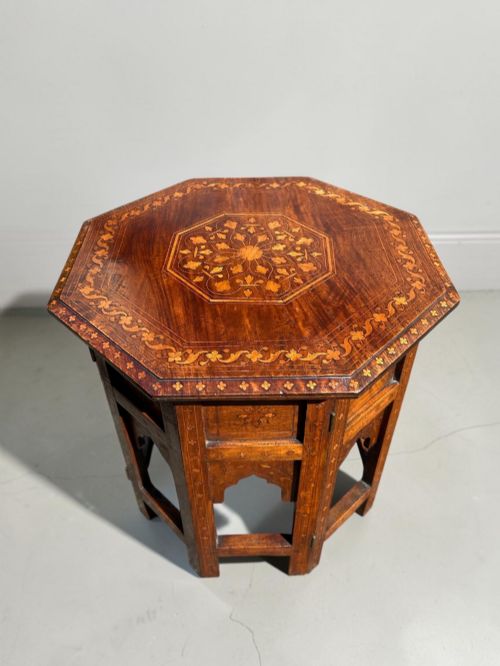
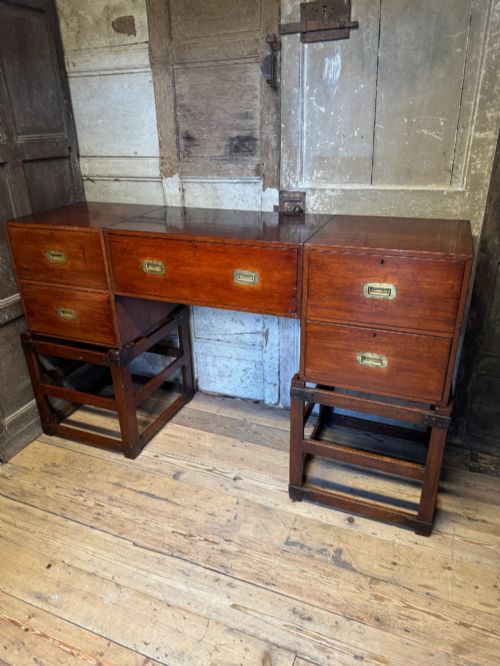
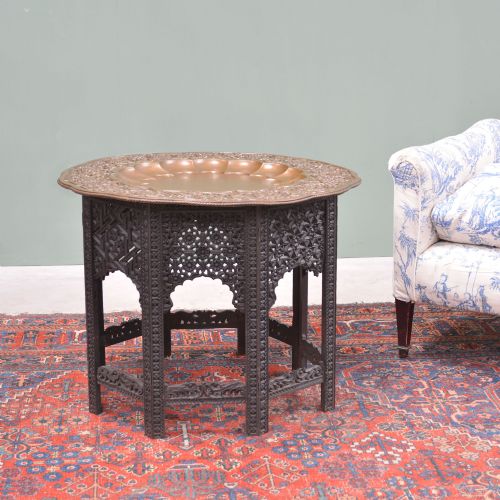
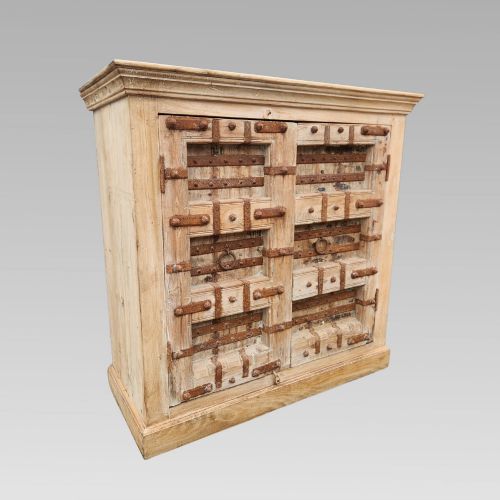
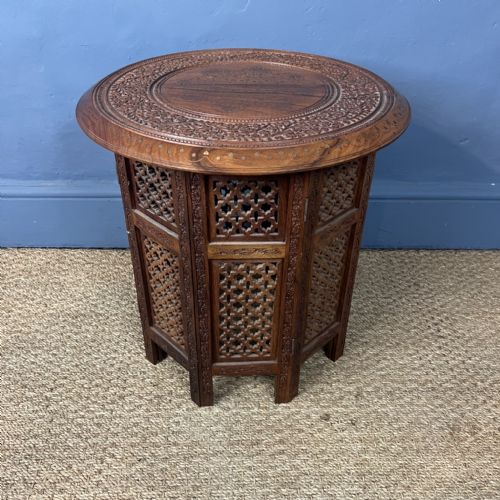
Octagonal tables, campaign chests, and carved cabinets dominate the selection. These forms combine solid teak construction with complex surface decoration, created for both export markets and domestic use in British India and Burma.
Dating primarily from the Victorian era through the 1930s, these items show regional variations including Anglo-Indian, Hoshiarpur, and Burmese styles. Buyers encounter both utilitarian campaign pieces and highly ornamental household furniture.
Materials and construction methods
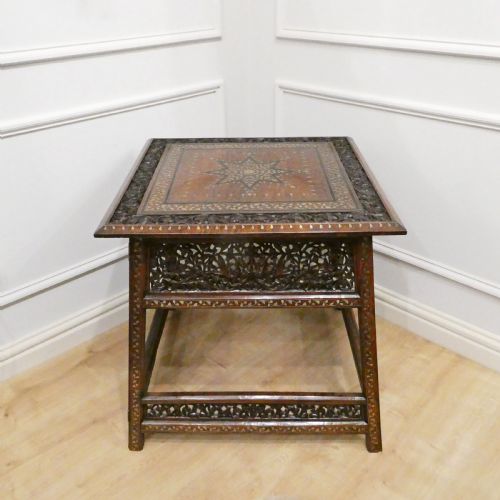
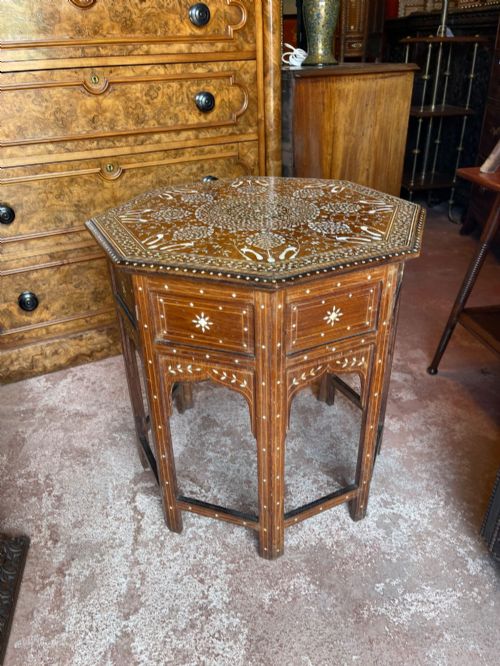
Solid teak serves as the primary structural material, often combined with secondary hardwoods, iron bands, and brass fittings for strength and transport. Many items incorporate intricate surface detailing using brass inlay, bone, and bone inlay set directly into the timber.
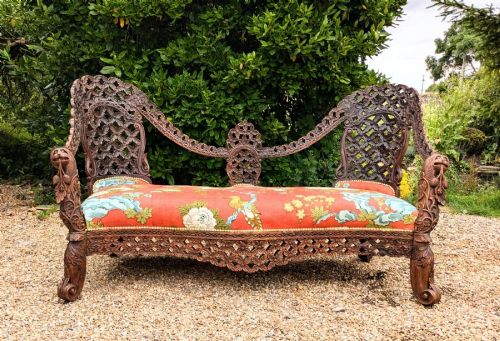
Woodworking techniques rely on dense carving and traditional joinery to support heavy ornamentation. Tables and chests frequently feature folding bases, intricate pierced panels, and metal reinforcement designed for colonial transport.
Several tables on offer feature dedicated elephant motifs carved directly into the teak structure, celebrating regional fauna in domestic design.
Distinctions in quality and execution
Depth and precision of the hand carving separate standard production from superior examples. Master workshops in centres like Hoshiarpur achieved remarkable geometric and floral relief work, whereas lesser pieces display shallower or repetitive patterns.
The integrity of the timber and the retention of original decorative elements define the higher tier. Pieces retaining complete brass or bone inlay without replacement parts maintain greater historical and aesthetic integrity.
The Indian Teak Furniture Glossary
- Anglo-Indian
- Furniture made in India during the British colonial period, combining traditional Indian forms and carving with European room layouts and utility. This style heavily influenced domestic interior design in Britain.
- Hoshiarpur
- A style of woodwork originating from Punjab, defined by dense carving and intricate inlay work using brass or bone. Pieces from this tradition often feature octagonal folding tables and occasional tables.
- Campaign trunk
- A portable chest or trunk built in sections with recessed brass handles and corner brackets for military or civilian travel. These items utilise durable teak to withstand frequent movement.
- Damchiya
- A traditional Indian dowry chest or storage cabinet used for keeping household textiles and valuables. They usually feature heavy panel construction and elaborate carving.
- Almirah
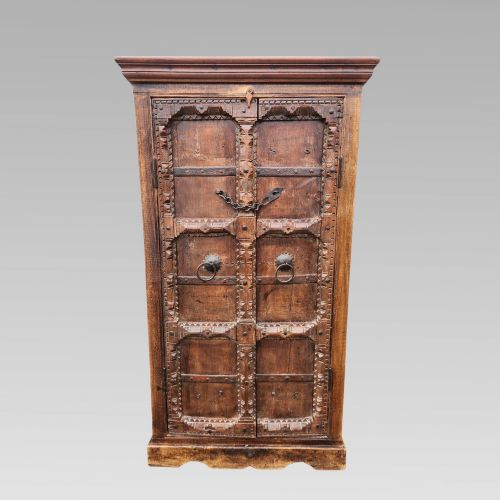
- A freestanding cupboard or wardrobe used for storage in colonial households. These tall units demonstrate the practical application of teak in domestic interiors.
Indian Teak Furniture: Frequently Asked Questions
How do I identify Hoshiarpur pieces?
Hoshiarpur pieces are recognised by their dense, all-over surface carving and intricate geometric patterns inlaid with brass or bone. They frequently take the form of octagonal tables with folding bases.
Closer inspection reveals floral motifs and pierced fretwork covering every available surface of the teak wood, distinguishing them from plainer colonial furniture.
What is a campaign trunk used for?
Campaign trunks were originally built for British officers and officials needing to transport possessions across India and Burma. Their sturdy teak construction and brass corners protected contents during long journeys.
Today, these chests function well as coffee tables or practical storage trunks in modern living spaces while retaining their historical utility.
How do I care for teak furniture?
Teak is a dense, oily wood that requires minimal maintenance to stay in good condition. Regular dusting with a soft cloth keeps the surface clean.
Avoid placing these pieces near direct heat sources or strong sunlight, which can dry out the timber and affect intricate brass or bone inlay.
Are these pieces purely decorative?
While many items feature elaborate carving and inlay, most were built for everyday domestic use. Cabinets, sideboards, and desks served practical storage and writing functions in colonial homes.
Today, buyers continue to utilise these items for storage and display, blending historical character with modern room layouts.