



Dark Teak Cupboard
A dark teak cupboard brings rich grain and deep colour to a room, offering practical storage rooted in colonial and vernacular craftsmanship.
Dark Teak Cupboard
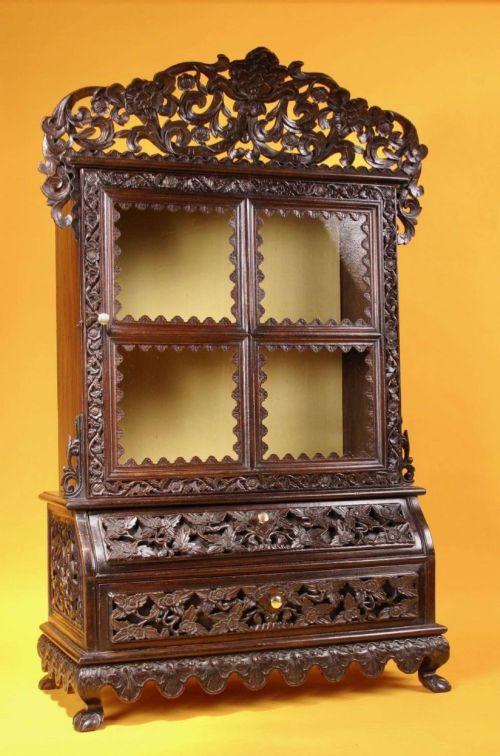
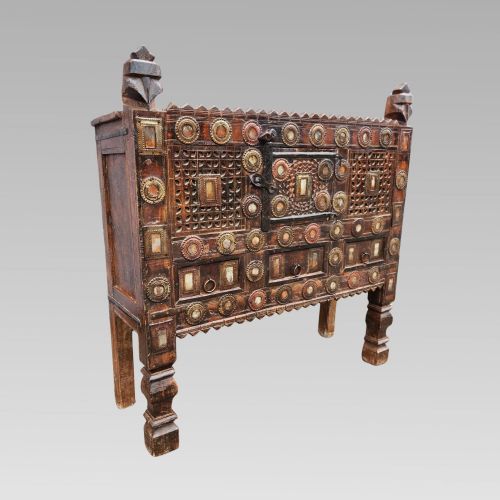
A dark teak cupboard is a robust storage piece typically originating from nineteenth century India, Ceylon or Burma, designed to hold household goods or provisions. When you browse this selection of dark teak cupboard items, you encounter sideboards, cabinets, corner cupboards and dowry chests spanning the Victorian era through the nineteen thirties.
The most common examples on this page are nineteenth century Anglo Indian carved cabinets and storage chests fashioned from dense tropical hardwoods. These pieces frequently exhibit regional styles such as Anglo Indian, Victorian Colonial and Indian folk art, combining heavy functional forms with intricate surface decoration.
Buyers seek these items for their strong architectural presence and versatility as storage furniture in contemporary or traditional interiors. Each dark teak cupboard carries the distinct marks of its period, whether through panelled construction, multi drawer layouts or specialised forms like veranda gin cabinets.
How they were made
Construction relies heavily on solid teak, rosewood and other dense hardwoods selected for their durability and resistance to tropical climates. Makers joined heavy timber using traditional joinery and panel techniques suited to large storage chests and cabinets.
Listings on this site span the Victorian era, the nineteenth century, and the nineteen twenties, featuring teak, rosewood, bone inlay, and marble.
What varies in quality
Quality in a dark teak cupboard rests primarily on the depth and crispness of the hand carving, the selection of the timber grain, and the integrity of the original construction. Superior examples display sharply defined motifs and tightly fitted joinery that withstands generations of use.
The sophistication of regional design and the presence of original hardware, such as brass pulls or iron hinges, also distinguish finer specimens from simpler utilitarian storage chests.
The Dark Teak Cupboard Glossary
- Anglo-Indian
- A descriptive term for furniture made in India during the British colonial period, combining European furniture forms with local carving traditions. These pieces often feature dense tropical hardwoods and elaborate plant or animal motifs.
- Damchiya
- A traditional Indian dowry chest or low storage cabinet, typically featuring heavy carving and panelled doors. They were used to store textiles and valuables for a bride.
- Teak
- A durable tropical hardwood valued for its rich dark colour, straight grain and natural oils that resist moisture. It forms the primary structural material for nineteenth century colonial and vernacular cabinets.
- Corner cupboard
- A specialised storage cabinet designed to fit neatly into the ninety degree angle of a room, maximising floor space. Historical examples often feature single or double doors enclosing shelving for display or storage.
Dark Teak Cupboard: Frequently Asked Questions
What is a dark teak cupboard?
A dark teak cupboard is a solid hardwood storage unit, often originating from nineteenth century colonial India, Ceylon or Burma. These pieces range from corner cupboards to multi drawer cabinets and dowry chests.
They combine utilitarian storage with dense hand carved ornamentation, utilising timbers like teak and rosewood to create heavy, durable furniture.
How were dark teak cupboards used?
Historically, these cupboards served various domestic storage needs, from general household provisions to specialised uses like storing gin on a veranda or keeping textiles safe in a dowry chest.
Today, buyers use them in living spaces and hallways as statement storage furniture that conceals modern items while adding historical character.
How do I date a dark teak cupboard?
Dating relies on identifying period characteristics, construction techniques, and stylistic markers recorded in the evidence, such as Victorian colonial influences or nineteenth century Anglo Indian carving styles.
Hardware, joinery methods and regional folk art patterns also provide clues to whether a piece belongs to the Victorian era or the early twentieth century.
What materials are used in these cupboards?
The primary material is teak, often chosen for its dark tone and strength, alongside rosewood and other dense hardwoods. Secondary materials include brass fittings, iron hinges, glass panels, bone inlay and marble.
These varied materials reflect both local Indian craftsmanship and British colonial design preferences of the nineteenth and early twentieth centuries.