

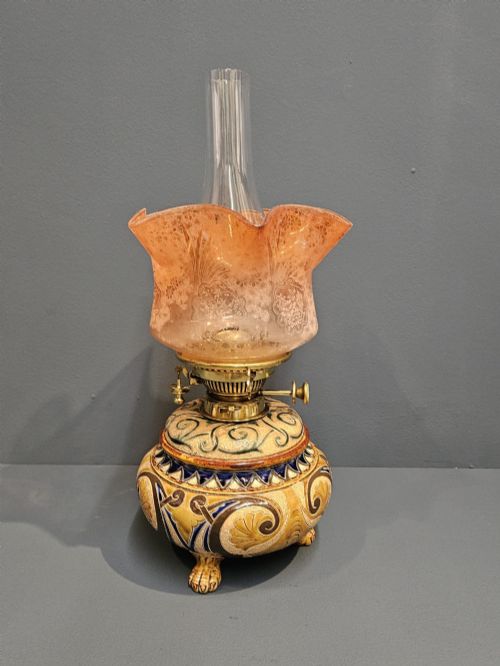
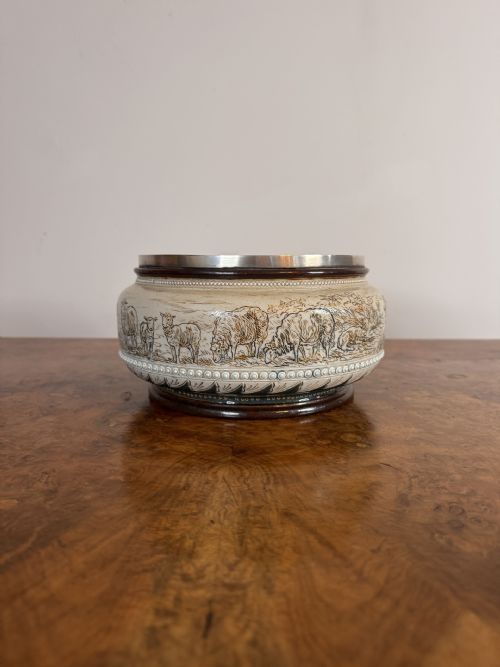
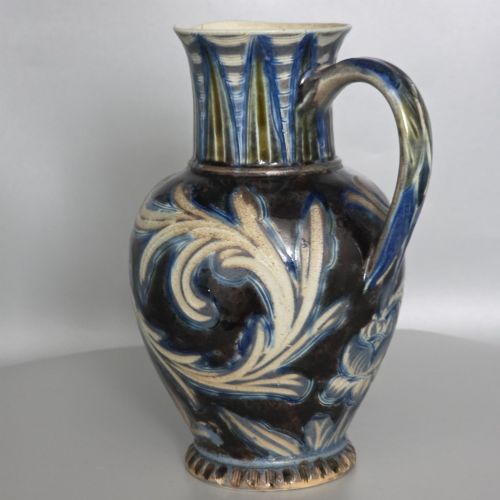



Incised Stoneware Pottery
These incised stoneware pottery pieces combine dense ceramic bodies with deeply cut decorative patterns, offering robust utility and enduring aesthetic appeal.
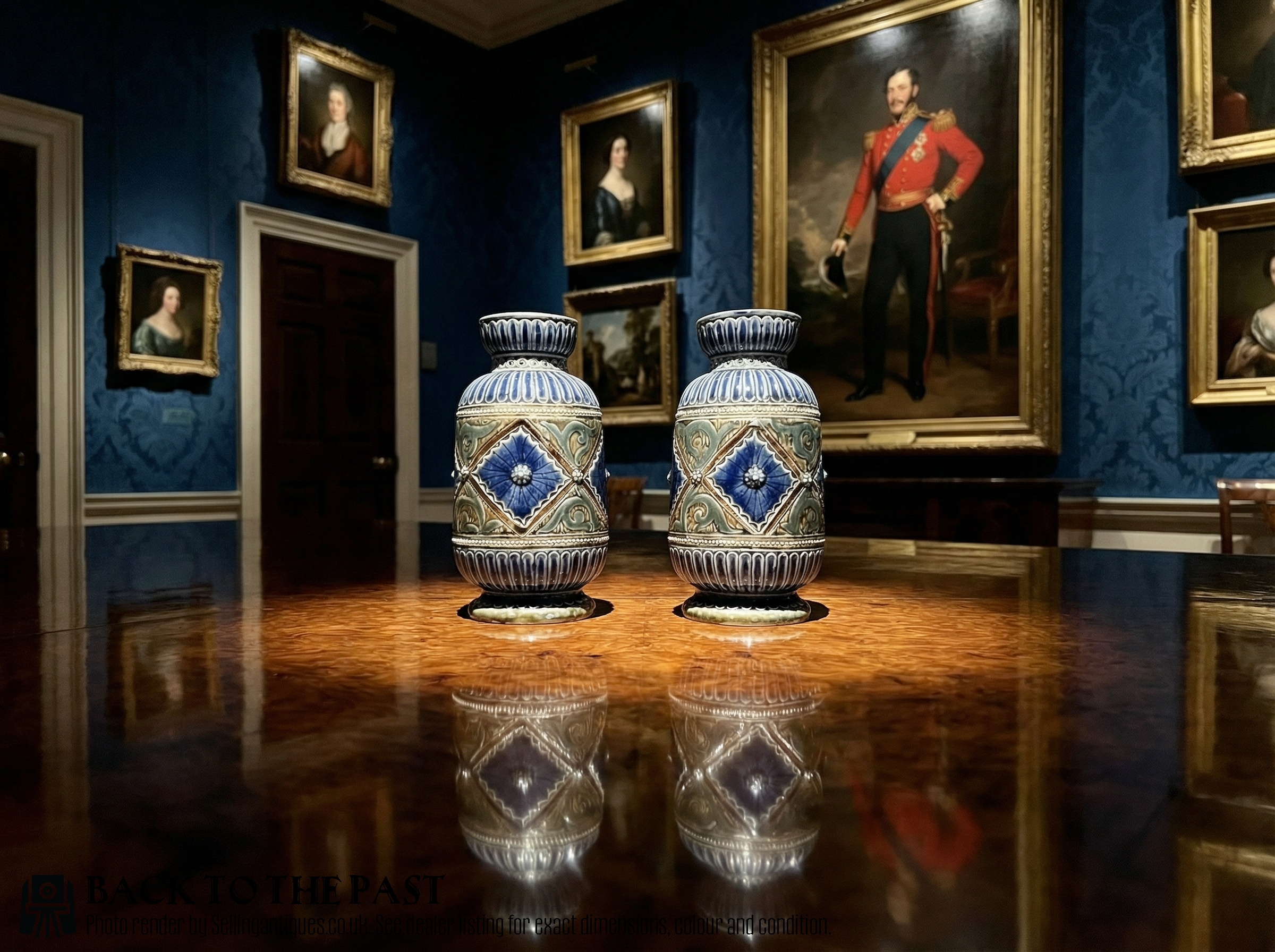
Incised Stoneware Pottery
When searching for incised stoneware pottery, collectors encounter robust ceramic vessels designed for utility and decorative display. The pieces span centuries, originating from traditional kilns in Britain, Germany, and China.
Vessels on this page range from Victorian art pottery jugs and vases to earlier German tankards and ancient celadon bowls. Doulton Lambeth productions from the nineteenth century form a prominent portion of the selection.
Forms include ewers, tygs, salad bowls, and beakers, demonstrating the diverse application of incised decoration across different historical periods and regional workshops.
What Varies in Quality
The precision and depth of the incised carving distinguish standard production items from masterworks. Crisp, confident lines demonstrate superior control by the decorator during the shaping process.
Attribution to named artists working within established potteries elevates the significance of a piece. The integration of supplementary materials, such as silver plate mounts, also influences the overall finish of the vessel.
Incised Stoneware Pottery Retail Price Guide 2026
Typical asking prices for incised stoneware pottery among the pieces listed under this phrase on Sellingantiques today, from the lower quarter to the upper quarter. They describe what is for sale here now, not the wider market.
Listings feature stoneware, earthenware, and celadon ceramics spanning the eighteenth, nineteenth, and early twentieth centuries alongside earlier Asian dynasties.
Doulton Lambeth·Mettlach Pottery·Fulham Pottery
The Incised Stoneware Pottery Glossary
- Incising
- Cutting lines into the surface of leather-hard clay before firing. This technique creates depressed channels that often receive coloured glazes.
- Tyg
- A large drinking vessel featuring multiple handles designed for communal passing around a table. These ceramic mugs frequently date to the Victorian era.
- Celadon
- A pale green glaze developed in East Asia, often associated with Song Dynasty and pre-sixteenth-century ceramics. The glaze pools softly in carved or incised recesses.
- Stoneware
- A heavy, durable ceramic fired at high temperatures until vitrified and non-porous. It resists liquids without requiring an interior glaze.
- Ewer
- A large jug with a wide spout and curved handle, historically used for pouring water. Decorative examples emphasise sculptural form over practical utility.
Incised Stoneware Pottery: Frequently Asked Questions
How do I clean incised stoneware?
Wash the ceramic gently in warm water using a mild detergent and a soft cloth to protect the glazed surfaces.
Avoid abrasive scrubbers that might damage the recessed incised lines or any attached silver plate mounts.
Can I use these vessels for food?
Many historical pieces serve primarily decorative or display functions due to their age and delicate glazes.
Verify the interior condition before using any antique bowl or jug for serving liquids or food items.
How are different periods identified?
Examine base stamps, factory marks, and stylistic indicators such as Victorian Arts and Crafts motifs or Song Dynasty forms.
Comparing the clay body and glaze characteristics against known historical examples helps establish the date of manufacture.
What is a Doulton Lambeth tyg?
A Doulton Lambeth tyg is a three-handled drinking mug produced in London during the nineteenth century.
These pieces often feature elaborate incised ornamentation executed by notable studio artists of the period.