





Impressionist Marine Art
Impressionist marine art captures coastal light, harbours and open water through loose brushwork and vibrant colour palettes.
Impressionist Marine Art
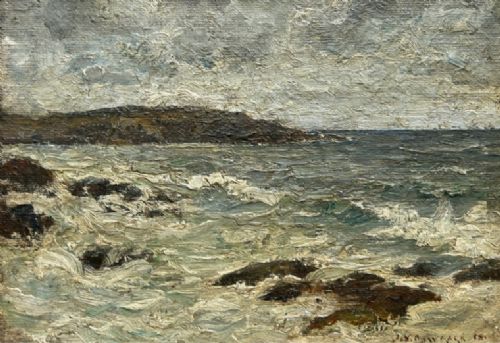
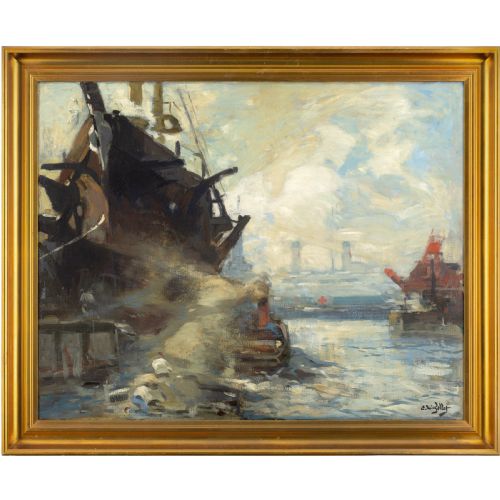
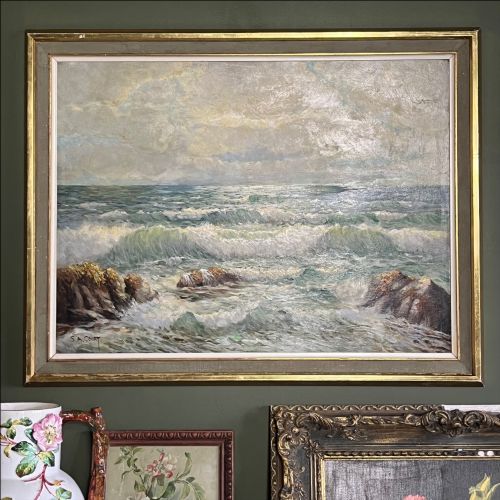
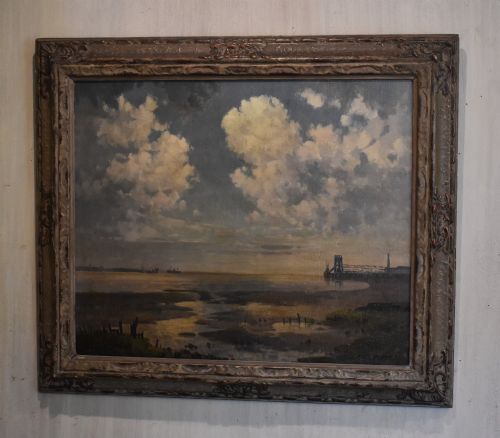
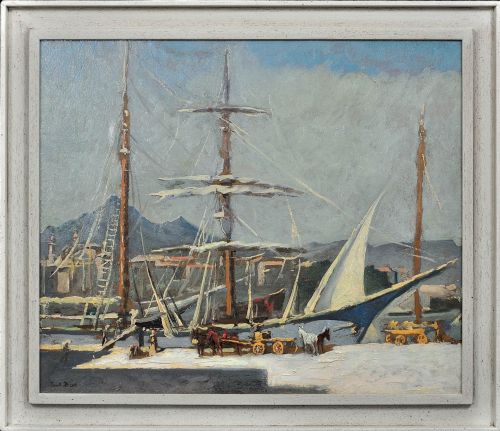
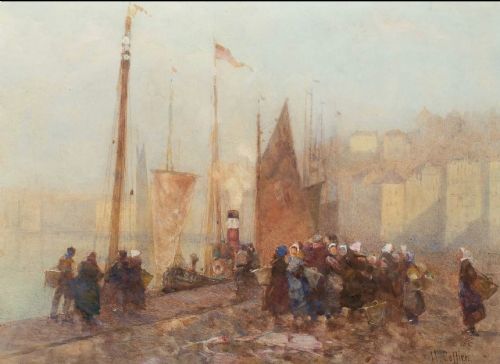
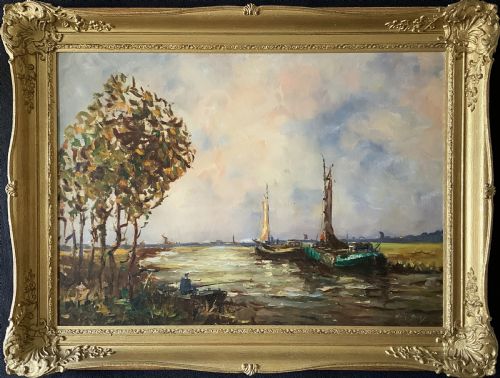
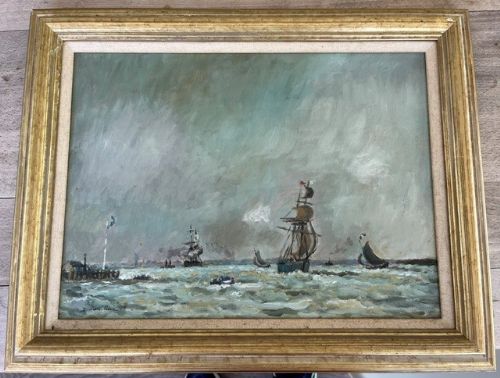
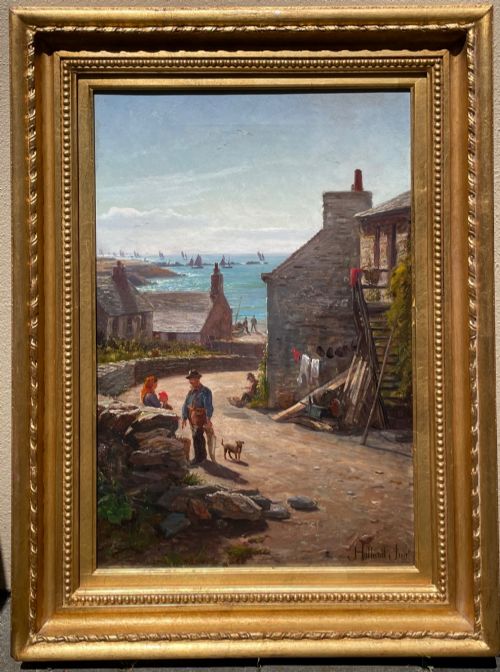
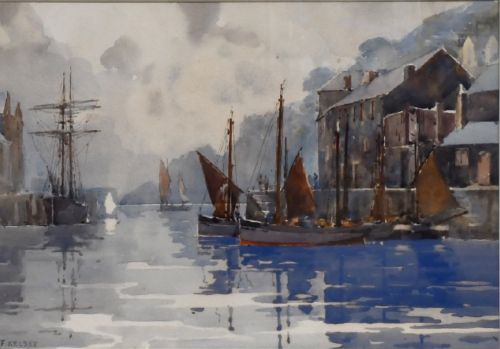
Impressionist marine art encompasses oil paintings, watercolours and oil on board works depicting coastal scenes, harbours, and open seas from the nineteenth century through to the mid-twentieth century. The pieces reflect both British and French regional schools, capturing specific coastal locations from Cornwall and Norfolk to Normandy, Brittany, and the Mediterranean. Buyers encounter works executed en plein air alongside studio compositions that translate coastal light onto canvas or paper.
The versions most frequently met on this page span the decades from nineteen ten to nineteen fifty, displaying the influence of impressionism, post-impressionism, and mid-century modern movements. These range from intimate watercolours of fishing ports to larger impasto oil paintings of sailing vessels and dramatic cliffs. Each piece records the maritime environment through expressive brushwork rather than rigid academic detail.
Factors of quality
Quality in impressionist marine art rests upon the artist's ability to convey movement, atmosphere, and light with economy of mark. Superior works demonstrate confident handling of paint or pigment where the surface texture directly supports the subject matter, such as heavy impasto for turbulent seas or fluid washes for calm harbours. Compositional balance and the accurate rendering of maritime scale also distinguish exceptional pieces from routine topographical views.
The immediacy of execution plays a central role, as works painted directly from nature often retain a vitality absent in formulaic studio productions. The integration of light across water, sky, and land defines the most accomplished examples within this genre. Provenance and clear artist attribution further elevate a piece within the broader landscape of period marine painting.
Artists frequently chased coastal gales with portable paintboxes, returning with canvases bearing trapped grains of sand.
Clifford Hanney·Eugène-Louis Gillot·Sidney A. Court·William Banks Fortescue·Clive Browne·Paul Bret·Hector Caffieri·Willem Bos·John Holland·Frank Kelsey·Elisabeth Bardon·Louis Suire·Gustave Vidal·Raymond Picque·William Lee Hankey·Fred Pailhes·Norman Lloyd·Fred Lawson·Edward Seago·William Greaves·Charles Malfroy·Pauwels·Roger de la Corbiere·Donald McIntyre·Antoine Bouvard Senior
The Impressionist Marine Art Glossary
- Impasto
- Paint applied thickly to a canvas or board, standing out in relief from the surface. This technique allows the artist to build physical texture into the representation of waves or coastal rocks.
- En plein air
- The act of painting outdoors to capture the direct and transient effects of natural light upon a subject. Impressionist artists utilised this approach extensively along coastal locations.
- Gilt
- A thin layer of gold leaf or gold paint applied to the surface of a picture frame. It provides a decorative border that enhances the tonal warmth of the enclosed oil painting or watercolour.
- Watercolour
- A paint consisting of pigment suspended in a water-based solution, traditionally applied to paper. This medium permits luminous, transparent washes ideal for capturing shifting sea and sky conditions.
Impressionist Marine Art: Frequently Asked Questions
What defines impressionist marine art?
Impressionist marine art focuses on coastal views, harbours, and ships rendered through loose brushwork and a primary concern for natural light and atmospheric conditions. Artists prioritised the optical impression of a scene over strict botanical or nautical precision.
These works span oil paintings on canvas and board alongside watercolours on paper, originating primarily from British and French coastal regions during the late nineteenth and mid-twentieth centuries.
Where were these coastal scenes painted?
Painters travelled to established fishing ports, estuaries, and seaside towns across Britain and continental Europe to record maritime life. Locations in Cornwall, Norfolk, Normandy, Brittany, and the Mediterranean appear frequently across the surviving works.
Artists frequently set up their easels directly on beaches, harboursides, and cliffs to observe the changing tides, shipping activity, and local weather patterns firsthand.
How do I care for an oil painting on canvas?
Oil paintings on canvas require stable indoor humidity and temperature levels to prevent the canvas fabric from slackening or the paint layer from cracking. Direct sunlight should be avoided to protect the pigments and varnish from gradual fading.
Dust should be removed gently from the surface and frame using a soft, dry brush without applying pressure. Professional conservation is recommended for any structural cleaning or repairs.
How do watercolours differ from oil paintings?
Watercolours utilise water-soluble pigments on paper supports, resulting in transparent washes that rely on the white of the paper to reflect light through the colour. Oil paintings use slow-drying oil binders on canvas, wood, or board, allowing for opaque layers, rich impasto, and extensive reworkings.
Watercolour works require protective glass framing to prevent moisture and atmospheric damage, whereas oil paintings on canvas remain unglazed to let the textured paint surface breathe.