



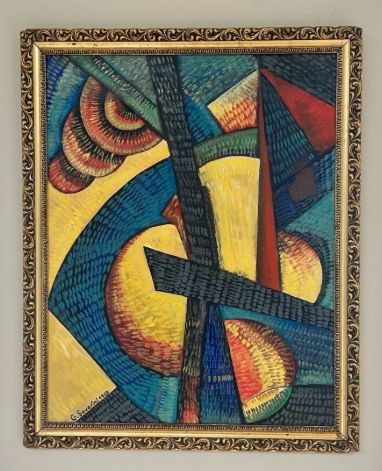


Textured Oil Painting
A textured oil painting brings physical depth and rich pigment directly to a wall, offering the immediate tactile appeal of raised impasto.
Textured Oil Painting
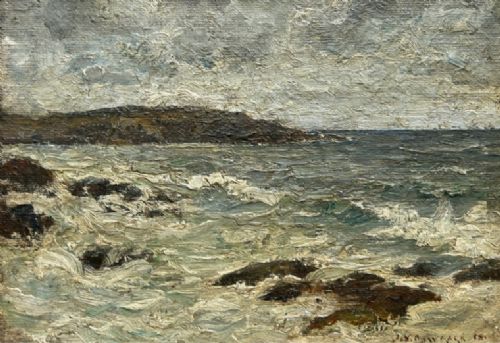
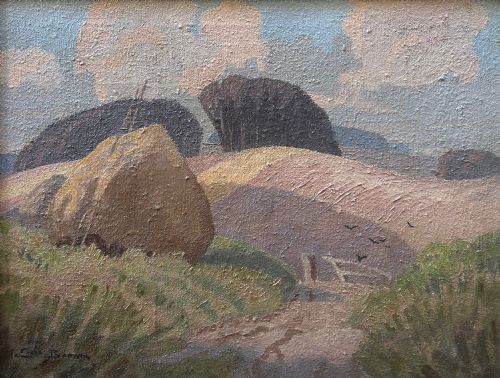
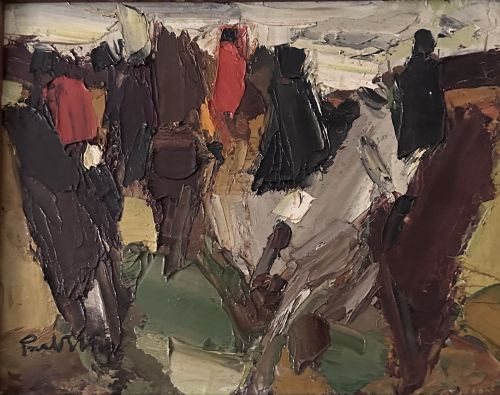
A textured oil painting gives physical presence to flat wall art through thick applications of pigment and impasto techniques. When you search for a textured oil painting, you encounter mid-century works spanning from the 1920s to the 1960s, encompassing coastal scenes, cityscapes, abstract compositions, and still lifes.
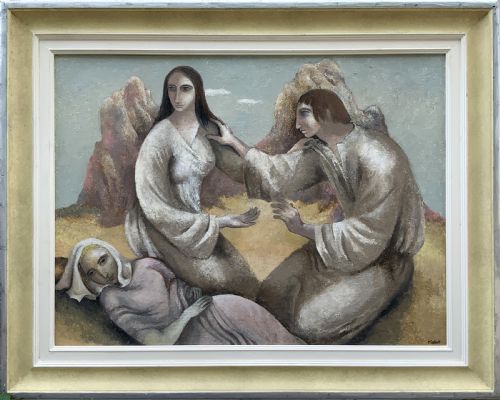
The pieces on this page lean heavily into mid-century modernism, expressionism, and post-impressionism. Artists from Britain, France, America, and Haiti appear across the selection, working on canvas, board, and wood supports often housed in original wood and gesso frames.
Subjects range from traditional marine landscapes and haystacks to industrial constructivist factory scenes and abstract cityscapes. These works capture mid-century aesthetic developments through visible brushstrokes and raised sculptural surfaces.
Materials and construction
Artists built these surfaces using oil paint applied thickly with brushes or palette knives onto canvas, board, or wood panels. This heavy application, known as impasto, creates physical relief that catches the light and casts tiny shadows across the composition.
Many works retain their period wood frames, sometimes finished with gesso detailing to complement the bold, tactile nature of the painted surface.
The listings on this page span several decades from the 1920s to the 1960s, featuring oil paint applied to canvas, board, and wood.
Assessing quality and execution
Quality rests in the confidence of the brushwork and the stability of the thick pigment layers over time. The relationship between the heavy texture and the underlying composition separates casual decorative output from accomplished mid-century expressionism.
The integration of the painting with its frame also dictates overall standard, particularly where original wood and gesso moulding survives intact to support the weight of the heavy paint surface.
Eric Brown·Christine Nesbit·Erich Mercker·Elisabeth Bardon·Helen Layfield Bradley·Gino Severini·Leon Kossoff·Jeffrey Pratt·Ernst Louizor·William Ernst Burwell
The Textured Oil Painting Glossary
- Impasto
- Paint applied thickly to a canvas or board, leaving prominent brush or palette knife marks that stand proud of the surface. This technique creates a three-dimensional quality that catches ambient light.
- Gesso
- A plaster-like mixture applied to wood frames or panels to prepare a smooth or textured base for painting. It provides a durable foundation for decorative moulding.
- Mid-Century Modern
- An architectural, product, and interior design style that heavily influenced painting from the 1930s through the 1960s. It prioritises clean lines alongside expressive, textured surfaces.
- Post-Impressionism
- An art movement that extended Impressionism while rejecting its limitations, favouring generalized geometric forms and heavy impasto. Artists in this tradition emphasised symbolic content over strict naturalism.
- Constructivist
- An artistic approach originating in Russia that favoured industrial motifs, geometric abstraction, and structural forms. Works in this style often depict factories, machinery, and urban architecture.
Textured Oil Painting: Frequently Asked Questions
What is a textured oil painting?
A textured oil painting is a work where the artist applies thick layers of oil pigment to canvas or board, creating a raised, sculptural surface. This technique uses visible brushstrokes and palette knife marks to build physical depth.
Such pieces date predominantly from the mid-twentieth century and include abstracts, landscapes, and portraits. The resulting surface catches light differently than flat paint, adding dynamic shadows to a room.
How do I care for impasto paintings?
These works require gentle dusting with a soft, dry brush to prevent particulate build-up within the deep grooves of the thick paint. Avoid using damp cloths or cleaning solutions on the textured surface.
Keep the paintings away from direct sunlight and extreme temperature fluctuations to protect the oil paint and underlying board or canvas from cracking over time.
How are these paintings framed?
Many mid-century works retain their original wood frames, frequently accented with gesso moulding to match the period aesthetic. These housings provide necessary structural support for heavier panels.
When framing or reframing, ensure the depth of the rebate accommodates the thick impasto without pressing glass directly against the delicate surface of the paint.
How do I identify mid-century styles?
Mid-century painting styles range from expressionist cityscapes to abstract compositions influenced by post-impressionism and constructivism. Look for bold colour palettes, simplified geometric forms, and energetic application.
Signatures, dates, and framing details often help anchor the work firmly within the 1920s to 1960s period, aligning with specific regional schools from Britain, Europe, and beyond.