


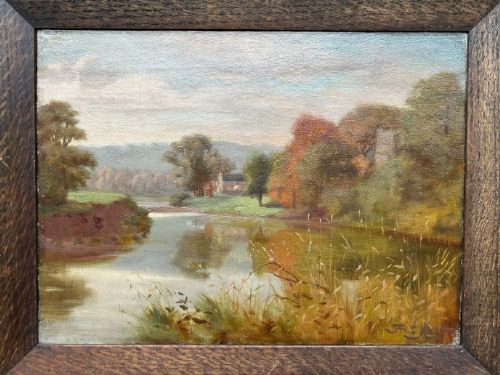
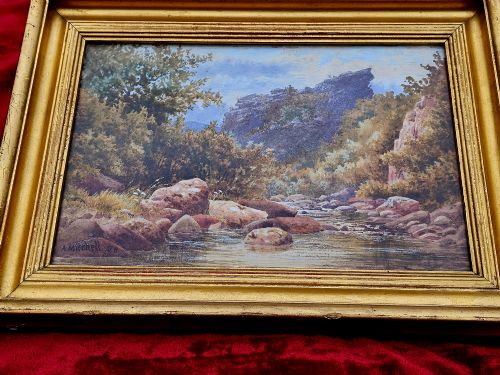
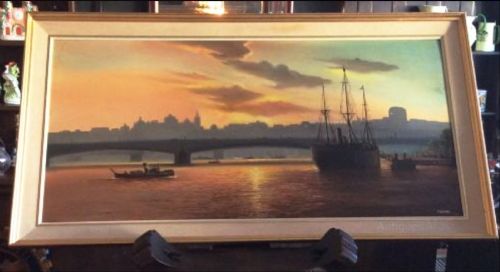

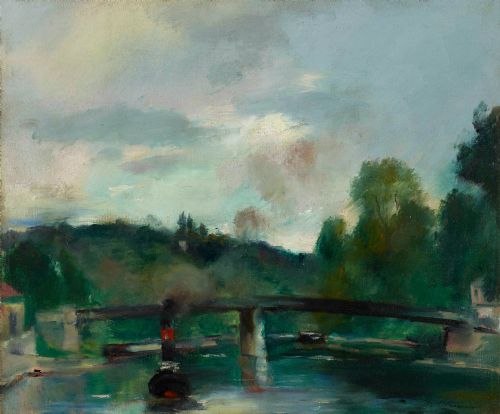
Framed River Landscape
A framed river landscape brings the calm movement of water and open skies directly into a room.

Framed River Landscape
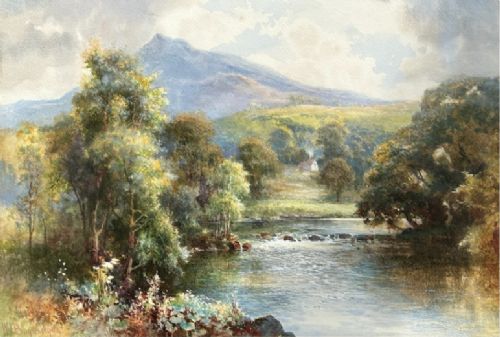
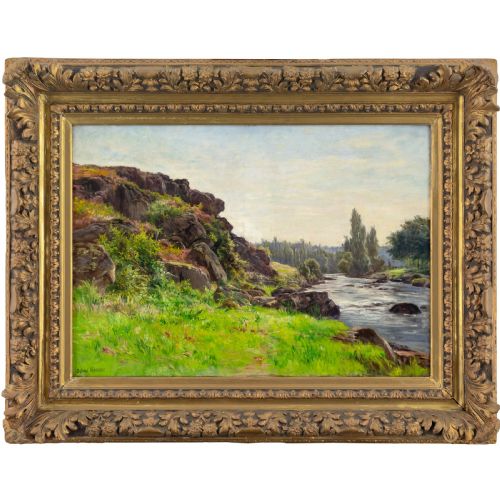
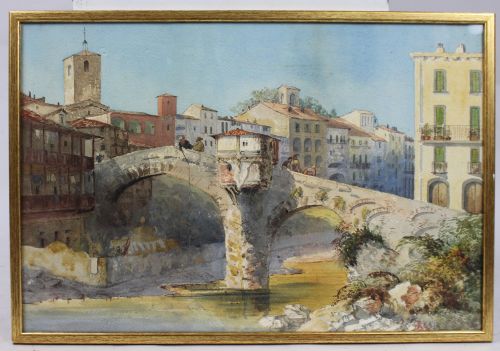
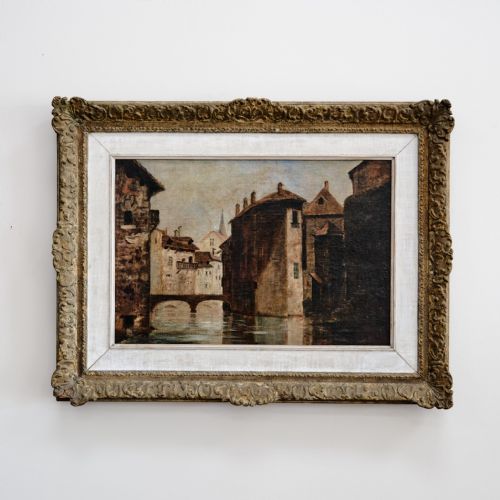
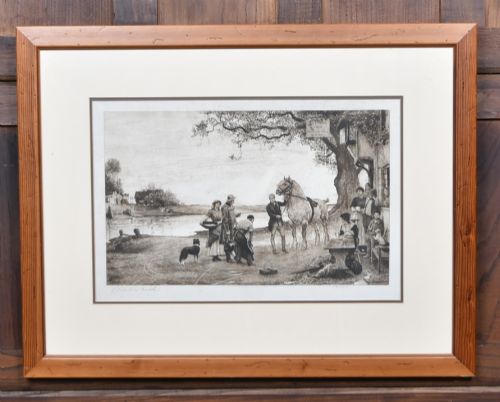
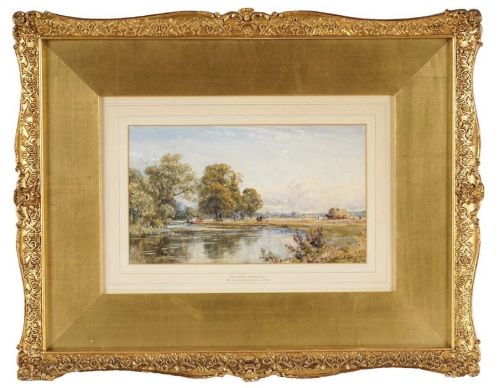
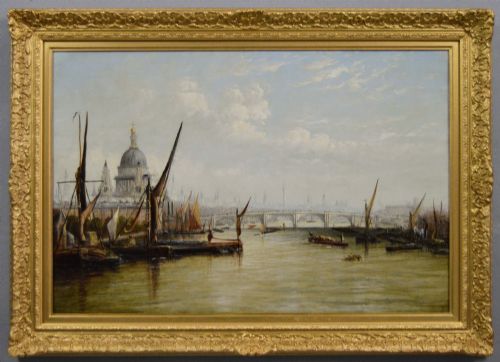
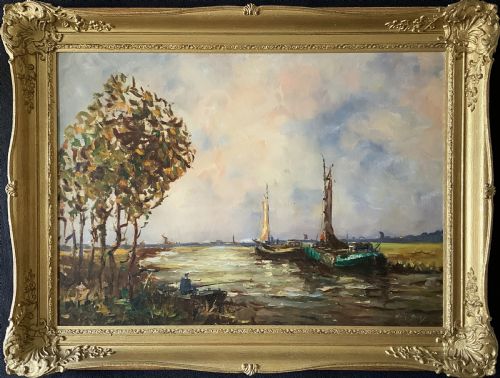
A framed river landscape captures scenes of flowing water, banks, and bridges, drawing mostly from nineteenth-century and early twentieth-century traditions. Buyers encounter oil paintings on canvas or wood panels alongside delicate watercolours and charcoal drawings depicting British, French, and Dutch waterways.
The selection ranges from expansive panoramic views of the Thames to quiet rural streams and Dutch canalscapes. These works cross several periods including the Victorian era, Edwardian period, and Regency styles, showcasing regional schools and specific topographical locations.
Materials and Techniques
Painters applied oil paint or watercolour onto stretched canvas, wood panels, paper, or board, utilising mediums that captured natural light and atmospheric depth along the water. Artists built texture with heavy opaque gouache or combined ink and wash for detailed riverbanks and architectural bridges.
Makers housed these works within protective enclosures utilising wood frames finished with gesso and gilt moulding. Glass frequently covered paper-based watercolours and drawings to preserve the delicate pigments from moisture and fading.
Framed River Landscape Retail Price Guide 2026
Typical asking prices for framed river landscape among the pieces listed under this phrase on Sellingantiques today, from the lower quarter to the upper quarter. They describe what is for sale here now, not the wider market.
The available selection includes depictions of British rivers, Italianate scenes, Dutch canals, and French rural waterways.
Factors of Quality
Quality rests upon the artist's ability to handle light, reflection, and perspective on moving water, distinguishing skilled academic hands from standard decorative output. Superior compositions demonstrate confident brushwork, balanced tonal ranges, and precise handling of atmospheric conditions such as morning mist or sunset.
The integration between the artwork and its original frame plays a part in the overall merit of the piece. Well-preserved surfaces free from heavy restoration retain the intended vibrancy of the pigment and the integrity of the support.
Frederick Marriott·William Joseph Boyes·Gabriel Mathieu·Robert W Macbeth·Francis Moltino·Willem Bos·George Oyston·Sir Alfred East·Herbert Royle·Paul Desire Trouillebert·Florence Adelina Hess·T C Hofland·Henry H Parker·Frederick Hines·Sydney Yates Johnson
The Framed River Landscape Glossary
- Gesso
- A plaster-like mixture applied to wood or canvas to prepare a smooth surface for painting or to build raised ornamentation on frames.
- Watercolour
- A painting method where fine pigment is suspended in a water-based, translucent solution, typically applied to paper.
- Oil on Canvas
- Pigment mixed with drying oils applied to a woven fabric support stretched across a wooden frame.
- Wood Panel
- A rigid flat wooden support used by artists as an alternative to canvas during earlier centuries.
- Barbizon School
- A nineteenth-century French art movement focused on realistic landscape painting en plein air.
Framed River Landscape: Frequently Asked Questions
What periods do these paintings come from?
The works span from the eighteenth century through the Victorian and Edwardian eras up to the mid-twentieth century. Most examples originate from the nineteenth century.
Specific dates or stylistic movements like British Impressionism help pinpoint the exact era of creation.
How should I hang a river landscape?
Select a wall with stable ambient light away from direct sunlight to protect the canvas or watercolour paper. Ensure the weight of the frame is supported securely by appropriate wall fixings.
Consider eye-level placement in rooms such as studies or living spaces where the calm subject matter can be appreciated.
Are these paintings original works?
The selection contains original hand-painted oils, watercolours, and drawings created directly by artists. Signatures, inscriptions, and artist records verify individual pieces.
Some listings reflect the manner or influence of established schools and historical painters rather than direct attribution.
How do I care for antique frames?
Dust gilt and gesso frames gently with a soft dry brush to prevent accumulation in carved crevices. Avoid using liquid cleaners or chemical polishes which can damage original gilding.
Keep the artworks in rooms with controlled humidity to protect both the wooden frames and the canvas supports.