


Mediterranean Oil Painting
These mediterranean oil painting works capture sunlit coasts, harbours and southern light across the nineteenth and twentieth centuries.
Mediterranean Oil Painting
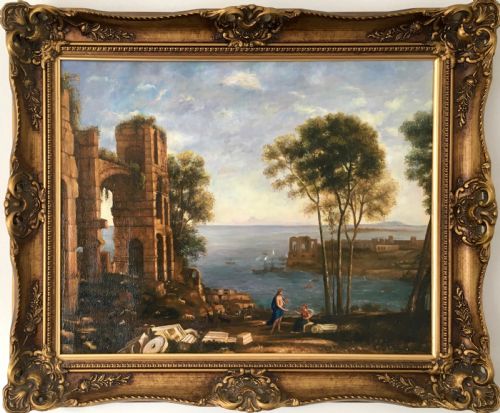
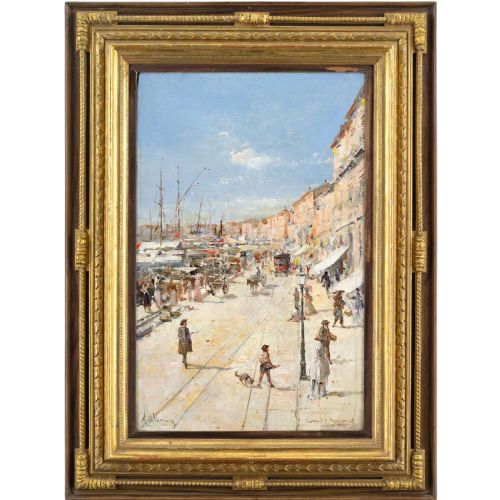
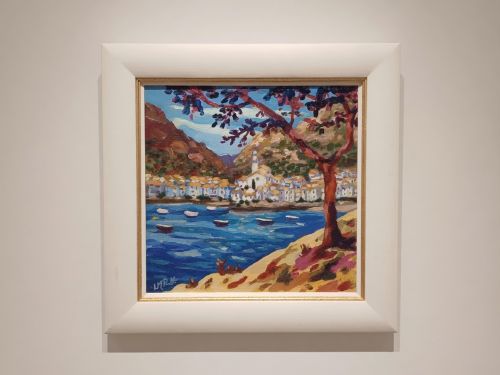
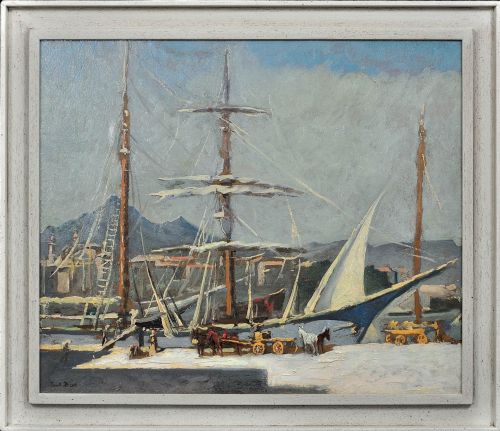
A mediterranean oil painting typically depicts coastal scenes, harbours, olive groves and southern European street views. The selection spans nineteenth century works through to mid-century modern interpretations.
The objects take the form of framed oil paintings on canvas, panel or board, alongside complementary decorative vessels such as terracotta jars and painted pottery.
Subjects range from Sicilian ports and Roman landscapes to Provençal coastlines and the French Riviera under various impressionist and realist influences.
Materials and Technique
Pigments applied in oil paint form the primary medium, set upon supports of canvas, wood panel or board.
Earthenware, terracotta and glazed ceramics appear in related painted vessels, utilising traditional potting and decorative methods.
Recorded periods span from the nineteenth century through the nineteen sixties, including post-impressionism and fauvism.
Distinction in Execution
Handling of light and colourist intensity separates standard topographical records from works of greater artistic merit.
Surface texture, brushwork confidence and the preservation of the original support dictate the overall calibre of each piece.
Augusto Alberici·Paul Bret·Erich Mercker·Gustave Vidal·Jean-Baptiste Olive·Norman Lloyd·Cecil Rochfort Doyly John·Charles Malfroy·Hendrik Willebrord Jansen·Francesco Guardi·Augustus William Enness·John William Gilroy·William Adolphus Knell·Percy Morton Teasdale·Nettle Shields
The Mediterranean Oil Painting Glossary
- Post-Impressionism
- A stylistic development following impressionism characterised by expressive brushwork and vivid colour choices. Artists built upon impressionist foundations while pushing form and tone further.
- Fauvism
- A movement prioritising painterly qualities and strong colour over the representational values of naturalism. These canvases display bold, non-naturalistic hues.
- Oil on Canvas
- Pigment mixed with drying oil applied to a stretched woven fabric support. This combination provides durability and a distinct textural surface.
- Terracotta
- Unglazed or glazed fired clay used for sculptural and vessel forms. It serves as a traditional Mediterranean medium for storage jars.
- Capriccio
- An architectural fantasy placing together buildings, archaeological ruins and other architectural elements in a fictitious combination. Such works often evoke classical Italian settings.
Mediterranean Oil Painting: Frequently Asked Questions
What subjects feature in these paintings?
The compositions focus on southern European landscapes, marine views, harbours and sunlit street scenes.
Locations span the French Riviera, Provence, Sicily, Rome and coastal Italy.
Which periods do these works cover?
The selection encompasses nineteenth century academic and marine art alongside twentieth century impressionist and post-impressionist examples.
Dates range from the eighteen hundreds through the nineteen sixties.
How are the canvas works framed?
Many examples retain period wooden frames that complement the painting style and era.
Some pieces are presented on panel or board without traditional framing.
What companion items appear alongside the paintings?
Painted terracotta olive jars and glazed earthenware vessels occasionally accompany the canvas works.
These ceramic items reflect traditional southern craft.