


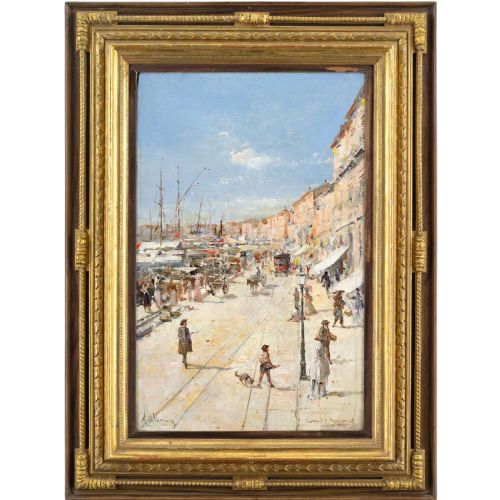
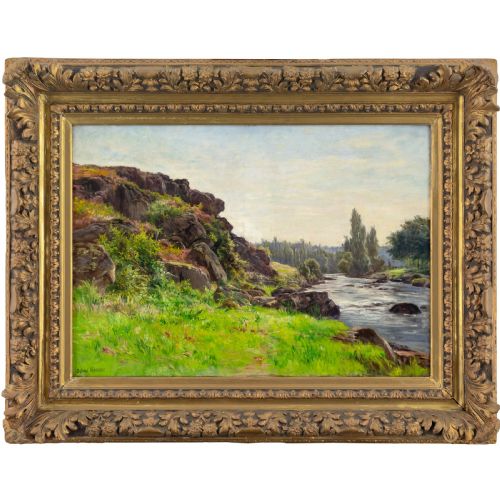
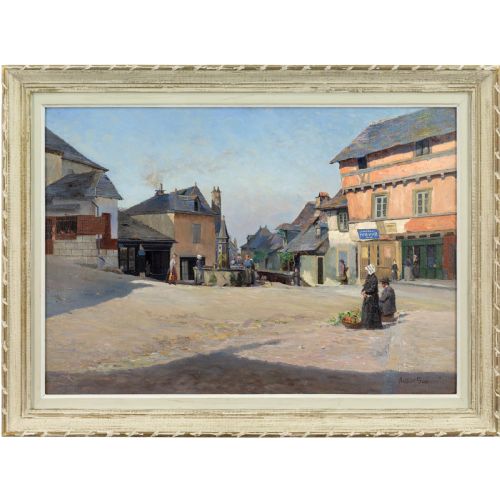
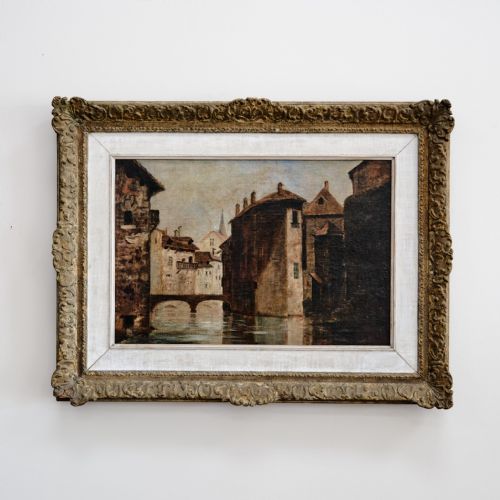
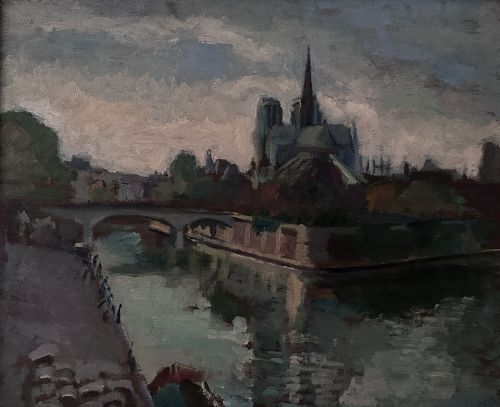
Impressionist Landscape Oil Canvas
When you search for an impressionist landscape oil canvas, you enter a world of light, movement and pigment built on woven supports.
Impressionist Landscape Oil Canvas
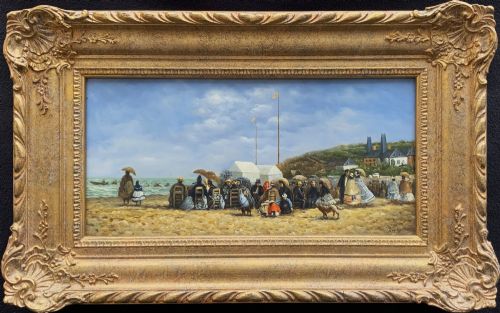
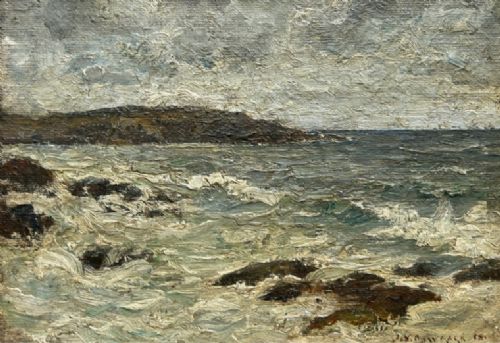
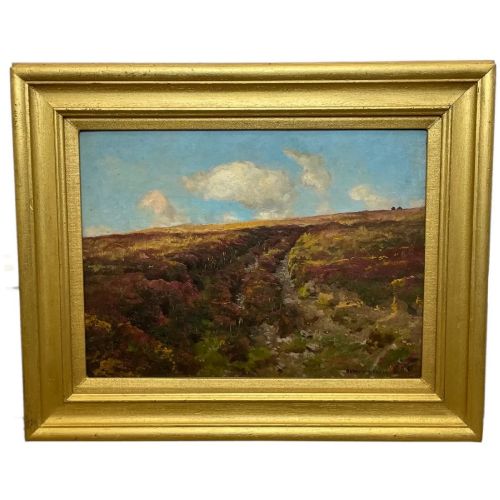
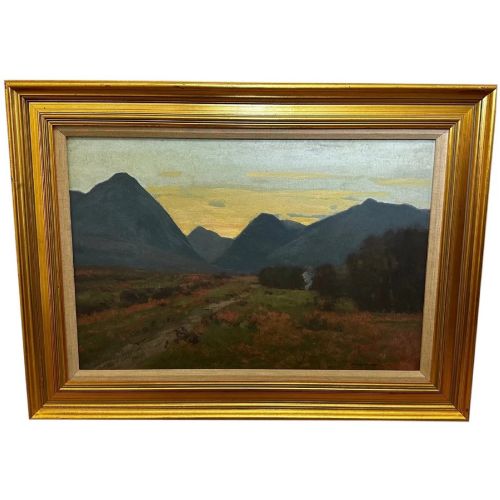
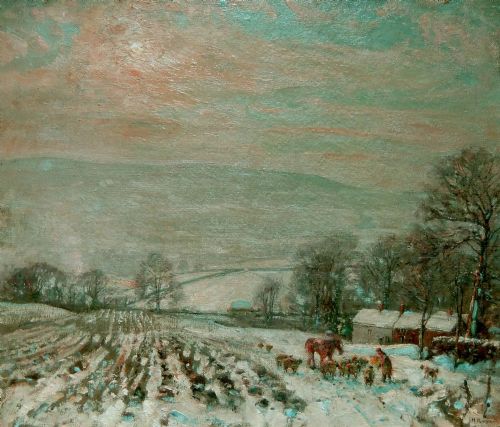
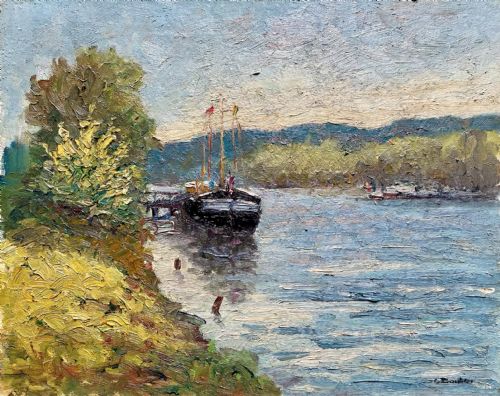
An impressionist landscape oil canvas captures fleeting moments of natural light, water and open air using visible brushwork.
The pieces on this page span the nineteenth century through to the modern era, featuring British, French, Italian and Dutch scenes.
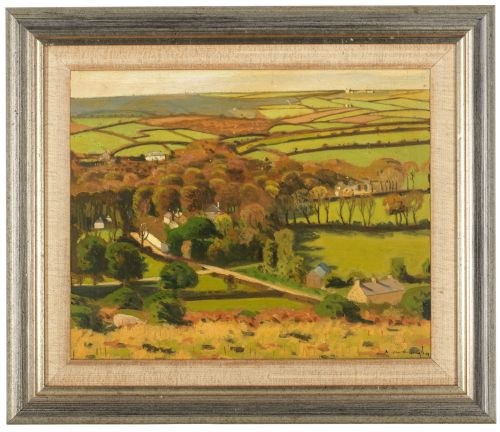
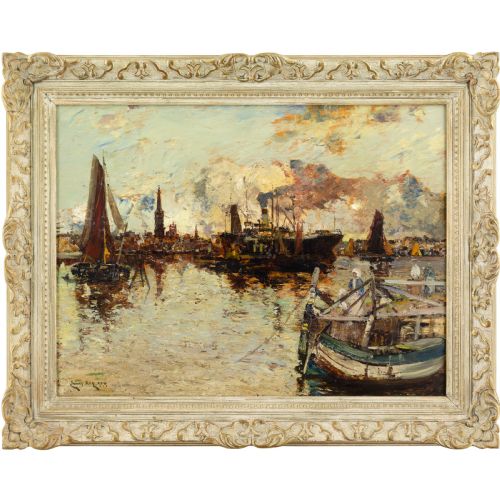
You will encounter coastal views, river banks, city streets and rural pastures rendered in oils on woven fabric or canvas boards.
How they were made
Artists built these works using oil paint applied to prepared canvas, often supported by wooden stretcher frames.
Many works incorporate textured impasto paint layers that catch the light, while others rely on smooth, rapid tonal blending.
Period frames constructed from gilt wood and gesso frequently accompany the paintings, completing the construction.
Several canvases record quiet moments of sheep grazing among wild garlic and boys fishing under willow trees.
What varies in quality
Quality rests upon the artist's command of atmospheric perspective, tonal balance and the convincing play of light across water or foliage.
The handling of pigment creates the distinction between a flat record of a scene and a dynamic composition with genuine depth.
Framing also plays a role, as period gilt wood surrounds that complement the canvas elevate the presentation.
George Graham·Clifford Hanney·Arthur Wardle·George Houston·Herbert Royle·Robert Morson Hughes·James Kay·Augusto Alberici·Gabriel Mathieu·Arthur Gué·Antonio DeVity·Clive Browne·Paul Bret·Lucy Pratt·Ethel Sands·Cyril Walduck Edwards·Alfred Wolmark·Eric Brown·Willem Bos·Henri Ottmann·Ernest Higgins Rigg·John Hodgson Lobley·Harry Kluge·Sir Alfred East·Donald McIntyre
The Impressionist Landscape Oil Canvas Glossary
- Impasto
- Paint applied thickly to a canvas, standing out in relief from the surface so that the marks of the brush or palette knife remain visible.
- Gesso
- A plaster-like mixture applied to wood or canvas to prepare a smooth surface for painting in oils.
- Gilt wood
- Timber treated with a thin layer of gold leaf or gold-coloured pigment, commonly found on antique picture frames.
- Post-Impressionism
- An artistic movement developing roughly from the last decades of the nineteenth century, extending impressionist methods with a greater emphasis on geometric forms or expressive colour.
- Canvas board
- A stiff board faced with primed fabric, used as a lightweight and portable alternative to stretched canvas.
Impressionist Landscape Oil Canvas: Frequently Asked Questions
How do I hang a heavy oil canvas safely?
Ensure your wall fixings match the weight of both the canvas and its wooden frame. Use sturdy picture wire attached securely to the stretcher bars.
Position the piece away from direct sunlight and strong heat sources to protect the oil pigments.
How do I identify the period of the painting?
Examine the style of the brushwork, the subject matter, and the construction of the canvas and stretcher frame behind the piece. Signatures, artist inscriptions, and labels on the reverse often provide helpful clues.
Comparing the work to documented pieces by the same school narrows down the date.
Are these paintings supplied with frames?
Many listings include period or vintage frames, such as gilt wood and gesso surrounds that match the era of the canvas. The specific framing details are recorded in each individual description.
Inspect the accompanying photographs to see the exact style of the frame provided.