




Framed Nautical Landscape Art
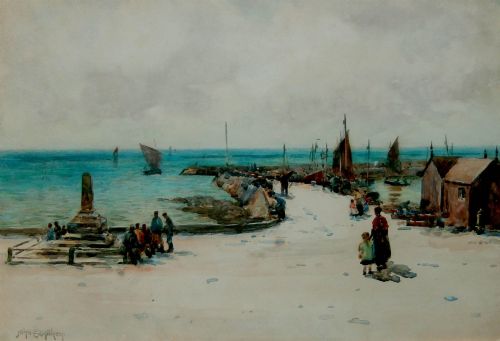
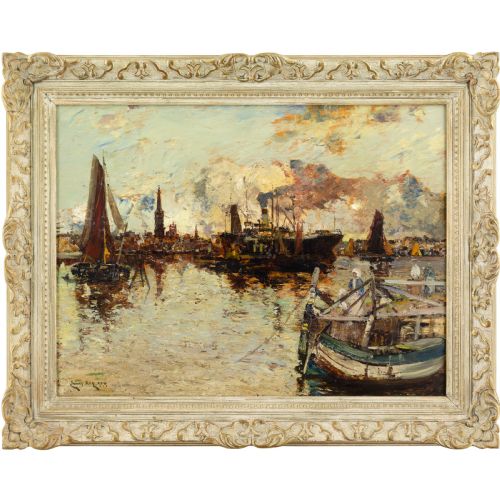
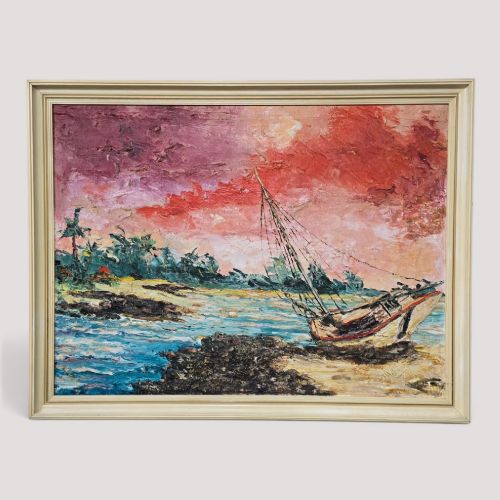
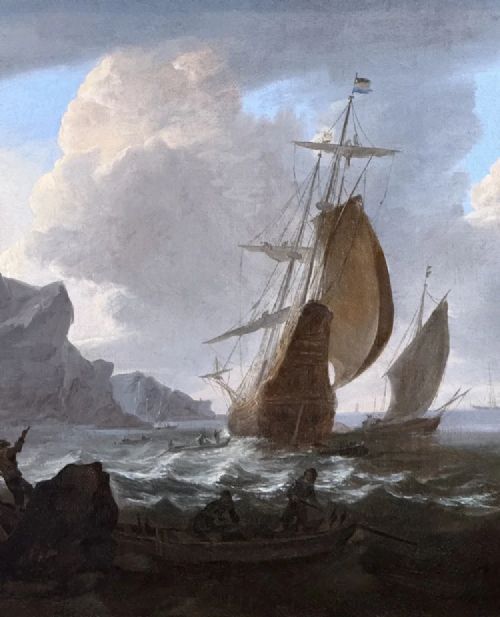
Framed nautical landscape art brings the open water, historic harbours and coastal shores indoors through oil and watercolour.
Framed Nautical Landscape Art
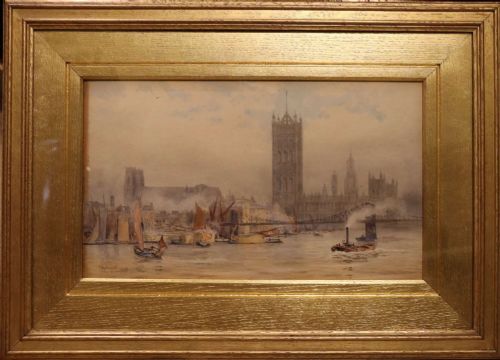
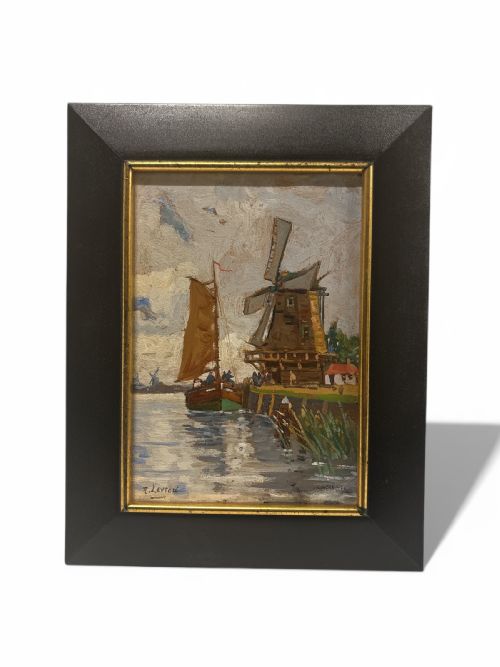
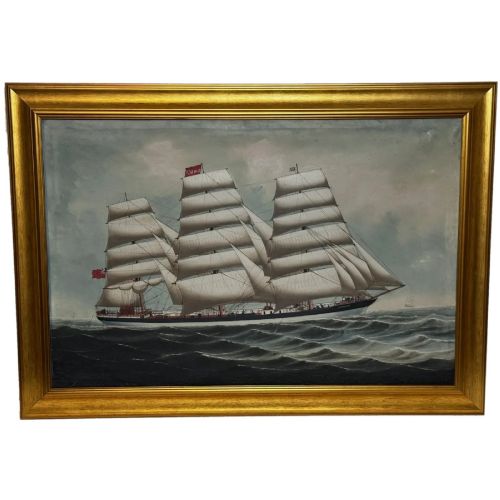
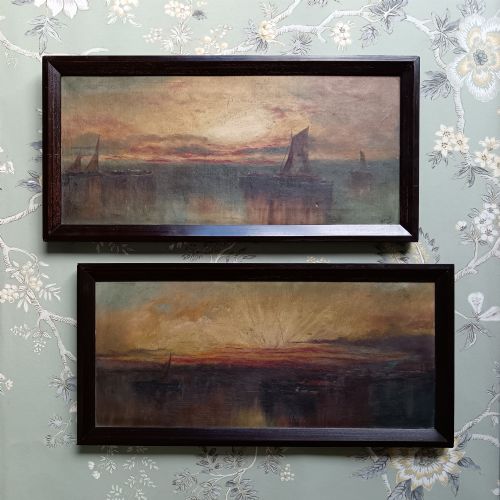
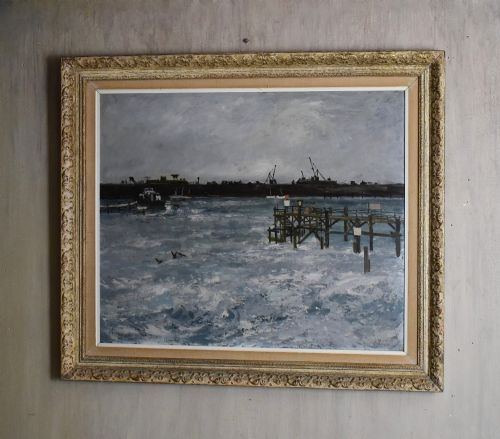
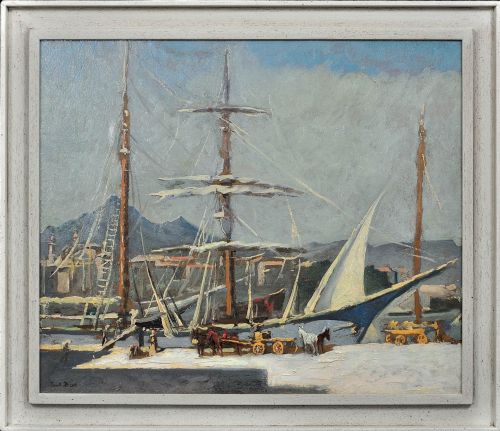
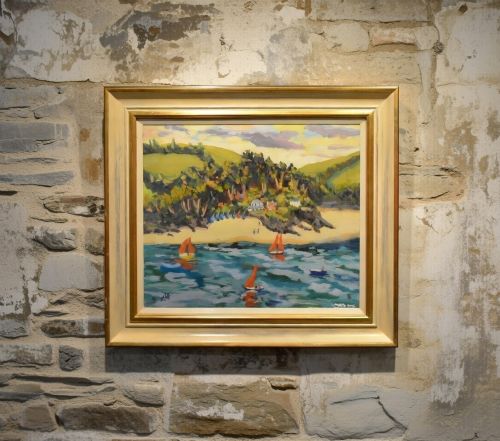
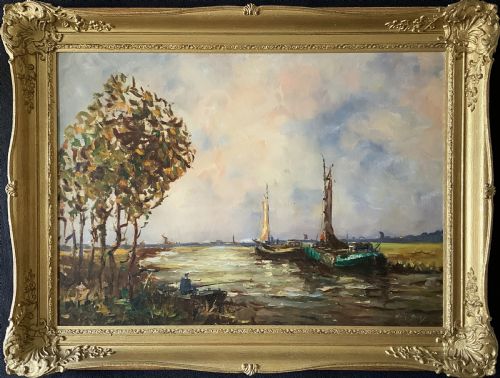
Framed nautical landscape art encompasses paintings depicting seascapes, coastal views, river scenes, and harbour activities. These works capture maritime life through depictions of fishing boats, sailing vessels, and coastal topography across various bodies of water.
The pieces appearing most frequently originate from the nineteenth and early twentieth centuries, spanning Victorian, Edwardian, and Impressionist periods. Makers utilised both oil paint and watercolour on canvas, board, and paper to record these marine subjects.
Compositions range from calm coastal stretches and quiet beach scenes to dramatic depictions of ships in gales or busy harbour channels. Many examples remain housed within their original gilt wood frames, preserving the complete presentation of the period.
How they were made
Artists applied oil paint or watercolour onto prepared surfaces of canvas stretched over wooden frames, wooden boards, or heavy paper sheets. Oil mediums provided depth and durability for capturing shifting light on water, while watercolours offered swift, transparent washes suited to coastal air.
Makers enclosed these paintings within wooden frames, frequently finished with gilt decoration to complement the maritime subject matter. These frames varied from ornate moulded designs to simpler profiles, serving to protect the edges of the canvas or paper.
Listings feature works created across the nineteenth and twentieth centuries, utilising oil paint, watercolour, canvas, paper, and gilt wood.
What varies in quality
The strength of the composition and the handling of light and atmosphere distinguish the finest works from ordinary examples. Painters who achieved convincing movement in water and accurate rigging on vessels command greater attention than those producing formulaic shoreline views.
The preservation of the paint surface and the originality of the accompanying frame contribute significantly to the standing of a piece. Works retaining their undisturbed original oil or watercolour pigments without extensive modern intervention demonstrate superior historical integrity.
James Orrock·Reginald Arthur Borstel·John E. Aitken·James Kay·Bonaventura Peeters·Peter Brannan·Paul Bret·Willem Bos·John Wilson Carmichael·John Moore of Ipswich·William Henry Williamson·George Stanfield Walters·Frank Kelsey·William Lee Hankey·Gustave De Bréanski·Pieter Cornelis Dommersen·Thomas Bush Hardy·Adrian Van Porten·William Tuck·Edward Henry Eugene Fletcher·Fred Waugh·William Greaves·Abraham Hulk Snr·Charles Sim Mottram·Hendrik Willebrord Jansen
The Framed Nautical Landscape Art Glossary
- Oil on canvas
- Pigment mixed with drying oil applied to a woven fabric support stretched over a wooden frame. This technique allowed artists to build rich textures and deep tones for marine scenes.
- Watercolour
- Pigment ground in a water-soluble binder and applied to paper. It created luminous, translucent effects ideal for capturing coastal light and weather.
- Gilt wood
- Wood coated with a thin layer of gold leaf or metallic gilt finish. Frames treated this way were standard for exhibiting fine art paintings in period interiors.
- Impressionism
- A nineteenth-century painting style characterised by relatively small, thin yet visible brush strokes and an emphasis on accurate depiction of light. Artists applied this approach to render changing atmospheric conditions at sea.
- Marine art
- Paintings or other works depicting ships, shipping, sea views, and coastal landscapes. This broad category forms the core of nautical visual culture.
Framed Nautical Landscape Art: Frequently Asked Questions
What periods do these paintings come from?
The available works span primarily from the nineteenth century through the mid-twentieth century, including Victorian and Edwardian examples. Artists working during these decades recorded maritime scenes using traditional painting methods.
Dates range from early nineteenth-century watercolours to mid-century oil paintings on canvas and board. Each era brought distinct framing styles and handling of coastal subjects.
How should I hang these paintings at home?
These framed works suit spaces with stable temperature and humidity away from direct sunlight to protect the canvas and paper. Positioning them at eye level allows proper appreciation of the detail in the brushwork.
Consider the weight of the gilt wood frames when selecting wall fixings. Matching the frame finish to existing room decor helps integrate the artwork into domestic interiors.
What is the difference between oil and watercolour nautical art?
Oil paintings utilise pigment bound in drying oil on canvas or board, offering heavier texture and deep colour saturation. Watercolours employ water-soluble pigments on paper, presenting lighter, more transparent atmospheric effects.
Oils generally require sturdy wooden stretcher frames and protective borders, while watercolours are typically mounted behind glass within a frame to prevent moisture damage.
How do I identify a Victorian marine painting?
Victorian marine paintings often feature dramatic coastal conditions, trading vessels, or fishing boats rendered with academic precision in oil or watercolour. The clothing of figures and the types of ships depicted usually reflect nineteenth-century maritime technology.
Signatures, dates, and framing materials from the period offer further context for dating the piece accurately. Many retain nineteenth-century gilt frames consistent with the date of creation.