


Vintage Lake Landscape Painting
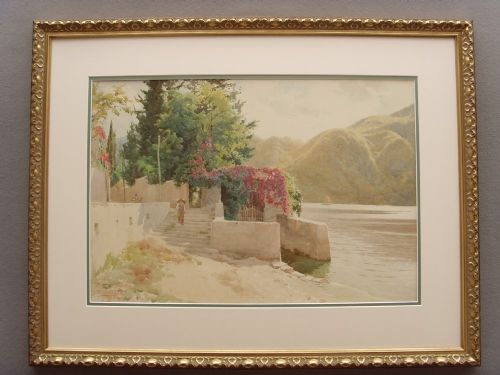
A vintage lake landscape painting captures tranquil expanses of water framed by mountains, woodlands, and hills across various past eras.
Vintage Lake Landscape Painting
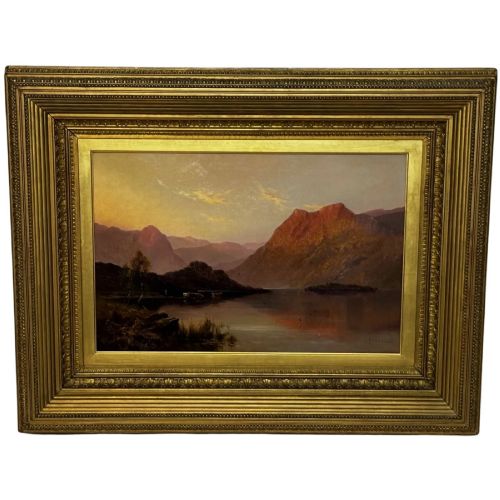
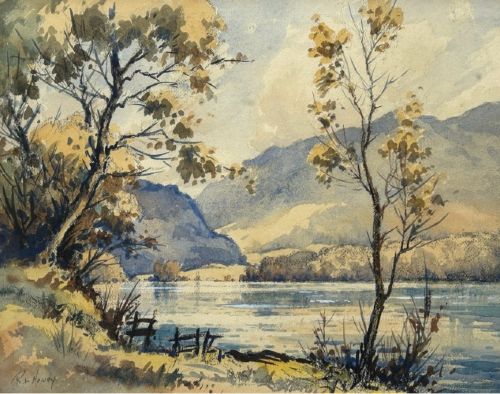
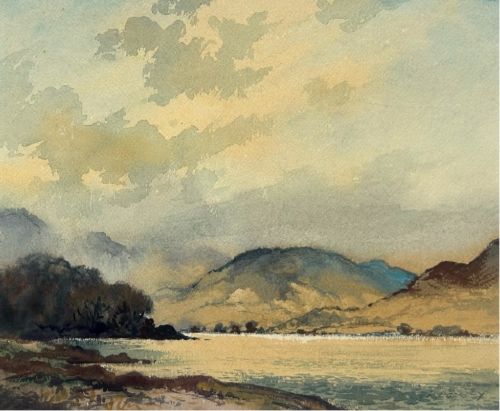
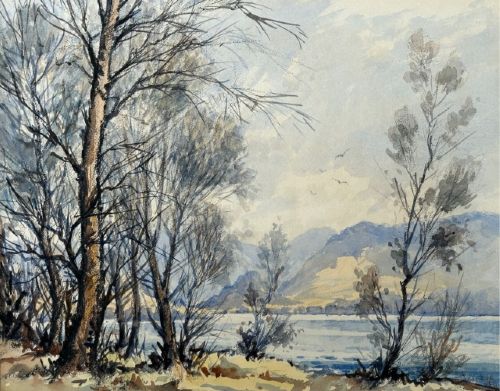
A vintage lake landscape painting encompasses framed water scenes rendered in oils, watercolours, and gouache by artists working from the nineteenth century through the mid-twentieth century.
The selections on this page feature depictions of specific British bodies of water like Windermere and Derwentwater, alongside continental European alpine views and French country scenes.
Works range from topographical topographical watercolours on paper to large impasto oils on canvas bearing signatures from regional British and European painters.
How they were made
Artists painted these lake views using oil paint on canvas or board, alongside watercolours and gouache applied to paper, occasionally finished with ink line details.
Support materials include traditional woven canvas, heavy artist paper, and wood panels, often housed behind glass within wooden frames featuring gesso ornamentation.
Artworks incorporate impressionist, Victorian, Edwardian, and mid-century modern aesthetic approaches.
What varies in quality
Quality rests in the handling of light and atmosphere across the water, distinguishing hurried topographical sketches from confident impressionist brushwork.
The strength of the composition and the integrity of the original period frame heavily influence the standing of an individual piece.
Robert Leslie Howey·Frank Hider·Edward Horace Thompson·Percy Lancaster·Antoine Bouvard
The Vintage Lake Landscape Painting Glossary
- Impasto
- Paint applied thickly to a canvas or board so that it stands proud of the surface, creating visible brush texture. This technique adds tactile depth to water lilies and shoreline vegetation.
- Topographical
- Representing actual places accurately rather than inventing imaginary scenery. These paintings often record specific regional landmarks and historical shorelines.
- Gesso
- A plaster-like mixture applied to wood frames to create a smooth surface for gilding or moulding. It provides the decorative borders found on many period artworks.
- Gouache
- An opaque water-based paint that dries to a matte finish, offering stronger coverage than traditional watercolours. Artists use it to capture bright highlights on water and distant mountains.
Vintage Lake Landscape Painting: Frequently Asked Questions
How should I hang a heavy oil painting?
Ensure the wall fixing engages directly with a stud or utilises appropriate masonry anchors to support the weight of the wooden frame and canvas.
Position the artwork at eye level and away from direct sunlight to protect the pigments on the canvas.
Can watercolours be displayed in bright rooms?
Works on paper remain sensitive to strong light, which can fade delicate watercolour pigments and discolour the underlying paper support over time.
Display these paintings on interior walls away from direct sun exposure and use conservation framing with UV-filtering glass.
How do I identify the period of a painting?
Examine the materials used for the backing, stretcher bars, and framing methods, alongside any signatures or labels remaining on the reverse.
Stylistic cues such as impressionist brushwork or mid-century palettes also help narrow down the decade of creation.
What is the difference between oil and watercolour?
Oil paint utilises a slow-drying medium that allows artists to blend colours smoothly on canvas and build heavy textures over time.
Watercolour employs a water-soluble binder on paper, creating translucent washes that rely on the white paper surface for luminosity.