





Impressionist Boat Oil Painting
When you search for an impressionist boat oil painting, you find works capturing water, light, and maritime life through loose brushwork and vibrant pigments.
Impressionist Boat Oil Painting
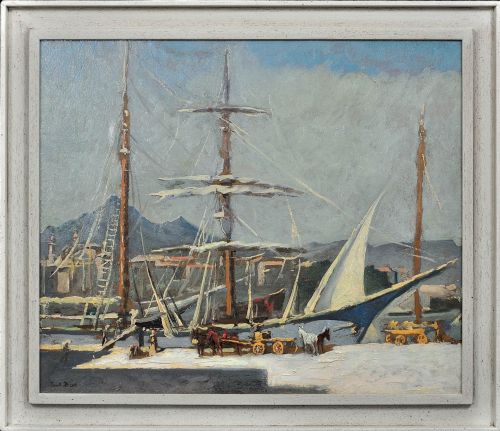
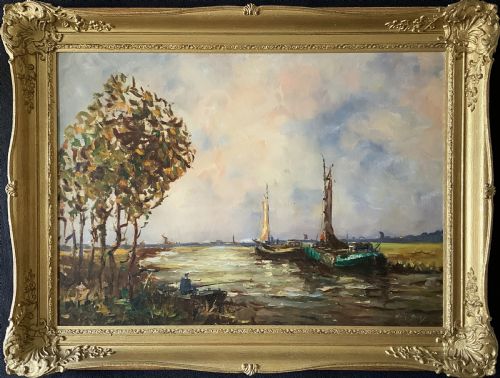
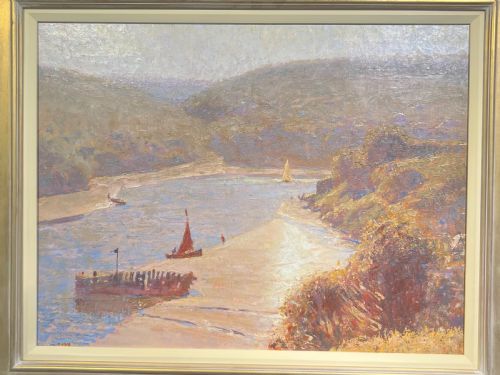
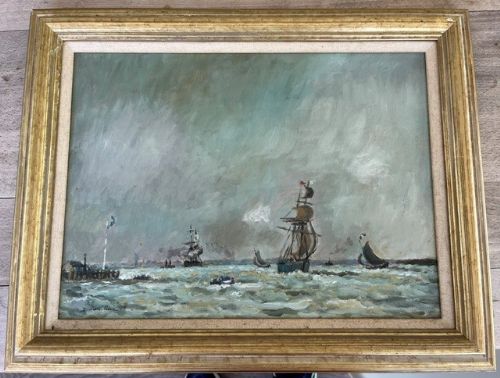
An impressionist boat oil painting brings together water, vessel, and open air, recorded across harbour scenes, rivers, and coastal inlets from the nineteenth and twentieth centuries. These works stem from British, French, and Dutch traditions, showing the movement from nineteenth-century plein air observation to mid-century abstraction.
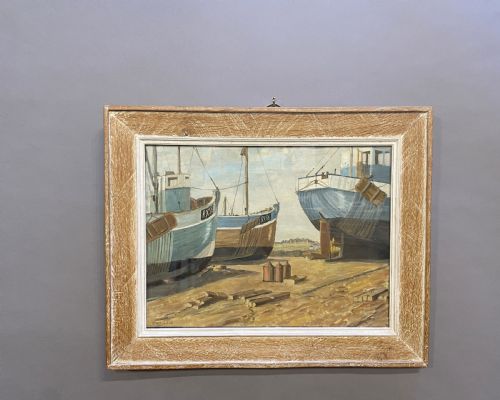
The most common formats on this page include framed canvases and board panels depicting fishing boats, sailing yachts, and industrial barges in harbours or along canals. Painters from St Ives, Provence, and the Thames appear frequently alongside continental coastal views.
Subjects range from tranquil river boating lakes to busy southern European ports, rendered in styles spanning British Impressionism, Post-Impressionism, and mid-century modern interpretations of light.
How they were made
Artists built these works primarily with oil paint applied to stretched canvas, wooden board, or panel supports, often held within original wood and gilt frames. The physical surface preserves the working method, showing both smooth blending and thick impasto texture.
Plein air execution required rapid application to capture shifting coastal light, leading to expressive brushstrokes where pigment sits directly on the ground. Painters utilised palette knives and loaded brushes to build relief, particularly when rendering white crests on water or wooden hulls.
The listings span from the nineteenth century through the 1960s, using oil paint on canvas, board, and panel supports.
What varies in quality
Quality rests on the certainty of the hand and the control of light, where the strongest examples use economical marks to describe distance, water movement, and atmosphere without overworking the surface. A successful composition manages tone and pigment density so that water, sky, and vessel hold their space naturally.
Condition of the paint surface and support matters greatly, distinguishing works preserved with original stable pigments and secure frames from those compromised by heavy restoration or flaking impasto. Provenance and identified regional harbour locations add historical weight to the artistic merit.
Paul Bret·Willem Bos·Elisabeth Bardon·Edward Matthew Elliott·Jean-Baptiste Olive·Raymond Picque·Gabriel Dauchot·Edward Seago·Donald McIntyre·Armand Guillaumin·William Lambert Bell·Owen Bowen·Herbert Royle·Antonio Godoy·Pauline Boumphrey·Hendrik Yan Wolter·Henri Ottman·Frank Myers Boggs·Augustus William Enness
The Impressionist Boat Oil Painting Glossary
- Impasto
- Paint applied thickly to a canvas or board, standing out in relief from the surface so that the marks of the brush or knife remain visible.
- Plein air
- Painting outdoors in direct natural light, allowing the artist to capture transient atmospheric conditions on location rather than in a studio.
- Seascape
- A work of fine art depicting the sea, coastlines, shipping vessels, or maritime activity.
- Post-Impressionism
- An artistic movement following Impressionism that retained vivid colours and visible brushwork while exploring more structured forms and expressive content.
Impressionist Boat Oil Painting: Frequently Asked Questions
What subjects do these paintings show?
These works depict harbours, estuaries, rivers, and open seas populated by fishing vessels, barges, and sailing yachts. The settings range from Cornish fishing ports to French Mediterranean coastal towns.
Scenes capture specific locations at low tide, during sunset, or under midday sun, focusing on the interplay between water and light.
How do I date an impressionist marine painting?
Dating relies on stylistic shifts between nineteenth-century plein air traditions, early twentieth-century tonal realism, and bolder mid-century abstract approaches. Signatures, artist biographical dates, and framing styles often narrow the period.
Support materials such as board types and canvas stamps provide additional chronological clues for works lacking a direct date inscription.
Where were these maritime scenes painted?
Painters worked across British coastal colonies like St Ives and Mevagissey, alongside French destinations including Marseille, Provence, and Paris. Dutch canals and Brazilian harbours also feature within this selection.
Many artists travelled extensively to record working ports and leisure boating locations across Europe.
How should I display an oil painting on board?
Oil paintings on board require stable indoor environments away from direct sunlight, excessive heat sources, and damp walls. Proper framing protects the edges of wooden panels from warping.
Displaying them in their period wood or gilt frames maintains the historical context intended by the maker.