


Belgian Impressionist Painting
Belgian impressionist painting brings daylight and quiet realism straight into a room, capturing local farmyards, bustling markets and northern ports with assured brushwork.
Belgian Impressionist Painting
When you search for belgian impressionist painting, you encounter works spanning the late nineteenth century through to the mid twentieth century. The selection ranges from turn-of-the-century rural scenes and townscapes to mid-century floral displays and coastal views.
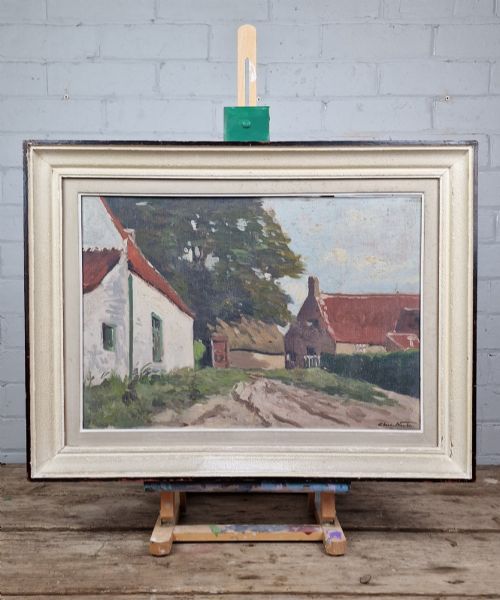
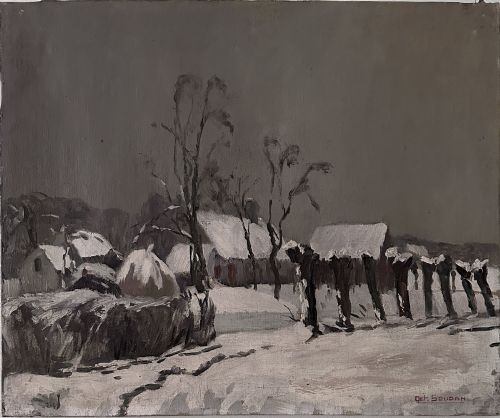
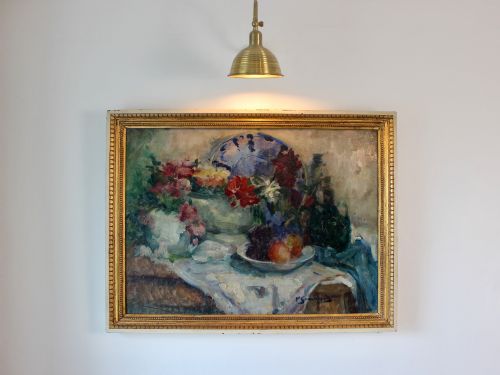
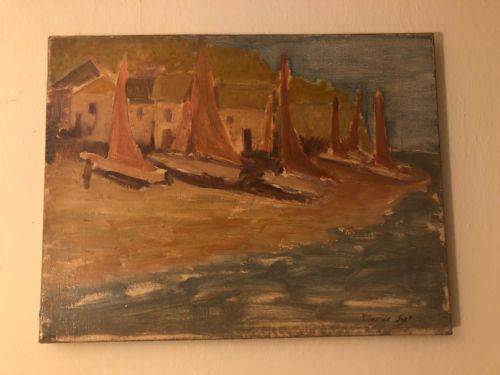
Most pieces you meet on this page take the form of framed oil paintings executed on canvas or board. Subject matter varies from quiet maritime shipping and winter villages to still lifes with game and intimate garden corners.
What varies in quality
Quality rests upon the handling of light and the surety of the composition, distinguishing a master's observation from a standard decorative study. The vitality of the brushwork and the harmony of the palette drive the distinction between average and exceptional works.
Condition of both the paint surface and the original gesso and gilt frame also plays a part in the overall standing of a piece.
Listings feature oil paint on canvas and board, often set within gesso and gilt frames across periods from the nineteenth century to mid-century.
Charles Houben·Victor Simonin·Frans Gailliard·Henri Joseph Pauwels·Maurice Wagermans
The Belgian Impressionist Painting Glossary
- Luminism
- A style focused on the effects of light, prominent in late nineteenth-century Belgian works. It emphasises the subtle play of sunshine and shadow across landscapes and gardens.
- Post-Impressionism
- An artistic development following impressionism that retains vivid colour while exploring structure and form more deliberately. Artists applied this approach to farmyards and figures.
- Gesso
- A plaster-like mixture applied to wooden frames before gilding. It provides a smooth base for intricate moulding details.
- Gilt
- A thin layer of gold applied to the surface of frames. It adds a reflective finish characteristic of period presentation.
Belgian Impressionist Painting: Frequently Asked Questions
What subjects do these paintings show?
The works depict rural farmyards, winter villages, local markets and maritime shipping scenes. Still lifes featuring floral displays or game also appear frequently.
Artists captured everyday Belgian life, from quiet gardens to bustling ports, through the lens of impressionist and luminist styles.
How do I hang a heavy framed oil painting?
Ensure your wall fixings are secured directly into wall studs or masonry using appropriate heavy-duty hooks. The weight of gesso and gilt frames requires robust support.
Position the centre of the canvas at eye level to achieve the correct visual balance in your room.
How should I care for oil paintings on board?
Keep paintings away from direct sunlight and fluctuating heat sources to prevent the wood board or canvas from warping. Dust the surface gently with a soft, dry brush.
Avoid using water or chemical cleaners on either the oil paint or the antique frame.
How can I tell the period of a frame?
Period frames often display hand-applied gesso and genuine gilt work that show natural signs of age. Construction details on the reverse can also help indicate the era.
Compare the framing style with the date of the canvas to check whether they are original to one another.